
Business Insurance: The Complete Guide
Business insurance explained: the general liability, BOP, workers comp, E&O, and commercial auto policies a small business needs — and what each costs per month.
92 in-depth guides
Why you can trust this guide
- Written by Daniel Reyes, AINS, former licensed P&C agent — independent insurance education publisher.
- Factual accuracy reviewed and signed off by Marcus Hale, CPCU, AINS, licensed P&C agent (Independent insurance reviewer).
- Every factual claim traces to a regulator, statute, or policy document — sources are listed at the bottom of the page.
- Last verified ; time-sensitive guides are re-checked at least twice a year. Read our editorial policy.


Architect Insurance: Professional Liability for Design Risk
Architect insurance pairs professional liability for design errors with general liability and pollution coverage; most firms pay $2,000–$10,000 per year.
Read guide
Auto Repair Shop Insurance: Garage Liability and the Customer-Car Question
Auto repair shop insurance pairs garagekeepers coverage for customer cars with garage liability, property, and pollution. Most shops budget $150–$500 per month.
Read guide
Bar and Pub Insurance: Liquor Liability Is the Whole Game
Bar insurance pairs liquor liability for over-service claims with a BOP, assault-and-battery coverage, and workers comp; most bars pay $300–$900 per month.
Read guide
Barbershop Insurance: Coverage for Barbers and Shops
Barbershop insurance splits by seat: booth renters buy liability plus tools coverage, shop owners add a BOP — $25–$65 solo, $85–$250 per month for shops.
Read guide
BOP vs Standalone Business Policies: How to Choose
A Business Owners Policy bundles three coverages at a discount; standalone policies fit online businesses, high-risk trades, and complex risks — the math inside.
Read guide
Business Insurance in Alabama: Requirements and Costs
Business insurance in Alabama costs $50–$300 per month for a typical BOP; the five-employee comp rule and Gulf storm exposure set the price.
Read guide
Business Insurance in Alaska: Requirements and Costs
Business insurance in Alaska costs $50–$300 per month for a typical BOP; the first-employee comp rule and remote, seasonal risks set the price.
Read guide
Business Insurance in Arizona: Requirements and Costs
Business insurance in Arizona costs $50–$300 per month for a typical BOP; the first-employee comp rule, heat, and monsoon claims set the price.
Read guideBusiness Insurance in Arkansas: Requirements and Costs
Business insurance in Arkansas costs $50–$300 per month for a typical BOP; the three-employee comp rule and freight-heavy economy set the price.
Read guide
Business Insurance in California: Requirements and Costs
Business insurance in California costs $50–$300 per month for a typical BOP; the first-employee comp rule and wildfire and earthquake property risk set the price.
Read guide
Business Insurance in Colorado: Requirements and Costs
Business insurance in Colorado costs $50–$300 per month for a typical BOP; the first-employee comp rule, FAMLI tax, and hail set the price.
Read guide
Business Insurance in Connecticut: Requirements and Costs
Business insurance in Connecticut costs $50–$300 per month for a typical BOP; the first-employee comp rule and nor'easter flood risk set the price.
Read guide
Business Insurance in Delaware: Requirements and Costs
Business insurance in Delaware costs $50–$300 per month for a typical BOP; the first-employee comp rule and the construction deemed-employee rule set the price.
Read guide
Business Insurance in District of Columbia: Requirements and Costs
Business insurance in Washington, DC costs $50–$300 per month for a typical BOP; the first-employee comp rule and federal contract terms set the price.
Read guide
Business Insurance in Florida: Requirements and Costs
Business insurance in Florida costs $50–$300 per month for a typical BOP; the four-employee comp rule and hurricane wind deductibles set the price.
Read guide
Business Insurance in Georgia: Requirements and Costs
Business insurance in Georgia costs $50–$300 per month for a typical BOP; the three-employee comp rule and the film-and-freight storm economy set the price.
Read guide
Business Insurance in Hawaii: Requirements and Costs
Business insurance in Hawaii costs $50–$300 per month for a typical BOP; the first-employee comp rule and the health and TDI mandates set the price.
Read guideBusiness Insurance in Idaho: Requirements and Costs
Business insurance in Idaho costs $50–$300 per month for a typical BOP; the first-employee comp rule, the State Insurance Fund, and wildfire set the price.
Read guide
Business Insurance in Illinois: Requirements and Costs
Business insurance in Illinois costs $50–$300 per month for a typical BOP; the first-employee comp rule and Chicago freight-economy claims set the price.
Read guide
Business Insurance in Indiana: Requirements and Costs
Business insurance in Indiana costs $50–$300 per month for a typical BOP; the first-employee comp rule and manufacturing class codes set the price.
Read guide
Business Insurance in Iowa: Requirements and Costs
Business insurance in Iowa costs $50–$300 per month for a typical BOP; the first-employee comp rule and derecho, flood, and ag-processing risk set the price.
Read guide
Business Insurance in Kansas: Requirements and Costs
Business insurance in Kansas costs $50–$300 per month for a typical BOP; the $20,000 payroll comp trigger and hail-alley property risk set the price.
Read guide
Business Insurance in Kentucky: Requirements and Costs
Business insurance in Kentucky costs $50–$300 per month for a typical BOP; the first-employee comp rule and bourbon-warehouse fire risk set the price.
Read guide
Business Insurance in Louisiana: Requirements and Costs
Business insurance in Louisiana costs $50–$300 per month for a typical BOP; the first-employee comp rule and the Gulf's named-storm market set the price.
Read guide
Business Insurance in Maine: Requirements and Costs
Business insurance in Maine costs $50–$300 per month for a typical BOP; the first-employee comp rule and working-waterfront storm risk set the price.
Read guide
Business Insurance in Maryland: Requirements and Costs
Business insurance in Maryland costs $50–$300 per month for a typical BOP; the first-employee comp rule and the port-and-federal economy set the price.
Read guide
Business Insurance in Massachusetts: Requirements and Costs
Business insurance in Massachusetts costs $50–$300 per month for a typical BOP; the first-employee comp rule and the state's health mandates set the price.
Read guide
Business Insurance in Michigan: Requirements and Costs
Business insurance in Michigan costs $50–$300 per month for a typical BOP; the 35-hour comp trigger and the state's group self-insured funds set the price.
Read guide
Business Insurance in Minnesota: Requirements and Costs
Business insurance in Minnesota costs $50–$300 per month for a typical BOP; the first-employee comp rule, Medical Alley, and hail set the price.
Read guideBusiness Insurance in Mississippi: Requirements and Costs
Business insurance in Mississippi costs $50–$300 per month for a typical BOP; the five-employee comp rule and Gulf Coast wind-pool risk set the price.
Read guide
Business Insurance in Missouri: Requirements and Costs
Business insurance in Missouri costs $50–$300 per month for a typical BOP; the five-employee comp rule and Joplin-grade tornado risk set the price.
Read guide
Business Insurance in Montana: Requirements and Costs
Business insurance in Montana costs $50–$300 per month for a typical BOP; comp from the first employee and wildfire-country property rates set the price.
Read guide
Business Insurance in Nebraska: Requirements and Costs
Business insurance in Nebraska costs $50–$300 per month for a typical BOP; comp from the first employee and farm-belt hail and flood rates set the price.
Read guideBusiness Insurance in Nevada: Requirements and Costs
Business insurance in Nevada costs $50–$300 per month for a typical BOP; comp from the first employee and earthquake-exposed property markets set the price.
Read guide
Business Insurance in New Hampshire: Requirements and Costs
Business insurance in New Hampshire costs $50–$300 per month for a typical BOP; comp from the first employee and ice-storm property risk set the price.
Read guide
Business Insurance in New Jersey: Requirements and Costs
Business insurance in New Jersey costs $50–$300 per month for a typical BOP; comp from the first employee and dense-market liability costs set the price.
Read guide
Business Insurance in New Mexico: Requirements and Costs
Business insurance in New Mexico costs $50–$300 per month for a typical BOP; comp from the first employee and Permian oilfield class codes set the price.
Read guide
Business Insurance in New York: Requirements and Costs
Business insurance in New York costs $50–$300 per month for a typical BOP; comp from the first employee and the Scaffold Law's construction liability set the price.
Read guide
Business Insurance in North Carolina: Requirements and Costs
Business insurance in North Carolina costs $50–$300 per month for a typical BOP; the three-employee comp rule and coastal wind deductibles set the price.
Read guide
Business Insurance in North Dakota: Requirements and Costs
Business insurance in North Dakota costs $50–$300 per month for a typical BOP; state-fund workers comp and Bakken energy exposure set the price.
Read guide
Business Insurance in Ohio: Requirements and Costs
Business insurance in Ohio costs $50–$300 per month for a typical BOP; state-fund workers comp through OhioBWC and manufacturing class codes set the price.
Read guide
Business Insurance in Oklahoma: Requirements and Costs
Business insurance in Oklahoma costs $50–$300 per month for a typical BOP; mandatory first-employee comp and tornado-alley property rates set the price.
Read guide
Business Insurance in Oregon: Requirements and Costs
Business insurance in Oregon costs $50–$300 per month for a typical BOP; comp through SAIF or private carriers and wildfire-exposed property rates set the price.
Read guide
Business Insurance in Pennsylvania: Requirements and Costs
Business insurance in Pennsylvania costs $50–$300 per month for a typical BOP; comp from the first employee and winter-storm property claims set the price.
Read guide
Business Insurance in Rhode Island: Requirements and Costs
Business insurance in Rhode Island costs $50–$300 per month for a typical BOP; comp from the first employee and Narragansett Bay storm deductibles set the price.
Read guide
Business Insurance in South Carolina: Requirements and Costs
Business insurance in South Carolina costs $50–$300 per month for a typical BOP; the four-employee comp rule and coastal wind deductibles set the price.
Read guide
Business Insurance in South Dakota: Requirements and Costs
Business insurance in South Dakota costs $50–$300 per month for a typical BOP; comp from the first employee and hail-alley property rates set the price.
Read guide
Business Insurance in Tennessee: Requirements and Costs
Business insurance in Tennessee costs $50–$300 per month for a typical BOP; the five-employee comp rule and tornado and earthquake exposure set the price.
Read guide
Business Insurance in Texas: Requirements and Costs
Business insurance in Texas costs $50–$300 per month for a typical BOP; the voluntary comp option and hail and hurricane exposure set the price.
Read guide
Business Insurance in Utah: Requirements and Costs
Business insurance in Utah costs $50–$300 per month for a typical BOP; comp from the first employee and Wasatch Fault earthquake exposure set the price.
Read guide
Business Insurance in Vermont: Requirements and Costs
Business insurance in Vermont costs $50–$300 per month for a typical BOP; comp from the first employee and flood-seasoned mountain property rates set the price.
Read guide
Business Insurance in Virginia: Requirements and Costs
Business insurance in Virginia costs $50–$300 per month for a typical BOP; the two-employee comp rule and data-center and shipyard risk set the price.
Read guide
Business Insurance in Washington: Requirements and Costs
Business insurance in Washington costs $50–$300 per month for a typical BOP; state-fund comp through L&I and earthquake-exposed property markets set the price.
Read guide
Business Insurance in West Virginia: Requirements and Costs
Business insurance in West Virginia costs $50–$300 per month for a typical BOP; comp from the first employee and mountain-flood property risk set the price.
Read guide
Business Insurance in Wisconsin: Requirements and Costs
Business insurance in Wisconsin costs $50–$300 per month for a typical BOP; the $500-per-quarter comp trigger and winter property claims set the price.
Read guide
Business Insurance in Wyoming: Requirements and Costs
Business insurance in Wyoming costs $50–$300 per month for a typical BOP; state-fund comp through Workforce Services and energy-industry class codes set the price.
Read guide
Business Insurance Requirements: What's Legally Required (State by State)
Workers compensation, commercial auto, and license-specific coverage are the legal floor — every other business insurance requirement arrives by contract.
Read guide
Cleaning Business Insurance: Coverage for Housekeepers and Janitorial Companies
Cleaning business insurance is liability-first: damage to client property, theft bonds, and the certificates clients demand; solo cleaners pay $40–$80 per month.
Read guide
Coffee Shop Insurance: Coverage for Cafés and Roasters
Coffee shop insurance pairs a BOP built around the espresso equipment with spoilage coverage for the milk; most shops pay $80–$250 per month.
Read guide
Commercial Auto Insurance: When Your Personal Policy Stops Working
Commercial auto insurance exists because personal policies exclude business use; most small businesses pay $100–$250 per month per vehicle, and HNOA fixes the rest.
Read guide
Consultant Insurance: E&O, GL, and the Solo Advisor's Stack
Consultant insurance is E&O-first: the advice exposure drives the stack, general liability covers site visits, and cyber covers client data — $1,500–$4,000 per year.
Read guide
Contractor Insurance: What Coverage You Need and What It Costs
Contractor insurance is a stack: general liability as the base, workers compensation on the first hire, tools, auto, and trade-driven pricing from $100 per month.
Read guide
Cyber Insurance for Small Business: What It Covers and What It Costs
Cyber insurance pays breach response, ransomware downtime, and liability for leaked client data; small businesses pay $500–$2,500 per year for $250k–$1M limits.
Read guide
Daycare Insurance: Coverage for Childcare Businesses
Daycare insurance pairs child-injury liability, abuse coverage, and licensing mandates; home daycares pay $100–$250 and centers $400–$1,500 per month.
Read guide
E-commerce Insurance: Coverage for Online Sellers
E-commerce insurance is product-liability-first: goods sold create the claims, inventory is the asset, and customer data is the cyber exposure — $80–$400 per month.
Read guide
Event Planner Insurance: Coverage for Weddings, Galas, and Corporate Events
Event planner insurance is a venue-driven stack: $1M–$2M liability, planning-error coverage, and per-event cancellation; annual stacks run $500–$3,000.
Read guide
Food Truck Insurance: Coverage for the Mobile Kitchen
Food truck insurance pairs commercial auto for the truck with equipment coverage for the kitchen build-out; most owner-operators pay $200–$500 per month.
Read guide
Freelancer Insurance: The Self-Employed Coverage Stack
Freelancer insurance is the lean professional stack: E&O for the work, general liability for the exposure, cyber for the data — roughly $90–$210 per month.
Read guide
Gym and Fitness Studio Insurance: Coverage for the Injury-Prone Floor
Gym insurance is built around member injuries; boutique studios commonly pay $100–$250 per month, while large facilities with pools price higher.
Read guide
Hiring Your First Employee: Insurance Checklist
The first W-2 hire triggers workers compensation, re-rates general liability, and raises auto and EPLI questions — here is the pre-day-one checklist.
Read guide
Home Business: Insurance Checklist
A home business outgrows the homeowners policy once inventory, client visits, or employees enter the picture — the endorsement-versus-BOP decision, item by item.
Read guide
How Much Is Business Insurance? Costs by Policy and Business Type
Small business insurance runs $40–$100 per month for general liability and $60–$200 for a BOP, with a small employer's full stack at $150–$600 per month.
Read guide
How to Choose the Best Business Insurance Company (No Sponsored Rankings)
The best business insurer is industry-specific: evaluate carriers on packages, claims handling, certificate speed, and financial strength — not ads.
Read guide
HVAC Insurance: Coverage for Heating and Air Contractors
HVAC insurance pairs general liability and completed-work coverage with workers compensation, vans, and the refrigerant question; expect $150–$400 per month solo.
Read guide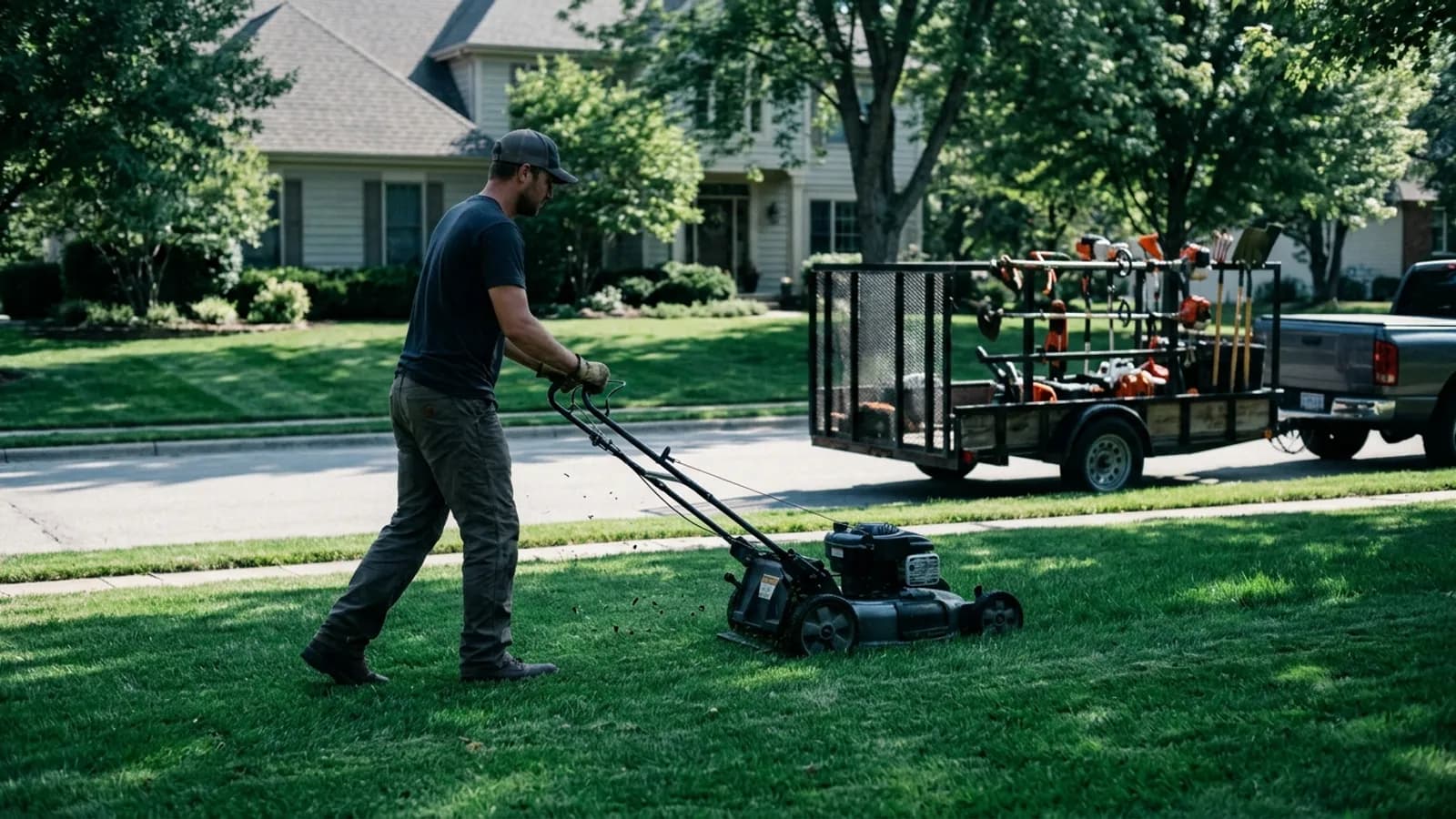
Landscaping Insurance: Coverage for Lawn Care and Landscaping Businesses
Landscaping insurance covers property damage, mower injuries, stolen equipment, and chemical-application claims; solo operations pay $70–$150 per month.
Read guide
Law Firm Insurance: Legal Malpractice and the Practice Stack
Law firm insurance centers on legal malpractice at $1,500–$5,000 per year per attorney, plus cyber for client confidentiality and general liability for the office.
Read guide
LLC Insurance: What Coverage Your Company Actually Needs
LLC insurance covers what the liability shield does not — your own negligence, uninsured claims — starting at $40–$100 per month for general liability.
Read guide
Nonprofit Insurance: Coverage for Mission-Driven Organizations
Nonprofit insurance combines general liability, D&O board protection, abuse coverage for youth programs, and volunteer policies, commonly $100–$500 per month.
Read guide
Photographer Insurance: Coverage for Cameras, Weddings, and Clients
Photographer insurance covers the gear (inland marine), the venue liability, and the missed-wedding exposure (E&O), commonly $30–$120 per month for the full stack.
Read guide
Property Manager Insurance: Coverage for Managing Other People's Buildings
Property manager insurance pairs general liability and E&O for management errors with fidelity coverage for trust funds, commonly $100–$350 per month.
Read guide
Real Estate Agent Insurance: E&O and the Agent's Coverage Stack
Real estate agent insurance starts with E&O, required for licensure in most states, plus showings auto and cyber for client data, commonly $50–$150 per month.
Read guide
Restaurant Insurance: Coverage, Costs, and Requirements
Restaurant insurance bundles a BOP, workers comp, liquor liability, and spoilage coverage, running $150–$350 per month fast-casual and $250–$700 full-service.
Read guide
Retail Store Insurance: Coverage for Shops and Boutiques
Retail store insurance pairs a BOP covering inventory, liability, and interruption with workers comp and product extensions, $80–$250 per month for small shops.
Read guide
Salon and Barber Insurance: Coverage for Stylists and Shops
Salon insurance splits by model — shop owners carry a BOP, workers comp, and professional liability; booth renters carry their own liability from $25–$75 per month.
Read guide
Starting an LLC: Insurance Checklist
The insurance checklist for a new LLC: general liability first, E&O before the first invoice, workers comp at the first hire, and the entity named on every policy.
Read guide
Trucking Insurance: Federal Filings, Limits, and Costs
Trucking insurance runs on FMCSA filings — $750,000–$5 million liability minimums by freight — plus cargo and physical damage, at $8,000–$25,000 per year per truck.
Read guide
Tutoring Business Insurance: Coverage for Tutors and Learning Centers
Tutoring insurance pairs professional liability with general liability for sessions and abuse coverage for minor students, at $30–$60 per month for solo tutors.
Read guide
Videographer and Drone Operator Insurance: Coverage for Motion Work
Videographer and drone operator insurance covers gear, venue liability, Part 107 drone operations, and lost-footage E&O, at $40–$150 per month for the full stack.
Read guide
What Is a BOP (Businessowners Policy)? The Small-Business Bundle
A Business Owners Policy (BOP) bundles general liability, commercial property, and business interruption at a discount; most small businesses pay $50–$300 per month.
Read guide
What Is E&O Insurance (Errors and Omissions)? Who Needs It
Errors and omissions (E&O) insurance pays claims that professional work financially harmed a client; small firms commonly pay $500–$1,500 per year for $1M limits.
Read guide
What Is General Liability Insurance? Coverage and Costs
General liability insurance pays third-party injury and property damage claims; small businesses pay $40–$100 per month for the standard $1M/$2M limits.
Read guide
Workers Comp Insurance: Requirements, Costs, and the Rules Employers Miss
Workers compensation insurance is required in nearly every state; class codes and experience modifiers price a typical small employer at $40–$150 per month.
Read guideBusiness insurance is not one policy but a stack assembled around two forces — state law and client contracts — anchored by general liability at $40–$100 per month, a BOP bundle at $60–$200 per month, and a fully insured small employer's stack at $150–$600 per month.
What business insurance covers (and what it never covers)
General liability insurance is the stack's foundation. It pays third-party claims: a customer's slip-and-fall, damage your work does to a client's property, advertising injury. At the standard $1M per-occurrence / $2M aggregate limits, it costs $40–$100 per month for low-risk small businesses — and clients and landlords demand proof of it so routinely that general liability functions as the de-facto license of the B2B world.
General liability never pays four claims owners expect it to. Injuries to your own employees belong to workers compensation. Financial harm caused by your professional work — bad advice, missed deadlines — belongs to errors and omissions (E&O) coverage. Damage to your own building, equipment, or inventory belongs to commercial property. And business use of a personal vehicle is excluded by personal auto policies, which is why work driving needs commercial auto.
Every policy in the stack shares the same mechanics. The premium is the price of the policy, billed monthly or annually; property and cyber lines carry a deductible — the share of each claim you pay before coverage responds; and every form carries exclusions, the perils and situations the policy deliberately refuses to pay. Reading a form's exclusions tells you more than reading its marketing page.
What business insurance costs
Monthly figures for a typical small business; workers compensation is a payroll rate rather than a flat premium:
| Policy | Typical small-business cost |
|---|---|
| General liability ($1M/$2M) | $40–$100 per month |
| BOP (GL + property + interruption) | $60–$200 per month |
| Workers compensation | $2–$15 per $100 of payroll (a typical small employer lands at $40–$150 per month) |
| Professional liability (E&O) | $40–$125 per month |
| Commercial auto (per vehicle) | $100–$250 per month |
| Cyber liability | $40–$210 per month |
Two anchors sit on top of the policy table. A small employer's full stack — liability, property, comp, plus the exposure-driven additions — commonly runs $150–$600 per month, and the standard planning budget is 1–3% of revenue for the complete stack. State risk changes the band: the state guides in this cluster quote $50–$300 per month for a typical BOP, the wider range reflecting each state's court environment and catastrophe exposure on top of the $60–$200 base for a low-risk single-location business. The full breakdown by policy and business type lives in How Much Is Business Insurance? Costs by Policy and Business Type.
How to get business insurance in five steps
- Inventory the exposures. List the physical locations, vehicles, employee count and payroll, client-contract insurance clauses, and the professional-advice or customer-data exposure — the stack follows the list.
- Match the policies to the list. General liability plus a BOP covers most storefront risks; add workers compensation before the first hire, E&O before invoicing advice, commercial auto before work driving, cyber before holding client data.
- Quote 3+ carriers or a BOP bundle on identical limits — $1M/$2M general liability is the comparison baseline; make sure every quote prices the same contract requirements (additional-insured status, waivers).
- Check certificate-of-insurance speed. Clients and landlords request certificates constantly; a carrier that issues them same-day online saves real administrative drag.
- Re-quote annually and after any growth event — a new hire, a new vehicle, a bigger lease, or a higher contract value re-rates the stack; the BOP vs standalone guide and the how-much page above give the re-check benchmarks.
Which policies each business type needs
| Business type | Core stack | Common additions |
|---|---|---|
| Consultant / freelancer | E&O + GL | Cyber (client data), HNOA (client-site driving) |
| Contractor / trades | GL + commercial auto + comp | Tools/inland marine, contractor's pollution, surety bonds |
| Retail / storefront | BOP (GL + property + interruption) | Cyber, employment practices at first hires |
| Restaurant / food service | BOP + comp | Spoilage, liquor liability, food-contamination |
| Online / e-commerce | GL (product liability) + cyber | Product liability extensions, inventory property |
| Professional firm (law, accounting, agency) | E&O + BOP | Malpractice variant, employment practices |
The starting an LLC checklist sequences the first-year decisions, and the industry guides in the card grid above carry the trade-specific stack.
How to use this guide set
- New venture — LLC, side business, or home-based operation. Run the Starting an LLC: Insurance Checklist before the first invoice, and let Home Business: Insurance Checklist decide between a homeowners endorsement and a BOP if the business runs from home.
- Buying the core policies. The BOP guide explains the bundle most storefront businesses start with, and the general liability guide above covers the policy every stack includes.
- About to hire. Hiring Your First Employee: Insurance Checklist covers the comp trigger, the GL re-rate, and the EPLI question before day one.
- Price shopping. Benchmark every quote against the cost table above and the how-much guide it links, not against a competitor's ad.
The small-business decision framework
Bundle or standalone. A BOP bundles general liability, property, and interruption at a discount; standalone forms fit online businesses, high-risk trades, and complex liability. The comparison guide in the map below works the math.
The first hire. Employees change everything: workers compensation becomes mandatory (thresholds vary by state — some trigger at the first employee, others at three or five), general liability re-rates, and employment-practices exposure appears. Workers Comp Insurance: Requirements, Costs, and the Rules Employers Miss covers the class-code arithmetic and the misclassification trap.
Advice and data exposure. Businesses that sell advice or hold client data price two additions: What Is E&O Insurance (Errors and Omissions)? Who Needs It for the professional-error exposure, and cyber insurance for breach response, ransomware downtime, and leaked-data liability.
Vehicles and state law. Work driving needs commercial auto (the map below links the guide), and every state's comp thresholds, state-fund arrangements, and license requirements are covered in the state guides.
The five mistakes that cost small businesses
- Driving on a personal policy. Personal auto excludes business use, which voids claims on work trips and deliveries; a hired-and-non-owned (HNOA) endorsement fixes it for a small fraction of a commercial premium.
- Treating 1099 subcontractors as comp-exempt. Misclassified workers still count as employees in most states, and premium audits surface them after the fact — with penalties attached.
- Waiting for a contract to buy E&O. Professional liability is claims-made with retroactive dates; coverage bought after the work is done does not reach back to cover it.
- Insuring property at book value. Depreciated book values leave the replacement gap out of your pocket; property schedules should follow replacement cost.
- Skipping cyber while holding client data. Breach notification, credit monitoring, and forensic bills arrive whether or not the policy exists — and client contracts increasingly require the coverage to exist too.
The business insurance cluster, mapped
The card grid above lists every page in this cluster. These are the entry points:
Start here
- Business Insurance Requirements: What's Legally Required (State by State) — the legal floor versus the contract floor.
- BOP vs Standalone Business Policies: How to Choose — when the bundle wins and when tailored forms beat it.
- How to Choose the Best Business Insurance Company (No Sponsored Rankings) — carrier evaluation by claims handling, certificate speed, and financial strength.
State guides
-
Business Insurance in District of Columbia: Requirements and Costs
-
Business Insurance in North Carolina: Requirements and Costs
-
Business Insurance in South Carolina: Requirements and Costs
Policy guides
- Commercial Auto Insurance: When Your Personal Policy Stops Working — owned vehicles, hired and non-owned (HNOA) coverage, and the personal-policy exclusion.
- Law Firm Insurance: Legal Malpractice and the Practice Stack — malpractice exposure, E&O, and the office policy stack.
- Tutoring Business Insurance: Coverage for Tutors and Learning Centers — professional liability for educators outside the school system.
Industry-specific stacks — restaurants, contractors, salons, daycares, food trucks, and two dozen more — each have their own guide in the grid above.
Related guides
Business insurance connects to every other line on this site: the same owner who buys general liability also insures the company car, the employees' health, and — through key person policies — the lives the business depends on.
- Health Insurance: The Complete Guide — the group medical decision every employer eventually faces.
- Life Insurance: The Complete Guide — key person coverage and the personal policies behind buy-sell agreements.
- Car Insurance: The Complete Guide — where personal auto coverage ends and commercial auto begins.
- Supplemental Insurance: The Complete Guide — the voluntary benefits offered alongside group health during open enrollment.
Sources
Frequently asked questions
What insurance does a small business need?
Most small businesses need four building blocks: general liability for third-party injury and property damage claims, commercial property or a BOP bundle for the physical assets, workers compensation once employees arrive (legally required in nearly every state), and commercial auto for vehicles driven for work. Businesses that advise clients add professional liability (E&O); businesses that hold customer data add cyber insurance.
How much does business insurance cost per month?
General liability commonly costs $40–$100 per month for a low-risk small business at $1M/$2M limits, a BOP bundle $60–$200 per month, and workers compensation $2–$15 per $100 of payroll. A small employer's full stack typically lands at $150–$600 per month. Industry risk class, payroll, revenue, claims history, and location move the number more than anything else.
Is business insurance required by law?
Workers compensation is the main legal requirement: nearly every state mandates it once a business has employees (Texas is the notable exception, and thresholds vary). Commercial auto liability is required for owned business vehicles. Everything else — general liability, E&O, cyber — is contract-driven: landlords, clients, and lenders impose it through leases and service agreements even where no law does.
What is a BOP (businessowners policy)?
A Businessowners Policy (BOP) bundles general liability, commercial property, and business interruption coverage into one discounted package. It fits small businesses with a physical location and modest liability exposure — offices, retail shops, restaurants, workshops. A typical BOP runs $60–$200 per month, usually cheaper than buying the three coverages separately; high-risk or complex risks often price better as standalone policies.
Who needs professional liability (E&O) insurance?
Professional liability (errors and omissions) pays claims that your professional work financially harmed a client — bad advice, missed deadlines, errors in deliverables. Consultants, IT firms, accountants, agencies, real estate agents, architects, and lawyers need it, and client contracts commonly require proof. Small firms commonly pay $40–$125 per month ($500–$1,500 per year) for $1 million of coverage.
When should a new business buy insurance?
Buy before the exposure exists: general liability before signing a lease or opening the doors, E&O before sending the first invoice (claims-made policies do not reach back to prior work), and workers compensation before the first employee's first day. Contracts trigger requirements earlier than law does, so list lease, client, and lender requirements when budgeting the stack.
How we researched this guide
Business insurance requirements are mostly statutory — workers comp is state law — so our guides separate legal requirements from prudent coverage.
- Workers-comp rules (who must carry, exemptions, monopolistic states) are verified against state statutes and NCCI classifications.
- General liability and BOP coverage mechanics are verified against standard policy forms and SBA guidance.
- Professional-liability explanations distinguish the claims-made trigger and tail options, because that's where businesses get caught.
- Industry examples use realistic claim scenarios published by insurers and courts, and we label estimates as estimates.
Where facts vary by state or insurer, we publish the range and the reason for the variation rather than a single misleading average. We do not sell insurance, take money from insurers for coverage, or publish claim amounts we cannot trace to a source.
Sources
The primary sources behind the facts on this page. Last verified November 17, 2026.
- U.S. Small Business Administration (SBA) — which policies a business legally needs and how to buy them.
- OSHA — Occupational Safety and Health Administration — workplace safety rules that drive workers-compensation obligations.
- NCCI — National Council on Compensation Insurance — workers-comp class codes and rate filings used in most states.
- NAIC — National Association of Insurance Commissioners — model regulations, consumer guides, and industry statistics.
- Find your state insurance regulator (NAIC directory) — every state insurance department — the authority for your state's rules and complaint filing.
- Insurance Information Institute (III) — industry statistics and consumer explainers we cross-check against regulator publications.
Rules that vary by state are verified against the state insurance department's consumer pages — find yours via the NAIC directory above.