
Salon and Barber Insurance: Coverage for Stylists and Shops
Salon insurance splits by model — shop owners carry a BOP, workers comp, and professional liability; booth renters carry their own liability from $25–$75 per month.
Why you can trust this guide
- Written by Daniel Reyes, AINS, former licensed P&C agent — independent insurance education publisher.
- Factual accuracy reviewed and signed off by Marcus Hale, CPCU, AINS, licensed P&C agent (Independent insurance reviewer).
- Every factual claim traces to a regulator, statute, or policy document — sources are listed at the bottom of the page.
- Last verified ; time-sensitive guides are re-checked at least twice a year. Read our editorial policy.

On this page
Salon insurance splits by business model: shop owners carry a BOP, workers compensation, and professional liability; booth renters carry individual liability and tools coverage. The chemical-service claims are the specialty; the slip-and-fall claims are the staple.
The shop owner's stack
Four lines cover the shop, the chairs, and the chemical services behind them:
| Policy | Covers | Typical monthly cost |
|---|---|---|
| BOP | Station property, general liability, interruption | $80–$180 per month |
| Workers compensation | Employed stylists | Priced per $100 of payroll |
| Professional liability | Chemical-service claims | $15–$50 per month |
| Tools/inventory | Shears, dryers, product inventory | $10–$30 per month |
The booth renter's stack
| Policy | Typical monthly cost |
|---|---|
| Individual liability (general + professional) | $25–$75 per month |
| Tools coverage | $5–$20 per month |
The salon-specific claims
The claims that separate salons from general businesses:
- Chemical burns and reactions — the professional-liability claim; patch tests and records are the defense.
- Slip-and-fall — water, clippings, the salon's general liability staple.
- The stolen shears — tools coverage; the $2,000 shear set is real.
- Product reactions — the liability chain sometimes runs to the manufacturer; documentation decides.
The costs by model
| Model | Typical monthly cost |
|---|---|
| Solo booth renter | $25–$75 per month |
| Small shop (2–4 chairs) | $80–$180 per month |
| Full-service salon + spa | $150–$400 per month (spa services add professional exposure) |
The chemical service that ends in a lawsuit
Salon professional-liability claims follow a script: the chemical service — color, relaxer, keratin treatment, lash adhesive — is applied without a patch test or against a documented allergy, the reaction is severe, and the claim arrives with the client's medical records attached. The defense is entirely documentation: intake forms recording allergies and prior reactions, patch tests logged 48 hours before chemical services, product labels and batches retained, and consent forms for higher-risk services. The insurance line is professional liability insurance — included in salon packages or endorsed — and it answers both the settlement and the defense costs. Salons that run the patch-test protocol as a hard rule price below identical salons; the ones that skip it fund the settlement the protocol would have prevented.
The supply line: when the product is blamed
Not every chemical claim is an application error — some are product claims: the formula that burned clients across the region, the recalled developer, the counterfeit product that entered through a non-authorized supplier. The salon sits between the manufacturer and the client, and product liability exposure follows sale: selling the product makes the salon part of the chain plaintiff's counsel names. The protections: purchase from authorized distributors only (invoices are the chain-of-custody evidence), retain lot numbers and SDS sheets, and respond to recalls as documented events. General liability's products coverage answers the salon's sale; the manufacturer's insurance answers the formula. The claim against the salon is settled by the documentation showing proper purchase, storage, and application — the supply file is the defense.
A three-station shop's budget
A three-station salon with an owner and three booth renters or employees commonly budgets, in monthly terms: a BOP-style package (general liability, property, interruption) at $100–$210 per month; professional liability at $15–$50 per month; workers compensation for on-payroll staff at $35–$100 per month (booth renters carry their own); and the property details — hooded dryers, color processors, the building's plumbing — inside the property limit. Total: roughly $165–$375 per month. The two fields most often mis-sized: the property limit (color processors and build-outs cost more than the furniture list suggests) and the professional line — a salon offering lashes, extensions, or keratin treatments carries more professional exposure than a cuts-only shop, and the limit should say so.
From renter to owner: the expansion checklist
The stylist who buys the shop crosses the same insurance line the booth renter crossed in reverse — and the file changes twice. The purchase itself: the lease's insurance article (general liability limits, additional-insured status, property limits for the build-out the new owner now funds) and the BOP that answers it, priced per the BOP guide. The staff conversion: stylists who were renters become employees, which turns workers compensation on and moves the professional-liability exposure onto the shop's policy — the transition mechanics are in the workers compensation guide. What carries over unchanged: the sanitation log, the patch-test protocol, and the certificate exchange with any remaining renters. The shop's premium is priced on the same documentation that defended the renter's chair — the file just gets bigger. The barbering twin of this stack is in the barber insurance guide.
Related guides
The neighboring pages cover the appointment-shop siblings and the staffing questions.
- General Liability Insurance — the premises line behind every slip-and-fall claim.
- Gym and Fitness Studio Insurance — the service-floor sibling with the same injury-heavy exposure.
- Business Insurance: The Complete Guide — the hub mapping every coverage type and requirement.
- LLC Insurance — naming the salon entity on policies and booth agreements.
- How Much Is Business Insurance? — monthly cost ranges for every policy line.
- What Is Employment Practices Liability? — the staff line that enters when renters become employees.
Sources
Frequently asked questions
How much is salon insurance?
Shop owners commonly pay $80–$200 per month for a BOP plus workers comp; booth renters pay $25–$75 per month for individual liability plus tools coverage. Full-service salons adding spa services run $150–$400 per month. The split matters: the shop's policy covers the business, and each booth renter needs separate coverage.
What insurance does a salon need?
Shop owners need a Business Owners Policy (BOP) for property and general liability, workers compensation for employed stylists, professional liability for chemical-service claims, and tools/inventory coverage. Booth-rental models shift the requirement to each renter, whose lease agreement typically demands individual liability coverage and a certificate naming the salon.
Does salon insurance cover chemical burn claims?
Professional liability responds to service-related injury claims — the chemical burn, the allergic reaction, the scalp injury — while general liability handles slip-and-fall claims. The distinction matters at claim time: a reaction caused by application is a professional claim, and salons without the professional line pay settlements out of pocket. Patch-test records are the defense.
Do booth renters need their own insurance?
Yes. The salon's policy covers the salon; a booth renter is typically an independent operator whose lease agreement requires individual liability coverage (general plus professional) and tools coverage, with the salon named as additional insured. The certificate request is standard booth-agreement language, and renters without coverage are working uninsured.
Does salon insurance cover lash and brow services?
Only if the policy knows about them. Lash extensions, tinting, and brow services carry distinct professional-liability exposure from adhesives and near-eye application, and some carriers treat them as separate activities requiring disclosure or a specific endorsement. Report the service line before the first client, not after the reaction.
Are mobile salon visits covered?
Frequently not by default. A policy's described locations cover the salon, and house calls move operations off-premises; some carriers extend coverage by endorsement while others require a separate mobile-professional policy. The same question applies to bridal-party and on-location work. Report the mobile model at quoting and carry the certificate to the appointment.
How we researched this guide
Business insurance requirements are mostly statutory — workers comp is state law — so our guides separate legal requirements from prudent coverage.
- Workers-comp rules (who must carry, exemptions, monopolistic states) are verified against state statutes and NCCI classifications.
- General liability and BOP coverage mechanics are verified against standard policy forms and SBA guidance.
- Professional-liability explanations distinguish the claims-made trigger and tail options, because that's where businesses get caught.
- Industry examples use realistic claim scenarios published by insurers and courts, and we label estimates as estimates.
Where facts vary by state or insurer, we publish the range and the reason for the variation rather than a single misleading average. We do not sell insurance, take money from insurers for coverage, or publish claim amounts we cannot trace to a source.
Sources
The primary sources behind the facts on this page. Last verified November 10, 2026.
- U.S. Small Business Administration (SBA) — which policies a business legally needs and how to buy them.
- OSHA — Occupational Safety and Health Administration — workplace safety rules that drive workers-compensation obligations.
- NCCI — National Council on Compensation Insurance — workers-comp class codes and rate filings used in most states.
- NAIC — National Association of Insurance Commissioners — model regulations, consumer guides, and industry statistics.
- Find your state insurance regulator (NAIC directory) — every state insurance department — the authority for your state's rules and complaint filing.
- Insurance Information Institute (III) — industry statistics and consumer explainers we cross-check against regulator publications.
Rules that vary by state are verified against the state insurance department's consumer pages — find yours via the NAIC directory above.
Keep reading

Business Insurance: The Complete Guide
Business insurance explained: the general liability, BOP, workers comp, E&O, and commercial auto policies a small business needs — and what each costs per month.
Read guide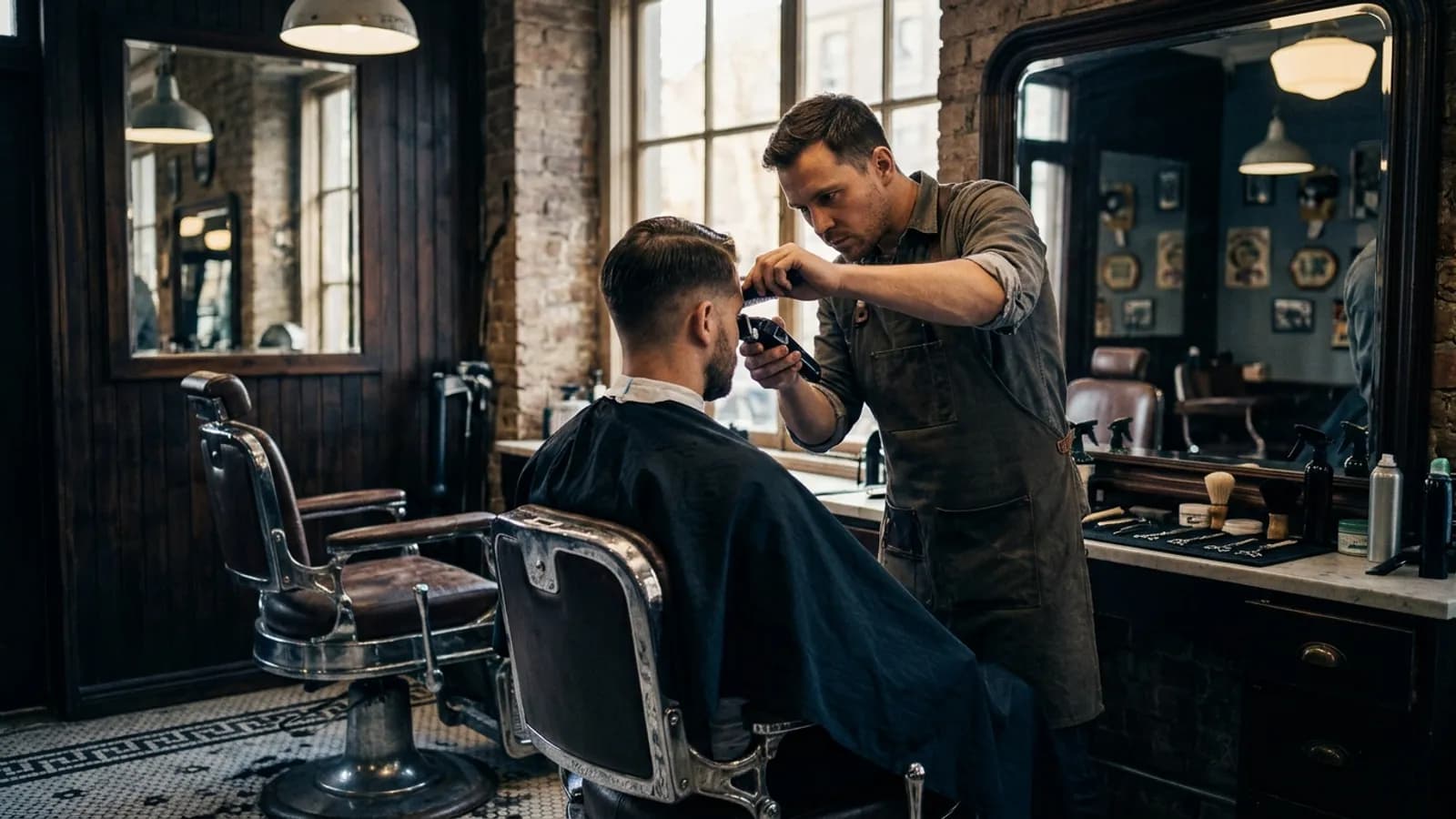
Barbershop Insurance: Coverage for Barbers and Shops
Barbershop insurance splits by seat: booth renters buy liability plus tools coverage, shop owners add a BOP — $25–$65 solo, $85–$250 per month for shops.
Read guide
What Is a BOP (Businessowners Policy)? The Small-Business Bundle
A Business Owners Policy (BOP) bundles general liability, commercial property, and business interruption at a discount; most small businesses pay $50–$300 per month.
Read guide
How Much Is Business Insurance? Costs by Policy and Business Type
Small business insurance runs $40–$100 per month for general liability and $60–$200 for a BOP, with a small employer's full stack at $150–$600 per month.
Read guide
LLC Insurance: What Coverage Your Company Actually Needs
LLC insurance covers what the liability shield does not — your own negligence, uninsured claims — starting at $40–$100 per month for general liability.
Read guideWhat Is Employment Practices Liability (EPLI)?
Employment practices liability insurance (EPLI) covers wrongful termination, discrimination, harassment, and retaliation claims — excluding wage-and-hour.
Read guide