
Auto Repair Shop Insurance: Garage Liability and the Customer-Car Question
Auto repair shop insurance pairs garagekeepers coverage for customer cars with garage liability, property, and pollution. Most shops budget $150–$500 per month.
Why you can trust this guide
- Written by Daniel Reyes, AINS, former licensed P&C agent — independent insurance education publisher.
- Factual accuracy reviewed and signed off by Marcus Hale, CPCU, AINS, licensed P&C agent (Independent insurance reviewer).
- Every factual claim traces to a regulator, statute, or policy document — sources are listed at the bottom of the page.
- Last verified ; time-sensitive guides are re-checked at least twice a year. Read our editorial policy.
On this page
Auto repair shop insurance is garage liability plus garagekeepers coverage — the customer cars in your care are what define the category. A fully covered shop commonly budgets $150–$500 per month, with pollution liability and workers compensation insurance completing the stack.
The two coverages that define the category
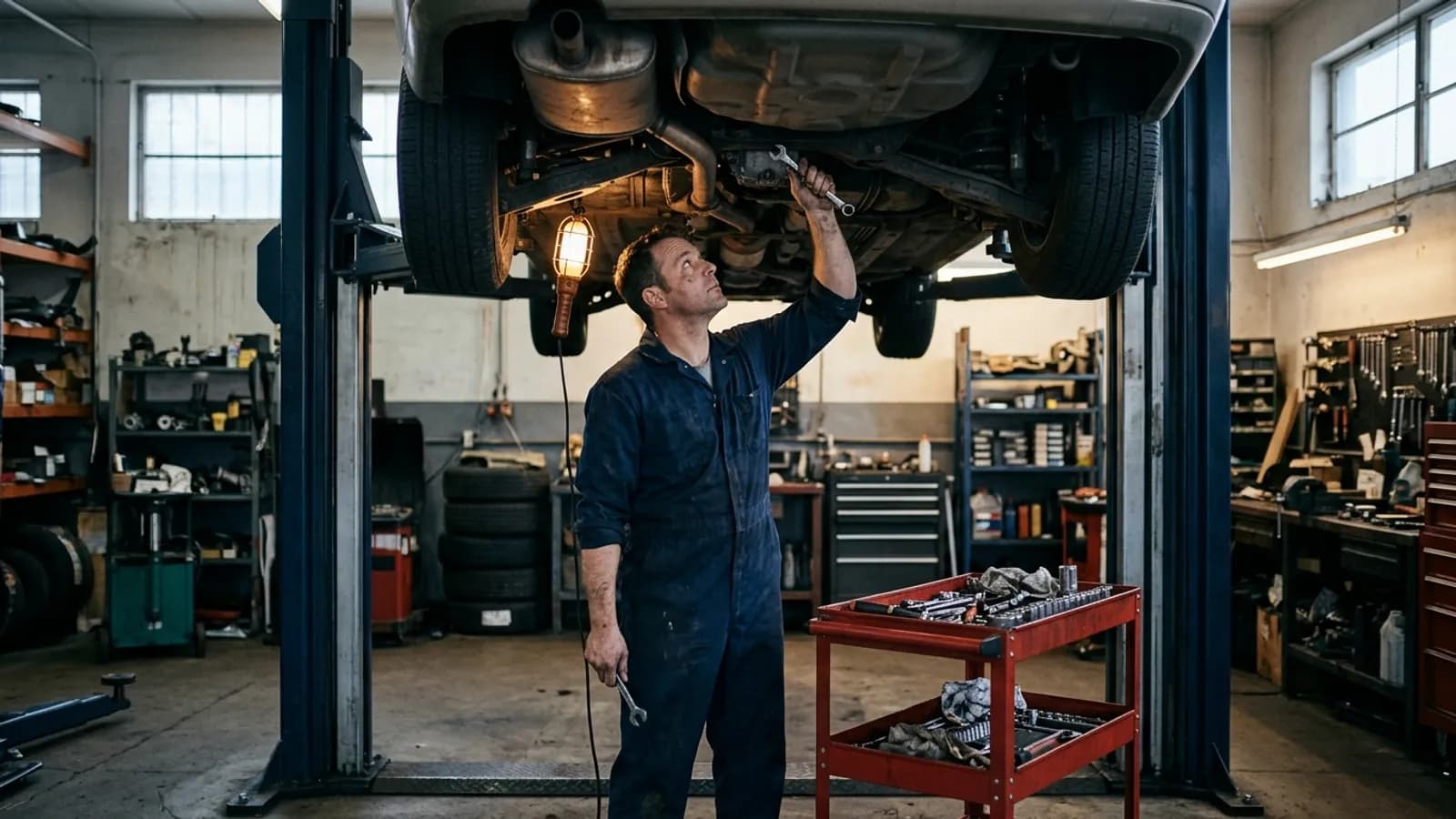
Garage liability and garagekeepers answer different questions. Garage liability insurance covers operations, products, and completed work — the test-drive accident, the repair that later fails and causes damage, the customer injured in the waiting area. Garagekeepers coverage covers vehicles the customer entrusted to you: the fire that takes three cars in the bay, the theft from the overnight lot, the hailstorm while the sedan sat on your lift. Shops that skip garagekeepers pay for that trust out of the register, because standard general liability insurance excludes property in your care, custody, and control.
| Policy | Covers | Typical monthly cost |
|---|---|---|
| Garage liability | Operations, products, test drives | $80–$250 |
| Garagekeepers | Customer cars in care, custody, control | Priced by lot value |
| Property | Lifts, tools, diagnostic equipment | $40–$120 |
| Workers compensation | Lift injuries, chemical exposure | Priced per payroll |
| Pollution liability | Oil, solvent, refrigerant releases | $30–$100 |
The garagekeepers basis: direct versus legal liability
The form's basis decides whose claim gets paid. Under a legal-liability basis, the policy pays only when the shop was negligent — a gate left open, keys left in the ignition. Under a direct basis, the policy pays the customer's loss regardless of fault, which ends the argument at the service counter and costs more per month. The second detail worth reading before the fire: deductibles. Garagekeepers commonly carries per-car deductibles, so one bay fire damaging five customer cars applies five deductibles unless the form waives them.
Test drives, road checks, and the auto line
Any employee driving a customer's vehicle — verification runs, alignment checks, moving cars around the lot — puts the shop's auto exposure on the road. A personal auto policy naming the owner excludes this use, and the customer's own policy may respond first, then look back at your operation. Shops handle it with garage liability written to include owned, hired, and customer vehicles operated in the business, or with a hired-auto endorsement on a commercial auto policy. The rule is simple: if it rolls and carries a customer's keys, your auto arrangement should know about it first. Dealership and fleet accounts verify garagekeepers limits before they hand over keys, so keep the certificate of insurance current and ready.
The shop-specific claims
- The bay fire — the garagekeepers claim: three customer cars, one fire, five deductibles unless waived.
- The test-drive accident — the garage liability claim that follows the customer's car onto the road.
- The lift injury — the workers compensation staple of the trade.
- The oil spill — the pollution claim, most often the storm-drain scenario.
- The diagnostic-equipment theft — the property claim on the $20,000 scan tool.
What a two-bay shop budgets per year
A small independent shop with two bays, five employees, and a modest customer lot commonly lands at $125–$335 per month (about $1,500–$4,000 per year) for the core stack — garage liability, garagekeepers, premises coverage, and workers compensation priced separately by payroll. Adding a tow vehicle or a service van moves the number with commercial auto pricing, commonly $100–$250 per month per vehicle depending on radius and driver records. Workers compensation for the shop runs heavy: a four-tech operation commonly pays $250–$670 per month ($3,000–$8,000 per year) depending on state rates and claim history, because auto repair carries one of the heavier class codes in light industry — lifts, presses, hot exhaust work, and undercarriage labor price accordingly. Three fields drive that bill: the class code assigned to each employee's actual duties (a service writer coded as a technician overpays), the payroll estimate at binding (audited to actuals at year end), and the experience modifier the shop's claim history earns. The hire itself triggers the obligations and audit file described in the first-employee checklist.
Pollution: the compliance frame behind the premium
Pollution liability covers sudden releases — the oil spill, the refrigerant venting — while gradual pollution and regulatory fines sit outside most forms. EPA shop requirements for used oil, used batteries, and refrigerant handling are the compliance frame, and the waste-oil questions shape both the quote and the inspection. Environmental claims ride against the pollution exclusions in base liability forms, which is why the endorsement is priced separately rather than assumed.
Related guides
The shop stack connects to the vehicle, payroll, and requirements sides of the business-insurance map:
- Commercial Auto Insurance — when personal policies stop covering business driving, and the HNOA fix.
- Workers Comp Insurance — requirements, class codes, and the audit rules employers miss.
- How Much Is Business Insurance? — costs by policy and business type for comparison.
- Business Insurance Requirements — what is legally required in your state versus by contract.
- Business Insurance: The Complete Guide — the full small-business coverage stack.
Sources
Frequently asked questions
How much is auto repair shop insurance?
Commonly $150–$500 per month for the full stack: garage liability at $80–$250 per month, garagekeepers priced by the value of customer cars on the lot, property coverage at $40–$120 per month, workers compensation per payroll, and pollution extensions at $30–$100 per month.
What insurance does an auto repair shop need?
The stack: garage liability (operations plus products), garagekeepers coverage (customer cars in your care — the fire, theft, or damage claim on their vehicle), property (lifts, tools, diagnostic equipment), workers compensation insurance (the injury-heavy trade), and pollution liability (oil, solvents, refrigerant).
What is garagekeepers insurance?
Coverage for customer vehicles left in your care, custody, and control — the fire that takes three cars in the bay, the test-drive accident, the theft from the lot. It is the shop's defining coverage; standard general liability insurance excludes customer vehicles entrusted to you.
Does garagekeepers insurance cover hail damage to customer cars?
Usually yes — garagekeepers covers customer vehicles for specified causes of loss while in your care, custody, and control, and weather perils like hail, wind, and fire are standard inclusions. Expect a deductible per vehicle or per lot, and confirm the basis (direct versus legal liability) with your carrier before storm season.
Who is responsible if a customer's car is stolen from my lot?
Under a legal-liability garagekeepers form, you pay only if you were negligent — a gate left open, keys in the ignition. Under a direct-basis form, the shop's policy pays the customer's loss regardless of negligence. Direct coverage costs more per month; it also ends the argument at the service counter.
Does shop insurance cover work performed incorrectly?
Damage caused by faulty workmanship — the brake job that failed — is addressed by the completed-operations portion of garage liability for resulting damage and injury. Repairing your own defective work is generally a warranty matter, not an insurance payout. Documentation of parts and labor splits the two questions cleanly.
How we researched this guide
Business insurance requirements are mostly statutory — workers comp is state law — so our guides separate legal requirements from prudent coverage.
- Workers-comp rules (who must carry, exemptions, monopolistic states) are verified against state statutes and NCCI classifications.
- General liability and BOP coverage mechanics are verified against standard policy forms and SBA guidance.
- Professional-liability explanations distinguish the claims-made trigger and tail options, because that's where businesses get caught.
- Industry examples use realistic claim scenarios published by insurers and courts, and we label estimates as estimates.
Where facts vary by state or insurer, we publish the range and the reason for the variation rather than a single misleading average. We do not sell insurance, take money from insurers for coverage, or publish claim amounts we cannot trace to a source.
Sources
The primary sources behind the facts on this page. Last verified November 10, 2026.
- U.S. Small Business Administration (SBA) — which policies a business legally needs and how to buy them.
- OSHA — Occupational Safety and Health Administration — workplace safety rules that drive workers-compensation obligations.
- NCCI — National Council on Compensation Insurance — workers-comp class codes and rate filings used in most states.
- NAIC — National Association of Insurance Commissioners — model regulations, consumer guides, and industry statistics.
- Find your state insurance regulator (NAIC directory) — every state insurance department — the authority for your state's rules and complaint filing.
- Insurance Information Institute (III) — industry statistics and consumer explainers we cross-check against regulator publications.
Rules that vary by state are verified against the state insurance department's consumer pages — find yours via the NAIC directory above.
Keep reading

Business Insurance: The Complete Guide
Business insurance explained: the general liability, BOP, workers comp, E&O, and commercial auto policies a small business needs — and what each costs per month.
Read guide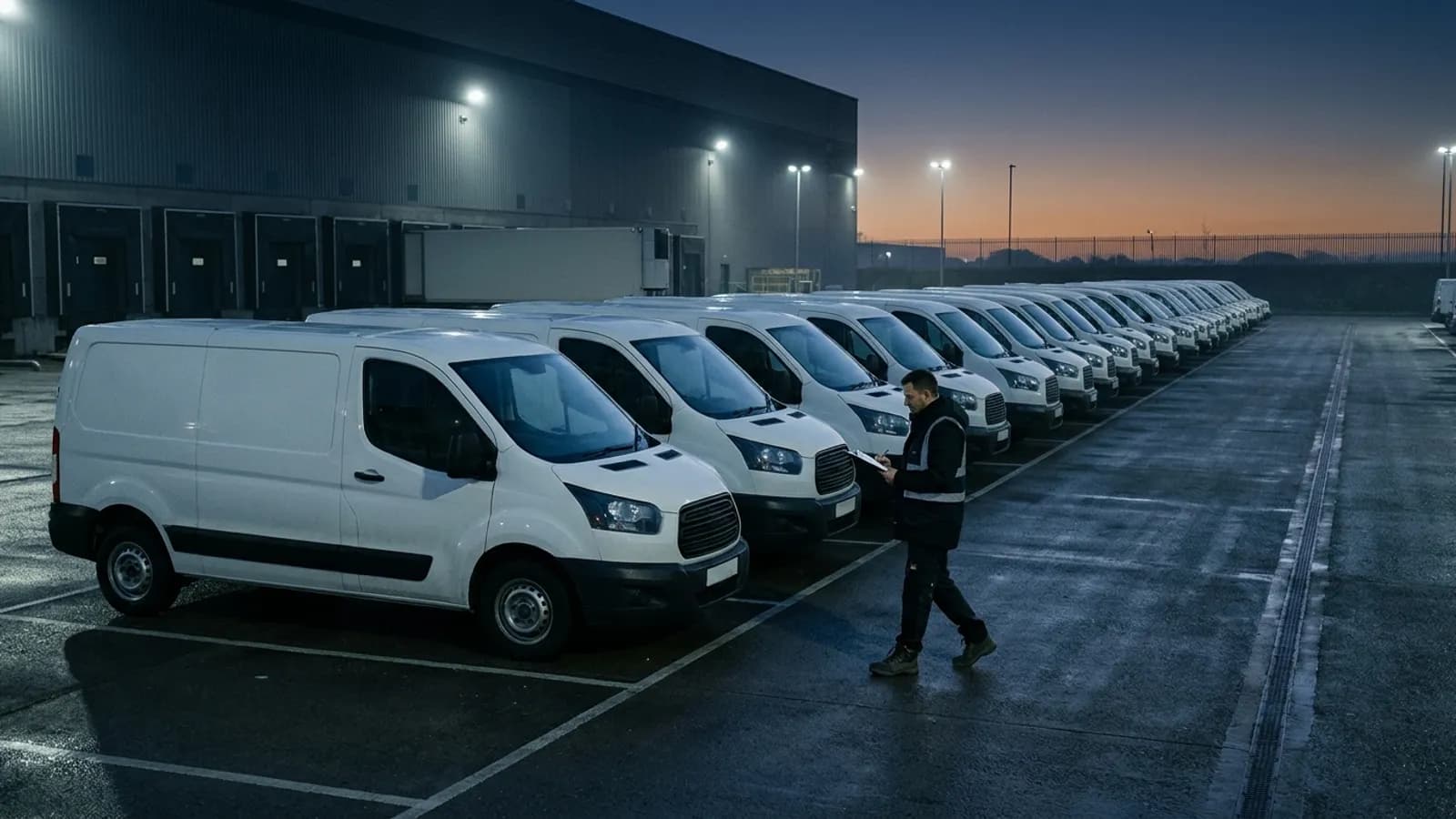
Commercial Auto Insurance: When Your Personal Policy Stops Working
Commercial auto insurance exists because personal policies exclude business use; most small businesses pay $100–$250 per month per vehicle, and HNOA fixes the rest.
Read guide
Workers Comp Insurance: Requirements, Costs, and the Rules Employers Miss
Workers compensation insurance is required in nearly every state; class codes and experience modifiers price a typical small employer at $40–$150 per month.
Read guide
Business Insurance Requirements: What's Legally Required (State by State)
Workers compensation, commercial auto, and license-specific coverage are the legal floor — every other business insurance requirement arrives by contract.
Read guide
How Much Is Business Insurance? Costs by Policy and Business Type
Small business insurance runs $40–$100 per month for general liability and $60–$200 for a BOP, with a small employer's full stack at $150–$600 per month.
Read guide