
Restaurant Insurance: Coverage, Costs, and Requirements
Restaurant insurance bundles a BOP, workers comp, liquor liability, and spoilage coverage, running $150–$350 per month fast-casual and $250–$700 full-service.
Why you can trust this guide
- Written by Daniel Reyes, AINS, former licensed P&C agent — independent insurance education publisher.
- Factual accuracy reviewed and signed off by Marcus Hale, CPCU, AINS, licensed P&C agent (Independent insurance reviewer).
- Every factual claim traces to a regulator, statute, or policy document — sources are listed at the bottom of the page.
- Last verified ; time-sensitive guides are re-checked at least twice a year. Read our editorial policy.
On this page
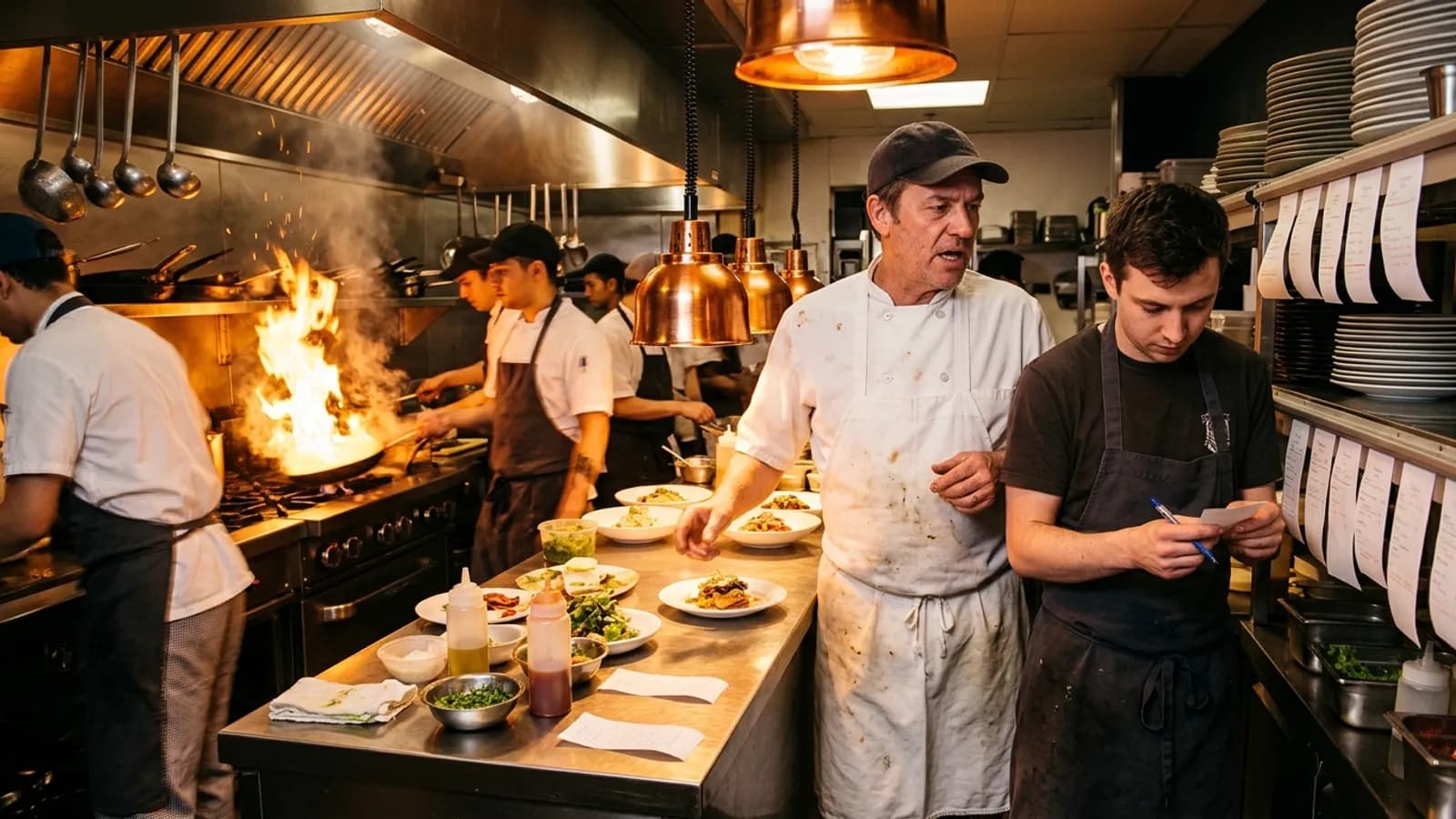
Restaurant insurance is the most coverage-dense small-business stack: BOP, workers compensation, liquor liability, spoilage, contamination, and auto — because kitchens combine fire, injury, alcohol, and perishables. Full-service stacks commonly run $250–$700 per month.
The restaurant stack
Six lines cover the kitchen, the bar, and the parking lot:
| Policy | Covers | Typical monthly cost |
|---|---|---|
| BOP | Building, general liability, business interruption | $120–$300 per month |
| Workers compensation | Employee injuries (burns, cuts, slips) | $2–$6 per $100 of payroll |
| Liquor liability | Over-service claims | $50–$200 per month |
| Spoilage/contamination | Refrigerated inventory plus closure events | $30–$100 per month |
| Commercial auto | Delivery vehicles | $100–$250 per month per vehicle |
| Cyber | POS breaches, payment data | $50–$150 per month |
The restaurant-specific claims
The claims that separate kitchens from general businesses:
- Kitchen fires — the top restaurant property claim; suppression systems and hood-cleaning schedules are the premium levers.
- Slip-and-fall — the general liability staple; floor documentation matters.
- Liquor claims — the over-service DUI that traces to the bar.
- Foodborne illness — contamination coverage answers the outbreak scenario.
- Spoilage — the power outage that kills $8,000 of refrigerated inventory.
The costs by format
Format drives the stack before square footage does:
| Format | Typical stack cost |
|---|---|
| Fast casual (no liquor) | $150–$350 per month |
| Full-service restaurant | $250–$500 per month |
| Bar/nightclub (liquor-heavy) | $400–$900 per month |
| Franchise | Per the franchisor's required schedule |
The kitchen is the workers-comp engine
Workers compensation in restaurants is priced by what the kitchen does: burns from fryers and broilers, lacerations from slicers, slips on wet floors, and lifting injuries from deliveries and kegs. Class codes and rates follow the operation — full-service dining, limited-service, and bars carry different payroll rates — and the experience modifier moves the bill for years after claims. The safety program is both the modifier's steering wheel and the underwriting file: documented knife and slicer training, anti-slip footwear policy, floor-cleaning schedules with wet-floor signage discipline, and incident reports written the same day. A kitchen that logs its safety meetings and near-misses prices measurably below the identical kitchen that does not, and the difference compounds annually through the modifier.
Delivery apps changed the liability map
Third-party delivery restructures restaurant liability in one specific way: when the platform's driver crashes, the driver's and platform's auto liability answers — the restaurant did not employ the driver and does not own the vehicle. What does not change is the restaurant's exposure to the food itself. Temperature abuse, contamination, and allergen errors during delivery remain the kitchen's responsibility, and the packaging standard (sealed, labeled, allergen-marked) is both the claim defense and increasingly the platform's requirement. The contract-level questions to verify once: who is liable between handoff and delivery, does the platform's agreement indemnify the restaurant, and does the policy require delivery operations disclosed. In-house delivery drivers change everything back — that is a commercial auto and workers compensation file.
The power cut at 2 a.m.: spoilage mechanics
The overnight outage is the restaurant's most preventable large loss, and its coverage is a chain of specific terms. Spoilage coverage pays the inventory itself — the walk-in's contents — when the cause is a covered peril or a covered power failure; the off-premises utility failure is commonly excluded from base forms and needs its own endorsement. Equipment breakdown pays the compressor that died trying. Business interruption pays the closed days that follow. Three endorsements, three perils, one event. A restaurant holding $8,000–$15,000 of perishable inventory should price spoilage against that number and verify the utility-failure endorsement explicitly — the base-form exclusion on this peril is the most common surprise in restaurant claims.
Liquor liability: the line standard GL excludes
Serving alcohol changes the liability map, and liquor liability is the line that answers it: the intoxicated patron's DUI, the assault in the parking lot, the claim that traces over-service to the restaurant. Dram-shop statutes in many states make the exposure statutory rather than merely contractual, and some regulators require the coverage as a condition of the license. The service-side protocols that underwrite the coverage: documented server training, refusal logs, and last-call discipline. Bars and late-night venues price the line hardest, which is why the bar and nightclub format carries the tallest stack in the table above.
The franchise and investor insurance schedule
The restaurant that takes investment or signs a franchise agreement inherits an insurance schedule written by someone else's counsel. Franchise disclosure documents specify coverages and limits the franchisee must carry — general liability, property, workers compensation, sometimes liquor and contamination — with certificates due at opening and annually. Investor and lender term sheets add their own lines: property at replacement value with the lender as loss payee, business interruption sized to the debt service, and sometimes key-person coverage on the chef or operator. Reading the schedule before signing beats discovering it in the pre-opening checklist; every line is insurable, but several require lead time. The statutory baseline beneath the schedule is in the requirements guide, and the staffing it assumes prices through the first-employee checklist.
Related guides
The neighboring pages cover the mobile and beverage siblings of the same kitchen risk.
- Food Truck Insurance — the mobile-kitchen stack for trailers, carts, and trucks.
- Bar and Pub Insurance — the liquor-liability-first stack for late-night formats.
- Coffee Shop Insurance — the lighter café stack for beverage-led concepts.
- Business Insurance: The Complete Guide — the hub mapping every coverage type and requirement.
- How Much Is Business Insurance? — monthly cost ranges for every policy line.
- Cyber Insurance for Small Business — the payment-data line behind the POS system.
Sources
Frequently asked questions
How much is restaurant insurance?
A full-service restaurant's stack commonly runs $250–$700 per month: BOP $120–$300, workers comp priced by payroll class, liquor liability where alcohol is served, plus spoilage and contamination extensions. Fast-casual operations without liquor run $150–$350 per month, and liquor-heavy bars run $400–$900.
What insurance does a restaurant need?
The stack: a Business Owners Policy (BOP) covering property, general liability, and business interruption; workers compensation for kitchen staff (legally required with employees); liquor liability where alcohol is served; spoilage and contamination endorsements for refrigerated inventory; commercial auto for owned delivery vehicles; and cyber for payment systems.
Is liquor liability required for restaurants?
In some states yes — dram-shop laws make over-service liability statutory, and some regulators require the coverage with a liquor license. Everywhere, it is the coverage for over-service claims: the intoxicated patron's DUI or assault tracing back to your service. Standard general liability excludes liquor liability, so the endorsement or standalone policy is the only answer.
Does restaurant insurance cover food spoilage?
Only with spoilage coverage — the endorsement pays refrigerated inventory lost to a covered power failure or equipment breakdown. Base forms commonly exclude off-premises utility failures, so the utility-failure endorsement is the boundary to read. A related endorsement, contamination coverage, answers health-department closures and disposal costs.
Does restaurant insurance cover delivery drivers?
It depends who drives. Employees driving restaurant-owned vehicles need commercial auto plus workers compensation. Employees driving their own cars need a hired/non-owned auto endorsement. Third-party platform drivers bring their own auto liability and the platform's coverage — the restaurant's exposure is the food, not the driving. Disclose the delivery model at quoting; it decides the policy structure.
Do food trailers and carts need separate insurance?
Yes — each unit is its own property exposure needing its own auto, physical damage, and liability terms; the brick-and-mortar policy does not automatically follow a trailer. Trailers need towing coverage plus premises coverage while stationary, and carts need general liability plus the venue's certificate. List every unit by serial number at quoting.
How we researched this guide
Business insurance requirements are mostly statutory — workers comp is state law — so our guides separate legal requirements from prudent coverage.
- Workers-comp rules (who must carry, exemptions, monopolistic states) are verified against state statutes and NCCI classifications.
- General liability and BOP coverage mechanics are verified against standard policy forms and SBA guidance.
- Professional-liability explanations distinguish the claims-made trigger and tail options, because that's where businesses get caught.
- Industry examples use realistic claim scenarios published by insurers and courts, and we label estimates as estimates.
Where facts vary by state or insurer, we publish the range and the reason for the variation rather than a single misleading average. We do not sell insurance, take money from insurers for coverage, or publish claim amounts we cannot trace to a source.
Sources
The primary sources behind the facts on this page. Last verified November 10, 2026.
- U.S. Small Business Administration (SBA) — which policies a business legally needs and how to buy them.
- OSHA — Occupational Safety and Health Administration — workplace safety rules that drive workers-compensation obligations.
- NCCI — National Council on Compensation Insurance — workers-comp class codes and rate filings used in most states.
- NAIC — National Association of Insurance Commissioners — model regulations, consumer guides, and industry statistics.
- Find your state insurance regulator (NAIC directory) — every state insurance department — the authority for your state's rules and complaint filing.
- Insurance Information Institute (III) — industry statistics and consumer explainers we cross-check against regulator publications.
Rules that vary by state are verified against the state insurance department's consumer pages — find yours via the NAIC directory above.
Keep reading

Business Insurance: The Complete Guide
Business insurance explained: the general liability, BOP, workers comp, E&O, and commercial auto policies a small business needs — and what each costs per month.
Read guide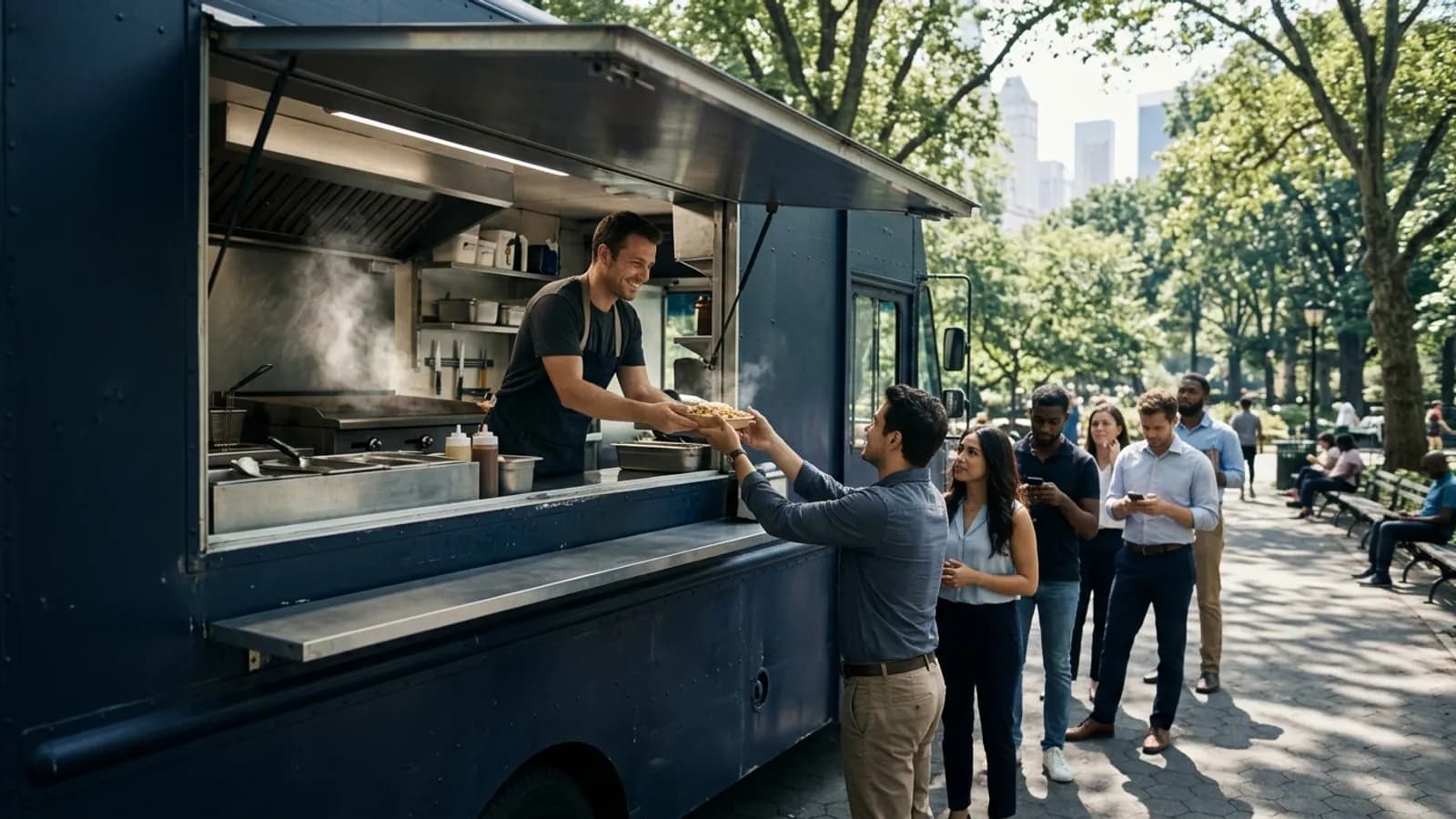
Food Truck Insurance: Coverage for the Mobile Kitchen
Food truck insurance pairs commercial auto for the truck with equipment coverage for the kitchen build-out; most owner-operators pay $200–$500 per month.
Read guide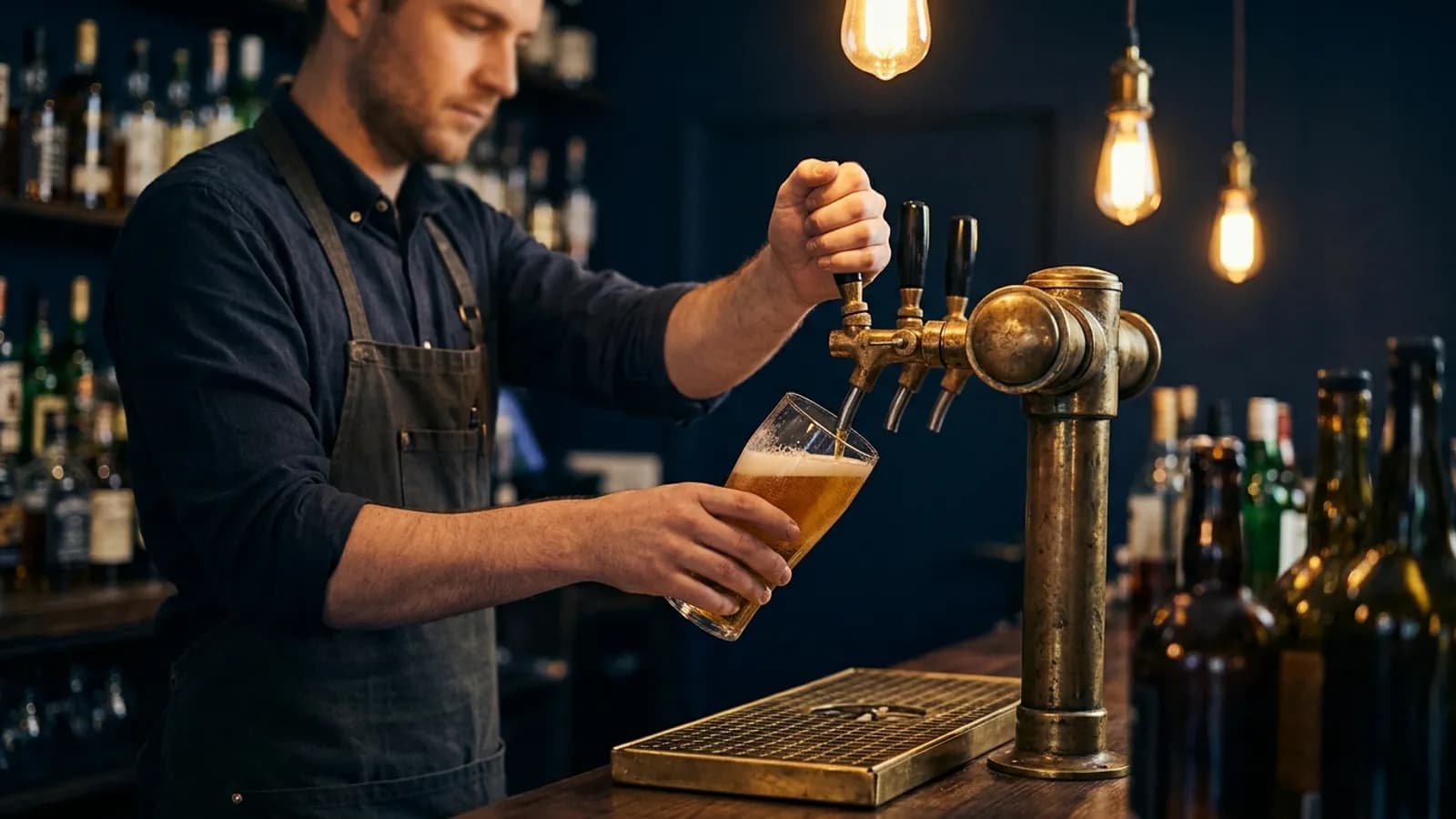
Bar and Pub Insurance: Liquor Liability Is the Whole Game
Bar insurance pairs liquor liability for over-service claims with a BOP, assault-and-battery coverage, and workers comp; most bars pay $300–$900 per month.
Read guide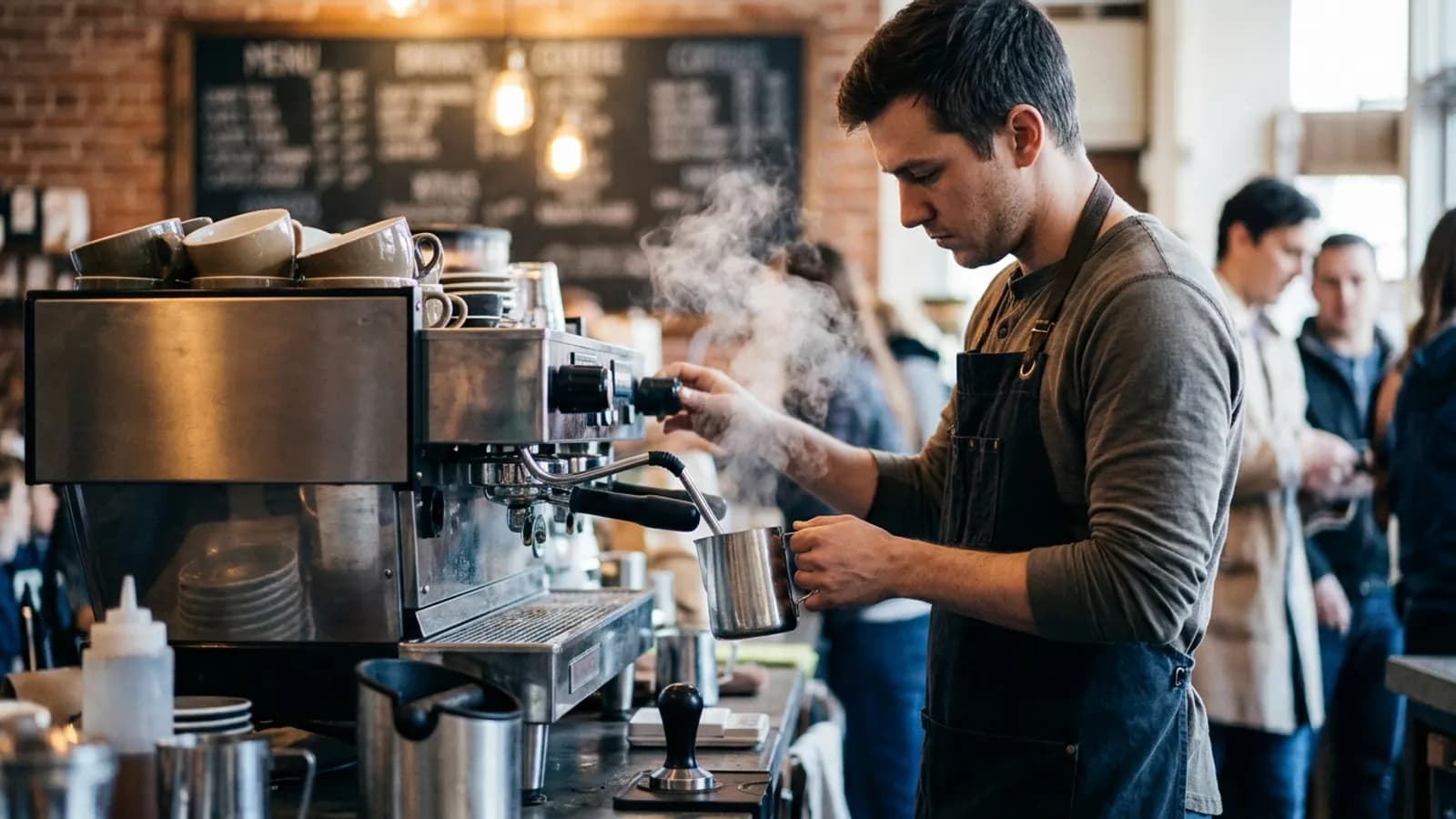
Coffee Shop Insurance: Coverage for Cafés and Roasters
Coffee shop insurance pairs a BOP built around the espresso equipment with spoilage coverage for the milk; most shops pay $80–$250 per month.
Read guide
How Much Is Business Insurance? Costs by Policy and Business Type
Small business insurance runs $40–$100 per month for general liability and $60–$200 for a BOP, with a small employer's full stack at $150–$600 per month.
Read guide
Cyber Insurance for Small Business: What It Covers and What It Costs
Cyber insurance pays breach response, ransomware downtime, and liability for leaked client data; small businesses pay $500–$2,500 per year for $250k–$1M limits.
Read guide