
Videographer and Drone Operator Insurance: Coverage for Motion Work
Videographer and drone operator insurance covers gear, venue liability, Part 107 drone operations, and lost-footage E&O, at $40–$150 per month for the full stack.
Why you can trust this guide
- Written by Daniel Reyes, AINS, former licensed P&C agent — independent insurance education publisher.
- Factual accuracy reviewed and signed off by Marcus Hale, CPCU, AINS, licensed P&C agent (Independent insurance reviewer).
- Every factual claim traces to a regulator, statute, or policy document — sources are listed at the bottom of the page.
- Last verified ; time-sensitive guides are re-checked at least twice a year. Read our editorial policy.
On this page
Videographer insurance is the motion-work stack: the gear (inland marine), the venue liability, the drone (Part 107) operations, and the E&O exposure of the corrupted card. The full stack runs $40–$150 per month, and the drone layer prices separately.
The videographer's stack
Four lines cover the kit, the sets, and the deliverables:
| Policy | Covers | Typical monthly cost |
|---|---|---|
| Equipment (inland marine) | Cameras, drones, gimbals, lighting — worldwide | $20–$70 per month |
| General liability | Venue requirements, set injuries | $20–$50 per month |
| Drone liability | Part 107 operations | $10–$30 per month |
| E&O | Footage loss, missed events | $15–$40 per month |
The videographer-specific claims
The claims that separate motion work from general businesses:
- The stolen kit — the $15,000 bag from the van; equipment coverage answers, auto policies do not.
- The venue incident — the guest injured by the rig; general liability answers, and the certificate proves it.
- The drone incident — the Part 107 liability claim, where the airspace rules matter.
- The corrupted card — the E&O claim, and the dual-recording prevention.
- The data loss — the client footage on the failed drive, at the cyber and E&O boundary.
The drone policy's two halves: hull and liability
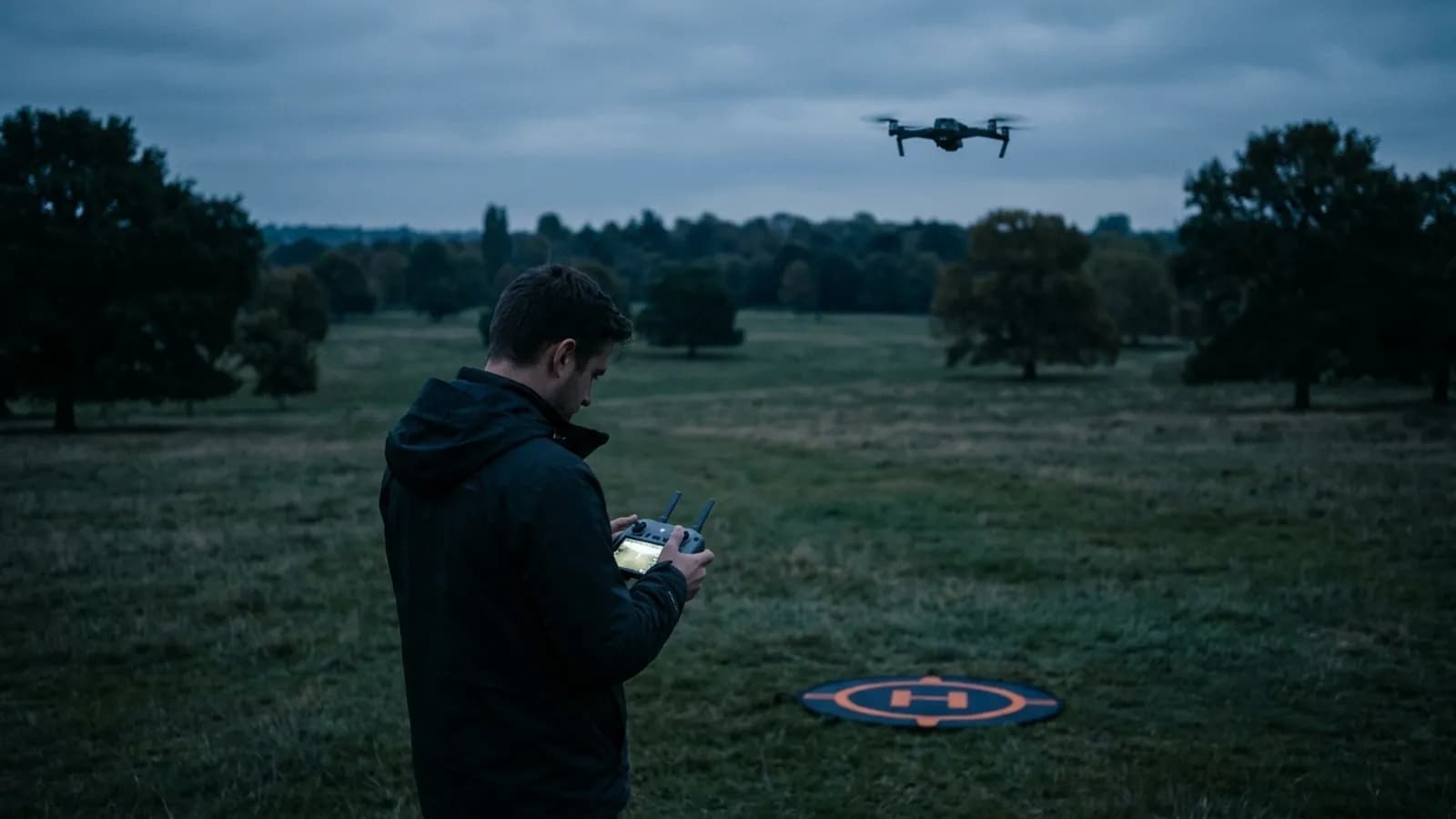
Drone insurance prices two separate exposures on one aircraft. Hull coverage pays the aircraft itself — crash damage, flyaway loss, theft — priced on the drone's value with per-flight or annual structures. Liability coverage pays third-party harm the aircraft causes: property damage, injury, and privacy-adjacent claims where covered, priced on limits (the $1 million/$2 million that venue and client contracts specify) and on the risk profile of operations. The two halves sell separately, and the common mistake is buying hull-only: the aircraft is replaceable, the third-party claim is not. Videographers entering client contracts discover the liability half first — the certificate demands liability limits the client names, with the production company named as additional insured. Liability-only policies for light aircraft commonly run $40–$100 per month.
Part 107 and the underwriting file
Commercial drone work in the United States runs under FAA Part 107: the remote-pilot certificate, aircraft registration, and operating rules — altitude ceilings, daylight and visibility minimums, airspace authorization near controlled airports. Insurers price this file, not just the aircraft: applications ask for certification status, flight hours, operation types (mapping, inspection, cinematography), and whether operations require waivers — night operations, flight over people, beyond-visual-line-of-sight. Waiver-requiring operations price higher, and some are declined by standard markets; specialty carriers handle them. The operational overlap is clean: the Part 107 compliance file, maintenance log, and flight-hour record that satisfy the FAA also satisfy the underwriter — and after an incident, satisfy the adjuster.
Contract clauses for aerial deliverables
Aerial work adds clauses to the standard production contract. The client's side typically demands: liability at $1 million or higher, additional-insured status, proof of pilot certification, and sometimes indemnification for aviation claims. The operator's side should add three clauses of its own. Weather and airspace: who decides when conditions ground the flight. Data retention: what happens to raw footage and how long it is kept. Location access: confirmation that permissions for takeoff and landing sites are secured — property permissions are the client's to secure, and the argument that follows a trespass claim starts there. Privacy-adjacent claims deserve one sentence: liability forms treat privacy differently, and operators flying residential or sensitive sites should verify what their form does and does not answer.
The flight log underwriters and adjusters both want
The drone file that moves premiums and settles claims is the flight log. What it contains per flight: date, location, aircraft, battery cycles, purpose, and any incidents or close calls. What it proves at underwriting: experience, currency, and an operation that maintains equipment on schedule — carriers ask for flight hours and maintenance practice at quoting, and documented logs price below memory-based answers. What it proves at claim time: the aircraft's condition, the flight profile, and the pre-flight check that the exclusion clauses assume. The same file feeds the FAA side: registration numbers, remote-pilot certificate currency, and waiver documentation where operations require them.
The venue certificate and the stills side
Wedding venues, corporate events, and concert halls demand $1 million general liability certificates with additional-insured status — the certificate of insurance that arrives same-day from a proper policy. The uninsured videographer cannot book the venue. Equipment rides on the floater structure the stills side uses, and the deliverable-side exposure — the missed shot, the corrupted card — is professional liability, covered in the E&O guide.
Related guides
The neighboring pages cover the stills-side twin of this stack, the entity structure, and the event season that generates the certificates.
- Photographer Insurance — the stills-side stack: gear schedules, wedding venues, and contract clauses.
- Business Insurance: The Complete Guide — the hub mapping every coverage type a production business touches.
- LLC Insurance — naming the production entity on every policy and certificate.
- Event Planner Insurance — the event-side liability and certificate season that surrounds shoots.
- How Much Is Business Insurance? — monthly cost ranges for each policy line.
- Does Renters Insurance Cover Drones? — when the aircraft exclusion applies to hobby drones.
Sources
Frequently asked questions
What insurance does a videographer need?
The stack: equipment coverage for cameras, drones, gimbals, and lighting (working kits run $10,000–$80,000), general liability at the $1 million limit venues demand, drone liability for Part 107 operations, and errors and omissions (E&O) for corrupted footage and missed events. The full stack commonly prices at $40–$150 per month.
Does videographer insurance cover drone operations?
Only through drone-specific liability — standard general liability excludes aviation. Part 107 commercial operations need an explicit drone liability policy or rider, priced on limits and flight profile; the aircraft itself claims under the equipment floater or a hull policy. Disclose operations over people and night work at quoting, since waiver-requiring operations price differently.
What does E&O cover for videographers?
The professional-exposure claims: corrupted footage, the missed event, the audio failure on a one-take interview, data loss before delivery. E&O pays defense and settlements for negligence claims about the work product. Dual-recording cameras, on-site backups, and a 3-2-1 archive are the claim prevention, and carriers increasingly ask about backup practice at underwriting.
Do venues require videographer insurance?
Yes — wedding venues, corporate clients, and concert halls routinely demand $1 million general liability certificates naming them as additional insured before granting access. The certificate comes from the policy, usually same-day. An uninsured videographer cannot book most professional venues, which makes the GL line a revenue requirement, not an option.
Do I need drone insurance for a sub-250-gram drone?
Yes, if the drone flies paid work. Weight exempts recreational aircraft from FAA registration, but commercial operations still run under Part 107 rules, and liability does not scale with mass — a small drone through a car window is a real claim. Liability-only policies for light aircraft commonly run $40–$100 per month.
Does drone insurance cover flying over people?
Usually not automatically. Operations over people are an FAA-waiver activity and a separate pricing question; some standard forms exclude overflight of crowds entirely, and specialty carriers cover it with conditions on event type, distances, and spotters. If the job includes concerts, races, or festivals, disclose it at quoting rather than after the incident.
How we researched this guide
Business insurance requirements are mostly statutory — workers comp is state law — so our guides separate legal requirements from prudent coverage.
- Workers-comp rules (who must carry, exemptions, monopolistic states) are verified against state statutes and NCCI classifications.
- General liability and BOP coverage mechanics are verified against standard policy forms and SBA guidance.
- Professional-liability explanations distinguish the claims-made trigger and tail options, because that's where businesses get caught.
- Industry examples use realistic claim scenarios published by insurers and courts, and we label estimates as estimates.
Where facts vary by state or insurer, we publish the range and the reason for the variation rather than a single misleading average. We do not sell insurance, take money from insurers for coverage, or publish claim amounts we cannot trace to a source.
Sources
The primary sources behind the facts on this page. Last verified November 10, 2026.
- U.S. Small Business Administration (SBA) — which policies a business legally needs and how to buy them.
- OSHA — Occupational Safety and Health Administration — workplace safety rules that drive workers-compensation obligations.
- NCCI — National Council on Compensation Insurance — workers-comp class codes and rate filings used in most states.
- NAIC — National Association of Insurance Commissioners — model regulations, consumer guides, and industry statistics.
- Find your state insurance regulator (NAIC directory) — every state insurance department — the authority for your state's rules and complaint filing.
- Insurance Information Institute (III) — industry statistics and consumer explainers we cross-check against regulator publications.
Rules that vary by state are verified against the state insurance department's consumer pages — find yours via the NAIC directory above.
Keep reading
Photographer Insurance: Coverage for Cameras, Weddings, and Clients
Photographer insurance covers the gear (inland marine), the venue liability, and the missed-wedding exposure (E&O), commonly $30–$120 per month for the full stack.
Read guide
Business Insurance: The Complete Guide
Business insurance explained: the general liability, BOP, workers comp, E&O, and commercial auto policies a small business needs — and what each costs per month.
Read guide
LLC Insurance: What Coverage Your Company Actually Needs
LLC insurance covers what the liability shield does not — your own negligence, uninsured claims — starting at $40–$100 per month for general liability.
Read guide
How Much Is Business Insurance? Costs by Policy and Business Type
Small business insurance runs $40–$100 per month for general liability and $60–$200 for a BOP, with a small employer's full stack at $150–$600 per month.
Read guide
Event Planner Insurance: Coverage for Weddings, Galas, and Corporate Events
Event planner insurance is a venue-driven stack: $1M–$2M liability, planning-error coverage, and per-event cancellation; annual stacks run $500–$3,000.
Read guideWhat Is an Additional Insured?
An additional insured is a party added to your policy — a client, landlord, or GC — that receives coverage for claims arising from your work, usually at no extra cost.
Read guide