
Does Car Insurance Cover Flood Damage?
Flood damage claims under comprehensive coverage — hydro-locked engines, flooded interiors, storm surge — and liability-only policies pay none of it.
Why you can trust this guide
- Written by Daniel Reyes, AINS, former licensed P&C agent — independent insurance education publisher.
- Factual accuracy reviewed and signed off by Marcus Hale, CPCU, AINS, licensed P&C agent (Independent insurance reviewer).
- Every factual claim traces to a regulator, statute, or policy document — sources are listed at the bottom of the page.
- Last verified ; time-sensitive guides are re-checked at least twice a year. Read our editorial policy.
On this page
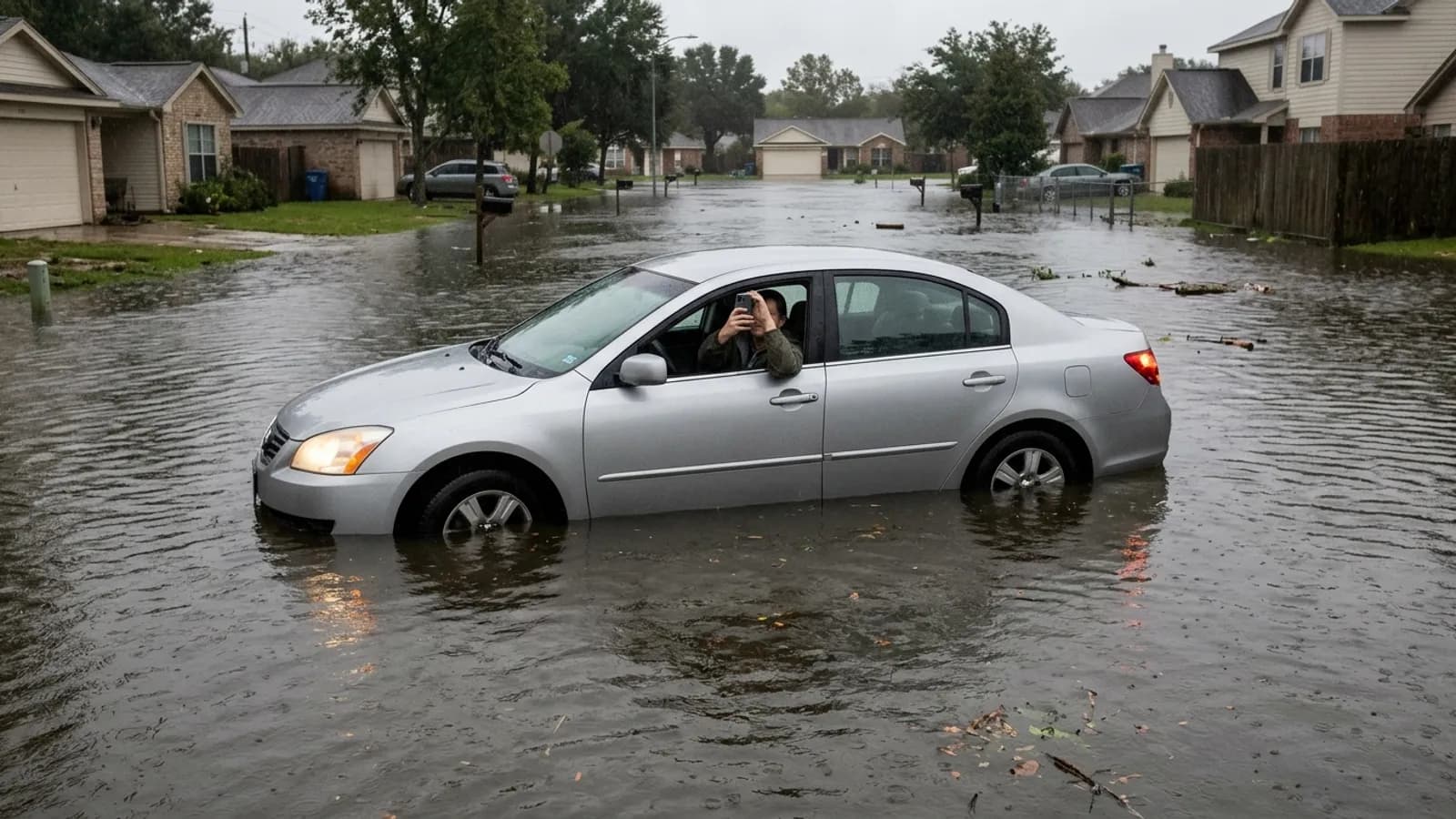
Yes — flood damage to a car claims under comprehensive insurance: the hydro-locked engine, the flooded interior, the totaled submerged car. Liability-only policies cover none of it, and water totals cars faster than crashes because contamination makes repairs uneconomical.
Why water writes off cars faster than crashes do
Flood claims convert to total losses at a rate crashes never match, and the reason is contamination economics. Worked example: a $19,000 car sits in a flooded underpass with water reaching the seat rails. The visible damage — interior extraction, carpeting, door panels — runs $4,000–$6,000. The invisible damage is what kills the claim: wiring harnesses, control modules, sensors, and connectors corrode progressively after the water recedes, and modern cars carry dozens of modules behind the kick panels. The repair estimate commonly crosses $10,000–$14,000, past the total-loss threshold on a $19,000 car — so the settlement becomes actual cash value minus the comprehensive deductible, and the car gets a flood-brand salvage title.
This is also the coverage line that punishes the liability-only decision: a liability-only policy pays exactly nothing in the same underpass. The peril line that pays is defined in the comprehensive guide.
| Scenario | Covered? | Why | | | --- | --- | | Flash flood swallows the parked car overnight | Yes — comprehensive | Flood is a covered peril | | Hydro-locked engine after driving through an underpass | Yes — comprehensive | Sudden, accidental water entry | | Drove around barricades into deep water | Contested | Negligence argument against "sudden and accidental" | | Hurricane storm surge in a beach parking lot | Yes — comprehensive | No hurricane deductible on auto policies | | Flood damage on a liability-only policy | No | Liability pays others' damage only | | Water damage on a rebuilt flood car | Often declined | Prior water ambiguity; reduced agreed value where offered |
The flooded-car protocol
- Do not start the engine — starting a hydro-locked engine converts a repairable entry into a destroyed bottom end.
- Photograph the water line on the car before the water recedes — the claim is evidence-sized.
- Report the claim the same day, with the location and the photos; the adjuster wants the water evidence fresh.
- Follow the adjuster's mitigation steps — extraction and drying on the insurer's direction, not the owner's improvisation.
Salvage titles, rebuilt cars, and insuring a flood car afterward
A flood-total claim ends with a branded title, and the brand changes everything downstream. Most carriers write liability on a rebuilt flood car. Many decline comprehensive and collision on it, because prior water damage makes future claims ambiguous. The carriers that do offer physical damage commonly price it at a reduced agreed value.
The purchase-side protection: NMVTIS and the title brand expose the history before the purchase, and an inspection that pulls a door panel or checks the trunk drains for silt lines catches what the paper trail misses. Buying a flood-damaged car without disclosure is a title-fraud matter against the seller, not an insurance claim — no policy undoes the purchase. The checklist that catches all of this is the used-car insurance checklist, and the title brand is the first item on it.
The storm-season prep that changes the claim
Flood claims are won or lost on preparation hours, not claim hours. The pre-season checklist: confirm comprehensive is active on every household car — the liability-only decision is the uncovered one — and check the comprehensive deductible, because a $1,000 deductible on a $9,000 car eats 11% of any settlement. Photograph each car's condition before the season, because the actual-cash-value fight after a flood is evidence-sized.
The during-flood rules: never drive through standing water — the claim may pay, but the total loss still happens — and never start a flood-soaked engine, which converts a $2,000 repair into a $9,000 one. Drivers in the storm belt should also read the hail damage guide, because one storm season produces both perils, and the engine-damage causal line is the engine failure guide.
Quick answer: does car insurance cover flood damage?
Yes — comprehensive covers flood damage fully: soaked interiors, flooded electronics, and the hydrolocked engine. Liability-only policies pay nothing.
- One deductible per event — the interior, electronics, and engine are one comprehensive claim, not several.
- Totaled-out at actual cash value — flooded cars are frequently total losses because electronics and mechanics rarely dry out cleanly; the payout is ACV minus deductible.
- Gap coverage matters here — on a financed car, the loan balance can exceed ACV on a flooded total, and gap insurance pays the difference.
- Driving into standing water is still comprehensive on most forms — the peril is the flood, not the choice of road.
The trap: liability-only policies in hurricane-exposed states. The peril is among the most expensive a car meets, and it rides entirely on the comprehensive line.
What the claim pays, priced
Flood repairs commonly run $5,000–$12,000 when the car is salvageable (drying, electronics, modules, interior) and total-loss payouts apply ACV minus deductible when it is not — the common outcome in hurricane events. Salvage-title flooded cars resell at steep discounts; buying one transfers the risk the policy already paid once. The flood damage guide walks the claim mechanics and the dry-out realities.
Related guides
The neighboring questions are the sibling storm peril, the engine-damage line flood triggers, and the used-car purchase that flood titles complicate.
- What Is a Total Loss? — the threshold the $10,000–$14,000 estimate crossed.
- What Is Gap Insurance? — the loan balance a flood total can leave behind.
- What Is Actual Cash Value (ACV)? — the valuation the settlement subtracts the deductible from.
- Car Insurance in Florida — the storm state where flood totals concentrate.
- Car Insurance: The Complete Guide — the hub for coverage structures and costs.
Sources
Frequently asked questions
Is my flooded car covered if I only have liability insurance?
No — flood damage is a comprehensive peril, and a liability-only policy covers damage the driver causes to others, never the driver's own car. Every flood-total claim in a liability-only household is a self-funded loss, which is why drivers in flood-prone areas keep comprehensive on older cars.
Does car insurance cover storm surge flooding at the beach?
Yes — comprehensive covers storm-surge damage the same as any flood, and the auto policy has no hurricane deductible; that concept belongs to home insurance. Comprehensive pays actual cash value minus the deductible, with the same total-loss math that applies to any submerged car.
Does insurance cover driving through a flooded street?
Comprehensive covers a hydro-locked engine and water damage as sudden, accidental events — though driving into visibly deep water or around barricades invites a negligence argument. The policy's duty of care applies, and the water-line photographs decide the close cases, so document before the water recedes.
What if I bought a flood-damaged car without knowing?
That is a title-fraud and disclosure matter against the seller, not an insurance claim — document the damage, pull the NMVTIS report, and pursue it through the dealer, the state attorney general, or small-claims court. Insurance does not undo the purchase; the title check and inspection are the prevention.
Can I insure a car that was previously flooded?
Yes for liability — most carriers write it on a rebuilt flood car. Comprehensive and collision are the hard part: many carriers decline them because prior water damage makes future claims ambiguous, and the carriers that do offer physical damage commonly price it at a reduced agreed value.
How we researched this guide
Car insurance pricing is set per driver, per ZIP code — so our guides anchor on regulator and industry statistics and explain the factors, not a fake exact price.
- Premium ranges are anchored to NAIC statewide average-expenditure data, the most complete public dataset on what drivers actually pay per state.
- State minimum-coverage requirements are checked against each state's motor-vehicle financial-responsibility statute and the state insurance department's consumer pages.
- What a coverage actually pays for is verified against policy declarations and specimen forms, not marketing copy.
- Discount and surcharge rules cite the state DOI consumer bulletin where each state regulates them differently — for example credit-based insurance scores, which most states permit but a few ban.
Where facts vary by state or insurer, we publish the range and the reason for the variation rather than a single misleading average. We do not sell insurance, take money from insurers for coverage, or publish claim amounts we cannot trace to a source.
Sources
The primary sources behind the facts on this page. Last verified November 17, 2026.
- IIHS — Insurance Institute for Highway Safety — crash-test data, vehicle loss statistics, and safety-feature research.
- NHTSA — National Highway Traffic Safety Administration — recalls, crash data, and state traffic-safety requirements.
- FMCSA — Federal Motor Carrier Safety Administration — commercial vehicle and carrier insurance requirements.
- NAIC — National Association of Insurance Commissioners — model regulations, consumer guides, and industry statistics.
- Find your state insurance regulator (NAIC directory) — every state insurance department — the authority for your state's rules and complaint filing.
- Insurance Information Institute (III) — industry statistics and consumer explainers we cross-check against regulator publications.
Rules that vary by state are verified against the state insurance department's consumer pages — find yours via the NAIC directory above.
Keep reading
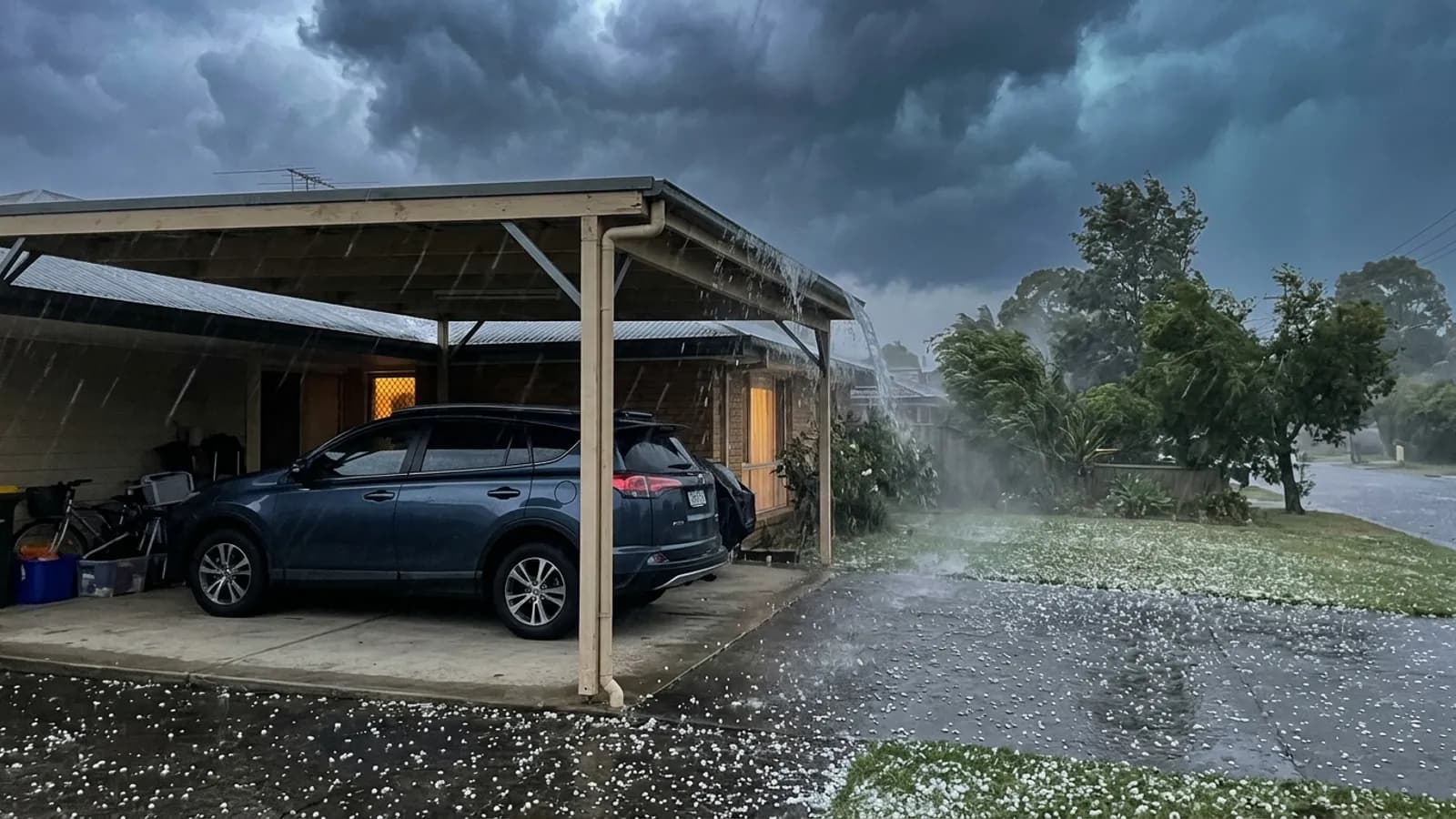
What Is Comprehensive Car Insurance? Coverage and Cost
Comprehensive car insurance pays for non-crash damage — theft, fire, hail, flood, falling objects, vandalism, animal strikes — commonly $100–$300 per year.
Read guide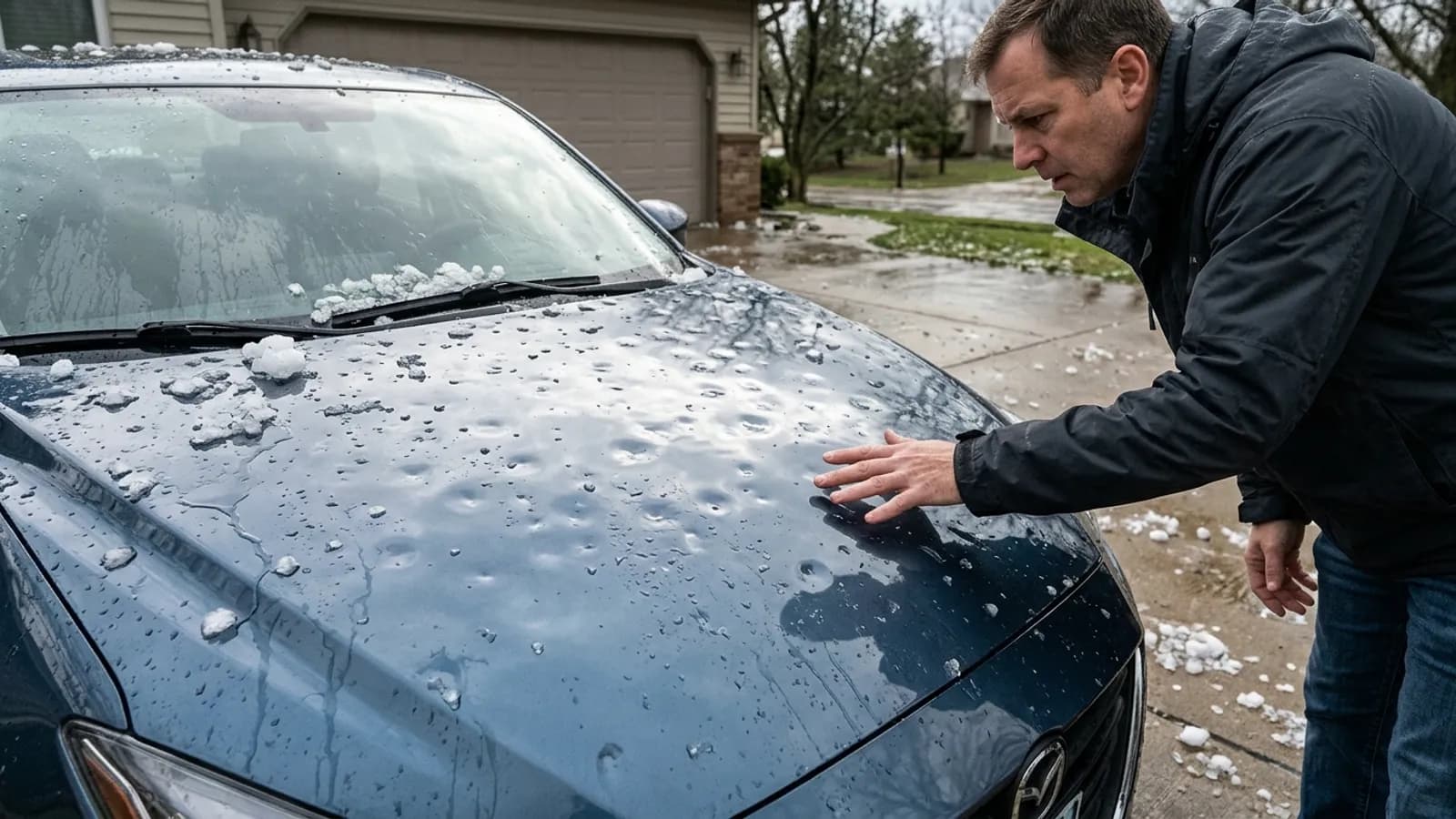
Does Car Insurance Cover Hail Damage?
Hail damage claims under comprehensive coverage — dents, broken glass, storm totals — and liability-only policies cover none of it. PDR and deductibles explained.
Read guide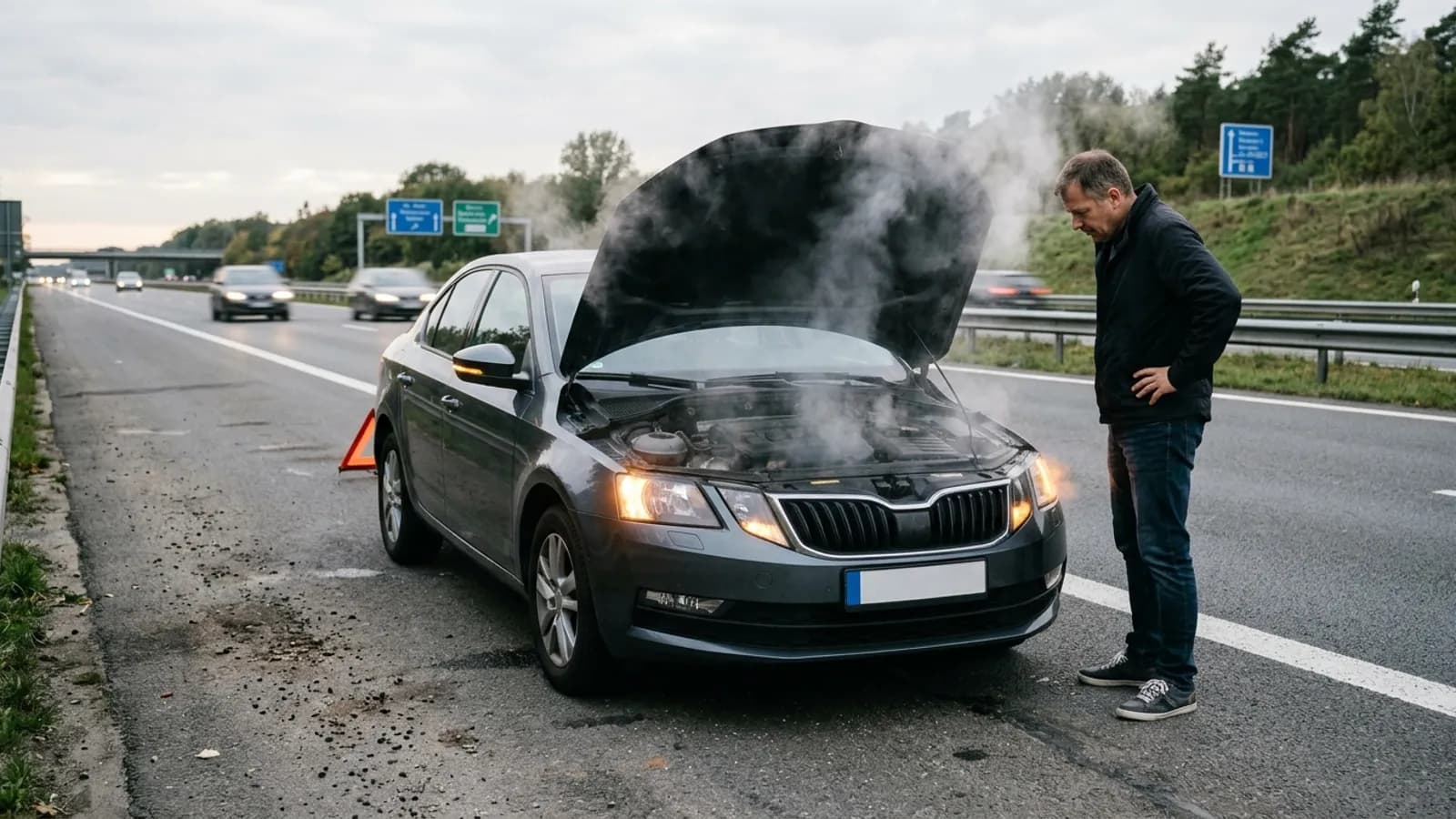
Does Car Insurance Cover Engine Failure?
Car insurance does not cover wear-and-tear engine failure — but engine damage from a covered peril such as flood, fire, or a crash is claimable.
Read guide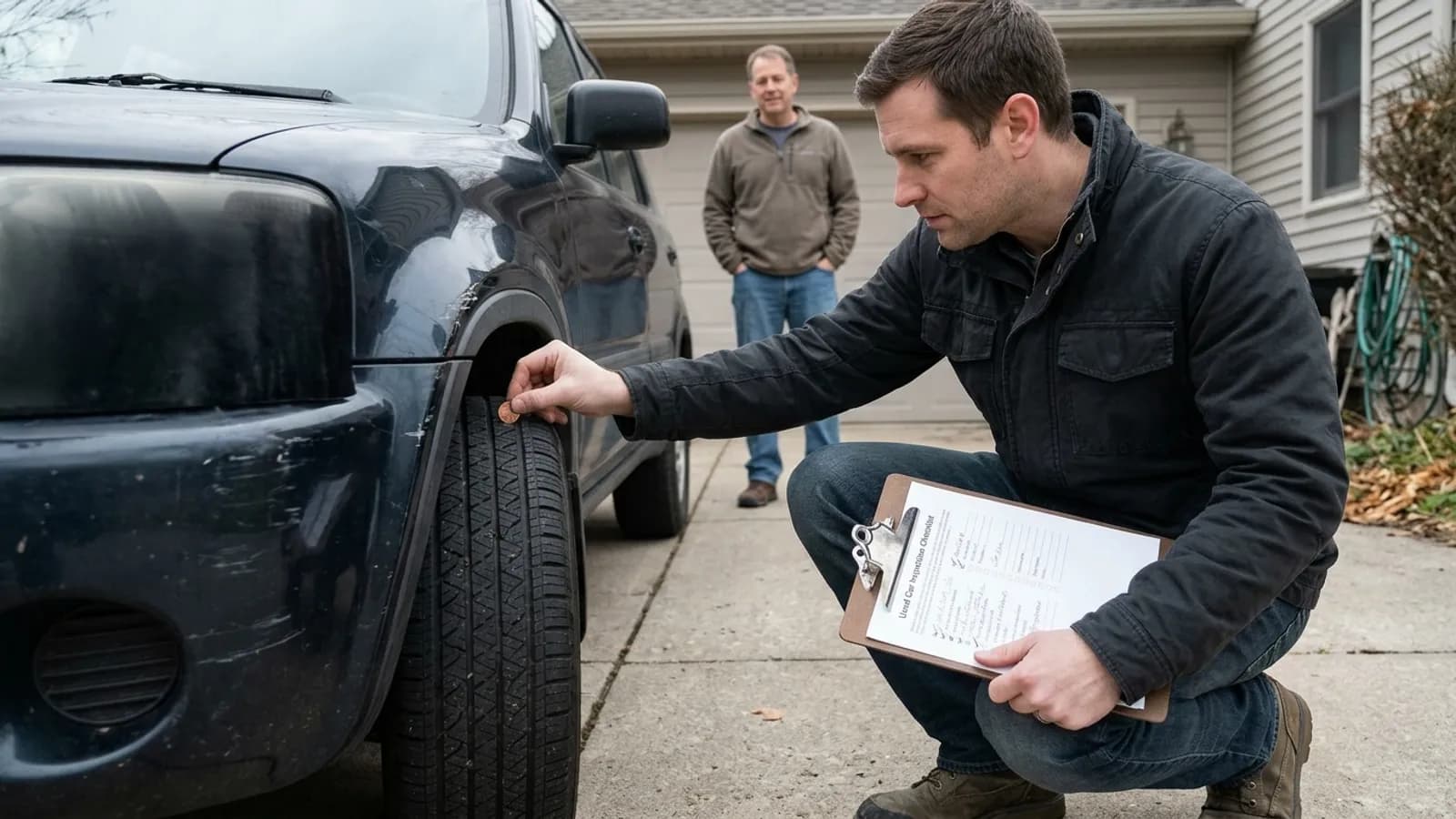
Buying a Used Car: Insurance Checklist
The used-car insurance checklist: quote the VIN before buying, run the ten-times rule on comp and collision, check title brands, and configure coverage day one.
Read guideWhat Is Salvage in Insurance?
Salvage is the damaged property an insurer takes after paying a total-loss claim — sold at auction to recover part of the payment.
Read guide