
Glossary
What Is Salvage in Insurance?
Salvage is the damaged property an insurer takes ownership of after paying a total-loss claim — the wrecked vehicle, the fire-damaged goods — which the insurer then sells at auction to recover part of the payment. The policyholder can often buy the salvage back at a reduced settlement, with a branded title and repair obligations attached.
How it works
The salvage line appears only when the claim is a total loss — when repair costs approach or pass the vehicle's actual cash value, against state total-loss thresholds commonly set at 70–100% of ACV. The settlement math runs both ways: payout equals full ACV minus the deductible when the carrier takes the property, and ACV minus the deductible minus the salvage value when the policyholder keeps it. The carrier sells retained salvage through auction networks, and the proceeds credit the claim file — one reason total-loss offers move when auction values move.
After a vehicle total loss, the state motor vehicle agency brands the title salvage, and returning the car to the road requires a salvage-to-rebuilt inspection. Property claims run the same structure with contents: the carrier may retain fire-damaged goods, flood-soaked materials, or debris with residual value, deducting that value when the policyholder retains them. Subrogation files carry salvage credits too — recovered equipment sold after a paid claim offsets the carrier's outlay, a mechanics note that sits inside the subrogation process. The valuation sheet the policyholder signs lists every one of these lines; gap insurance interacts with the same settlement when a loan balance exceeds the ACV.
Typical values
| Parameter | Typical range |
|---|---|
| State total-loss thresholds | 70–100% of actual cash value |
| Salvage auction value (vehicle) | Roughly 15–25% of pre-loss ACV |
| Buy-back structure | ACV minus deductible minus salvage value |
| Salvage-title resale discount | Commonly 20–40% below clean-title comparables |
| Rebuilt status | State inspection required before road use |
Salvage vs salvage title
Salvage is the damaged property itself — whatever remains of a totaled car, a flooded home's contents, or a burned structure that the carrier recovers value from. A salvage title is the state branding placed on the vehicle document after a total loss. One is the claim asset the auction network prices; the other is the ownership record that follows the vehicle, discounting its resale 20–40% against clean-title comparables and requiring a rebuilt inspection to clear. For the value loss on vehicles that are repaired instead of totaled, see diminished value.
Worked example
A 2019 sedan takes $19,500 in flood damage. Its actual cash value is $21,000 — 78% of pre-loss value, above the state's 75% total-loss threshold — so the claim is a total loss. The carrier pays $21,000 minus the $500 deductible, takes the car, and sells it at salvage auction for $4,200. The owner's buy-back option: retain the flooded car for $3,500, a salvage title, and a state rebuilt inspection before road use — a rebuild-and-drive decision that prices the repairs against the $21,000 replacement. Personal property comes out first either way: the transponder, the remotes, the documents leave before the title transfers.
Related guides
Salvage sits at the end of the total-loss workflow — the guides around it cover what comes before and after.
- Buying a Used Car: Insurance Checklist — how to read a rebuilt-salvage history before you buy it.
- What Is an Insurance Settlement? — how the valuation sheet's numbers become the payment.
- Home Insurance Claims Guide — the property-claim flow where salvage and debris decisions appear.
- Car Insurance: The Complete Guide — where total-loss and salvage rules fit the auto coverage picture.
Sources
- National Association of Insurance Commissioners (NAIC) — Total loss and salvage title standards
- Insurance Information Institute (III.org) — After a total loss settlement
Frequently asked questions
Is salvage value always deducted from a total-loss settlement?
No — the deduction applies only when you keep the damaged property. If the carrier retains the vehicle or contents and sells them, you receive full actual cash value with no salvage subtraction. The total-loss valuation sheet shows both numbers, and the choice is yours before settlement documents are signed.
Does a salvage title change what insurance pays later?
Yes — carriers commonly value salvage-title vehicles lower because the branded history suppresses market value, and some limit coverage types or pay against a stated value. Comprehensive and collision remain available from many carriers, but the total-loss valuation starts from the lower branded-title market.
Can I keep my totaled car?
Often, yes — the insurer deducts the salvage value from the settlement, the title brands as salvage, and the retained vehicle needs a state inspection to rebrand as rebuilt before road use. The math works when the buy-back price plus repairs undercuts the replacement cost, and fails when hidden damage surfaces.
What happens to personal property inside a totaled car?
It is your property, not salvage — remove toll transponders, garage remotes, chargers, and documents before the carrier takes the vehicle. After title transfer, recovering items means negotiating with the salvage yard. Property claims work the same way: document contents before the carrier retains or disposes of them.
Related guides
What Is a Total Loss?
A total loss is declared when repair costs plus salvage approach the car's actual cash value — thresholds run 70–100% — and the insurer pays ACV minus deductible.
Read guideWhat Is Actual Cash Value (ACV)?
Actual cash value (ACV) pays replacement cost minus depreciation — used value, not new. The cheaper premium option pays smaller claims on contents, roofs, and cars.
Read guideWhat Is Gap Insurance?
Gap insurance pays the difference between a totaled car's actual cash value (ACV) and your loan or lease balance — the depreciation gap collision never covers.
Read guideWhat Is Subrogation?
Subrogation is your insurer's right to recover its claim payment from the party at fault — paying you first, then pursuing the responsible side's insurer.
Read guide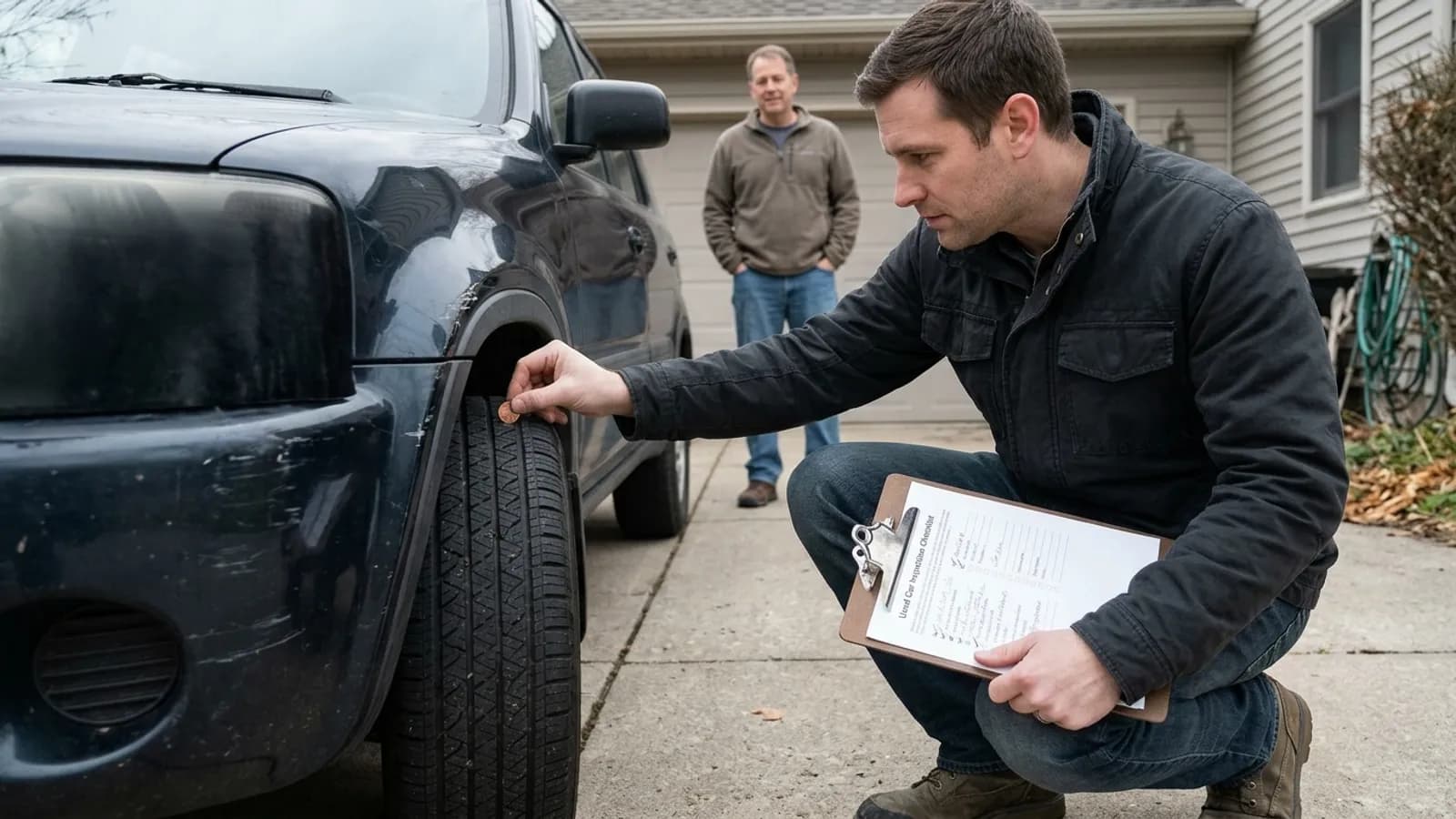
Buying a Used Car: Insurance Checklist
The used-car insurance checklist: quote the VIN before buying, run the ten-times rule on comp and collision, check title brands, and configure coverage day one.
Read guide← Back to the full insurance glossary
Sources
The primary sources behind the facts on this page. Last verified November 10, 2026.
- HealthCare.gov Glossary — official ACA definitions for health-coverage terms.
- Insurance Information Institute (III) — property & casualty term definitions cross-checked against policy forms.
- NAIC consumer resources — regulator-authored guides and glossaries for each line of insurance.
Rules that vary by state are verified against the state insurance department's consumer pages — find yours via the NAIC directory above.