
What Is Comprehensive Car Insurance? Coverage and Cost
Comprehensive car insurance pays for non-crash damage — theft, fire, hail, flood, falling objects, vandalism, animal strikes — commonly $100–$300 per year.
Why you can trust this guide
- Written by Daniel Reyes, AINS, former licensed P&C agent — independent insurance education publisher.
- Factual accuracy reviewed and signed off by Marcus Hale, CPCU, AINS, licensed P&C agent (Independent insurance reviewer).
- Every factual claim traces to a regulator, statute, or policy document — sources are listed at the bottom of the page.
- Last verified ; time-sensitive guides are re-checked at least twice a year. Read our editorial policy.
On this page
Comprehensive car insurance pays for damage to your car from events that are not crashes — theft, fire, hail, flood, falling objects, vandalism, and collisions with animals. It pays your car's actual cash value minus your comprehensive deductible. State law never requires it; lenders do, on financed vehicles.
What comprehensive covers
- Theft of the vehicle, and vandalism such as keying, broken windows, or stripped parts
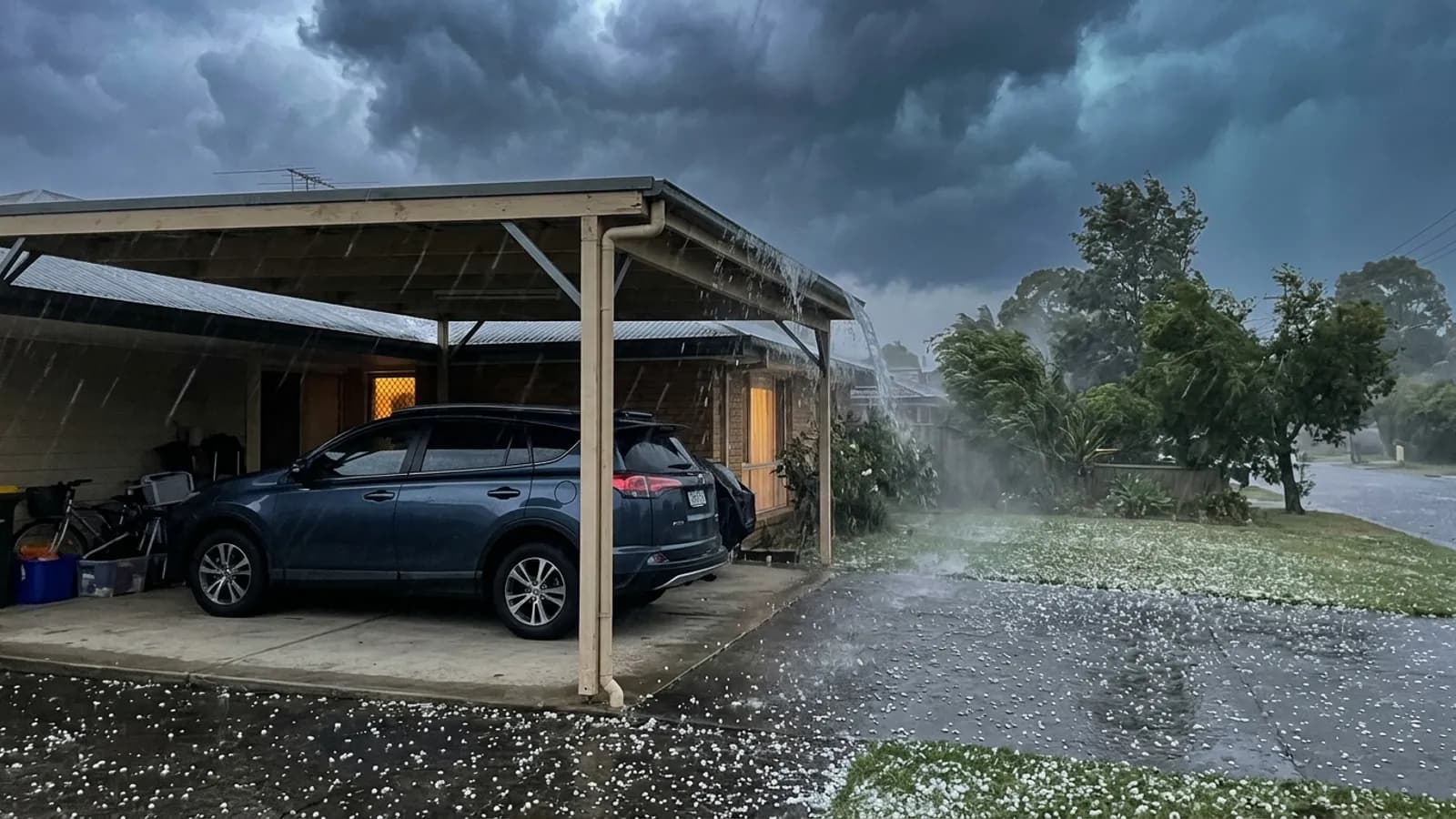
- Weather: hail, flood, hurricane, tornado, lightning
- Fire and explosions
- Falling objects: tree limbs, construction debris
- Animal collisions — deer strikes above all; the deer was "moving but not a vehicle," so it lands in comprehensive (the claim details are in the animal collision guide)
- Glass damage, including windshields
- Riots and civil disturbances
What it does not cover
- Crash damage — that is collision coverage
- The car's contents (laptops, tools) — those fall to home or renters insurance in many cases
- Mechanical failure, rust, wear and tear
- Personal items stolen from the car (separate claim under property insurance)
- Medical bills or liability for others
Comprehensive vs collision at a glance
| Scenario | Covered by | | | --- | | Hail shatters the windshield | Comprehensive | | You back into a pole | Collision | | Car stolen from a parking garage | Comprehensive | | You rear-end another car | Collision (yours) + liability (theirs) | | Deer runs into the road and you hit it | Comprehensive | | You swerve to miss a deer and hit a tree | Collision | | Floodwater totals the car | Comprehensive |
The swerve rule confuses people: the moment your car strikes something, it is collision, even if an animal caused the swerve.
What it costs
Comprehensive is the cheaper half of the physical-damage pair — commonly $100–$300 per year, versus $300–$900 per year for collision, because theft and weather losses are smaller and less frequent than crash losses. Deductibles commonly run $0–$1,000; a higher deductible lowers the premium.
Pricing also tracks local risk: comprehensive costs more where hail, hurricanes, or vehicle theft are common, and some insurers use separate glass deductibles in hail states. The cost guide shows where the line sits inside a full premium.
When to keep it — and when to drop it
Keep comprehensive while:
- The car is financed or leased (required)
- The car's value is more than a few years of the premium
- You live in hail, flood, or high-theft areas
- A $0-deductible glass option is cheap where you drive
Reconsider when an older car's value no longer justifies the premium (see the full coverage guide for the ten-times rule of thumb). One nuance: comprehensive often outlives collision in value on cheap older cars, because theft and glass losses do not scale down with the car's price as fast as crash-repair payouts do.
Filing a comprehensive claim
- Report theft to the police first (insurers require a report number).
- Document damage with photos before moving the car.
- Prevent further damage (tarp a broken window) — policies require reasonable mitigation.
- File promptly; the insurer pays actual cash value minus your deductible, either to you or the lender.
The theft claim: what the payout actually covers
A stolen-car claim pays the car, and only the car — the boundary is where theft claims surprise people. Comprehensive pays the vehicle's actual cash value minus your deductible, to you or the lienholder. It does not pay the laptop, gym bag, or tools inside — those are personal property claimed under a homeowners or renters policy, and a $700 laptop against a renters deductible is often self-funded (the mechanics are in the renters insurance guide). It does not automatically cover aftermarket wheels or an audio build — those ride under the custom-equipment endorsement. And it does not pay the loan balance if it exceeds the ACV — the year-one theft on a lightly-financed car is the classic upside-down scenario, which is the gap insurance question. The claim prerequisites: a police report number (insurers require it) and prompt notice; most policies also hold a short recovery window before paying the full ACV settlement.
Glass, hail, and the separate glass deductible
Glass is comprehensive's most-used line, and it carries its own pricing logic. Many policies offer a separate glass deductible — commonly $0 on full-glass options — so a windshield claim never dents the main comprehensive deductible; Florida, Kentucky, and South Carolina mandate $0 windshield replacement by law, with the claim mechanics in the windshield guide. Hail is the other half of the pair: one storm produces thousands of simultaneous claims, which means catastrophe processing — mobile adjusters, longer queues, and often a single blanket settlement for a dented hood, roof, and doors (the claim specifics are in the hail damage guide). Two checks before storm season: whether the glass deductible is $0 or shared, and whether weather claims are excluded from surcharge calculations in your state — most carriers exclude them, which is why a hail claim prices the renewal far milder than a crash claim of the same dollar size.
The ACV fight on a weather or theft total
Weather and theft totals are where the actual-cash-value number gets argued, because the peril is sudden but the valuation is not. The insurer's valuation report prices the car by model, mileage, and condition; the owner's counters are the same in every total: recent comparable listings in the region, documented maintenance and recent tires or brakes, option packages the report missed (a trim level, AWD, a tow package), and condition photographs. Those moves commonly lift an offer several hundred to a couple thousand dollars. Two structural notes sharpen the negotiation: salvage retention — if you want to keep the wreck, the payout reduces by the car's salvage value and the car carries a salvage title; and the new-car-replacement endorsement — on newer cars, many policies pay for a brand-new equivalent during the first one to two years or a mileage window, which ends the ACV argument entirely. The collision guide covers the same total-loss fork from the crash side.
Related guides
Comprehensive is one half of the physical-damage pair and the coverage behind the weather and theft claims — these pages carry the rest.
- Does Car Insurance Cover Flood Damage? — how flood claims pay, and what the flood title means for coverage.
- Average Cost of Car Insurance in 2026 — the national and state baselines your quote should beat, with the factor table.
- What Is Actual Cash Value (ACV)? — the depreciated-value formula every physical-damage payout starts from.
- What Is Comprehensive Coverage? — the non-crash peril coverage, defined.
- Car Insurance: The Complete Guide — the coverage structures, state rules, and savings levers every other page builds on.
Sources
Frequently asked questions
What does comprehensive car insurance cover?
Comprehensive covers damage to your car from events other than collisions: theft and vandalism, fire, hail, flood, wind, falling trees and objects, animal collisions such as deer strikes, and broken or shattered glass. It pays the car's actual cash value minus your comprehensive deductible.
Is hitting a deer comprehensive or collision?
Hitting a deer or other animal is covered under comprehensive insurance, not collision, in almost all policies — which matters because the two coverages can carry different deductibles. Hitting a stationary object like a pole or guardrail, or swerving and crashing, is collision.
Is comprehensive insurance required?
No state requires comprehensive coverage. Lenders and leasing companies require it on financed vehicles until the loan or lease ends. After that it is optional — worth keeping while the car's value justifies the premium, and worth re-evaluating every renewal.
Does comprehensive insurance cover windshield replacement?
Yes, glass damage falls under comprehensive. Several states — including Florida, Kentucky, and South Carolina — require insurers to offer full glass coverage with no deductible, and many other insurers offer a separate low- or zero-deductible glass option worth adding in hail-prone areas.
What happens if my stolen car is recovered after the claim is paid?
Tell the insurer immediately — the settlement terms decide. If the payout finalized and title transferred, the insurer keeps the recovered car; if recovery happened during the policy's waiting period, the claim converts to damage repair under comprehensive. Never dispose of a recovered car without the carrier's direction.
Does comprehensive insurance cover a laptop stolen from my car?
No — comprehensive covers the vehicle and factory-attached equipment. Personal belongings are personal property under a homeowners or renters policy, subject to its deductible and electronics sub-limits. One break-in can generate two claims: the broken window (auto) and the stolen bag (home or renters).
How we researched this guide
Car insurance pricing is set per driver, per ZIP code — so our guides anchor on regulator and industry statistics and explain the factors, not a fake exact price.
- Premium ranges are anchored to NAIC statewide average-expenditure data, the most complete public dataset on what drivers actually pay per state.
- State minimum-coverage requirements are checked against each state's motor-vehicle financial-responsibility statute and the state insurance department's consumer pages.
- What a coverage actually pays for is verified against policy declarations and specimen forms, not marketing copy.
- Discount and surcharge rules cite the state DOI consumer bulletin where each state regulates them differently — for example credit-based insurance scores, which most states permit but a few ban.
Where facts vary by state or insurer, we publish the range and the reason for the variation rather than a single misleading average. We do not sell insurance, take money from insurers for coverage, or publish claim amounts we cannot trace to a source.
Sources
The primary sources behind the facts on this page. Last verified November 10, 2026.
- IIHS — Insurance Institute for Highway Safety — crash-test data, vehicle loss statistics, and safety-feature research.
- NHTSA — National Highway Traffic Safety Administration — recalls, crash data, and state traffic-safety requirements.
- FMCSA — Federal Motor Carrier Safety Administration — commercial vehicle and carrier insurance requirements.
- NAIC — National Association of Insurance Commissioners — model regulations, consumer guides, and industry statistics.
- Find your state insurance regulator (NAIC directory) — every state insurance department — the authority for your state's rules and complaint filing.
- Insurance Information Institute (III) — industry statistics and consumer explainers we cross-check against regulator publications.
Rules that vary by state are verified against the state insurance department's consumer pages — find yours via the NAIC directory above.
Keep reading
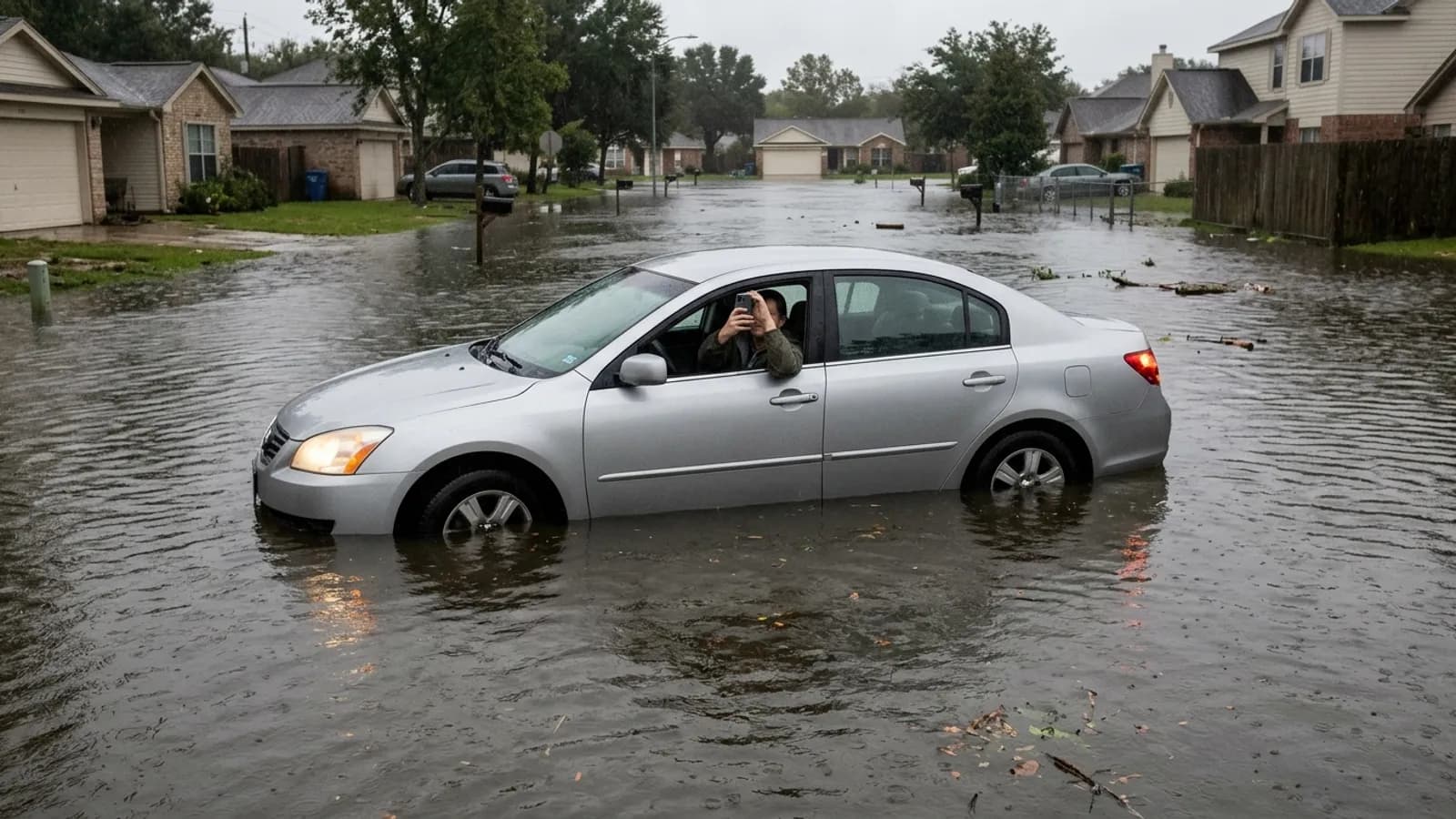
Does Car Insurance Cover Flood Damage?
Flood damage claims under comprehensive coverage — hydro-locked engines, flooded interiors, storm surge — and liability-only policies pay none of it.
Read guide
Average Cost of Car Insurance in 2026
Full coverage car insurance averages roughly $1,500–$2,500 per year and minimum liability $400–$900 per year nationally — age, state, and record swing the number.
Read guideWhat Is Actual Cash Value (ACV)?
Actual cash value (ACV) pays replacement cost minus depreciation — used value, not new. The cheaper premium option pays smaller claims on contents, roofs, and cars.
Read guideWhat Is Comprehensive Coverage?
Comprehensive coverage pays for non-crash damage to your car — theft, fire, hail, flood, animal strikes, glass — minus your deductible.
Read guide
Car Insurance: The Complete Guide
Car insurance bundles liability, collision, comprehensive, and medical coverage — this guide explains state minimums, full coverage, and how to lower the premium.
Read guide