
Does Car Insurance Cover Windshield Repair?
Windshield damage claims under comprehensive coverage — chip repairs are often free, and Florida, Kentucky, and South Carolina mandate $0-deductible replacement.
Why you can trust this guide
- Written by Daniel Reyes, AINS, former licensed P&C agent — independent insurance education publisher.
- Factual accuracy reviewed and signed off by Marcus Hale, CPCU, AINS, licensed P&C agent (Independent insurance reviewer).
- Every factual claim traces to a regulator, statute, or policy document — sources are listed at the bottom of the page.
- Last verified ; time-sensitive guides are re-checked at least twice a year. Read our editorial policy.

On this page
Yes — windshield damage claims under comprehensive car insurance, and in Florida, Kentucky, and South Carolina the law requires full glass coverage with no deductible. Elsewhere, most insurers sell low- or zero-deductible glass options, and chip repairs are often free.
Repair versus replacement: the claim split
Windshield claims split at the size of the damage, and the split decides both the cost and the deductible. The repair path: chips and short cracks — commonly under a credit-card width and outside the driver's direct line of sight — get resin injection, a 30-minute fix that commonly prices $100–$300, and many insurers waive the deductible entirely on repairs, because a $150 repair is cheaper than a $600 replacement. The replacement path: cracks crossing the glass, damage in the driver's sight line, or edge cracks that spread — a full replacement commonly prices $300–$1,200, and the glass deductible applies unless the state or policy provides full glass coverage.
Florida, Kentucky, and South Carolina mandate $0-deductible windshield replacement by law, several other states and carriers sell $0 glass options for a few dollars per month, and the peril line that pays is defined in the comprehensive coverage guide. The claim-day rule: a chip repaired within days stays a repair; the same chip driven on for a month becomes a crack across the glass.
| Damage | Claim path | Typical cost | Deductible | | | --- | --- | --- | | Chip under credit-card width, outside sight line | Repair (resin injection) | $100–$300 | Often waived | | Crack across the glass or edge crack | Full replacement | $300–$1,200 | Glass deductible; $0 in FL, KY, SC | | Cracked windshield plus hail dents | Glass claim plus dents claim | Both paths | Glass deductible, then comprehensive | | Replacement on a camera-equipped car | Replacement plus recalibration | +$150–$500 | Same glass deductible |
ADAS recalibration: the line item that doubles the bill
Modern windshields are sensor mounts, and the recalibration is where replacement quotes double. The camera behind the glass feeds lane-keep, automatic braking, and adaptive cruise; replace the windshield and the camera's aim changes. Static recalibration — targets in a controlled bay — and dynamic recalibration — a drive cycle on marked roads — commonly add $150–$500 to the job, and skipping it is not an option, because the driver-assist systems misjudge distances on a mis-aimed camera.
The insurance answer: recalibration is part of a proper replacement and claims through the same glass coverage. Insist that the invoice itemizes it and keep the calibration certificate, because the certificate is what a future claim or a car-sale inspection asks for. The shop choice matters here: insurer glass networks certify calibration-capable shops, and an independent shop without the equipment subcontracts the calibration anyway. This is also why a windshield replacement that cost $350 in 2015 prices at $900 now — the glass got cheaper, and the electronics behind it did not.
Mobile glass, OEM glass, and the quality question
The remaining windshield questions are quality questions, and each has a practical answer. OEM versus aftermarket glass: aftermarket glass is common, cheaper, and legally acceptable in most states; OEM glass fits and matches exactly, and some insurers sell an OEM-glass option for newer cars — the factory-versus-aftermarket boundary is the aftermarket parts guide. The quality risks to check are leaks and wind noise from poor adhesive work, and optical distortion from substandard glass — both show up at highway speed, and both are warranty items against the installer.
Mobile installation is standard and convenient, but the adhesive cure time matters: drive too soon and the glass can shift, so the installer's cure-time instruction is a safety instruction. The claim mechanics tie together: file through the insurer's glass network or any shop the policyholder chooses, the glass deductible applies per the policy, and the recalibration certificate rides with the invoice. Storm-belt drivers should read the hail damage guide — one hailstorm is a windshield claim and a dents claim at once, and Florida drivers hold the strongest glass rights of any state.
Quick answer: does car insurance cover windshield repair?
Yes — comprehensive typically covers both windshield repair and replacement. Liability-only pays nothing, and a handful of states — including Florida and Kentucky — require insurers to offer zero-deductible glass coverage.
- Repair versus replacement is the claim split — chip repairs commonly run $100–$400 and carriers often waive the deductible to encourage them; replacements run $700–$2,000+.
- ADAS recalibration is the line item that doubles the replacement bill — camera-equipped cars need it after glass work; the windshield guide covers the mechanics.
- Full-glass states change the math — zero-deductible glass coverage in those states makes small glass claims free.
- Small claims versus the discount — one glass claim rarely breaks a claims-free discount, but repeated ones can; the math lives below.
The trap: replacing out of pocket in a full-glass state. The coverage exists and the state law may make it free.
What the claim pays, priced
A chip repair costs $100–$400 and many carriers pay it with no deductible; a windshield replacement runs $700–$2,000+ with ADAS recalibration added, minus the comprehensive deductible — unless a full-glass state or a zero-deductible glass endorsement drops it to zero. The decision math: one replacement claim typically costs less in discount impact than the out-of-pocket bill, while repeated claims erode the claims-free discount that the how to lower car insurance guide prices.
Related guides
The neighboring questions are the dents claim from the same storm, the factory-versus-aftermarket glass line, and the coverage that pays both.
- What Is Comprehensive Coverage? — the glossary definition behind glass claims.
- What Is a Deductible Waiver? — the mechanic behind $0-deductible glass.
- What Is a Deductible? — the share a standard glass claim subtracts.
- Car Insurance in Arizona — a market where $0-deductible glass options are common.
- Car Insurance: The Complete Guide — the hub for coverage structures and state rules.
Sources
Frequently asked questions
Is windshield replacement covered with no deductible?
In Florida, Kentucky, and South Carolina, yes by law — comprehensive policies there include full glass coverage for windshield replacement. Elsewhere, the $0-deductible glass option costs a few dollars per month and pays for itself on the first replacement, which is why glass-belt drivers buy it.
Will a windshield claim raise my rates?
Glass-only claims are the mildest claims — many insurers do not surcharge them at all, and some states prohibit glass-claim surcharges. The renewal effect is smaller than a comprehensive claim of the same dollar size, and far smaller than a collision claim.
Will insurance cover the camera calibration after windshield replacement?
Yes — recalibration of the ADAS sensors behind the glass is part of a proper replacement and claims through the same glass coverage, adding $150–$500 to the job. Insist that the invoice itemizes the calibration and keep the calibration certificate with the vehicle records.
Can I choose my own glass shop for a windshield claim?
Yes — the choice of glass shop is the policyholder's in every state, as with collision repairs. Insurer glass networks offer convenience and calibration guarantees but are optional; an independent shop should provide OEM-equivalent glass on request and a recalibration certificate.
Will a chip repair show up as a claim on my insurance record?
Yes, technically — a paid repair is a claim, though many insurers process small glass repairs without touching the renewal price, and some states bar glass-claim surcharges. If the repair is free under a $0 glass benefit, ask whether it files as a claim at all before proceeding.
How we researched this guide
Car insurance pricing is set per driver, per ZIP code — so our guides anchor on regulator and industry statistics and explain the factors, not a fake exact price.
- Premium ranges are anchored to NAIC statewide average-expenditure data, the most complete public dataset on what drivers actually pay per state.
- State minimum-coverage requirements are checked against each state's motor-vehicle financial-responsibility statute and the state insurance department's consumer pages.
- What a coverage actually pays for is verified against policy declarations and specimen forms, not marketing copy.
- Discount and surcharge rules cite the state DOI consumer bulletin where each state regulates them differently — for example credit-based insurance scores, which most states permit but a few ban.
Where facts vary by state or insurer, we publish the range and the reason for the variation rather than a single misleading average. We do not sell insurance, take money from insurers for coverage, or publish claim amounts we cannot trace to a source.
Sources
The primary sources behind the facts on this page. Last verified November 17, 2026.
- IIHS — Insurance Institute for Highway Safety — crash-test data, vehicle loss statistics, and safety-feature research.
- NHTSA — National Highway Traffic Safety Administration — recalls, crash data, and state traffic-safety requirements.
- FMCSA — Federal Motor Carrier Safety Administration — commercial vehicle and carrier insurance requirements.
- NAIC — National Association of Insurance Commissioners — model regulations, consumer guides, and industry statistics.
- Find your state insurance regulator (NAIC directory) — every state insurance department — the authority for your state's rules and complaint filing.
- Insurance Information Institute (III) — industry statistics and consumer explainers we cross-check against regulator publications.
Rules that vary by state are verified against the state insurance department's consumer pages — find yours via the NAIC directory above.
Keep reading
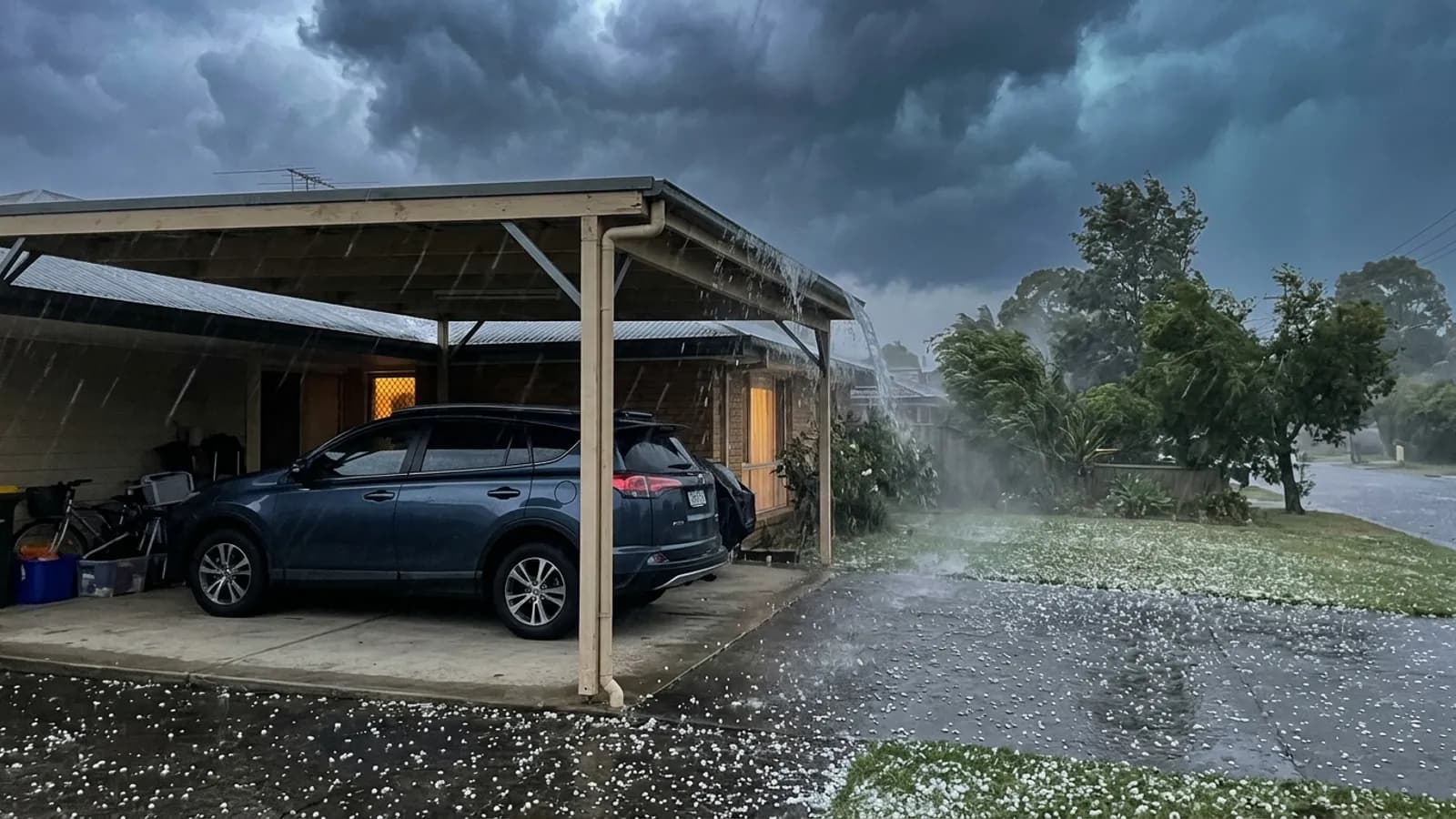
What Is Comprehensive Car Insurance? Coverage and Cost
Comprehensive car insurance pays for non-crash damage — theft, fire, hail, flood, falling objects, vandalism, animal strikes — commonly $100–$300 per year.
Read guide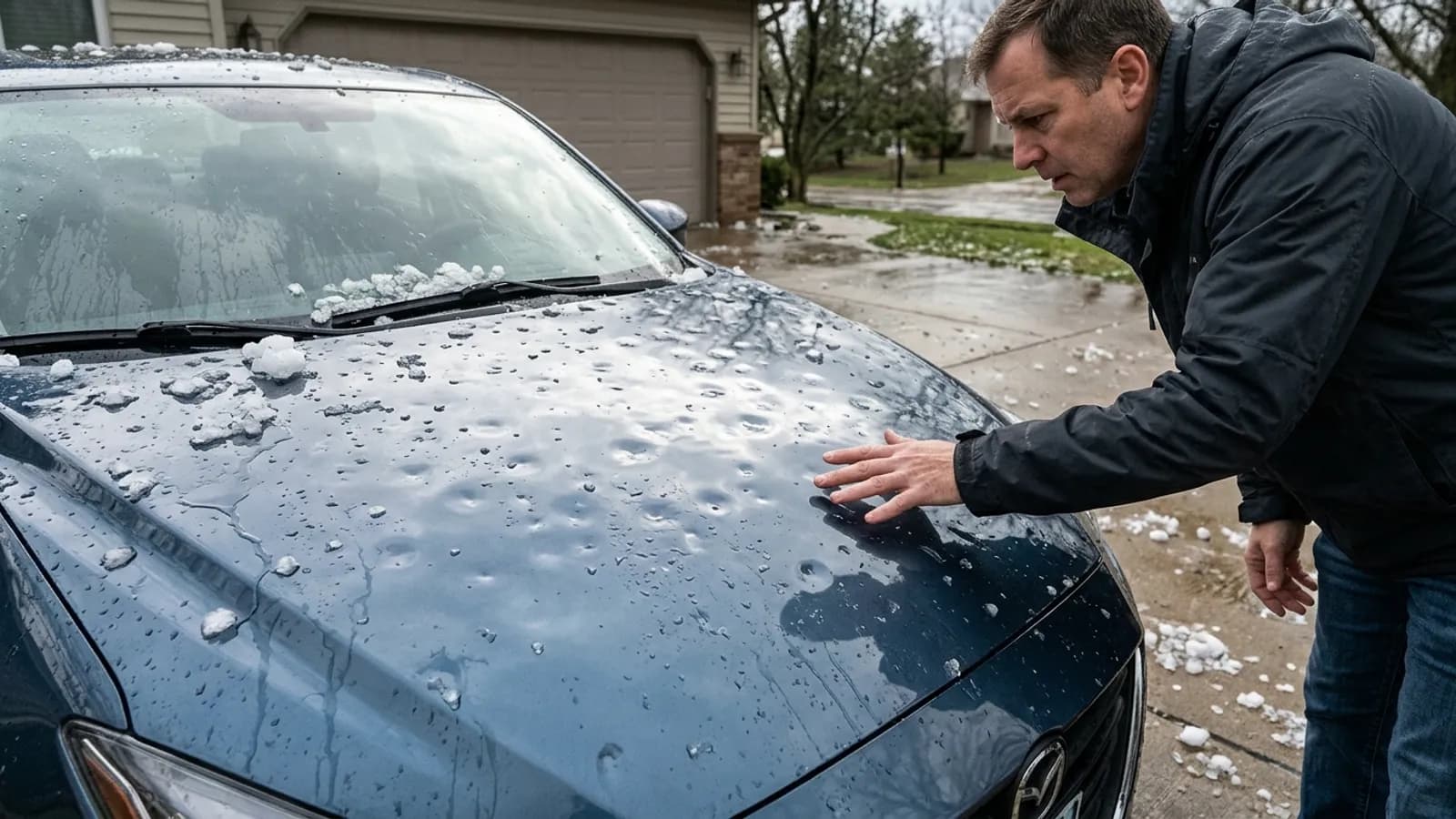
Does Car Insurance Cover Hail Damage?
Hail damage claims under comprehensive coverage — dents, broken glass, storm totals — and liability-only policies cover none of it. PDR and deductibles explained.
Read guide
Does Car Insurance Cover Aftermarket Parts?
Standard policies pay factory-equivalent parts and cap or exclude aftermarket mods — a custom parts and equipment endorsement covers declared upgrades.
Read guide
Car Insurance in Florida: No-Fault Rules, Costs, and the PIP Quirk
Florida car insurance commonly runs $2,200–$3,500+ per year for full coverage. A thin PIP-only minimum, high uninsured rates, and hurricanes drive the price.
Read guideWhat Is Comprehensive Coverage?
Comprehensive coverage pays for non-crash damage to your car — theft, fire, hail, flood, animal strikes, glass — minus your deductible.
Read guide