
Does Car Insurance Cover Aftermarket Parts?
Standard policies pay factory-equivalent parts and cap or exclude aftermarket mods — a custom parts and equipment endorsement covers declared upgrades.
Why you can trust this guide
- Written by Daniel Reyes, AINS, former licensed P&C agent — independent insurance education publisher.
- Factual accuracy reviewed and signed off by Marcus Hale, CPCU, AINS, licensed P&C agent (Independent insurance reviewer).
- Every factual claim traces to a regulator, statute, or policy document — sources are listed at the bottom of the page.
- Last verified ; time-sensitive guides are re-checked at least twice a year. Read our editorial policy.
On this page
Standard car insurance pays to restore a car with factory-equivalent parts — aftermarket upgrades are capped, excluded, or paid only at factory-equivalent value unless a custom parts and equipment (CPE) endorsement covers them. The CPE endorsement adds $1,000–$10,000 of declared coverage for wheels, audio, wraps, and performance parts.
How the standard settlement treats non-factory parts
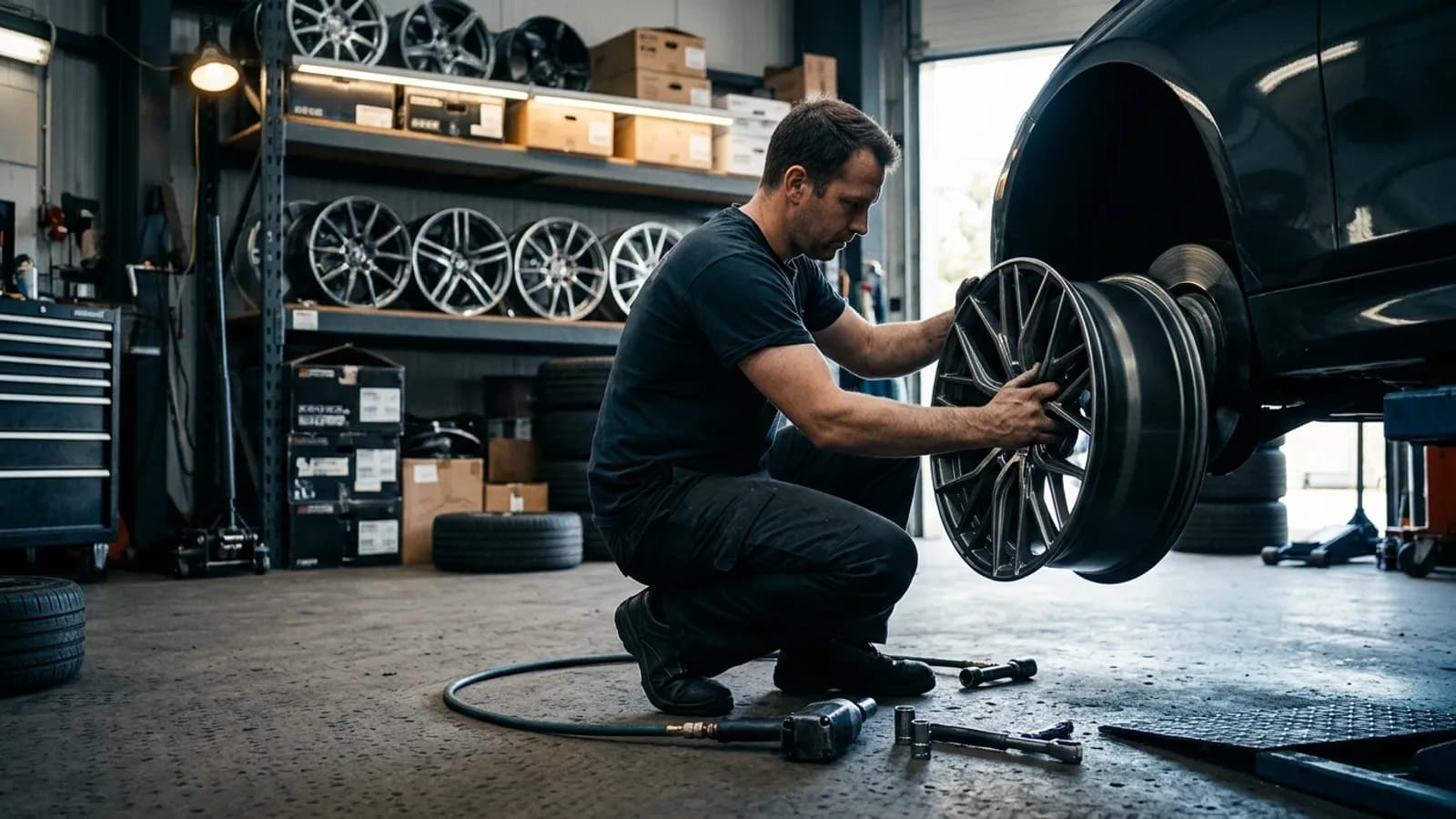
The default rule in physical-damage settlements: the policy pays to restore the car to its pre-loss condition using factory-equivalent parts — not to replace the upgrades. In practice, a damaged aftermarket wheel gets a factory-spec alloy, a burned-out aftermarket head unit gets basic OEM-equivalent value, and anything above that lands in a gray zone the adjuster resolves by policy language.
Some insurers add a small allowance for permanently attached accessories, commonly a few hundred dollars. Some exclude custom parts entirely. OEM-plus upgrades that improve on factory spec — better brakes, upgraded suspension — sometimes ride along as replacement parts. The settlement is also capped by the car's book value: $4,000 of wheels on a $9,000 car cannot push the payout above what the whole car is worth, because the actual cash value ceiling governs the claim.
| Scenario | Covered by the standard policy? | The fix | | | --- | --- | | Factory-installed performance package | Yes — part of the car's value | None needed | | Damaged aftermarket wheel or audio | Only at factory-equivalent value | CPE endorsement at declared value | | Vinyl wrap or custom paint | Excluded or capped by default | CPE endorsement or custom-paint line | | Undeclared performance modification | At risk of full-claim denial | Disclosure plus endorsement before the claim |
The CPE endorsement, priced and limit-sized
The custom parts and equipment (CPE) endorsement is the correct product, and it works on declared value. Worked example: a build with $2,400 wheels, $2,100 audio, and a $2,000 wrap — $6,500 of declared modifications. CPE endorsements are typically sold in bands from $1,000 to $10,000 or more; covering the $6,500 build commonly costs $80–$250 per year, added to a policy that already carries comprehensive and collision.
Three mechanics make it actually pay. Declare each modification at policy start and after every new mod — the undeclared mod is the denied line. Photograph the build and keep receipts, because the claim is sized by what the documentation proves. Confirm wraps and custom paint are inside the endorsement's language, since some carriers handle them as a separate line. One claim on a $6,500 build repays a decade of endorsement premiums.
Performance mods and the disclosure line
Appearance mods need an endorsement; performance mods need a conversation. Turbo and supercharger kits, ECU retunes, major suspension changes, and engine swaps change the risk the policy priced — higher horsepower changes crash severity, which is why carriers require disclosure and some decline or re-rate the file.
The failure mode is retroactive: an undisclosed performance build discovered at claim time gives the insurer a misrepresentation argument against the entire claim, not just the modified part. Disclosure is cheap; discovery is not. Leased cars carry a harder constraint than the insurance one: the lease requires return to original condition, so modifications violate the contract regardless of coverage — the leased car guide covers that trap.
The claim protocol for a modified car
- Declare every modification when binding the policy and after each new install.
- Photograph the build and store receipts with the policy file.
- After a claim, photograph the damage before any repair — the adjusted settlement depends on the evidence.
- Point the adjuster to the CPE endorsement and the declared-value schedule in writing.
The related boundary — bolted-in equipment versus loose belongings — is drawn in the personal items guide, and the physical-damage lines that pay the factory-equivalent base settlement are the comprehensive and collision guides.
Quick answer: does car insurance cover aftermarket parts?
Sometimes — collision and comprehensive pay the repair bill, but which parts the shop installs (OEM versus aftermarket) is decided by your state's parts rules and your policy's language, not by the claim itself.
- Collision and comprehensive pay to restore the car after a covered crash or event — the coverage does not care which brand of bumper goes on.
- State parts-steering rules differ: several states require insurers to disclose aftermarket use or prefer OEM for certain repairs, and glass claims often have their own OEM rules.
- Certified aftermarket parts (CAPA-certified) commonly run 30–60% below OEM prices; insurers default to them where allowed.
- Modifications are different: a standard policy does not cover custom parts or equipment you added (wheels, stereos, lift kits) — that needs the custom-parts endorsement.
The trap: arguing parts quality at claim time. The policy pays the reasonable repair cost; the OEM-versus-aftermarket fight is settled by state rules and the policy's parts provision, and the declaration page shows which one you bought.
What the repair pays, priced
| Repair | OEM parts cost | Certified aftermarket cost |
|---|---|---|
| Front bumper cover | $500–$1,200 | $300–$750 |
| Headlamp assembly (halogen/LED) | $400–$1,500 | $200–$900 |
| Hood panel | $600–$1,800 | $400–$1,100 |
After the deductible, the payout is the same either way — the difference lands in the insurer's cost, not yours, unless your state or policy guarantees OEM. Labor and paint are identical across part types; diminished value (the resale hit after a major repair) is a separate claim in some states and not a line item here.
Related guides
The neighboring work is the endorsement structure itself, the new-car moment where factory options get priced, and the coverage lines that pay the base settlement.
- What Is a Rider in Insurance? — the endorsement mechanics the CPE band rides on.
- Insuring a New Car — where factory packages and dealer add-ons get sorted.
- What Does Full Coverage Car Insurance Cover? — the structure the CPE endorsement attaches to.
- Does Car Insurance Cover Engine Failure? — the disclosure line for performance builds.
- Car Insurance: The Complete Guide — the hub for coverage structures and costs.
Sources
Frequently asked questions
How much does a custom parts and equipment endorsement cost?
Typically $80–$250 per year for $5,000–$10,000 of declared coverage, added to a policy that already carries comprehensive and collision. Price the endorsement against the build's real value with receipts — the band is cheap relative to one denied claim on an undeclared modification.
Are factory-installed performance packages covered by insurance?
Yes — factory options and performance packages are part of the car's value and are covered automatically by comprehensive and collision. The endorsement question applies only to dealer-installed accessories and owner-added modifications declared after purchase, so quote the CPE band against anything added later.
Do I need the endorsement if my modifications were inexpensive?
Do the math: standard policies allow only a few hundred dollars — or nothing — for custom parts. If the mods total more than that, the gap is self-insured without the endorsement. The test is the total build value, not each part's individual price.
Does insurance cover a vinyl wrap or custom paint?
Wraps and custom paint are excluded or capped by default, because the settlement is sized to factory finish. A custom parts and equipment endorsement — or a separate custom-paint line some carriers sell — covers declared wraps at value. Undeclared wraps are the classic partial-payment claim.
What happens if I don't tell my insurer about a modification?
Undisclosed modifications give the adjuster grounds to deny the parts coverage and, for performance builds, the entire claim — the non-disclosure is a misrepresentation argument against the policy. Disclosure costs a five-minute call; discovery at claim time costs the settlement.
How we researched this guide
Car insurance pricing is set per driver, per ZIP code — so our guides anchor on regulator and industry statistics and explain the factors, not a fake exact price.
- Premium ranges are anchored to NAIC statewide average-expenditure data, the most complete public dataset on what drivers actually pay per state.
- State minimum-coverage requirements are checked against each state's motor-vehicle financial-responsibility statute and the state insurance department's consumer pages.
- What a coverage actually pays for is verified against policy declarations and specimen forms, not marketing copy.
- Discount and surcharge rules cite the state DOI consumer bulletin where each state regulates them differently — for example credit-based insurance scores, which most states permit but a few ban.
Where facts vary by state or insurer, we publish the range and the reason for the variation rather than a single misleading average. We do not sell insurance, take money from insurers for coverage, or publish claim amounts we cannot trace to a source.
Sources
The primary sources behind the facts on this page. Last verified November 17, 2026.
- IIHS — Insurance Institute for Highway Safety — crash-test data, vehicle loss statistics, and safety-feature research.
- NHTSA — National Highway Traffic Safety Administration — recalls, crash data, and state traffic-safety requirements.
- FMCSA — Federal Motor Carrier Safety Administration — commercial vehicle and carrier insurance requirements.
- NAIC — National Association of Insurance Commissioners — model regulations, consumer guides, and industry statistics.
- Find your state insurance regulator (NAIC directory) — every state insurance department — the authority for your state's rules and complaint filing.
- Insurance Information Institute (III) — industry statistics and consumer explainers we cross-check against regulator publications.
Rules that vary by state are verified against the state insurance department's consumer pages — find yours via the NAIC directory above.
Keep reading
What Is Comprehensive Car Insurance? Coverage and Cost
Comprehensive car insurance pays for non-crash damage — theft, fire, hail, flood, falling objects, vandalism, animal strikes — commonly $100–$300 per year.
Read guide
What Is Collision Car Insurance? Coverage, Deductibles, and Cost
Collision insurance pays to repair or replace your car after a crash with a vehicle or object, regardless of fault — commonly $300–$900 per year.
Read guide
Does Car Insurance Cover Personal Items Stolen From My Car?
Auto insurance covers the car and attached equipment, not belongings inside it — stolen laptops and bags claim under homeowners or renters policies instead.
Read guide
Insurance for Leased Cars: What the Lease Contract Requires
Leased cars require full coverage, low deductibles, higher liability limits, and gap coverage — what the lease contract demands, what it costs, and lease-end moves.
Read guideWhat Is Actual Cash Value (ACV)?
Actual cash value (ACV) pays replacement cost minus depreciation — used value, not new. The cheaper premium option pays smaller claims on contents, roofs, and cars.
Read guide