
Insuring a New Car: What Coverage You Actually Need (and What the Dealer Pushes)
A new car needs full coverage, usually gap insurance, and two dealer-desk rejections — what lenders require and which endorsements are worth pricing.
Why you can trust this guide
- Written by Daniel Reyes, AINS, former licensed P&C agent — independent insurance education publisher.
- Factual accuracy reviewed and signed off by Marcus Hale, CPCU, AINS, licensed P&C agent (Independent insurance reviewer).
- Every factual claim traces to a regulator, statute, or policy document — sources are listed at the bottom of the page.
- Last verified ; time-sensitive guides are re-checked at least twice a year. Read our editorial policy.
On this page
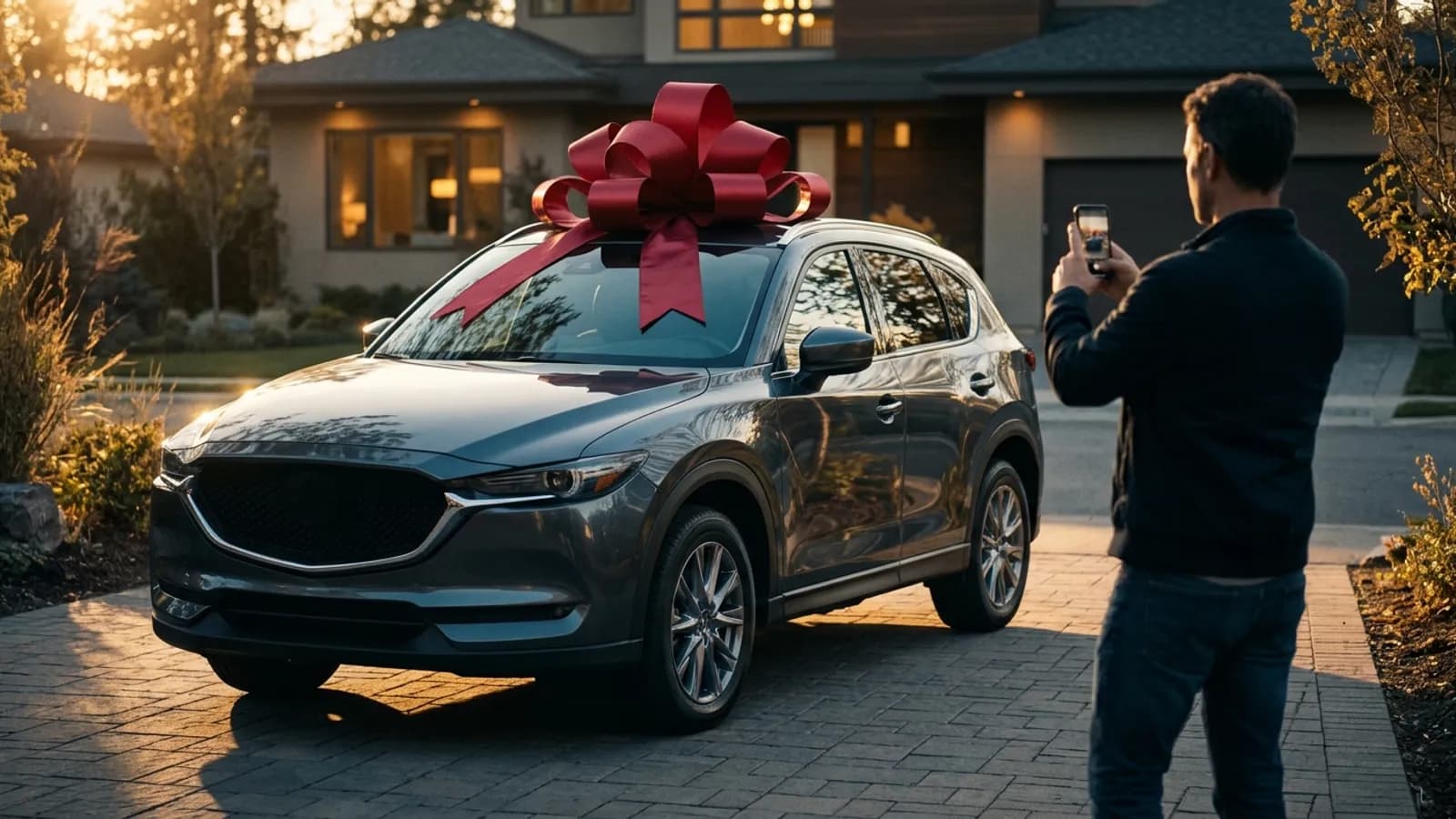
A new car needs full coverage, usually gap insurance, and two dealer-desk rejections — the gap product and the "protection package" upsell. The insurance conversation happens at the dealership's financing office for a reason: that's where the margin is. Price everything before you walk in.
The three layers for a new car
1. Full coverage (non-negotiable with financing)
Lenders contractually require comprehensive + collision until payoff — and force-placed coverage if yours lapses (see full coverage explained). New cars also justify it: repair costs and replacement values are at their lifetime peak in years 1–3. The lender's interest is recorded on the policy as the loss payee — the settlement pays the lender first.
2. Gap insurance (the depreciation answer)
New cars lose 20–30% of value in year one while loan balances fall slowly. A total loss in that window leaves a thousands-of-dollars gap — gap coverage pays it. The price comparison from our gap guide:
| Source | Typical cost | Notes | | | --- | --- | | Auto insurer endorsement | ~$20–$60 per year | One claim process; cancels when the gap closes | | Dealership, financed | $400–$700 one-time | Plus interest once rolled into the loan |
3. The endorsements worth pricing
- New-car replacement — pays for a brand-new equivalent instead of depreciated ACV, typically for the first 1–2 years (or a mileage window). Best on fast-depreciating models.
- Loan/lease payoff — a cousin of gap: pays a percentage (often 25%) above ACV toward the loan.
- Original parts (OEM) endorsement — repairs use factory parts, not aftermarket.
- Zero/low glass deductible — hail-country staple.
What it costs
| Vehicle | Typical annual (full coverage, clean record) |
|---|---|
| Mainstream sedan/SUV ($30,000) | ~$1,800–$2,600 per year |
| Full-size truck | ~$2,000–$3,200 per year |
| Luxury/EV ($60,000+) | ~$2,800–$4,500+ per year |
| Sports/performance | $3,000–$6,000 per year |
The insurance check belongs before the purchase decision: the same driver can see $800+ per year spreads between comparable models (repair costs, theft rates, and crash-claim data differ wildly). Get quotes on the exact VINs you're considering.
The dealer-desk rejections
| The upsell | Why to skip (usually) |
|---|---|
| Dealer gap ($400–$700) | The $20–$60-per-year endorsement does the same job |
| Etch/VIN protection packages | Insurance value ≈ zero; pure margin |
| Prepaid maintenance "bundles" with insurance framing | Not insurance; compare against dealer service pricing directly |
| "Tire & wheel" protection | Sometimes useful on big wheels; price honestly vs the deductible math |
The first-year checklist
- Bind coverage before driving off — the dealer needs proof; your current policy extends a grace window (often 2–30 days for a replacement car — confirm with your insurer).
- Update the insurer within the grace window with the VIN, financing, and garaging address.
- Add gap via the endorsement the same day.
- Re-shop at renewal — new cars also attract new-car discounts and telematics offers.
- Set the calendar reminder for year 3 — when the loan drops below value, cancel gap (see gap insurance).
New-car replacement versus gap: they solve different problems
The two new-car endorsements sound interchangeable and are not — they pay for different losses. Gap insurance pays the loan balance above the actual-cash-value settlement: a $34,000 loan on a car that totals at $26,500 leaves a $7,500 hole that gap fills; without a loan, there is no gap to fill. New-car replacement pays the cost of a brand-new equivalent car instead of depreciated ACV: the same totaled $34,000 car, one year old, books at $27,000 — replacement coverage pays to replace it new, regardless of financing. The two stack, and the stacking logic depends on the financing: a lightly-financed fast-depreciating car carries both exposures, so both endorsements earn their place; a cash purchase needs neither. Pricing is small relative to the exposure — commonly $20–$60 per year for gap as an insurer endorsement and a similar band for replacement coverage — and the dealer-desk versions of both cost five to ten times more, which is the gap guide's central comparison.
The grace-window mechanics on trade-in day
The drive-home coverage is automatic but misconfigured by default, and the ten-minute call from the dealership fixes it. The mechanics: most policies automatically extend coverage to a replacement vehicle for a limited window — commonly 2–30 days — but with the coverage levels of the car it replaced. The failure mode: a liability-only trade-in briefly insures a $40,000 financed crossover as liability-only, with no comprehensive, collision, or gap during the most expensive claim window the car will ever have. The call script: give the VIN and the lender's information, confirm full coverage at the limits you chose, add gap through the endorsement, and list the lienholder — the lender's proof-of-insurance requirement usually needs the binder within days. The same call updates the garaging address if the purchase coincides with a move. The configuration checklist that completes the setup is the new-car checklist, and the window's end date is a calendar item, not an assumption.
The warranty, OEM-parts, and maintenance-package boundary
The dealer desk sells three products next to the insurance conversation, and the boundary between them decides what to decline. The manufacturer warranty covers mechanical failure — insurance never does, so the warranty question is about terms and price, not coverage overlap. The OEM-parts endorsement is insurance: it guarantees factory parts in collision repairs, commonly $50–$150 per year, and matters most on cars where aftermarket body panels and sensors concern the owner. The prepaid maintenance package is not insurance at all — a service contract priced against the dealer's service menu. The line to hold: insurance conversations belong with your insurer at your carrier's rates, and the finance office's insurance-shaped products (etch protection, tire-and-wheel packages, "protection bundles") are margin items without claim value. The one dealer product that occasionally wins is a genuinely competitive new-car replacement or gap price, which is rare enough to verify against the endorsement quote rather than assume — the gap guide carries the price table.
Related guides
The new-car purchase connects to its used-car counterpart, the lease structure, and the EV variant of the same decisions.
- Buying a Used Car: Insurance Checklist — the VIN quote, title-brand checks, and ten-times rule for a used purchase.
- Insurance for Leased Cars: What the Lease Contract Requires — the lease contract's mandated limits, deductibles, and gap language.
- Electric Vehicle Insurance: Why EVs Cost More to Insure — why the battery pack adds 15-30% and which coverages narrow the gap.
- What Is Actual Cash Value (ACV)? — the depreciated-value formula every physical-damage payout starts from.
- Car Insurance: The Complete Guide — the coverage structures, state rules, and savings levers every other page builds on.
Sources
Frequently asked questions
What insurance does a new car need?
Three layers: full coverage (comprehensive + collision — required by any lender), gap insurance if you financed with little down (the first years' depreciation outruns the loan), and optionally new-car replacement or loan/lease payoff endorsements. Liability alone is legal but leaves a brand-new car completely uninsured.
How much is insurance on a new car?
Full coverage on a new vehicle commonly runs $1,800–$3,500 per year — higher than the same driver on a five-year-old car, because new cars cost more to repair and replace. Price the insurance before buying the car: the same driver can see $800-per-year spreads between comparable models.
Should I buy the dealership's gap insurance?
Usually not — dealer gap products commonly cost $400–$700 as a one-time charge (plus interest when financed), while the same protection as an insurer endorsement runs $20–$60 per year. Insurer gap also cancels easily when the loan drops below the car's value; dealer products are refundable but slower about it.
What is new-car replacement coverage?
An endorsement that pays for a brand-new equivalent car (rather than depreciated actual cash value) if yours is totaled within the first 1–2 years or a set mileage. Often bundled with loan/lease payoff in 'better car replacement' packages — worth pricing on cars that depreciate fast.
Do I need insurance before driving a new car off the lot?
Yes — dealers require proof of insurance before release, and your current policy's replacement-car grace window covers the drive home only with the old car's coverage levels. Call the insurer from the dealership with the VIN and lender details; the ten-minute call configures the coverage the window only extends.
Is insurance higher for a new car's first year?
Usually yes — new cars carry peak repair costs and replacement values, so comprehensive and collision price at their lifetime maximum. The premium falls as the car depreciates, which is also why gap coverage and new-car replacement earn their keep only in the first years.
How we researched this guide
Car insurance pricing is set per driver, per ZIP code — so our guides anchor on regulator and industry statistics and explain the factors, not a fake exact price.
- Premium ranges are anchored to NAIC statewide average-expenditure data, the most complete public dataset on what drivers actually pay per state.
- State minimum-coverage requirements are checked against each state's motor-vehicle financial-responsibility statute and the state insurance department's consumer pages.
- What a coverage actually pays for is verified against policy declarations and specimen forms, not marketing copy.
- Discount and surcharge rules cite the state DOI consumer bulletin where each state regulates them differently — for example credit-based insurance scores, which most states permit but a few ban.
Where facts vary by state or insurer, we publish the range and the reason for the variation rather than a single misleading average. We do not sell insurance, take money from insurers for coverage, or publish claim amounts we cannot trace to a source.
Sources
The primary sources behind the facts on this page. Last verified November 10, 2026.
- IIHS — Insurance Institute for Highway Safety — crash-test data, vehicle loss statistics, and safety-feature research.
- NHTSA — National Highway Traffic Safety Administration — recalls, crash data, and state traffic-safety requirements.
- FMCSA — Federal Motor Carrier Safety Administration — commercial vehicle and carrier insurance requirements.
- NAIC — National Association of Insurance Commissioners — model regulations, consumer guides, and industry statistics.
- Find your state insurance regulator (NAIC directory) — every state insurance department — the authority for your state's rules and complaint filing.
- Insurance Information Institute (III) — industry statistics and consumer explainers we cross-check against regulator publications.
Rules that vary by state are verified against the state insurance department's consumer pages — find yours via the NAIC directory above.
Keep reading
Buying a Used Car: Insurance Checklist
The used-car insurance checklist: quote the VIN before buying, run the ten-times rule on comp and collision, check title brands, and configure coverage day one.
Read guide
Insurance for Leased Cars: What the Lease Contract Requires
Leased cars require full coverage, low deductibles, higher liability limits, and gap coverage — what the lease contract demands, what it costs, and lease-end moves.
Read guide
Electric Vehicle Insurance: Why EVs Cost More to Insure
EV insurance costs 15–30% more than comparable gas cars because of battery repair exposure — the coverage questions, charging boundaries, and shopping strategy.
Read guideWhat Is Actual Cash Value (ACV)?
Actual cash value (ACV) pays replacement cost minus depreciation — used value, not new. The cheaper premium option pays smaller claims on contents, roofs, and cars.
Read guide
Car Insurance: The Complete Guide
Car insurance bundles liability, collision, comprehensive, and medical coverage — this guide explains state minimums, full coverage, and how to lower the premium.
Read guide