
Electric Vehicle Insurance: Why EVs Cost More to Insure
EV insurance costs 15–30% more than comparable gas cars because of battery repair exposure — the coverage questions, charging boundaries, and shopping strategy.
Why you can trust this guide
- Written by Daniel Reyes, AINS, former licensed P&C agent — independent insurance education publisher.
- Factual accuracy reviewed and signed off by Marcus Hale, CPCU, AINS, licensed P&C agent (Independent insurance reviewer).
- Every factual claim traces to a regulator, statute, or policy document — sources are listed at the bottom of the page.
- Last verified ; time-sensitive guides are re-checked at least twice a year. Read our editorial policy.
On this page
EV insurance runs 15–30% above comparable gas cars — the battery pack is the reason: $10,000–$20,000 of damage path, specialized repairs, and total-loss thresholds the pack tips. The EV-specific coverage questions and the shopping strategy below narrow the gap where it can be narrowed.
Why EVs cost more to insure
| Factor | Effect | | | --- | | Battery pack ($10,000–$20,000) | Sits in the damage path; total-loss math tips sooner | | Specialized repair networks | Fewer certified shops, longer rentals, calibration | | Sensor-heavy bodies | Cameras and radar in bumpers raise minor-repair costs | | Performance variants | The fast tranches price like sports cars |
The EV-specific coverage questions
- The battery — comprehensive/collision cover perils; the warranty (8 years/100,000+ miles federally mandated) covers degradation
- The home charger — the wall charger needs home-policy scheduling or the installer's coverage
- Charging-station liability — the home charging liability is standard home liability territory
- Roadside/towing — the tow-to-charger distance question (EV-specific roadside programs exist)
- Tesla Insurance — real-time-data pricing where available; the safe-driver advantage is real, the data-sharing is the trade (the pricing model is telematics)
The shopping strategy
- Quote the exact VIN before buying — the EV premium varies wildly by model (the performance EVs price like sports cars)
- Compare Tesla Insurance (if eligible) against traditional at each renewal
- The bundling and telematics stack works as always
- The gap insurance decision applies double — EV depreciation is front-loaded
The battery-total question, in claim dollars
The EV premium traces to one claim scenario: a minor crash that damages the battery pack. Worked example: a $52,000 EV takes a moderate rear hit — body damage commonly estimates $4,000–$7,000 on any car. The EV difference is the pack: even a casing intrusion or a module fault can require a $10,000–$18,000 battery intervention, because packs are sealed, module-level repair is manufacturer-limited in many models, and a damaged pack cannot be confidently returned to service. The combined estimate — body plus pack — routinely crosses the total-loss threshold on a car the market books at $41,000, so a crash that totals a gas car at 90% damage totals the EV at 60%. That arithmetic is the entire pricing story: same driver, same coverage, 15–30% higher premium. It also sharpens the gap-coverage decision, because EV depreciation is front-loaded — the gap insurance guide math matters more on a fast-depreciating pack car.
Charging equipment: which policy pays for what
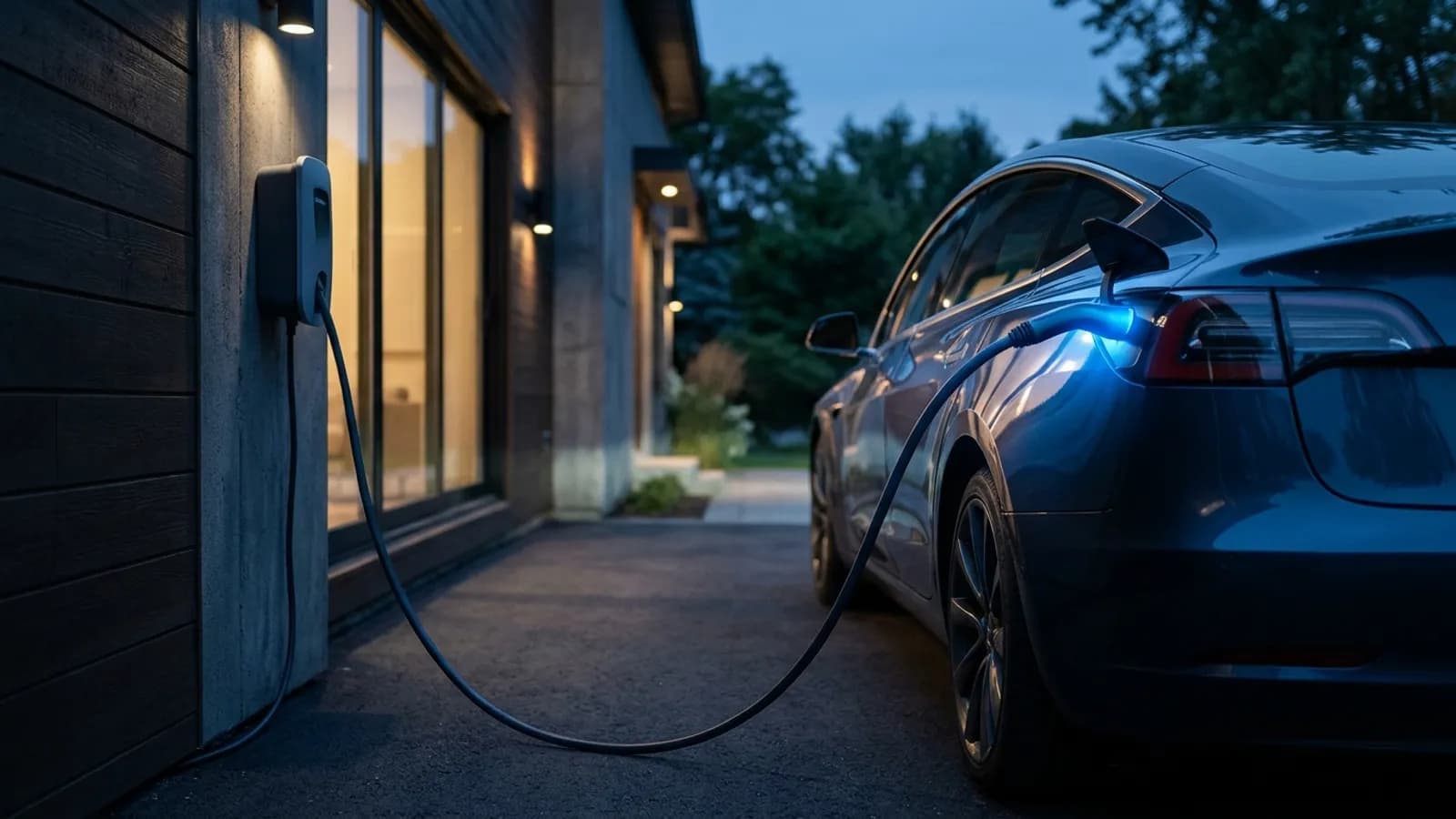
Charging splits across three policies, and the boundary confuses owners at claim time. The wall-mounted home charger: permanently installed electrical equipment — a homeowners-policy item, best scheduled or confirmed under the home policy's structures coverage, with the installation wiring inside the home policy's territory too (the home insurance hub carries the scheduling mechanics). The portable charging cable that lives in the trunk: personal property in the car — auto policies cover attached equipment, not loose property, so the cable claims under home or renters like a laptop would. The charging-station liability question: a home charger that starts a fire or injures someone is home liability; a fault at a public station is a premises matter. The garage-fire scenario that matters most: EV battery fires during charging are rare but severe, and insurers price the exposure without excluding it. For the car itself, the pack's warranty-versus-insurance split (degradation to the warranty, sudden damage to comprehensive and collision) is the new-car coverage question restated for batteries — see insuring a new car.
The EV premium audit at renewal
EV policies deserve a renewal audit with EV-specific questions, because the pricing is newer and more dispersed than gas-car pricing. The audit list:
- Verify the repair network in writing — certified EV body shops are scarce in some markets, and a non-certified shop can void pack workmanship.
- Stack the depreciation protections: gap plus new-car replacement covers the front-loaded EV value curve better than either alone.
- Ask whether any battery-health or safety-feature discount applies — programs are uneven across carriers and worth the explicit question.
- Re-quote Tesla Insurance against the incumbent where eligible, and re-check eligibility each renewal as states are added — the switching sequence applies unchanged.
- Confirm the performance trim is priced honestly — the dual-motor performance variants carry sports-car pricing that the base model does not.
The broader lever set — bundling, telematics, deductible moves — works identically on EVs, and the lowering playbook applies unchanged.
Related guides
The EV premium question sits inside the new-car coverage and cost decisions — these pages carry them.
- Average Cost of Car Insurance in 2026 — the national and state baselines your quote should beat, with the factor table.
- What Does Full Coverage Car Insurance Cover? — what the liability-plus-comp-plus-collision package includes, excludes, and costs.
- What Is Actual Cash Value (ACV)? — the depreciated-value formula every physical-damage payout starts from.
- Does Car Insurance Cover Flood Damage? — how flood claims pay, and what the flood title means for coverage.
- Car Insurance: The Complete Guide — the coverage structures, state rules, and savings levers every other page builds on.
Sources
Frequently asked questions
Why is EV insurance more expensive?
Battery packs ($10,000–$20,000) sit in the damage path, specialized repair networks and calibration requirements raise repair costs, and total-loss thresholds hit sooner (the battery pack tips the math). The same driver pays 15–30% more for the EV version of a comparable car.
Does EV insurance cover the battery?
Yes, for sudden damage — comprehensive and collision cover battery damage from covered perils such as a crash, hail, or flood. Battery degradation and manufacturing defects fall to the manufacturer's warranty instead (8 years/100,000+ miles federally mandated). A flooded EV's pack damage is a comprehensive claim; gradual capacity loss is a warranty claim.
Does Tesla's own insurance make sense?
It can — Tesla Insurance (where available) prices on real-time driving data and often beats traditional carriers for safe drivers, with two limits: state availability that changes each renewal, and the data-sharing trade the pricing model requires. The honest comparison is against traditional quotes on identical limits at every renewal, since eligibility and pricing both move.
Are there EV-specific coverages?
Charging-equipment coverage for the home wall charger (a homeowners-policy item), battery-rental programs from some manufacturers, and EV-specific gap products from specialty carriers all exist. The foundation stays standard, though: full coverage (liability plus comprehensive and collision), gap insurance on a financed EV, and the endorsement lines priced per carrier.
Does insurance cover a damaged EV charging cable?
The portable cable stored in the car is personal property — it claims under homeowners or renters insurance, not the auto policy. A wall-mounted home charger is permanently installed electrical equipment under the home policy. Damage to the car's charging port itself claims under comprehensive or collision.
Do electric vehicles qualify for insurance discounts?
There is no standard EV discount — what helps is the same safety-feature and telematics pricing any car earns, plus EV-specific programs some carriers offer. The bigger EV lever is shopping the exact VIN: EV premiums vary more by model than gas cars, and the spread between carriers is wider.
How we researched this guide
Car insurance pricing is set per driver, per ZIP code — so our guides anchor on regulator and industry statistics and explain the factors, not a fake exact price.
- Premium ranges are anchored to NAIC statewide average-expenditure data, the most complete public dataset on what drivers actually pay per state.
- State minimum-coverage requirements are checked against each state's motor-vehicle financial-responsibility statute and the state insurance department's consumer pages.
- What a coverage actually pays for is verified against policy declarations and specimen forms, not marketing copy.
- Discount and surcharge rules cite the state DOI consumer bulletin where each state regulates them differently — for example credit-based insurance scores, which most states permit but a few ban.
Where facts vary by state or insurer, we publish the range and the reason for the variation rather than a single misleading average. We do not sell insurance, take money from insurers for coverage, or publish claim amounts we cannot trace to a source.
Sources
The primary sources behind the facts on this page. Last verified November 10, 2026.
- IIHS — Insurance Institute for Highway Safety — crash-test data, vehicle loss statistics, and safety-feature research.
- NHTSA — National Highway Traffic Safety Administration — recalls, crash data, and state traffic-safety requirements.
- FMCSA — Federal Motor Carrier Safety Administration — commercial vehicle and carrier insurance requirements.
- NAIC — National Association of Insurance Commissioners — model regulations, consumer guides, and industry statistics.
- Find your state insurance regulator (NAIC directory) — every state insurance department — the authority for your state's rules and complaint filing.
- Insurance Information Institute (III) — industry statistics and consumer explainers we cross-check against regulator publications.
Rules that vary by state are verified against the state insurance department's consumer pages — find yours via the NAIC directory above.
Keep reading

Average Cost of Car Insurance in 2026
Full coverage car insurance averages roughly $1,500–$2,500 per year and minimum liability $400–$900 per year nationally — age, state, and record swing the number.
Read guide
What Does Full Coverage Car Insurance Cover?
Full coverage car insurance is liability plus comprehensive and collision — what each part pays, what it excludes, what it costs, and when liability-only wins.
Read guideWhat Is Actual Cash Value (ACV)?
Actual cash value (ACV) pays replacement cost minus depreciation — used value, not new. The cheaper premium option pays smaller claims on contents, roofs, and cars.
Read guide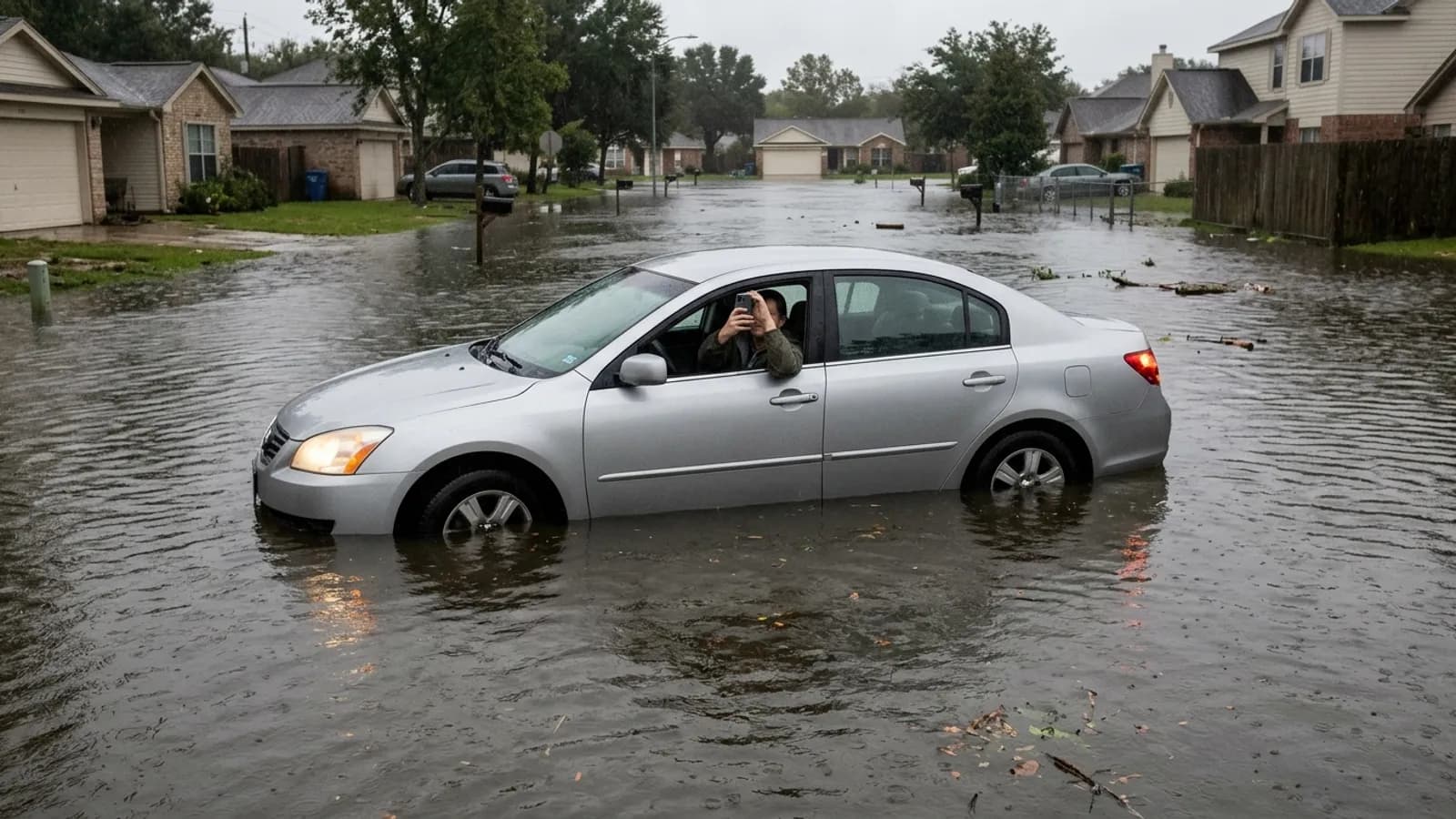
Does Car Insurance Cover Flood Damage?
Flood damage claims under comprehensive coverage — hydro-locked engines, flooded interiors, storm surge — and liability-only policies pay none of it.
Read guide
Car Insurance: The Complete Guide
Car insurance bundles liability, collision, comprehensive, and medical coverage — this guide explains state minimums, full coverage, and how to lower the premium.
Read guide