
What Does Full Coverage Car Insurance Cover?
Full coverage car insurance is liability plus comprehensive and collision — what each part pays, what it excludes, what it costs, and when liability-only wins.
Why you can trust this guide
- Written by Daniel Reyes, AINS, former licensed P&C agent — independent insurance education publisher.
- Factual accuracy reviewed and signed off by Marcus Hale, CPCU, AINS, licensed P&C agent (Independent insurance reviewer).
- Every factual claim traces to a regulator, statute, or policy document — sources are listed at the bottom of the page.
- Last verified ; time-sensitive guides are re-checked at least twice a year. Read our editorial policy.

On this page
Full coverage car insurance is liability insurance plus comprehensive and collision — the combination that pays both other people's losses and damage to your own car. There is no official product called "full coverage"; the phrase is shorthand, which is why two "full coverage" quotes can protect you very differently — the car insurance quotes guide covers the line-by-line comparison. The declaration page, not the phrase, defines what you actually have.
What a typical full coverage package pays for
| Component | Pays for | Pays whom | | | --- | --- | | Bodily injury liability | Medical costs, lost wages, legal claims for people injured in a crash you cause | Other people | | Property damage liability | Repairs to cars, fences, buildings you hit | Other people | | Collision | Your car's repair or replacement after a crash with a vehicle or object | You (minus your deductible) | | Comprehensive | Theft, fire, hail, flood, falling objects, animal strikes, glass | You (minus your deductible) | | Uninsured/underinsured motorist | Your injuries when the at-fault driver is uninsured or underinsured | You and your passengers | | Medical payments / PIP | Your and your passengers' medical bills, regardless of fault | You and your passengers |
What full coverage does not cover
- Mechanical breakdown and wear — engine failure, brakes, tires, routine maintenance.
- Your own injuries beyond medical limits if limits are exhausted.
- The loan gap after a total loss — the car's depreciated value can be thousands below what you owe, which is why gap insurance exists as a separate (usually cheap) add-on.
- Custom parts and equipment above small standard caps, unless you add an endorsement.
- Ride-share driving in many policies without a specific endorsement.
- Someone not on your policy driving with permission in some arrangements — rules vary by state and policy.
What full coverage costs
Nationally, full coverage averages roughly $1,500–$2,500 per year, versus roughly $400–$900 per year for minimum liability-only policies — the comprehensive and collision portion drives most of the difference. Age, state, driving record, and vehicle change the number a lot; our average cost guide has the breakdown. Raising your deductible from $250 to $1,000 is the fastest way to trim the full-coverage premium.
When full coverage makes sense
- The car is financed or leased (the lender contractually requires it).
- The car's value would be hard to replace out of pocket.
- You live somewhere with high theft, hail, or animal-strike risk — comprehensive earns its keep.
- You could not absorb a five-figure loss from an at-fault crash without it (that is the liability side).
When liability-only becomes the better deal
Run this quick test each renewal:
- Look up your car's private-party resale value.
- Multiply your annual comprehensive + collision premium by ten.
- If the value is below that number, price the policy liability-only and compare savings.
Example: a $2,200 car with $600 per year of comp/collision and a $500 deductible — a total-loss claim would net about $1,700 after the deductible, while five years of premium costs $3,000. Liability-only, plus parking the $600 in a savings account, usually wins.
How to buy full coverage smartly
- Set liability limits high enough to protect assets (100/300/100 is a common starting point, higher if you own a home or have savings).
- Match comprehensive and collision deductibles to your emergency fund.
- Add gap coverage if you are upside-down on the loan — through your insurer, not the dealership (the new-car version of this decision is in insuring a new car).
- Re-run the drop-or-keep test every renewal as the car depreciates.
The full-coverage audit: lines people pay for and never use
"Full coverage" bundles liability with comprehensive and collision — and then the quote adds optional lines that deserve an annual audit, because several are duplicates or expired by design. The roadside line duplicates the auto-club membership many households already carry. The rental reimbursement line is worth its premium only if a rental is the actual plan during repairs — at $30–$60 per year it is cheap; at $120 with a $20-per-day cap it is not. The gap-coverage line is designed to be cancelled: once the loan balance drops below the car's value — commonly year two or three — the endorsement pays nothing more. The medical-payments line overlaps health insurance for households with good coverage, though it earns its keep in high-deductible-health-plan households. The audit habit: photograph the declaration page, price each line against its actual use in the last two years, and cut the ones with no claim, no plan, and no duplicate-coverage rationale.
The same car, three structures, one table
The full-coverage decision is a structure decision, and three structures price the same car differently. Illustrative quote for one 35-year-old, clean record, mid-value sedan:
| Structure | What it includes | Typical annual |
|---|---|---|
| Liability-only (100/300/100) | Pays others' claims; nothing for your car | ~$640 per year |
| Full coverage, $1,000 deductible | Adds comp + collision, self-funded first $1,000 | ~$1,820 per year |
| Full coverage, $500 deductible | Adds comp + collision, self-funded first $500 | ~$1,980 per year |
The $1,340 gap between liability-only and full coverage is the price of transferring your car's crash, theft, and weather risk to the carrier; the $160 between the two deductible structures is the price of the carrier taking the first $500 of it. The right structure answers two questions: can the household absorb the car's full loss (liability-only becomes rational), and can it absorb the deductible (the lower one becomes rational). The ten-times test that ages the decision is the core of the collision coverage guide, and the uninsured-motorist line is the one worth keeping in every structure.
The total-loss paperwork path under full coverage
A full-coverage total loss runs a defined paperwork path, and knowing it changes the outcome. The sequence: the adjuster totals the car when damage approaches the value threshold; the valuation report sets actual cash value; the owner counters with comparable listings, maintenance records, and option-package evidence (the counter commonly moves the offer $500–$1,500); the settlement pays ACV minus the comprehensive or collision deductible, to the owner or the lender. The two overlays decide the final number: gap coverage, which pays the loan balance above the ACV settlement — the difference between walking away clean and owing thousands on a dead car; and the new-car replacement endorsement, which on newer cars pays for a brand-new equivalent during the first one to two years and ends the ACV negotiation entirely. State rules add sales tax and fees to payouts in several states. The claim-path mechanics — documentation, statements, and escalation — are the after-accident guide's territory.
Related guides
Full coverage is a package of parts and exclusions with their own pages — these carry the parts people misread.
- What Is Comprehensive Car Insurance? — the theft, weather, and animal-strike coverage that pays outside the crash path.
- Does Car Insurance Cover Engine Failure? — why mechanical failure stays excluded, and what covers it instead.
- What Is Personal Injury Protection (PIP)? — the no-fault medical coverage some states mandate.
- Insurance for Leased Cars: What the Lease Contract Requires — the lease contract's mandated limits, deductibles, and gap language.
- Car Insurance: The Complete Guide — the coverage structures, state rules, and savings levers every other page builds on.
Sources
Frequently asked questions
What does full coverage car insurance include?
Full coverage is not a defined product — insurers use it to mean liability (bodily injury and property damage) plus comprehensive and collision on your own vehicle. Most quotes also include uninsured/underinsured motorist and medical payments or PIP where required. Always check the declaration page: 'full coverage' can mean different limit packages.
Does full coverage cover engine failure or mechanical repairs?
No. Comprehensive and collision cover sudden events — crashes, theft, weather, fire — not wear and tear or mechanical breakdown. Engine failure, transmission problems, and routine maintenance are never covered by a standard auto policy, though a separate mechanical breakdown insurance or warranty can be.
When should I drop full coverage for liability only?
A common rule of thumb: drop comprehensive and collision when the car's market value falls below roughly ten times the annual cost of those coverages. Also consider whether you could replace the car out of pocket. Lenders require full coverage until the loan or lease is paid off.
Is full coverage worth it for an older car?
It depends on the car's value and your savings. If a total loss would pay out $2,000 and you pay $800 per year for comprehensive and collision with a $500 deductible, the math rarely works past a couple of years. If the same coverages cost $250 per year, keeping them is reasonable.
Does full coverage car insurance include roadside assistance?
No — roadside assistance is an optional add-on sold alongside full coverage, typically $15–$60 per year. Check for duplicates first: an auto-club membership, a credit-card benefit, or a new-car manufacturer program may already cover towing and battery service before you buy the line.
Is full coverage required on a financed car until payoff?
Yes — the lender contractually requires comprehensive and collision until the loan ends, and may force-place expensive single-peril coverage if the policy lapses. At payoff, run the ten-times test: the full-coverage decision becomes yours again, not the lender's.
How we researched this guide
Car insurance pricing is set per driver, per ZIP code — so our guides anchor on regulator and industry statistics and explain the factors, not a fake exact price.
- Premium ranges are anchored to NAIC statewide average-expenditure data, the most complete public dataset on what drivers actually pay per state.
- State minimum-coverage requirements are checked against each state's motor-vehicle financial-responsibility statute and the state insurance department's consumer pages.
- What a coverage actually pays for is verified against policy declarations and specimen forms, not marketing copy.
- Discount and surcharge rules cite the state DOI consumer bulletin where each state regulates them differently — for example credit-based insurance scores, which most states permit but a few ban.
Where facts vary by state or insurer, we publish the range and the reason for the variation rather than a single misleading average. We do not sell insurance, take money from insurers for coverage, or publish claim amounts we cannot trace to a source.
Sources
The primary sources behind the facts on this page. Last verified November 16, 2026.
- IIHS — Insurance Institute for Highway Safety — crash-test data, vehicle loss statistics, and safety-feature research.
- NHTSA — National Highway Traffic Safety Administration — recalls, crash data, and state traffic-safety requirements.
- FMCSA — Federal Motor Carrier Safety Administration — commercial vehicle and carrier insurance requirements.
- NAIC — National Association of Insurance Commissioners — model regulations, consumer guides, and industry statistics.
- Find your state insurance regulator (NAIC directory) — every state insurance department — the authority for your state's rules and complaint filing.
- Insurance Information Institute (III) — industry statistics and consumer explainers we cross-check against regulator publications.
Rules that vary by state are verified against the state insurance department's consumer pages — find yours via the NAIC directory above.
Keep reading
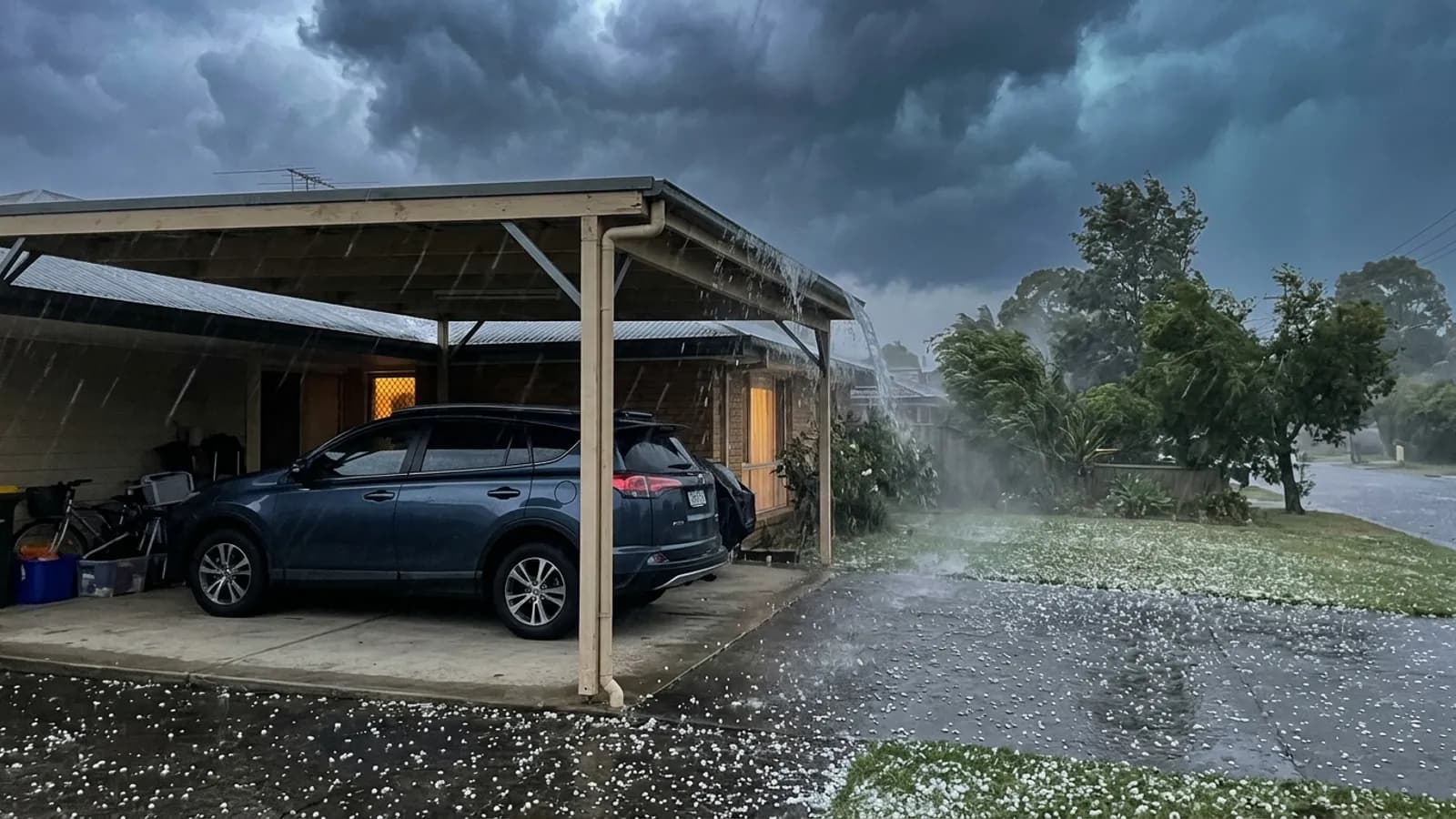
What Is Comprehensive Car Insurance? Coverage and Cost
Comprehensive car insurance pays for non-crash damage — theft, fire, hail, flood, falling objects, vandalism, animal strikes — commonly $100–$300 per year.
Read guide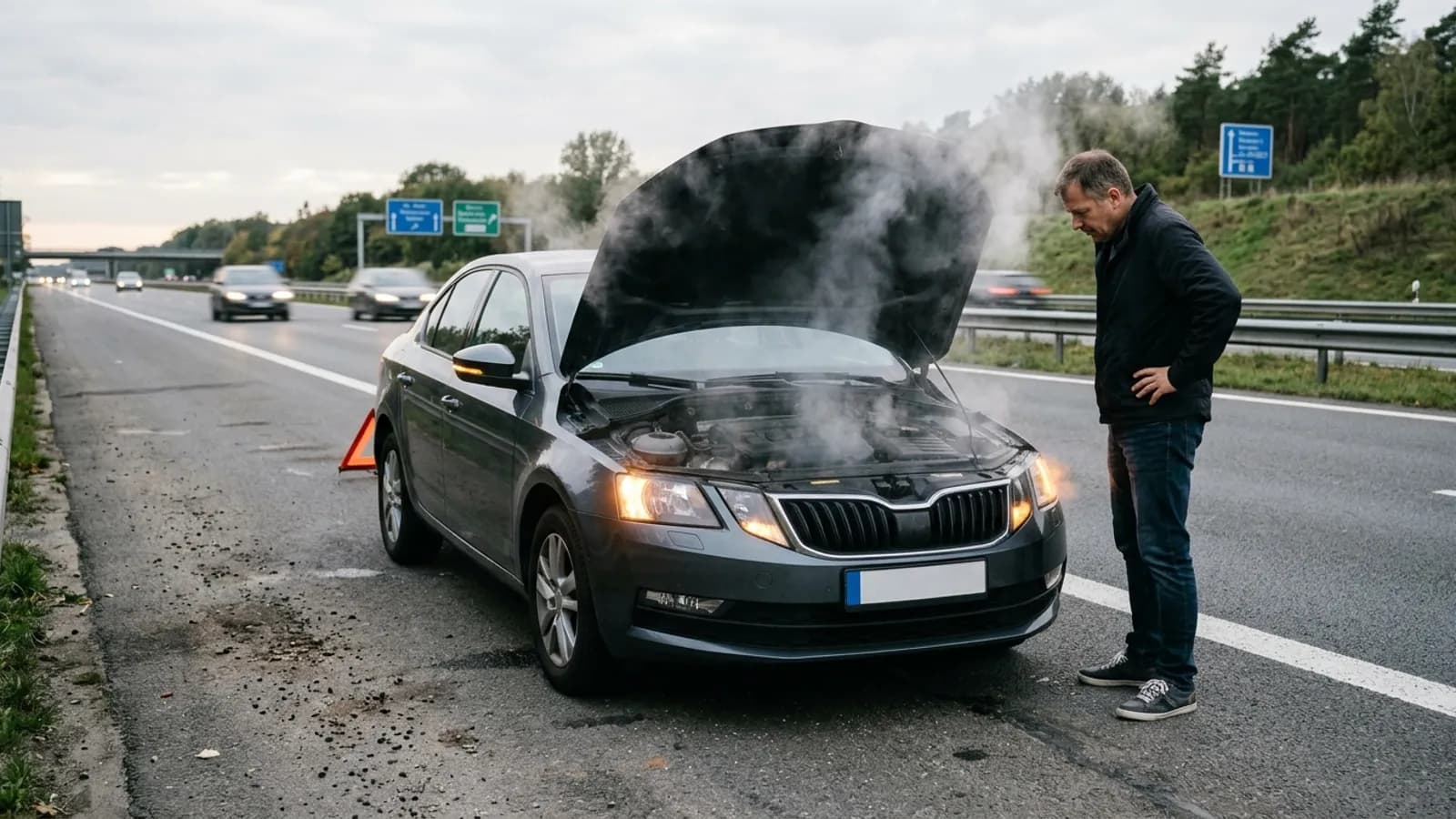
Does Car Insurance Cover Engine Failure?
Car insurance does not cover wear-and-tear engine failure — but engine damage from a covered peril such as flood, fire, or a crash is claimable.
Read guideWhat Is Personal Injury Protection (PIP)?
Personal injury protection (PIP) pays your medical bills and some lost wages after a crash regardless of fault — required in no-fault states, optional elsewhere.
Read guide
Insurance for Leased Cars: What the Lease Contract Requires
Leased cars require full coverage, low deductibles, higher liability limits, and gap coverage — what the lease contract demands, what it costs, and lease-end moves.
Read guide
Car Insurance: The Complete Guide
Car insurance bundles liability, collision, comprehensive, and medical coverage — this guide explains state minimums, full coverage, and how to lower the premium.
Read guideFree Car Insurance Quotes: Compare Rates by State (2026)
Free car insurance quotes explained — what drivers pay by state and age in November 2026, the information insurers request, and how to compare quotes fairly.
Read guide