
Car Insurance in Arizona: Minimums, Costs, and How to Save (2026)
Car insurance in Arizona costs roughly $1,700–$2,600 per year for full coverage. Monsoon hail, dust storms, and Phoenix density drive what drivers pay.
Why you can trust this guide
- Written by Daniel Reyes, AINS, former licensed P&C agent — independent insurance education publisher.
- Factual accuracy reviewed and signed off by Marcus Hale, CPCU, AINS, licensed P&C agent (Independent insurance reviewer).
- Every factual claim traces to a regulator, statute, or policy document — sources are listed at the bottom of the page.
- Last verified ; time-sensitive guides are re-checked at least twice a year. Read our editorial policy.

On this page
Car insurance in Arizona commonly costs $1,700–$2,600 per year for full coverage, with a minimum-liability policy running roughly 30–40% of that. Arizona's signature cost drivers are metro Phoenix — density, theft, and monsoon-season hail — plus dust-storm pileups on the I-10 corridor and an uninsured-driver share well above the national average.
What Arizona drivers pay
| Profile | Typical annual premium |
|---|---|
| Full coverage, clean record, statewide | $1,700–$2,600 |
| Minimum liability only (25/50/15) | Roughly 30–40% of the full-coverage figure |
| Phoenix metro | $1,900–$3,000 per year |
| Tucson metro | $1,700–$2,600 per year |
| One at-fault crash | +25–50% |
| Teen driver added to the household | +$2,000–$5,000 |
The Phoenix figures come from the Phoenix city guide, and Tucson's from the Tucson city page; both sit inside the statewide band, with the Phoenix metro's western suburbs (Avondale, Goodyear) frequently pricing above the city core. Rural Arizona — Yuma, Flagstaff's cooler climate belt, the border counties — quotes lower on density but not on weather.
What Arizona law requires
- Minimum liability is 25/50/15 — $25,000 bodily injury per person, $50,000 per accident, $15,000 property damage, per the Arizona Department of Insurance and Financial Institutions (DIFI).
- The system is tort (at-fault). The driver who causes the crash pays the other side's injury and property claims; Arizona requires no PIP.
- Uninsured/underinsured motorist coverage is offered on every policy and declined only in writing. Carriers must also offer stacking — multiplying UM/UIM limits by the number of insured vehicles.
- Electronic verification ties registration to insurance. Arizona's Motor Vehicle Division runs database checks, and a lapse suspends registration quickly.
- DIFI publishes consumer guides and takes written complaints when a claim stalls or a non-renewal looks improper.
The Arizona claim landscape
- Monsoon hail and microburst damage — June–September storms in Phoenix and Tucson produce large hail and straight-line winds in minutes. Hail dents and windshields are comprehensive perils; see how car insurance handles hail damage.
- Dust-storm pileups — the classic Arizona hazard: a haboob wall on I-10 between Phoenix and Tucson drops visibility to zero, and multi-vehicle chain-reaction crashes follow. Liability determination in those pileups is the state's most contested claim type.
- Extreme heat damage — sustained 110°F-plus heat kills batteries, tires, and cooling systems. Mechanical breakdown itself is not covered, but heat-warping after a fire or explosion under a hood can be a comprehensive claim.
- Uninsured-driver claims — Arizona's uninsured share runs high enough that injury claims routinely route through UM/UIM rather than the at-fault driver's liability, and carriers price that gap into the market.
- Border and rural corridor claims — the I-19 and SR-85 corridors and the Yuma–Tucson stretch carry cross-border traffic and long desolate distances; recovery tows and remote repairs add cost per claim, which is why rural Arizona doesn't discount as deeply as its density suggests.
- Theft and theft-recovery claims — Phoenix metro has spent years among the national leaders in vehicle theft, feeding comprehensive claims and metro zip-code pricing.
Coverage setup that fits Arizona
- Liability at 100/300/100. The 25/50/15 minimum puts $15,000 against property damage — less than the repair cost of many late-model vehicles it might hit — and one hospital stay exhausts the per-person injury cap.
- Uninsured/underinsured motorist matched to liability limits. Arizona makes it optional and lets you reject it in writing; the state's uninsured rate makes that a bad trade.
- Comprehensive for the monsoon profile — hail, flash flood, wind, and wildfire smoke are all comprehensive perils, and Arizona's comprehensive claim frequency runs above the national norm.
- Glass-friendly comprehensive — freeways deliver rock chips year-round; check whether the carrier waives or discounts glass deductibles in Arizona.
- Bundle and collect discounts — telematics programs are widely offered by Arizona carriers, and the low-mileage discount fits snowbirds who garage cars in summer.
Why Arizona pays for its weather and its drivers
Arizona's premium profile comes from a collision of two things: a weather pattern that concentrates severe physical-damage claims into a few monsoon months, and a driver population with one of the nation's higher uninsured shares. The monsoon pattern matters more than people expect — a single July evening can file thousands of hail and flood claims across the Phoenix metro, which is why comprehensive pricing in Maricopa County diverges from the statewide average. The uninsured-driver share matters because every injury claim with an uninsured at-fault driver routes through UM/UIM instead of liability, and insured drivers carry that gap. Add Phoenix's long-standing place among the national leaders in vehicle theft, and the result is a state where the optional coverages (UM/UIM, comprehensive) do more work than the mandatory ones. Keep both at full limits, re-quote annually, and price the specific address — the $1,700–$2,600 statewide band widens considerably inside Maricopa County. Snowbird season adds a second pattern to price: part-year residents who garage a vehicle for months should ask about storage or lay-up options rather than carrying full year-round pricing on a car that sits. The reverse move matters too — full-year Arizona residents who drive into California or Nevada regularly should confirm their policy's territory terms, because Arizona carriers rate the garaging address while out-of-state claim exposure still processes under the policy's own limits. That is one more reason the liability decision shouldn't sit at the 25/50/15 floor. The Arizona Department of Insurance and Financial Institutions' complaint portal is the practical first stop before re-quoting, because the state's carrier rankings shift with every monsoon season's claim volume.
Related guides
Arizona drivers connect with these pages — the two metro guides inside the statewide band, and the coverage mechanics behind the state's signature claims.
- Car Insurance: The Complete Guide — the hub for coverage types and how Arizona minimums compare nationally.
- Average Cost of Car Insurance in 2026 — national benchmarks against Arizona's $1,700–$2,600 per year.
- How to Lower Car Insurance — twelve levers that work on an Arizona policy.
- What Is Uninsured Motorist Coverage? — the optional line Arizona's uninsured share makes valuable.
- How to Switch Car Insurance — re-shop at renewal without a coverage lapse.
Compare car insurance in other states
Requirements and rate bands move at the state line:
Sources
- Arizona Department of Insurance and Financial Institutions — current Arizona requirements and consumer help
- NAIC — Auto insurance consumer resources
- III — Auto insurance facts and statistics
Frequently asked questions
How much is car insurance in Arizona?
Full coverage in Arizona commonly runs $1,700–$2,600 per year for a clean-record driver; a 25/50/15 minimum-liability policy costs roughly 30–40% of that. Phoenix prices above Tucson and the smaller metros on density, monsoon hail, and theft claims, while rural Arizona sits at the bottom of the band.
What are Arizona's minimum car insurance requirements?
Arizona requires 25/50/15 liability — $25,000 per person, $50,000 per accident for injuries, and $15,000 for property damage. The state runs a tort system with no PIP requirement, and insurers must offer uninsured/underinsured motorist coverage that can be declined only in writing. The Arizona Department of Insurance and Financial Institutions publishes the rules.
Does car insurance cover monsoon and dust-storm damage in Arizona?
Yes — monsoon hail, wind, flash-flood, and dust-damage claims fall under comprehensive coverage, which pays up to the vehicle's actual cash value minus the deductible. Collision coverage applies if you slide or hit another vehicle during a haboob whiteout. A liability-only policy covers none of your own vehicle's storm damage.
Why is uninsured motorist coverage a bigger deal in Arizona?
Arizona's uninsured-driver rate runs well above the national average, and the state makes UM/UIM optional. After a crash with an uninsured driver, liability coverage pays nothing to you; uninsured motorist is the only line that covers your own injuries, which is why Arizona practice is to keep it at liability limits rather than reject it.
How much car insurance should I carry in Arizona?
A practical Arizona setup: 100/300/100 liability instead of 25/50/15, uninsured/underinsured motorist matched to those limits, and comprehensive coverage for monsoon hail, heat-related system failures' aftermath, and wildfire smoke. Comprehensive with glass coverage earns its keep on I-10 and the Loop 101, where rock chips are routine.
How we researched this guide
Car insurance pricing is set per driver, per ZIP code — so our guides anchor on regulator and industry statistics and explain the factors, not a fake exact price.
- Premium ranges are anchored to NAIC statewide average-expenditure data, the most complete public dataset on what drivers actually pay per state.
- State minimum-coverage requirements are checked against each state's motor-vehicle financial-responsibility statute and the state insurance department's consumer pages.
- What a coverage actually pays for is verified against policy declarations and specimen forms, not marketing copy.
- Discount and surcharge rules cite the state DOI consumer bulletin where each state regulates them differently — for example credit-based insurance scores, which most states permit but a few ban.
Where facts vary by state or insurer, we publish the range and the reason for the variation rather than a single misleading average. We do not sell insurance, take money from insurers for coverage, or publish claim amounts we cannot trace to a source.
Sources
The primary sources behind the facts on this page. Last verified November 10, 2026.
- IIHS — Insurance Institute for Highway Safety — crash-test data, vehicle loss statistics, and safety-feature research.
- NHTSA — National Highway Traffic Safety Administration — recalls, crash data, and state traffic-safety requirements.
- FMCSA — Federal Motor Carrier Safety Administration — commercial vehicle and carrier insurance requirements.
- NAIC — National Association of Insurance Commissioners — model regulations, consumer guides, and industry statistics.
- Find your state insurance regulator (NAIC directory) — every state insurance department — the authority for your state's rules and complaint filing.
- Insurance Information Institute (III) — industry statistics and consumer explainers we cross-check against regulator publications.
Rules that vary by state are verified against the state insurance department's consumer pages — find yours via the NAIC directory above.
Keep reading
Car Insurance: The Complete Guide
Car insurance bundles liability, collision, comprehensive, and medical coverage — this guide explains state minimums, full coverage, and how to lower the premium.
Read guide
Average Cost of Car Insurance in 2026
Full coverage car insurance averages roughly $1,500–$2,500 per year and minimum liability $400–$900 per year nationally — age, state, and record swing the number.
Read guide
How to Lower Car Insurance: 12 Ways That Actually Work
How to lower car insurance: re-shop every renewal, raise deductibles, trim coverage on old cars, stack discounts, and fix the rating factors you control.
Read guide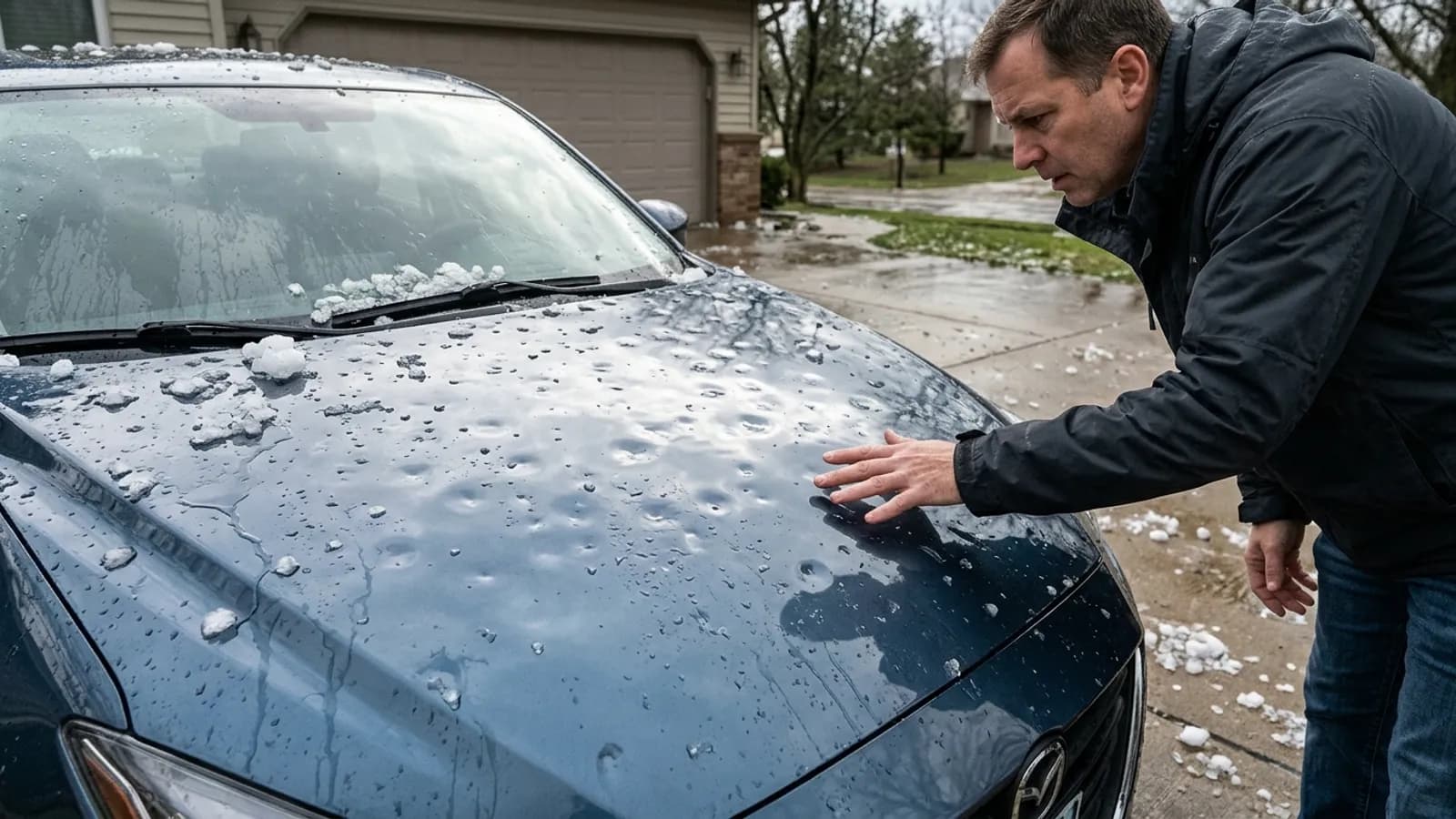
Does Car Insurance Cover Hail Damage?
Hail damage claims under comprehensive coverage — dents, broken glass, storm totals — and liability-only policies cover none of it. PDR and deductibles explained.
Read guideWhat Is Uninsured Motorist Coverage?
Uninsured motorist (UM) coverage pays your injuries when an at-fault driver has no insurance — including hit-and-run drivers — and UIM pays when limits fall short.
Read guide
Does Car Insurance Cover Mechanical Breakdown?
Mechanical breakdown from wear and tear is excluded from every auto policy — sudden covered perils are the exception. Warranties, MBI, and repair funds compared.
Read guide