
Car Insurance in Alaska: Minimums, Costs, and How to Save (2026)
Car insurance in Alaska costs roughly $1,600–$2,400 per year for full coverage. Moose strikes, ice roads, and a thin carrier market drive what Alaska drivers pay.
Why you can trust this guide
- Written by Daniel Reyes, AINS, former licensed P&C agent — independent insurance education publisher.
- Factual accuracy reviewed and signed off by Marcus Hale, CPCU, AINS, licensed P&C agent (Independent insurance reviewer).
- Every factual claim traces to a regulator, statute, or policy document — sources are listed at the bottom of the page.
- Last verified ; time-sensitive guides are re-checked at least twice a year. Read our editorial policy.
On this page
Car insurance in Alaska commonly costs $1,600–$2,400 per year for full coverage, with a minimum-liability policy costing roughly 30–40% of that. The state's signature cost drivers are a thin, expensive claims market — few carriers, remote repair logistics, and moose-scale animal strikes — plus Anchorage, where density and traffic push quotes well above the rest of the state.
What Alaska drivers pay
| Profile | Typical annual premium |
|---|---|
| Full coverage, clean record, statewide | $1,600–$2,400 |
| Minimum liability only (50/100/25) | Roughly 30–40% of the full-coverage figure |
| Anchorage metro | Above the statewide range |
| One at-fault crash | +25–50% |
| Teen driver added to the household | +$2,000–$5,000 |
Alaska has no large-metro city page equivalent to Anchorage pricing published separately, so treat the statewide range as a Fairbanks-to-Anchorage band: the top of it reflects the Anchorage–Eagle River corridor, the bottom reflects smaller boroughs. Quote your exact address either way — how to lower car insurance lists the levers that move an individual quote.
What Alaska law requires
- Minimum liability is 50/100/25 — $50,000 bodily injury per person, $100,000 per accident, $25,000 property damage. Alaska's floor sits well above the 25/50/25 that most states still use.
- The system is tort (at-fault). The driver who causes the crash, through liability coverage or personal assets, pays the other side's injury and property claims. Alaska requires no PIP.
- Uninsured/underinsured motorist coverage is included unless rejected in writing. UM/UIM pays your own injury claims when the at-fault driver carries nothing or too little — a real risk on remote highways, and see what uninsured motorist coverage is for how the coverage works.
- Insurance verification is electronic. The Alaska Division of Insurance and the Division of Motor Vehicles run database checks, so a lapse surfaces quickly and can suspend registration.
- Complaints and questions go to the Alaska Division of Insurance, which publishes consumer guides and takes written complaints against insurers.
The Alaska claim landscape
- Moose and wildlife strikes — Alaska's signature claim. A mature moose stands above hood height, so the impact transfers into the cabin and frequently totals the vehicle. Only comprehensive coverage pays for your own car after an animal strike; see whether car insurance covers animal collisions.
- Ice-road collisions — months of freezing rain, black ice, and whiteout wind events feed a steady winter collision load into collision coverage. Rear-end pileups on the Glenn and Seward highways are the classic Alaska winter claim.
- Earthquake damage to parked vehicles — Alaska sits on the Pacific Ring of Fire, and comprehensive coverage pays for quake-related vehicle damage (falling debris, structural collapse). Home-earthquake policies are separate; the auto policy's comprehensive section handles the car.
- Wildfire smoke and ash — Interior Alaska fires each summer produce ash-fall that etches paint and clogs engines; comprehensive covers the resulting physical damage.
- Remote-repair economics — a claim in Bethel, Nome, or Valdez can require barged or flown parts and limited shop capacity, which inflates repair costs and total-loss frequency. This is a structural reason Alaska premiums run above its population size.
- Plow-season damage and berm claims — the state's snow-removal season adds a claim category other states price lightly: contact with plow equipment, berms burying parked cars, and sub-zero failures after slide-offs all land in the comprehensive and collision lines each winter.
Coverage setup that fits Alaska
- Liability at 100/300/100. The 50/100/25 minimum exhausts on one hospital stay; the gap between minimum and this level is the cheapest protection per dollar on the policy.
- UM/UIM matched to liability limits. Keep the coverage even though Alaska allows written rejection — the step from 50/100 to 100/300 UM/UIM costs little and covers the statewide uninsured-driver gap.
- Comprehensive with a deductible you can actually pay — animal strikes, quake damage, and ash make it the workhorse coverage in Alaska. Run the deductible math against your reserve, not the premium chart.
- Rental reimbursement and roadside service — when a remote-town repair takes weeks, these coverages replace the vehicle and tow it.
- Bundle home or renters policies and ask for the full discount list: telematics, low annual miles, defensive driving, and paid-in-full all apply in Alaska.
Why Alaska prices the way it does — the remote-market effect
Alaska is the clearest example in the country of claims costs decoupling from population. Roughly 730,000 residents generate modest claim volume, but each claim is expensive: shops are concentrated in Anchorage, Fairbanks, and Juneau, so a crash almost anywhere else adds freight, ferry, or air transport to the bill. Carrier participation is thinner than in any lower-48 state, which limits the price competition that drives down averages elsewhere. Add the wildlife collision profile — moose strikes produce severe-impact totals at low speeds — and winter ice losses, and the result is a state where two identical drivers in different zip codes can sit 30–40% apart on premium. Price the specific address, re-quote after any in-state move, and treat the $1,600–$2,400 statewide average as context rather than a target. The Division of Insurance's consumer resources list which carriers actively write in-state — the first question for any Alaska quote, because the state's carrier count is the market's defining constraint.
Related guides
Alaska drivers share the same coverage mechanics as the rest of the site — these guides fill in the parts this page doesn't cover.
- Car Insurance: The Complete Guide — the hub: coverage types, requirements, and how the pieces fit together.
- Average Cost of Car Insurance in 2026 — national benchmarks to compare Alaska's $1,600–$2,400 per year against.
- How to Switch Car Insurance — re-shop without a lapse when your renewal reprices.
- What Does Full Coverage Cover? — the comprehensive and collision lines Alaska's weather and wildlife claims run through.
- What to Do After a Car Accident — the first-72-hours claim checklist, from documentation to the adjuster.
Compare car insurance in other states
Requirements and rate bands move at the state line:
Sources
- Alaska Division of Insurance — current Alaska requirements and consumer help
- NAIC — Auto insurance consumer resources
- III — Auto insurance facts and statistics
Frequently asked questions
How much is car insurance in Alaska?
Full coverage in Alaska commonly runs $1,600–$2,400 per year for a clean-record driver, while a 50/100/25 minimum-liability policy costs roughly 30–40% of that. Anchorage quotes above the statewide average because of density and claim costs; rural Alaska quotes lower but faces slower, costlier repairs.
What are Alaska's minimum car insurance requirements?
Alaska requires 50/100/25 liability — $50,000 per person, $100,000 per accident for injuries, $25,000 for property damage. The state runs a tort system with no PIP requirement, and insurers must include uninsured/underinsured motorist coverage unless you reject it in writing. The Alaska Division of Insurance publishes the current rules.
Does car insurance cover a moose collision in Alaska?
Yes — a collision with a moose, caribou, or other animal falls under comprehensive coverage, which pays your vehicle's damage up to its actual cash value minus your deductible. A liability-only policy covers the animal-related damage to nothing, and moose strikes in Alaska frequently total the vehicle because of the impact height and weight.
Why is Alaska car insurance expensive despite the small population?
Few national carriers compete in Alaska, parts and repair logistics add cost to nearly every claim, and winter driving produces year-round ice-related collision losses. Anchorage concentrates traffic, theft, and density claims, so its zip codes price well above Fairbanks, Juneau, and the bush communities.
How much car insurance should I carry in Alaska?
Practical setup for Alaska: 100/300/100 liability instead of the 50/100/25 minimum, uninsured/underinsured motorist matched to those limits, and comprehensive coverage for animal strikes, ice storms, and wildfire smoke. Rental reimbursement matters more here than in most states, since remote repairs can leave you without a car for weeks.
How we researched this guide
Car insurance pricing is set per driver, per ZIP code — so our guides anchor on regulator and industry statistics and explain the factors, not a fake exact price.
- Premium ranges are anchored to NAIC statewide average-expenditure data, the most complete public dataset on what drivers actually pay per state.
- State minimum-coverage requirements are checked against each state's motor-vehicle financial-responsibility statute and the state insurance department's consumer pages.
- What a coverage actually pays for is verified against policy declarations and specimen forms, not marketing copy.
- Discount and surcharge rules cite the state DOI consumer bulletin where each state regulates them differently — for example credit-based insurance scores, which most states permit but a few ban.
Where facts vary by state or insurer, we publish the range and the reason for the variation rather than a single misleading average. We do not sell insurance, take money from insurers for coverage, or publish claim amounts we cannot trace to a source.
Sources
The primary sources behind the facts on this page. Last verified November 10, 2026.
- IIHS — Insurance Institute for Highway Safety — crash-test data, vehicle loss statistics, and safety-feature research.
- NHTSA — National Highway Traffic Safety Administration — recalls, crash data, and state traffic-safety requirements.
- FMCSA — Federal Motor Carrier Safety Administration — commercial vehicle and carrier insurance requirements.
- NAIC — National Association of Insurance Commissioners — model regulations, consumer guides, and industry statistics.
- Find your state insurance regulator (NAIC directory) — every state insurance department — the authority for your state's rules and complaint filing.
- Insurance Information Institute (III) — industry statistics and consumer explainers we cross-check against regulator publications.
Rules that vary by state are verified against the state insurance department's consumer pages — find yours via the NAIC directory above.
Keep reading

Car Insurance: The Complete Guide
Car insurance bundles liability, collision, comprehensive, and medical coverage — this guide explains state minimums, full coverage, and how to lower the premium.
Read guide
Average Cost of Car Insurance in 2026
Full coverage car insurance averages roughly $1,500–$2,500 per year and minimum liability $400–$900 per year nationally — age, state, and record swing the number.
Read guide
How to Lower Car Insurance: 12 Ways That Actually Work
How to lower car insurance: re-shop every renewal, raise deductibles, trim coverage on old cars, stack discounts, and fix the rating factors you control.
Read guide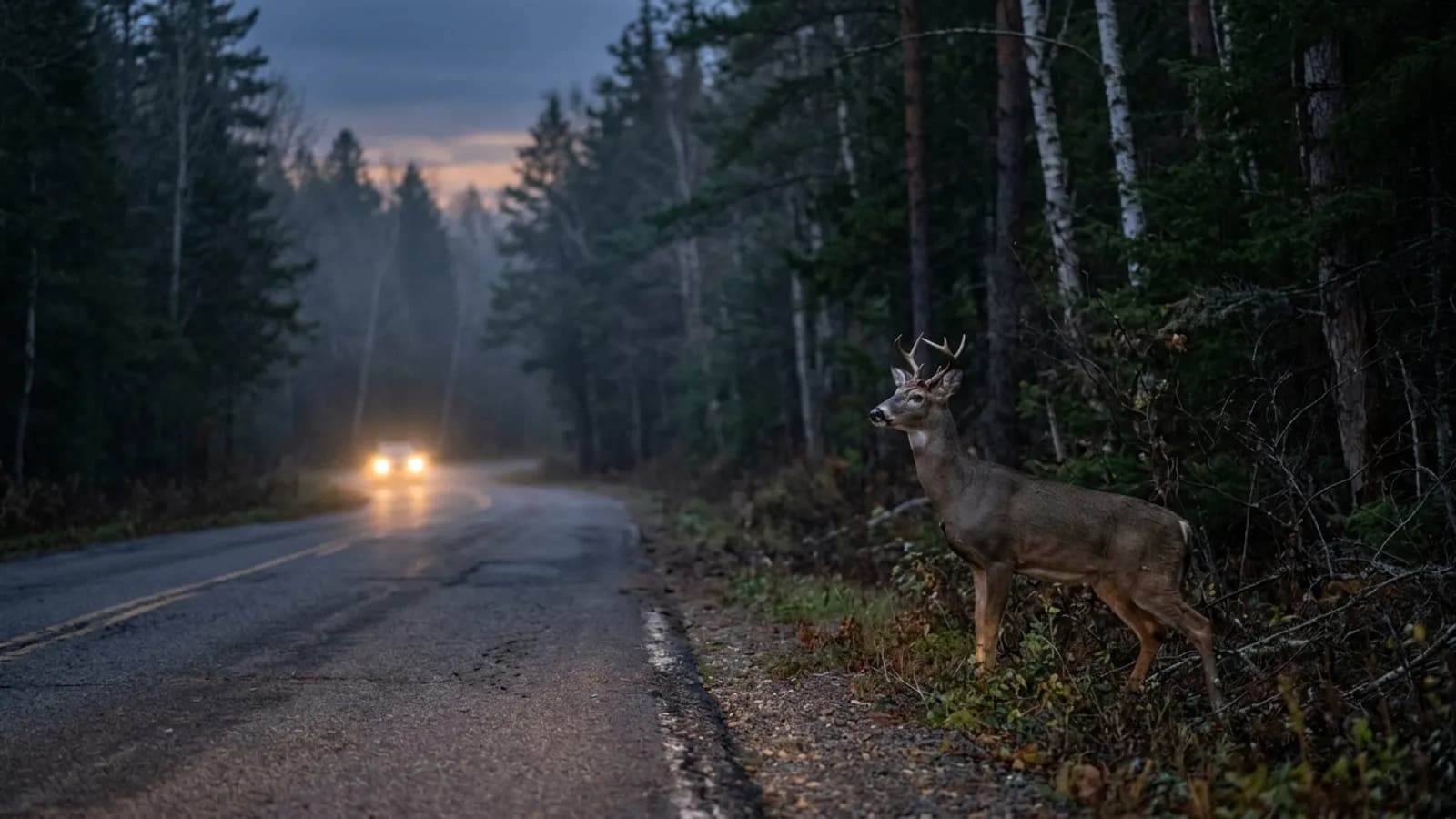
Does Car Insurance Cover Animal Collisions?
Hitting an animal claims under comprehensive coverage, not collision — swerving into something else flips the claim. Deer, livestock, and pet strikes explained.
Read guideWhat Is Uninsured Motorist Coverage?
Uninsured motorist (UM) coverage pays your injuries when an at-fault driver has no insurance — including hit-and-run drivers — and UIM pays when limits fall short.
Read guide