
Does Renters Insurance Cover Theft From My Car?
Yes — belongings stolen from inside your car are covered by renters insurance as personal property; the car itself and attached equipment belong to auto coverage.
Why you can trust this guide
- Written by Daniel Reyes, AINS, former licensed P&C agent — independent insurance education publisher.
- Factual accuracy reviewed and signed off by Marcus Hale, CPCU, AINS, licensed P&C agent (Independent insurance reviewer).
- Every factual claim traces to a regulator, statute, or policy document — sources are listed at the bottom of the page.
- Last verified ; time-sensitive guides are re-checked at least twice a year. Read our editorial policy.
On this page
Yes — belongings stolen from inside your car are covered by renters insurance as personal property. The car itself and its attached equipment are auto-comprehensive territory, so a break-in usually means two claims on two policies.
The split between your two policies
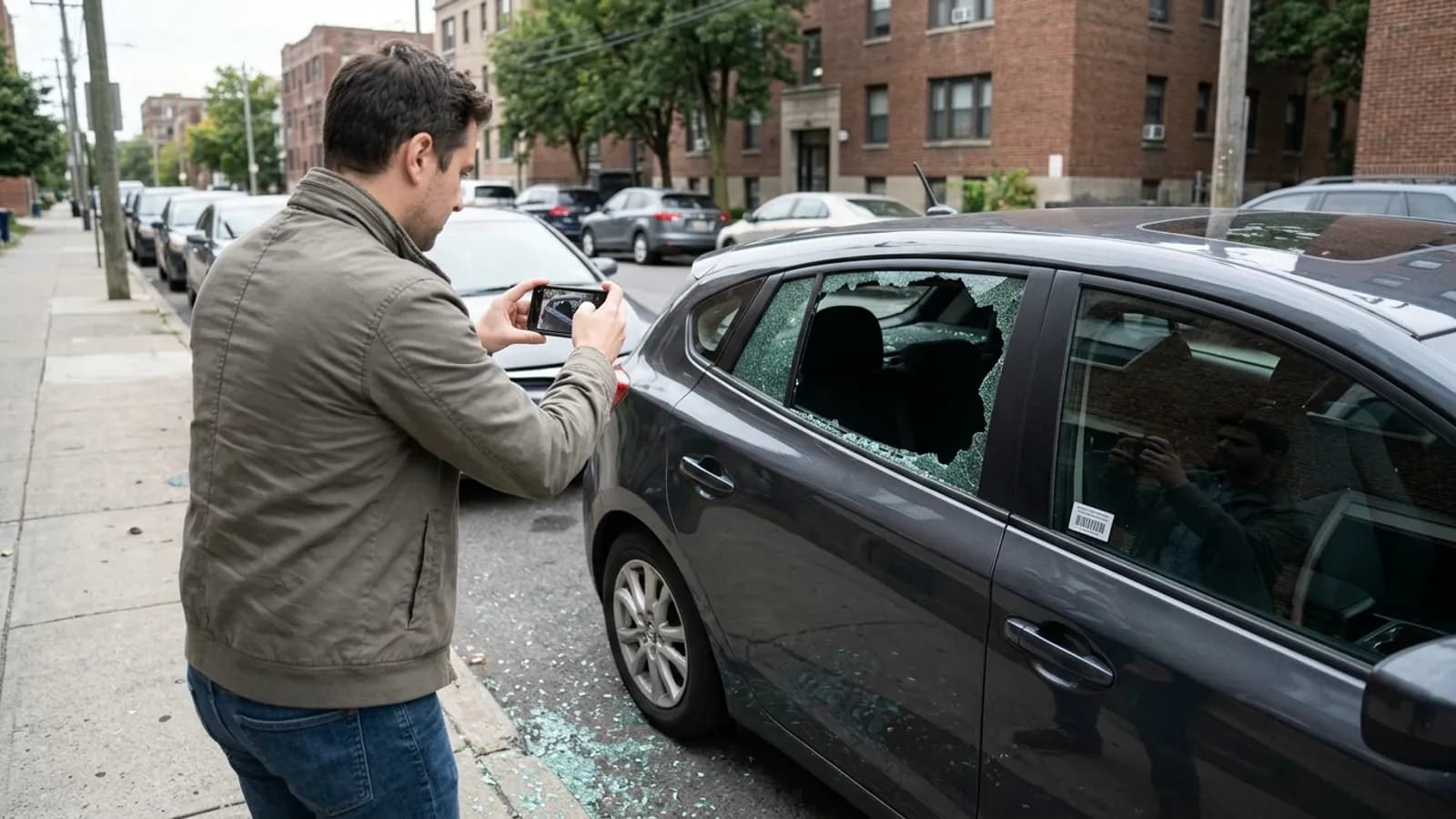
A car break-in activates two policies, and the split is clean. The auto policy's comprehensive coverage owns the car itself: the smashed window, the door damage, anything attached to the vehicle. Your renters policy owns the contents: the bag, laptop, camera, and anything loose in the cabin or trunk.
A break-in that takes a $1,300 laptop and costs a $400 window is therefore two claims — renters for the laptop, auto for the glass — and two deductibles. Renters who own no car (borrowed vehicles, car-shares, rentals) rely entirely on the renters side, which covers their property the same as theft from anywhere else. The one sentence that prevents the classic mistake: the car insurance never pays for your bag, and the renters insurance never pays for the window.
The sub-limits and the deductible overlap
Two cost mechanics shrink these claims, and both are knowable in advance. Deductibles stack: a $500 renters deductible on the contents plus a comprehensive deductible on the glass means small break-ins can net near zero — a $700 laptop against a $500 deductible pays $200, while the $400 glass goes to the auto deductible and pays nothing. Sub-limits bite selectively: jewelry, watches, and sometimes electronics carry category caps ($1,500 for jewelry is typical), and the jewelry question covers what scheduling does about it.
The worked total: laptop $1,300, camera $900, wallet cash $80 — the cash is excluded at most carriers, the electronics pay $1,700 after the $500 deductible, and any jewelry in the bag runs into its own cap. Check the sub-limit list before leaving valuables in any car, and remember that valuation matters too: carriers without replacement cost pay actual cash value, which discounts the three-year-old laptop hard.
The break-in documentation sequence
Theft claims from vehicles move on the same evidence as any theft, gathered in one stop.
- File the police report from the parking lot — most carriers require it for theft, and the location details stay accurate.
- Photograph before cleanup: the glass, the point of entry, the empty space where the item sat.
- Do not discard the damaged bag or its remnants; adjusters price from what remains.
- File both claims the same day — renters for contents, auto for glass — because prompt notice is a policy condition on both.
- Attach purchase receipts or comparable listings for the stolen items.
A claim with the report, the photos, and the valuations attached moves in days rather than the follow-up-call weeks that incomplete theft claims earn. The full claim process covers the sequence from report to reimbursement.
Prevention beats the claim arithmetic
The claim math argues for prevention. A $500 deductible against a $700–$1,500 loss nets a few hundred dollars at best, and the claim sits on your history either way. Nothing visible through the windows, valuables in the trunk before parking (not at the destination), and the trunk itself closed are the three habits that eliminate most break-in losses. Off-premises caps also bound what travels with you — the storage units question explains the 10% cap that applies the same way to a car full of gear.
The renter without an auto policy
The split simplifies for renters who do not own a car: borrowed vehicles, car-shares, and rentals put no comprehensive claim in play, because the renter has no auto policy to claim against. The break-in becomes a single renters claim for the contents — the bag, the laptop, the camera — under the same away-from-home rules as any theft. The glass is the vehicle owner's or the rental company's problem, through their coverage or the rental company's damage waiver.
The same logic covers gear stolen from a friend's car, a rideshare, or a moving van: the renters policy follows the property, not the vehicle, which is why the away-from-home cap and the electronics sub-limits matter exactly as much on the road as at home. The storage units question covers that cap in its slowest-moving form.
Related guides
Break-in claims connect to the sub-limit, deductible, and claim questions:
- Does Renters Insurance Cover a Stolen Bike? — the other away-from-home theft claim, with its own sub-limit.
- What Is Renters Insurance and How Much Does It Cost? — the policy paying the contents half of the break-in, at $15–$30 per month.
- How to Choose the Best Renters Insurance Company — claim channels differ carrier by carrier; the criteria test them.
- What Is Scheduled Personal Property? — the itemized endorsement that lifts the electronics and jewelry caps.
Sources
Frequently asked questions
My laptop was stolen from my car — whose insurance pays?
Renters insurance — the laptop is personal property away from home, subject to any electronics sub-limits. The smashed window claims against your auto policy's comprehensive coverage. Two policies, two claims, and both need the same police report number. File both the same day; prompt notice is a condition on each.
Is a bag stolen from an unlocked car covered?
Most renters forms pay theft from a vehicle regardless of forced entry; some require signs of entry. Check the theft wording on your form, and rely on the police report to document how the theft occurred — the report is required either way.
Whose deductible applies to a theft-from-car claim?
Your renters deductible applies to the stolen contents. The auto deductible applies only if you also claim the glass or vehicle damage — two claims, two deductibles, each on its own policy. Small break-ins can net near zero once both deductibles stack.
Is the car stereo stolen from my car covered by renters insurance?
Factory-installed equipment belongs to the vehicle and claims under auto comprehensive. Aftermarket items you added may be personal property — the attached-versus-portable line — and auto policies often need a custom-equipment endorsement for the good stuff. The permanently attached versus portable test decides most stereo disputes.
Are car keys and garage remotes covered when stolen with my bag?
The physical remotes and fobs can be claimable as personal property. Rekeying the car or reprogramming the garage opener often falls outside contents coverage — scope those costs before filing, and ask the adjuster what the form allows. Dealership reprogramming quotes vary widely, so get two before claiming.
How we researched this guide
Renters coverage is small and simple, but landlord requirements and state rules vary — so we verify both sides of the lease.
- What HO-4 policies cover (and the liability and loss-of-use mechanics) is verified against standard policy forms and DOI consumer guides.
- Landlord-side insurance requirements are framed against HUD tenant-rights resources, since required coverage limits appear in lease terms, not statutes.
- Cost figures are ranges by state and coverage limit, anchored to NAIC statistics.
- Disaster-aid expectations are set from FEMA guidance: federal assistance is not a replacement for coverage, and we explain exactly what it does pay.
Where facts vary by state or insurer, we publish the range and the reason for the variation rather than a single misleading average. We do not sell insurance, take money from insurers for coverage, or publish claim amounts we cannot trace to a source.
Sources
The primary sources behind the facts on this page. Last verified November 10, 2026.
- HUD — tenant rights and responsibilities — state landlord-tenant rules that affect liability requirements.
- FEMA — renters and disaster assistance — what federal disaster aid does and does not cover for tenants.
- NAIC — National Association of Insurance Commissioners — model regulations, consumer guides, and industry statistics.
- Find your state insurance regulator (NAIC directory) — every state insurance department — the authority for your state's rules and complaint filing.
- Insurance Information Institute (III) — industry statistics and consumer explainers we cross-check against regulator publications.
Rules that vary by state are verified against the state insurance department's consumer pages — find yours via the NAIC directory above.
Keep reading
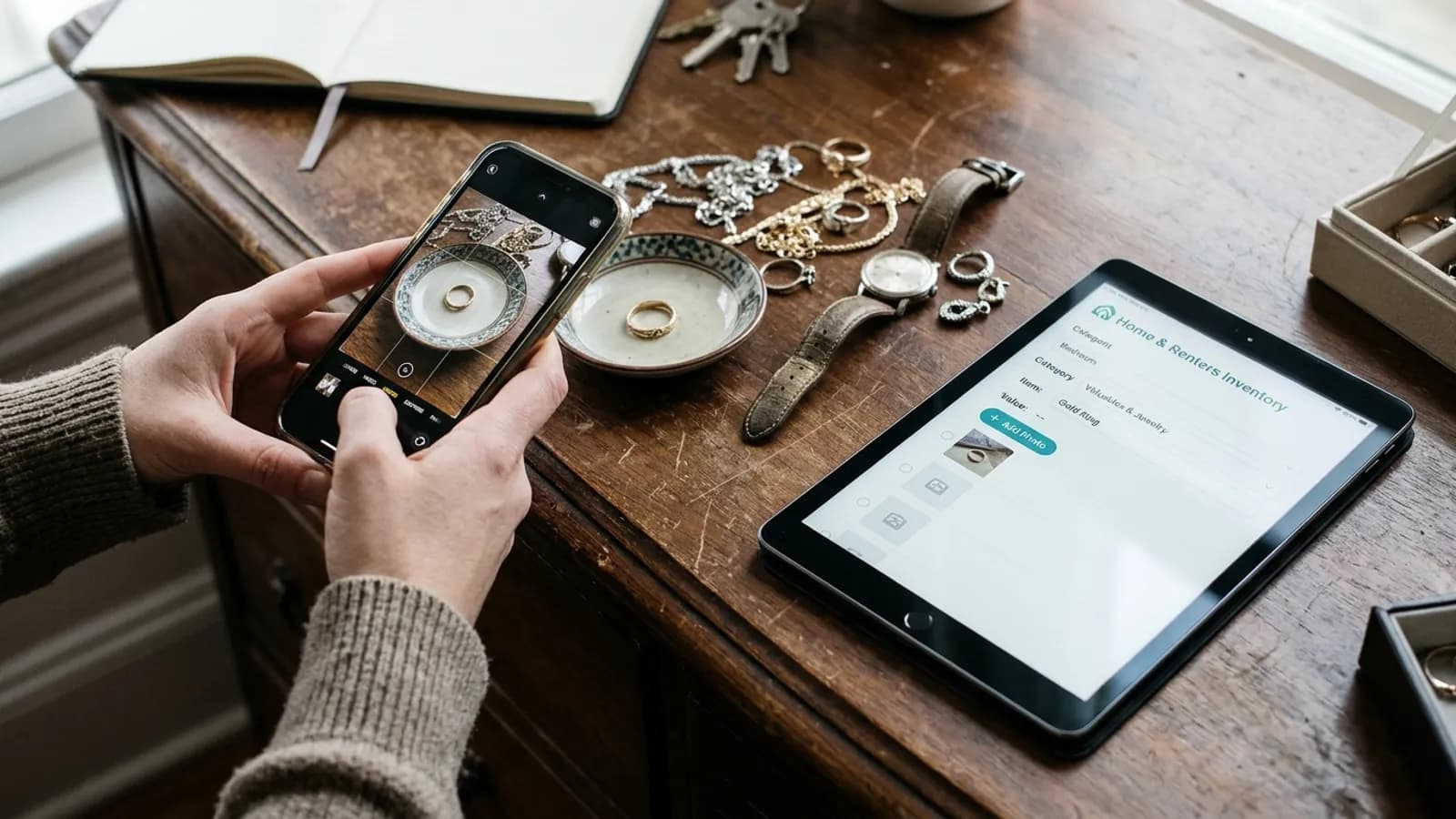
Does Renters Insurance Cover Jewelry?
Yes up to a sub-limit — renters policies cap stolen jewelry at $1,000–$2,500; pieces above the cap need a scheduling endorsement for full appraised value.
Read guide
Does Renters Insurance Cover Storage Units?
Usually — renters insurance follows belongings into storage, but an off-premises cap of 10% of your property limit bounds the payout; scheduling bypasses the cap.
Read guide
The Renters Insurance Claim Process: From Theft to Reimbursement
Renters claims are won by documentation — police report, photos before cleanup, itemized inventory — and most simple claims pay within one to two weeks.
Read guideWhat Is Actual Cash Value (ACV)?
Actual cash value (ACV) pays replacement cost minus depreciation — used value, not new. The cheaper premium option pays smaller claims on contents, roofs, and cars.
Read guideWhat Is a Deductible? (Insurance, Explained)
A deductible is what you pay out of pocket for covered losses before insurance pays — health resets it yearly; auto and home apply it per claim.
Read guide