
Does Renters Insurance Cover Jewelry?
Yes up to a sub-limit — renters policies cap stolen jewelry at $1,000–$2,500; pieces above the cap need a scheduling endorsement for full appraised value.
Why you can trust this guide
- Written by Daniel Reyes, AINS, former licensed P&C agent — independent insurance education publisher.
- Factual accuracy reviewed and signed off by Marcus Hale, CPCU, AINS, licensed P&C agent (Independent insurance reviewer).
- Every factual claim traces to a regulator, statute, or policy document — sources are listed at the bottom of the page.
- Last verified ; time-sensitive guides are re-checked at least twice a year. Read our editorial policy.
On this page
Yes, up to a sub-limit — renters insurance covers stolen jewelry only to a category cap, typically $1,000–$2,500 total for jewelry, watches, and furs. An engagement ring above the cap needs a scheduled-personal-property endorsement for its appraised value.
How the sub-limit and scheduling work together
The standard policy caps theft of jewelry, watches, and furs as a category — $1,500 is the common figure, with some carriers at $1,000 or $2,500. The sub-limit sits under your contents limit, not beside it: a $20,000 policy with a $1,500 jewelry cap pays at most $1,500 for any theft of jewelry, no matter how many pieces were taken.
Scheduling rewrites those terms per item. The piece is listed at appraised value, the deductible disappears, and perils broaden — mysterious disappearance and lost stones become covered on scheduled items, which is the change that actually matters for rings that leave the house. Pricing runs roughly $1–$2 per $100 of value annually, so a $6,000 ring schedules for $60–$120 per year. Any piece above the cap is a scheduling decision, not a maybe — the mechanics live under scheduled personal property, and a standalone personal-property floater is the equivalent route at carriers that price it that way.
The claim scenarios mapped
Three scenarios behave differently under the same policy. Theft at home: paid, but capped by the jewelry sub-limit unless the piece is scheduled. Theft while traveling: the sub-limit follows the jewelry anywhere — hotel, gym locker, checked bag — so the cap applies identically abroad. Loss and damage: the boundary line — an unscheduled ring that slides off at the beach is mysterious disappearance, commonly excluded; a scheduled one is covered, no deductible.
Fire and other perils usually run against the general contents limit rather than the theft sub-limit, though forms differ on whether jewelry carries its own all-peril cap. The one-line summary: theft is capped everywhere, loss is excluded everywhere — unless the item is scheduled, and then both are covered.
The appraisal and documentation claims require
Scheduled items live and die on the appraisal. Carriers want a current appraisal or detailed receipt — stone weights, metal, cut, and a replacement value — typically dated within the last few years, and they reprice or re-ask as metal and stone markets move, which is why appraisals refresh every two to three years.
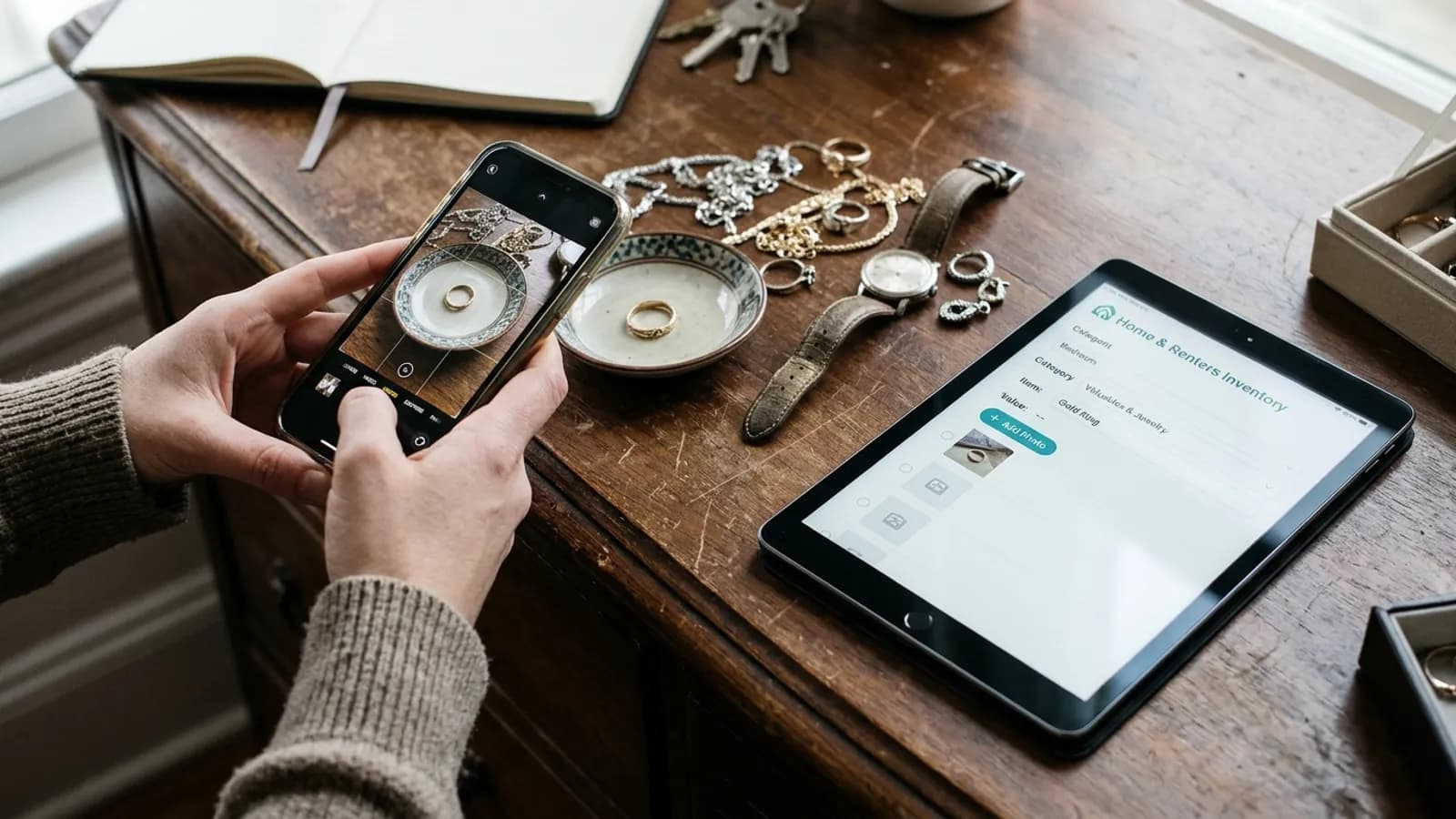
The supporting file is simple and digital: the appraisal PDF, three or four photos per piece, serial numbers for watches, and the purchase receipt where it exists. Unscheduled pieces need the same file preemptively, because a post-theft scramble to prove a ring's value is the difference between a paid claim and a lowballed one. Store the file in cloud storage, not the same drawer as the jewelry — and remember that jewelry left in a car is the most common theft setting, covered in the theft-from-car question.
Deciding what to schedule
- Total the appraised value of every piece you own; compare it to your form's jewelry cap.
- Schedule any single piece above the cap — the ring, the heirloom watch, the family stones.
- Refresh appraisals every two to three years, and after any major market move in gold or diamonds.
- Keep the appraisal, receipts, and photos in one cloud folder the adjuster can be sent in one email.
The common mistakes page lists the skipped scheduling check among the eight errors that cost tenants money at claim time.
Related guides
Jewelry coverage sits next to the sub-limit and scheduling questions:
- Does Renters Insurance Cover a Stolen Bike? — the other category that lives under a low sub-limit.
- What Is Renters Insurance and How Much Does It Cost? — the full policy for $15–$30 per month, sub-limits included.
- First Apartment Insurance Checklist — the scheduling step, done while the receipts still exist.
- The Renters Insurance Claim Process — the documentation standard the theft claim must meet.
Sources
Frequently asked questions
Is my engagement ring covered by renters insurance?
Up to the jewelry sub-limit — typically $1,000–$2,500 — for theft. Most rings exceed that cap, so scheduling is the real answer: an endorsement listing the ring at appraised value with no deductible and broader perils, including loss scenarios the base form excludes.
Is jewelry damaged in a fire covered above the theft sub-limit?
At many carriers the sub-limit applies to theft only, and fire damage draws on the general personal-property limit. Wording varies by form — check whether your jewelry cap is theft-specific or all-peril before assuming the fire claim is uncapped. Scheduling removes the ambiguity entirely for pieces that matter.
What if my jewelry is lost rather than stolen?
Unscheduled jewelry: mysterious disappearance is commonly excluded — theft is covered, loss is not. Scheduled items: loss is covered, with no deductible. The scheduling endorsement is the difference between the two outcomes, and a ring that slides off at the beach is the classic denied-versus-paid pair.
Can I schedule several pieces on one endorsement?
Yes. Itemized scheduling lists each piece with its appraised value and pays each at its own amount; some carriers offer blanket jewelry scheduling with per-item caps, which is simpler but caps single pieces. Itemized costs more and covers more, and appraisals dated within the last few years support either version.
What does scheduling cost for a $5,000 ring?
Commonly $1–$2 per $100 of value annually — so $50–$100 per year for a $5,000 ring — with no deductible and broader perils than the standard policy, including mysterious disappearance and lost stones. The appraisal sets the scheduled value, so keep it current.
How we researched this guide
Renters coverage is small and simple, but landlord requirements and state rules vary — so we verify both sides of the lease.
- What HO-4 policies cover (and the liability and loss-of-use mechanics) is verified against standard policy forms and DOI consumer guides.
- Landlord-side insurance requirements are framed against HUD tenant-rights resources, since required coverage limits appear in lease terms, not statutes.
- Cost figures are ranges by state and coverage limit, anchored to NAIC statistics.
- Disaster-aid expectations are set from FEMA guidance: federal assistance is not a replacement for coverage, and we explain exactly what it does pay.
Where facts vary by state or insurer, we publish the range and the reason for the variation rather than a single misleading average. We do not sell insurance, take money from insurers for coverage, or publish claim amounts we cannot trace to a source.
Sources
The primary sources behind the facts on this page. Last verified November 10, 2026.
- HUD — tenant rights and responsibilities — state landlord-tenant rules that affect liability requirements.
- FEMA — renters and disaster assistance — what federal disaster aid does and does not cover for tenants.
- NAIC — National Association of Insurance Commissioners — model regulations, consumer guides, and industry statistics.
- Find your state insurance regulator (NAIC directory) — every state insurance department — the authority for your state's rules and complaint filing.
- Insurance Information Institute (III) — industry statistics and consumer explainers we cross-check against regulator publications.
Rules that vary by state are verified against the state insurance department's consumer pages — find yours via the NAIC directory above.
Keep reading
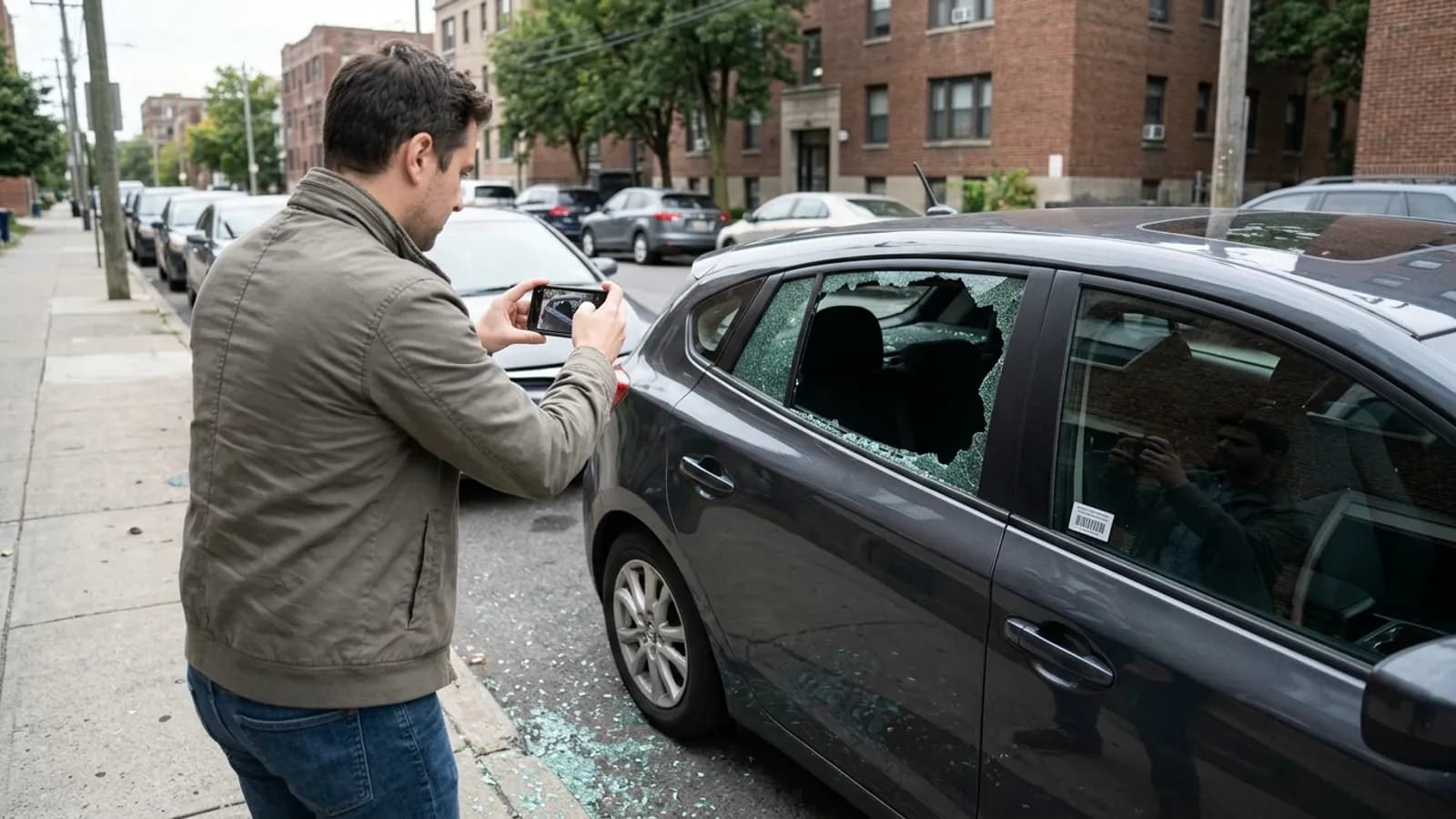
Does Renters Insurance Cover Theft From My Car?
Yes — belongings stolen from inside your car are covered by renters insurance as personal property; the car itself and attached equipment belong to auto coverage.
Read guide
The 8 Renters Insurance Mistakes That Cost Tenants Money
Eight renters insurance mistakes cost real money: ACV coverage, thin liability, skipped endorsements, unlisted roommates, undisclosed pets, and lapsed renewals.
Read guide
What Is Renters Insurance and How Much Does It Cost?
Renters insurance covers your belongings, liability, and hotel costs when the rental is unlivable, for about $15–$30 per month — what it pays and what it excludes.
Read guideWhat Is Scheduled Personal Property?
Scheduled personal property is items listed individually on a policy at appraised value — no deductible, broader perils, full-value payment at loss.
Read guideWhat Is a Personal Property Floater?
A floater is a scheduled personal property policy covering specific valuables — jewelry, cameras, bikes — at appraised value, no deductible, with broader perils.
Read guide