
The Renters Insurance Claim Process: From Theft to Reimbursement
Renters claims are won by documentation — police report, photos before cleanup, itemized inventory — and most simple claims pay within one to two weeks.
Why you can trust this guide
- Written by Daniel Reyes, AINS, former licensed P&C agent — independent insurance education publisher.
- Factual accuracy reviewed and signed off by Marcus Hale, CPCU, AINS, licensed P&C agent (Independent insurance reviewer).
- Every factual claim traces to a regulator, statute, or policy document — sources are listed at the bottom of the page.
- Last verified ; time-sensitive guides are re-checked at least twice a year. Read our editorial policy.
On this page
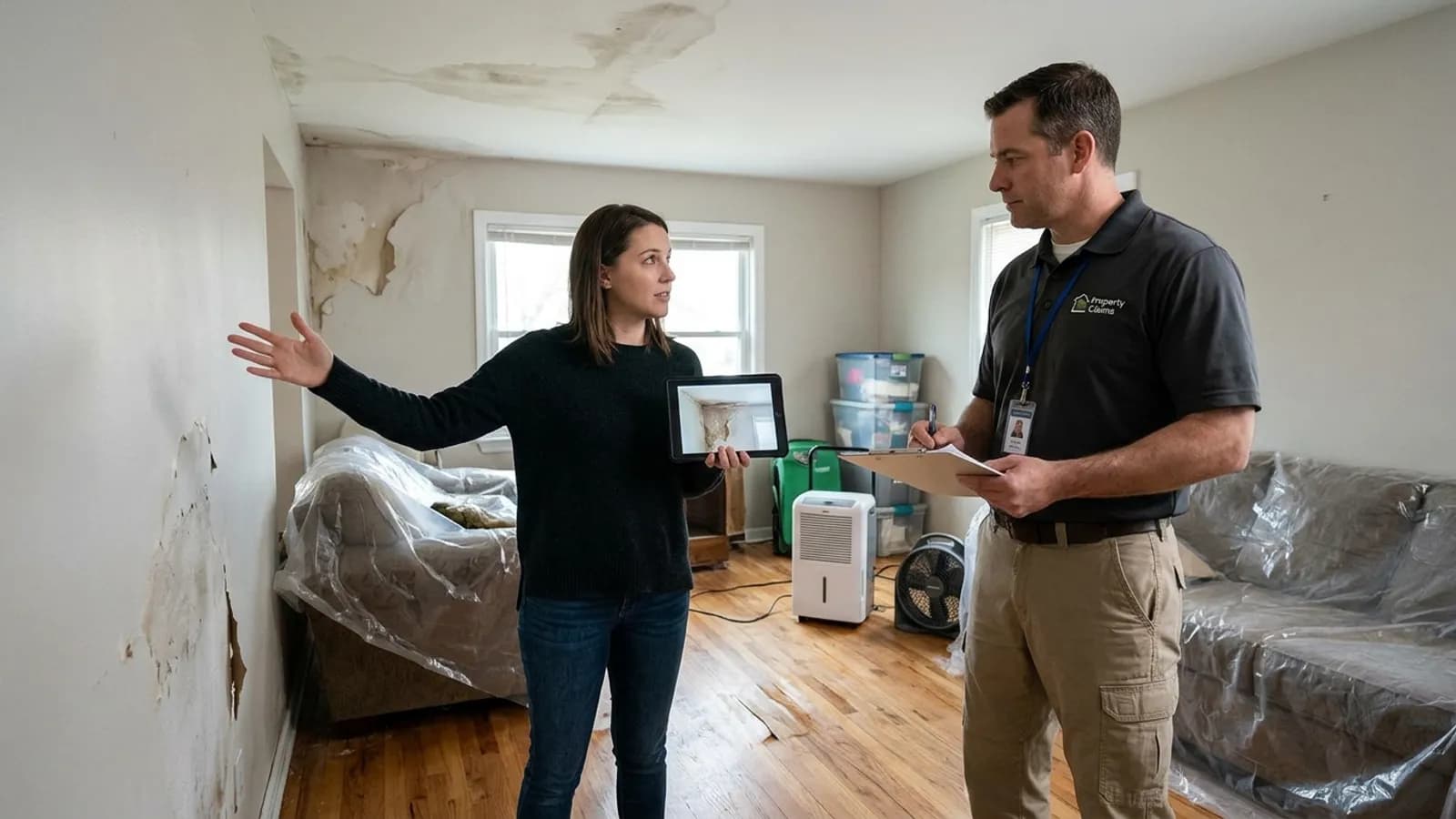
The renters claim is the simplest insurance claim in personal insurance — and it is still won by documentation: the police report, the photos taken before cleanup, and the itemized inventory. The sequence from loss to reimbursement runs the same way for theft, fire, and water; only the evidence differs.
The day of the loss
- Theft or vandalism: police report first — the report number is the claim's prerequisite, and reporting from the scene keeps the details accurate.
- Photograph everything before cleanup — the damage, the entry point, the water line, the empty spaces.
- Mitigate — stop the water, tarp the window; the mitigation duty applies to tenants too, and mitigation receipts are claimable.
- Landlord notice in writing — building issues are theirs; the paper trail protects both parties and dates the event.
The order matters because every step after cleanup loses evidence. A claim opened the same day with photographs attached moves through the queue without the back-and-forth that stalls incomplete claims.
Filing the claim
The insurer's app or phone line opens the claim, and the declaration page is the reference for everything the adjuster asks first: limits, deductible, endorsements. The file that supports payment contains:
- The itemized list — each item, age, purchase price, replacement cost; the inventory video pays off here.
- Receipts where they exist — comparable listings where they do not.
- The police report number for theft and vandalism claims.
- Cause evidence for water and fire claims — the plumber's note, the photos of the source.
- The deductible acknowledged — it comes off the top of the property payout.
The timeline
| Claim type | Typical processing |
|---|---|
| Theft with documentation | 1–2 weeks |
| Fire/water (adjuster visit) | 2–4 weeks |
| Loss-of-use payments | Fastest — submit receipts as they accrue |
| Replacement-cost settlements | ACV first, holdback released after replacement proof |
The adjuster assigned after a larger loss works from the same file; the adjuster's valuation, not the estimate you hoped for, becomes the offer. That offer is negotiable when the evidence contradicts it — the appeal path below.
What slows claims down
- No police report — theft claims stall without the report number.
- Cleanup before documentation — the strongest evidence is the one that no longer exists.
- Vague inventories — "some clothes, a TV" prices like nothing; itemize with ages and values.
- Unreported roommates' items — the named-insured boundary means their property was never covered; file only what the policy insures.
- Sub-limit surprises — the $1,500 jewelry cap against a $4,000 ring discovered after the loss; scheduling while the receipts exist is the fix.
- Missing proof of loss — larger claims often require the signed statement on the carrier's form, inside a deadline that expires quietly.
The settlement math, worked
The claim's final number follows the valuation basis, and the two paths diverge by hundreds of dollars. Worked example: a $6,000 loss (electronics, furniture, clothing) against a $500 deductible. Actual-cash-value path: the carrier prices each item at replacement cost minus depreciation — three-year-old items at perhaps 60–70% of new — and pays roughly $4,200 once, done. Replacement-cost path: the same initial check arrives at the depreciated figure, but the held depreciation is released when you submit replacement receipts, bringing the total to about $5,500. The actual cash value versus replacement-cost gap is the price of the endorsement, paid back in one claim.
The operational rule that follows: under replacement cost, the claim is not finished until the receipts are submitted — unclaimed depreciation is money left on the table.
The proof-of-loss and receipts loop
Two paperwork mechanisms decide how much of a claim actually pays. Proof of loss: larger claims often require a signed statement of the loss amount, on the carrier's form, within a fixed window — calendar the deadline, because late submission jeopardizes payment. The receipts loop: under replacement cost, the carrier pays the depreciated figure first and releases the remainder against receipts, typically with a submission window running from the payment date — 180 days is a common term, form-dependent.
The loop's failure mode is quiet: the check arrives, the claim feels closed, and the held depreciation expires unnoticed. A folder of replacement receipts submitted weekly — not annually — is the mechanics of collecting the full settlement. When a carrier denies rather than underprices, the escalation ladder changes; the claim denial entry covers that branch.
The appeal path for low valuations
Adjuster valuations are negotiable when they meet evidence. A valuation that prices a TV below its model or a bike below its class gets answered with comparables: three to five current listings for the same or equivalent items, plus original receipts where they exist. Submit the counter in writing, attached to the claim number, and most lowballs resolve at the adjuster level.
The escalation ladder beyond that: a supervisor review, then the state insurance department's consumer complaint process, which obligates the carrier to respond formally and moves stalled claims more than repeated phone calls. Small-claims court exists as the final venue but is rarely needed for renter-scale claims — the written evidence file does most of the work the courtroom would.
The renewal footnote most renters miss
A filed claim does not end at payment: it sits on your loss history, feeds the carrier's renewal re-rating, and follows you on CLUE-style reports when the next carrier quotes. That is the calculus behind the deductible math — a $300 net payout on a $500 deductible claim can cost more at the next two renewals than it returned. File claims that matter; self-fund the ones that do not. The common mistakes page ranks the claim-diligence failures among the eight that cost tenants money.
The public-adjuster question
A public adjuster is a licensed professional who re-prices your loss for a percentage of the settlement, and the honest answer for renter-scale claims is that the ladder above works first. Public adjusters earn their fee on large, disputed, documentation-heavy losses; a $6,000 contents claim with a 10% contingency fee can give back more than the valuation dispute would have won. The sequence that makes sense: comparables in writing, supervisor review, then the state insurance department's complaint process — and the public adjuster only when a genuinely large or bad-faith-stalled loss justifies the fee. The state DOI complaint path costs nothing and obligates a formal response, which is why it precedes everything paid.
The landlord's claim, running alongside
A fire or water loss in an apartment produces two claims on two policies, and knowing the seam prevents the classic crossover mistakes. The landlord's policy owns the structure: drywall, flooring, cabinets, the plumbing itself. Your renters claim owns the contents and the displacement. The two claims share the loss date and often the same repair crew, and they share nothing else — the landlord's carrier does not pay your furniture, and yours does not pay their drywall, even when the same burst pipe caused both.
The seam gets political at the repair timeline: your loss-of-use clock runs on the landlord's repair schedule, which is why the documented contractor timeline in your file matters. And it matters at subrogation: when the loss traces to a landlord-neglected leak or a tenant-abandoned stove, the two carriers may pursue recovery against each other. That negotiation is carrier-to-carrier; the tenant's job remains filing promptly, documenting, and answering truthfully.
Related guides
The claim process connects to the setup that makes it pay and the mistakes that stall it:
- What Is Renters Insurance and How Much Does It Cost? — the policy parts the claim pays under, for $15–$30 per month.
- First Apartment Insurance Checklist — the inventory video and receipt folder the claim runs on.
- What Is a Proof of Loss? — the signed statement and its deadline on larger claims.
- What Is Replacement Cost Coverage? — the valuation basis and the receipts loop it requires.
- What Is an Insurance Settlement? — what the final number is called and how it is paid.
Sources
Frequently asked questions
How do I file a renters insurance claim?
Through the insurer's app or phone line: the incident date and description, the police report number (theft/vandalism), photos, and the itemized loss list. Most claims process in 1–2 weeks; payment goes by check or direct deposit after the deductible. Open the claim the same day as the loss — prompt notice is a policy condition.
What documentation does a renters claim need?
Theft: police report. Fire/water: photos of damage before cleanup, the cause evidence, and any landlord communications. Both: the itemized inventory with ages, values, and receipts where they exist — the pre-loss inventory video is the claim's best asset. Photographs taken after cleanup are worth a fraction of photographs taken before it.
How long does a renters insurance claim take?
Simple claims (theft with documentation): 1–2 weeks. Claims needing adjuster visits (fire, water): 2–4 weeks. Loss-of-use payments (hotel) process fastest when receipts are submitted promptly, ideally weekly rather than in one batch at the end. Ask about an advance after a total loss — most carriers issue one against the expected claim.
Why did my renters claim pay less than the item's price?
Carriers pay actual cash value — replacement cost minus depreciation — first. Under replacement-cost coverage, the held depreciation is released when you submit replacement receipts, usually within a set window after payment. The claim is not finished until those receipts are in.
What is proof of loss in a renters claim?
A signed statement of the loss amount some forms require for larger claims, due within a fixed deadline. Late or missing proof of loss can jeopardize the payment — calendar the deadline when the form arrives and submit it with the itemized inventory attached.
Can I dispute an adjuster's valuation?
Yes. Send comparable listings and receipts in writing against the claim number. If unresolved, escalate to a supervisor review and then your state insurance department's consumer complaint process, which obligates the carrier to respond formally. Three to five comparable listings is the evidence set that moves most valuations.
How we researched this guide
Renters coverage is small and simple, but landlord requirements and state rules vary — so we verify both sides of the lease.
- What HO-4 policies cover (and the liability and loss-of-use mechanics) is verified against standard policy forms and DOI consumer guides.
- Landlord-side insurance requirements are framed against HUD tenant-rights resources, since required coverage limits appear in lease terms, not statutes.
- Cost figures are ranges by state and coverage limit, anchored to NAIC statistics.
- Disaster-aid expectations are set from FEMA guidance: federal assistance is not a replacement for coverage, and we explain exactly what it does pay.
Where facts vary by state or insurer, we publish the range and the reason for the variation rather than a single misleading average. We do not sell insurance, take money from insurers for coverage, or publish claim amounts we cannot trace to a source.
Sources
The primary sources behind the facts on this page. Last verified November 10, 2026.
- HUD — tenant rights and responsibilities — state landlord-tenant rules that affect liability requirements.
- FEMA — renters and disaster assistance — what federal disaster aid does and does not cover for tenants.
- NAIC — National Association of Insurance Commissioners — model regulations, consumer guides, and industry statistics.
- Find your state insurance regulator (NAIC directory) — every state insurance department — the authority for your state's rules and complaint filing.
- Insurance Information Institute (III) — industry statistics and consumer explainers we cross-check against regulator publications.
Rules that vary by state are verified against the state insurance department's consumer pages — find yours via the NAIC directory above.
Keep reading

What Is Renters Insurance and How Much Does It Cost?
Renters insurance covers your belongings, liability, and hotel costs when the rental is unlivable, for about $15–$30 per month — what it pays and what it excludes.
Read guide
The 8 Renters Insurance Mistakes That Cost Tenants Money
Eight renters insurance mistakes cost real money: ACV coverage, thin liability, skipped endorsements, unlisted roommates, undisclosed pets, and lapsed renewals.
Read guide
First Apartment Insurance Checklist (20 Minutes to Covered)
The first-apartment renters checklist: a 20-minute sequence of inventory, limits, replacement cost, endorsements, and the landlord certificate before move-in.
Read guideWhat Is a Proof of Loss?
A proof of loss is the sworn statement some policies require after a claim — itemizing damaged items, values, and documentation — commonly due within 60–90 days.
Read guideWhat Is Replacement Cost Coverage?
Replacement cost pays today's price to repair or replace damaged property with no depreciation subtracted; actual cash value subtracts depreciation.
Read guide