
Home Insurance in San Diego, CA: Costs and Guide (2026)
Home insurance in San Diego costs $1,700–$3,000 per year. East-county wildfire corridors, coastal calm, and the quake exclusion shape the local pricing spread.
Why you can trust this guide
- Written by Daniel Reyes, AINS, former licensed P&C agent — independent insurance education publisher.
- Factual accuracy reviewed and signed off by Marcus Hale, CPCU, AINS, licensed P&C agent (Independent insurance reviewer).
- Every factual claim traces to a regulator, statute, or policy document — sources are listed at the bottom of the page.
- Last verified ; time-sensitive guides are re-checked at least twice a year. Read our editorial policy.

On this page
Home insurance in San Diego runs about $1,700–$3,000 per year for a standard HO-3 policy on a median-priced home. The local story is a county split in two: the coastal plain and urban core price calmly, while the east-county wildfire corridors — where the 2003 Cedar and 2007 Witch Creek fires burned into neighborhoods — carry interface underwriting, FAIR Plan placements, and the county's steepest quotes. The quake exclusion is the second decision, since earthquake damage sits outside every standard policy. The statewide picture sits in the California guide linked below.
What San Diego homeowners pay
| Profile in San Diego | Typical annual premium |
|---|---|
| California statewide median | $1,500–$3,500 |
| Median San Diego home, updated roof, $1,000 deductible | $1,700–$3,000 |
| East-county interface addresses (Santee, Lakeside, Alpine) | quotes high, or FAIR Plan placement after inspection |
| Coastal and urban-core ZIPs (La Jolla, North Park, Chula Vista edge) | mid-range for San Diego |
| Roof 15+ years old | +15–40%, or an actual-cash-value roof settlement |
| Earthquake coverage added (CEA or private) | separate policy, 10–25% deductible math |
San Diego sits inside California's range, and the wildfire map does the spread: a North Park craftsman and an Alpine hillside home with identical rebuild values can quote hundreds of dollars apart, or land with different carriers entirely. Rebuild costs run high county-wide.
Why San Diego prices the way it does
Wildfire corridors are the first driver: east-county canyons and the slopes behind them carry the fire history — Cedar in 2003, Witch Creek in 2007 — that modern wildfire models price into interface ZIPs, and carriers answer with inspections, defensible-space conditions, and non-renewals. Rebuild costs are the second: San Diego construction prices keep the dwelling figure — and any underinsurance in it — expensive per square foot. The quake exclusion is the third: Southern California faults put earthquake outside the HO-3, creating the separate coverage decision that defines the region's real coverage spend. Carrier availability is the fourth — California's wildfire-driven market dysfunction thins competition statewide, pushing quotes toward the range's upper half.
Requirements and insurer norms in San Diego
California does not mandate homeowners insurance; mortgage lenders do, and replacement-cost claim treatment requires insuring at least 80% of the home's rebuild cost. Interface-adjacent carriers inspect for defensible space and may condition renewal on mitigation work — brush clearance documentation is the east-county renewal habit. Homes the admitted market declines place through the California FAIR Plan, which covers fire and smoke but omits liability and water, so FAIR Plan owners pair it with a difference-in-conditions policy. The California Department of Insurance licenses carriers and runs the complaint process for stalled claims, and the CEA publishes the quake policy structure behind most Southern California earthquake quotes.
The San Diego claim pattern
- Wildfire underwriting before any fire — Cedar and Witch Creek history shows up as defensible-space requirements and non-renewals in the east-county corridors; the FAIR Plan is the placement answer when the admitted market declines (wildfire coverage).
- The quake exclusion — earthquake damage is excluded from the HO-3; CEA or private coverage with a 10–25% deductible is the separate Southern California purchase (earthquake insurance).
- Smoke and ash intrusion — fire seasons push smoke over the coast; ash damage is covered under the fire peril, documented before cleanup.
- Water claims in older coastal stock — dated plumbing and slab leaks in postwar housing produce the sudden-versus-gradual disputes; documentation settles them (the exclusion concept).
- Slab-leak and drainage disputes — hillside homes add runoff and soil-movement questions the earth-movement exclusion removes; drainage maintenance is the practical defense.
Coverage setup that fits San Diego
- Earthquake coverage alongside the standard policy — CEA or private, with a 10–25% deductible sized against the rebuild figure; Southern California makes this the local planning exercise.
- Defensible-space documentation for interface addresses — brush clearance photos and inspection reports keep an admitted-market policy in force at renewal.
- Dwelling at rebuild cost with ordinance-or-law awareness — San Diego rebuild costs punish stale limits; re-estimate every 2–3 years.
- A $1,000–$2,500 flat deductible — returning 10–25% of premium versus $500 while keeping claim exposure fundable.
- The FAIR Plan path understood before it is needed — fire-only coverage plus a difference-in-conditions policy is the interface fallback structure.
Related guides
San Diego's decisions run through the wildfire corridors and the quake exclusion — and these guides cover each one.
- Homeowners Insurance in California — the FAIR Plan, carrier non-renewals, and statewide pricing.
- Home Insurance: The Complete Guide — the HO-3 structure behind every figure on this page.
- Does Homeowners Insurance Cover Water Damage? — where sudden water is covered and where the policy stops.
- ACV vs Replacement Cost — the roof-settlement difference that decides partial-loss payouts.
- What Is Ordinance or Law Coverage? — the code-upgrade gap older rebuilds face.
Home insurance in California
Compare the state band against the nearest metros:
Sources
- California Department of Insurance — consumer resources, complaint line 800-927-4357
- California Earthquake Authority — earthquake policy structure and deductibles
- III — Homeowners and renters insurance facts
Frequently asked questions
How much is home insurance in San Diego?
San Diego home insurance runs about $1,700–$3,000 per year for a standard HO-3 policy on a median-priced home. Coastal and urban-core ZIPs price toward the middle of California's range, while east-county canyon addresses quote higher — or harder to place — as wildfire-interface underwriting prices the corridors.
Is wildfire damage covered in San Diego?
Yes under the standard policy — wildfire is a covered peril — but carriers manage east-county exposure with defensible-space requirements, inspections, and non-renewals. The 2003 Cedar Fire destroyed Scripps Ranch homes and the 2007 Witch Creek Fire hit Rancho Bernardo; that history keeps canyon and interface ZIPs under the strictest underwriting in the county.
Does home insurance cover earthquakes in San Diego?
No — earthquake damage is excluded from every standard HO-3, and Southern California faults make the exclusion real. Earthquake coverage is a separate policy, commonly through the California Earthquake Authority, with deductibles of 10–25% of dwelling coverage. It is the second coverage decision every San Diego owner prices.
What deductible should a San Diego homeowner carry?
A flat $1,000–$2,500 deductible handles most San Diego claims, and moving up from $500 saves 10–25% of the annual premium. The separate decision is the earthquake policy's percentage deductible — 10–25% of dwelling coverage — which on an $900,000 San Diego home is a five-figure sum per event, sized consciously.
Why do coastal and east-county San Diego quotes differ so much?
Wildfire modeling. The coastal plain and urban core sit far from heavy fuel loads, while east-county canyons and interface edges — Santee, Lakeside, Alpine, and the slopes behind them — score as elevated wildfire risk. The same house can quote hundreds of dollars apart, or land in the FAIR Plan, based on the address.
What happens if my carrier non-renews my San Diego home?
The admitted market may decline interface or older-stock homes for wildfire exposure or condition. The California FAIR Plan covers fire and smoke but omits liability and water, so FAIR Plan owners pair it with a difference-in-conditions policy. Non-renewal letters arrive at renewal season, so start re-quoting before the deadline.
How we researched this guide
Home policies are forms-driven: the peril list in the form decides what gets paid, so our guides follow the policy form structure.
- Coverage explanations track the standard HO-3/HO-5 form structure — Coverage A through E — because that's the contract language adjusters apply.
- Flood facts come from FEMA's National Flood Insurance Program (floodsmart.gov), since standard home policies exclude flood.
- Regional cost ranges are built from NAIC home-owners insurance statistics, with the drivers of variation (construction, age, wind/hail exposure) named explicitly.
- Mitigation and eligibility claims cite IBHS research and state fair-plan rules where standard market access is an issue.
Where facts vary by state or insurer, we publish the range and the reason for the variation rather than a single misleading average. We do not sell insurance, take money from insurers for coverage, or publish claim amounts we cannot trace to a source.
Sources
The primary sources behind the facts on this page. Last verified November 10, 2026.
- FEMA — National Flood Insurance Program (FloodSmart) — flood coverage, which standard homeowners policies exclude.
- Insurance Institute for Business & Home Safety (IBHS) — property-loss research and mitigation standards that affect eligibility and discounts.
- U.S. Department of Housing and Urban Development (HUD) — FHA-insured property requirements and disaster assistance programs.
- NAIC — National Association of Insurance Commissioners — model regulations, consumer guides, and industry statistics.
- Find your state insurance regulator (NAIC directory) — every state insurance department — the authority for your state's rules and complaint filing.
- Insurance Information Institute (III) — industry statistics and consumer explainers we cross-check against regulator publications.
Rules that vary by state are verified against the state insurance department's consumer pages — find yours via the NAIC directory above.
Keep reading
Homeowners Insurance in California: Costs and What to Know (2026)
Homeowners insurance in California costs $1,500–$3,500 per year, with wildfire risk, carrier pullbacks, and earthquake exclusions shaping what each ZIP pays.
Read guideHome Insurance: The Complete Guide
Homeowners insurance pays to rebuild, replace, and defend after fire, storms, and lawsuits — this guide maps coverage, exclusions, deductibles, and costs by state.
Read guide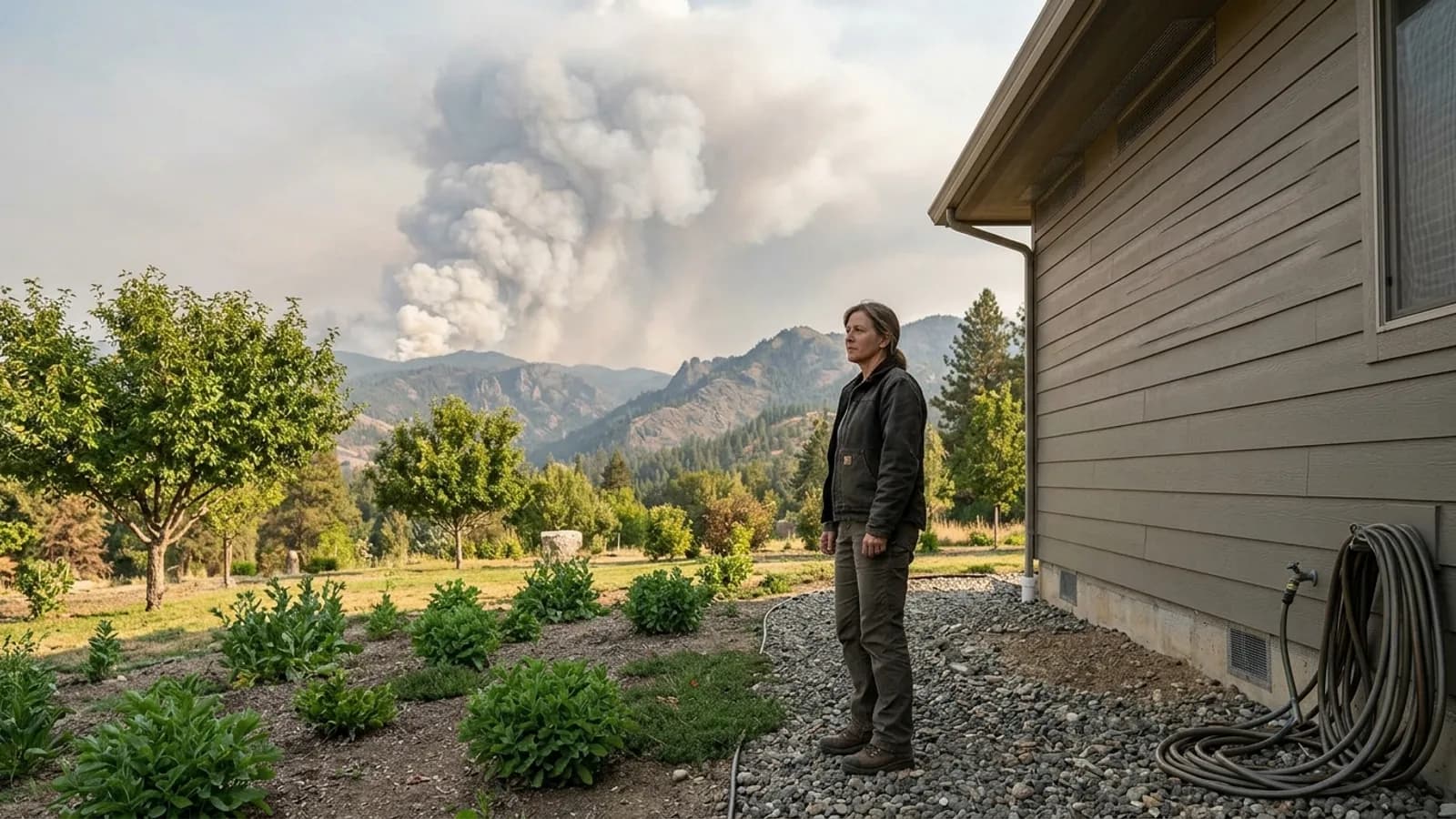
Does Homeowners Insurance Cover Wildfires?
Wildfire damage to structure, contents, and smoke is covered by standard policies; loss-of-use pays evacuation costs, and availability is the fight in fire states.
Read guide
Earthquake Insurance: The Exclusion That Matters Most (and How to Fix It)
Earthquake damage is excluded from every standard home policy. What quake coverage costs, who should buy it, and the fire-following-quake exception.
Read guideWhat Is an Exclusion in Insurance?
An exclusion is a peril, property type, or situation a policy does not cover — floods, earthquakes, wear and tear — marking exactly where your protection ends.
Read guide