
Does Homeowners Insurance Cover Wildfires?
Wildfire damage to structure, contents, and smoke is covered by standard policies; loss-of-use pays evacuation costs, and availability is the fight in fire states.
Why you can trust this guide
- Written by Daniel Reyes, AINS, former licensed P&C agent — independent insurance education publisher.
- Factual accuracy reviewed and signed off by Marcus Hale, CPCU, AINS, licensed P&C agent (Independent insurance reviewer).
- Every factual claim traces to a regulator, statute, or policy document — sources are listed at the bottom of the page.
- Last verified ; time-sensitive guides are re-checked at least twice a year. Read our editorial policy.
On this page
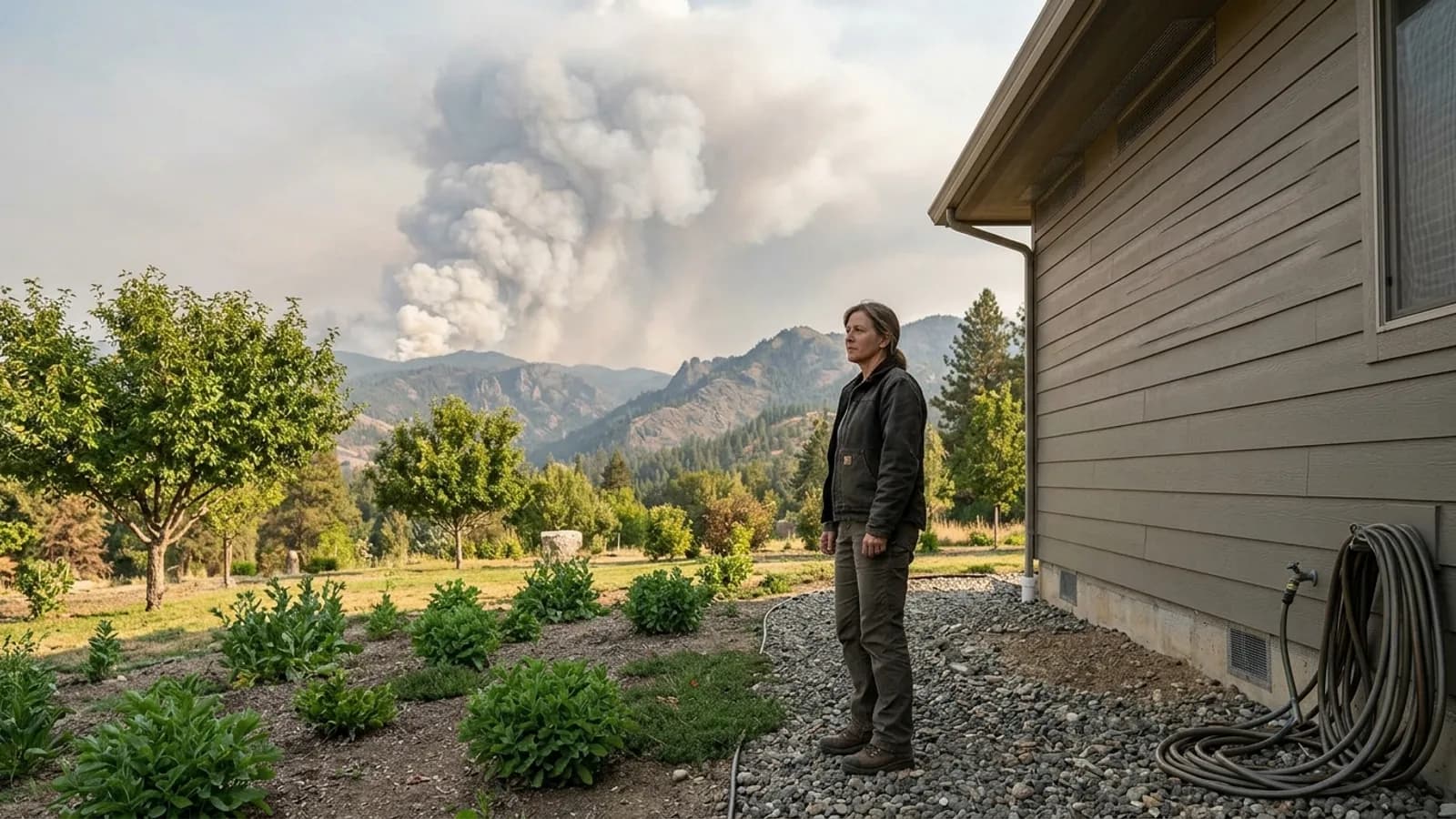
Wildfire damage — structure, contents, smoke, and loss of use — is covered by standard homeowners policies. Fire is a core peril; the market question in wildfire states is whether carriers still write the risk, not whether the peril is covered.
The smoke-ash-soot claim grading
Wildfire claims include a category most owners miss until they smell it: smoke. The claim grading runs from full structure loss — a total-loss claim paid at dwelling limits — through exterior damage, with siding, windows, and decks scorched or melted, to the interior smoke category: ash and soot infiltration in HVAC systems, ducts, and soft goods such as curtains, upholstery, and clothing, which is a real, payable property claim even when flames never reached the structure. Two technical points decide smoke claims. The cleanup standard: professional smoke remediation with duct cleaning commonly runs $2,000–$10,000 for a smoke-affected home, versus a homeowner's $400 cleaning that leaves residue and odor for years. The distance question: homes miles from the fire line collect ash fallout, and carriers treat proximity-based smoke claims with varying liberality, so documentation — photos of ash on surfaces, air-quality reports for your ZIP code, a professional's contamination assessment — is the claim. Soot and ash cleanup after a covered wildfire is a covered loss in standard forms; the disputes are about scope, not coverage.
The ALE mechanics during an evacuation
Additional living expenses coverage is the wildfire claim's daily-life answer, and its mechanics matter during a multi-week evacuation. What ALE pays: hotel or rental costs above your normal living expenses, meals above the normal grocery baseline, laundry, and pet boarding — the incremental costs of not living at home, up to the policy's loss-of-use limit, commonly a percentage of dwelling coverage or a stated dollar figure. Two practical rules: keep every receipt, because the reimbursement math is receipts minus normal expenses and a debit-card-only record reconstructs poorly; and understand the trigger — civil-authority coverage pays ALE during a mandatory evacuation in most forms even when the home is undamaged, which is the provision that covers hotel bills during a two-week precautionary evacuation. The limit check worth doing annually: an ALE limit sized for a two-week stay is undersized for the months-long displacements major fires produce — the annual audit is the place to fix that number.
The market reality in wildfire states
The wildfire insurance market has structural features worth knowing before renewal. Carrier withdrawals and non-renewals in high-risk zones — California is the prominent example — have pushed many homeowners toward the state's FAIR plan, which writes fire coverage where the voluntary market declines, often with narrower terms and separate earthquake and liability products; the Difference-in-Conditions gap between a FAIR plan fire policy and a standard HO-3 is where losses go unpaid if nobody notices. The mitigation levers carriers price: defensible space — a documented vegetation-management zone around the structure — ember-resistant venting, Class A roofing, and home-hardening certifications that some states require carriers to consider; California's wildfire rules, for example, require rate credit for documented mitigation. The renewal-season sequence for high-risk addresses: start mitigation documentation before the renewal, get the certificate, and ask every carrier, including surplus-lines markets, for terms with the file attached. Market costs and exits are tracked in the California state guide, the Colorado state guide, and the annual cost guide.
| Wildfire scenario | Covered? | Notes |
|---|---|---|
| Flames destroy or damage the structure | Yes | Dwelling limits; total-loss claims settle at Coverage A |
| Smoke and ash miles from the fire line | Yes | Scope disputes are decided by documentation |
| Mandatory evacuation, home undamaged | ALE | Civil-authority trigger; receipts decide the math |
| Voluntary departure with no order | Weak | Discretionary departures lack the trigger |
The table's third row carries the receipts rule, and its fourth row carries the planning lesson: if wildfire season threatens an ordered evacuation, leaving on the order rather than ahead of it preserves the ALE claim, while leaving early for safety always beats any claim. Both can be true at once — safety first, then the paperwork, in that order. Check the ALE limit annually: limits sized for a two-week stay underserve the multi-month displacements major fires produce, and the fix is a limit change at renewal, not a claim-time surprise.
Related guides
Wildfire coverage connects to the state-market pages, because the peril is covered everywhere and the availability fight is local.
- Homeowners Insurance in California — the FAIR-plan layering and carrier-exit market this page references.
- Homeowners Insurance in Colorado — annual costs in the other wildfire-state market with carrier pressure.
- What Does Homeowners Insurance Cover? — where fire and smoke sit in the standard peril list.
- Annual Insurance Audit Checklist — the ALE-limit and rebuild-cost checks that matter most before fire season.
Sources
Frequently asked questions
Is smoke damage covered if the fire never reached my house?
Generally yes. Smoke, ash, and soot from a covered wildfire are covered losses in standard forms, including HVAC and duct contamination and soft-goods cleaning. The disputes are about scope and distance: professional remediation with duct cleaning is the standard the policy contemplates, and ash-fall documentation — photos, air-quality data, a contamination assessment — supports claims at addresses well away from the fire line.
Does insurance pay for hotel costs during a voluntary evacuation?
Yes, when the evacuation is ordered by civil authority — most forms cover additional living expenses for a mandatory or official evacuation even if the home is never damaged. Voluntary departures without an order are weaker claims. Keep every receipt, because ALE reimburses the increment above your normal living expenses and the receipts are the arithmetic. Check your ALE limit against the multi-week displacements evacuations actually produce.
What can I do if my insurer will not renew because of wildfire risk?
Work the ladder: request a re-underwrite with a mitigation file — defensible-space documentation, ember-resistant vents, a Class A roof certificate — then ask an independent agent about surplus-lines and regional carriers, and use the state FAIR plan as the last-resort floor; in California, FAIR plan plus a Difference-in-Conditions policy approximates standard coverage. Many homeowners return to the standard market after two to three documented mitigation seasons.
Are wildfires covered everywhere or only in western states?
Fire, including wildfire, is a core covered peril in every standard homeowners policy nationwide. What differs by state is the market: carrier withdrawals and non-renewals concentrate in high-risk zones such as California and Colorado, pushing some homeowners to FAIR plans and surplus-lines carriers. The peril is covered everywhere; the premium and the availability are the state-variable parts.
Should I document my home before wildfire season?
Yes. A video walkthrough of every room, closets included, stored in the cloud is the contents inventory a wildfire claim needs, because total-loss claims reconstruct belongings from evidence rather than memory. Add exterior photos of siding, decks, and vents for the smoke-and-heat-damage scope. Update the walkthrough annually, and pair it with the ALE-limit and rebuild-cost checks in the annual audit.
How we researched this guide
Home policies are forms-driven: the peril list in the form decides what gets paid, so our guides follow the policy form structure.
- Coverage explanations track the standard HO-3/HO-5 form structure — Coverage A through E — because that's the contract language adjusters apply.
- Flood facts come from FEMA's National Flood Insurance Program (floodsmart.gov), since standard home policies exclude flood.
- Regional cost ranges are built from NAIC home-owners insurance statistics, with the drivers of variation (construction, age, wind/hail exposure) named explicitly.
- Mitigation and eligibility claims cite IBHS research and state fair-plan rules where standard market access is an issue.
Where facts vary by state or insurer, we publish the range and the reason for the variation rather than a single misleading average. We do not sell insurance, take money from insurers for coverage, or publish claim amounts we cannot trace to a source.
Sources
The primary sources behind the facts on this page. Last verified November 10, 2026.
- FEMA — National Flood Insurance Program (FloodSmart) — flood coverage, which standard homeowners policies exclude.
- Insurance Institute for Business & Home Safety (IBHS) — property-loss research and mitigation standards that affect eligibility and discounts.
- U.S. Department of Housing and Urban Development (HUD) — FHA-insured property requirements and disaster assistance programs.
- NAIC — National Association of Insurance Commissioners — model regulations, consumer guides, and industry statistics.
- Find your state insurance regulator (NAIC directory) — every state insurance department — the authority for your state's rules and complaint filing.
- Insurance Information Institute (III) — industry statistics and consumer explainers we cross-check against regulator publications.
Rules that vary by state are verified against the state insurance department's consumer pages — find yours via the NAIC directory above.
Keep reading

What Does Homeowners Insurance Cover? (And What It Never Covers)
A standard HO-3 covers fire, wind, hail, theft, and burst pipes — and never floods, earthquakes, or gradual damage. The coverage buckets, exclusions, and fixes.
Read guide
Homeowners Insurance in Colorado: Costs and What to Know (2026)
Homeowners insurance in Colorado costs $2,400–$3,800 per year, with Front Range hail, wildfire losses, and roof-shrinkage rules shaping what each ZIP pays.
Read guide
Annual Insurance Audit Checklist (30 Minutes)
A 30-minute annual audit: verify dwelling limits against rebuild cost, pull the CLUE report, sweep endorsements and beneficiaries, and re-shop both policies.
Read guide
How Much Is Homeowners Insurance?
Homeowners insurance costs $1,500–$3,000 per year for typical coverage, and state risk, roof age, and your deductible choices decide where you land.
Read guideWhat Is Loss of Use Coverage (Coverage D)?
Loss of use (Coverage D) pays hotel, meals, and other extra costs while a covered peril makes your home unlivable — typically 20% of dwelling coverage.
Read guide