
Home Insurance in Los Angeles, CA: Costs and Guide (2026)
Home insurance in Los Angeles costs about $1,800–$3,500 per year. Canyon wildfire exposure, FAIR Plan availability, and the quake exclusion every LA policy carries.
Why you can trust this guide
- Written by Daniel Reyes, AINS, former licensed P&C agent — independent insurance education publisher.
- Factual accuracy reviewed and signed off by Marcus Hale, CPCU, AINS, licensed P&C agent (Independent insurance reviewer).
- Every factual claim traces to a regulator, statute, or policy document — sources are listed at the bottom of the page.
- Last verified ; time-sensitive guides are re-checked at least twice a year. Read our editorial policy.

On this page
Home insurance in Los Angeles runs about $1,800–$3,500 per year for a standard HO-3 policy on a median-priced home. Wildfire territory rating splits the city: canyon and hillside addresses price at the top of that range or land on the California FAIR Plan, while flatland neighborhoods price inside it. The quake exclusion is the second structural fact — every LA policy carries it, and quake coverage is a separate purchase. Total spend runs above the headline once quake coverage and FAIR Plan wraps are priced in. The state-side backdrop sits in the California guide linked below.
What Los Angeles homeowners pay
| Profile in Los Angeles | Typical annual premium |
|---|---|
| California statewide median | $1,500–$3,500 |
| Median LA home, updated roof, $1,000 deductible | $1,800–$3,500 |
| Canyon and hillside homes — Pacific Palisades, Bel Air, Mount Washington, Eagle Rock hillsides | quotes above the range; FAIR Plan where admitted carriers decline |
| Flatland neighborhoods — Mid-City, the Valley floor, South LA | quotes inside the lower half of the range |
| Roof 15+ years old | +15–40%, or an actual-cash-value roof settlement |
| New construction | −10–20% vs the LA median |
The city's premium map is a wildfire map first and a construction-cost map second. Two homes with identical square footage can sit a full range apart depending on which side of the brush boundary they occupy.
Why Los Angeles prices the way it does
Wildland-urban interface wraps the city's western and northern edges — the Palisades, the Santa Monica Mountains, and the San Gabriel foothill belt — and that brush terrain drives territory rating. The January 2025 Palisades and Eaton fires then repriced the whole market: admitted carriers tightened canyon writing and the California FAIR Plan absorbed thousands of LA homes. Earthquake never shows up in the base premium because it is excluded everywhere in California, leaving the California Earthquake Authority and private carriers to price it separately. Older flatland housing — 1920s-to-1950s stock across Mid-City and the Valley floor — adds plumbing and electrical claims. LA-area construction costs set the dwelling figure high; rebuild estimates here price above most of the country before any peril factor applies.
Requirements and insurer norms in Los Angeles
California does not mandate homeowners insurance; mortgage lenders do, and they expect dwelling coverage to track the rebuild estimate, not the purchase price. Replacement-cost claims follow the 80% rule — insure at least 80% of replacement cost or the payout scales down. Hillside applications draw brush-clearance and roof-condition inspections, and the California FAIR Plan serves as the market of last resort when the admitted market declines a canyon home. Stalled claims escalate through the California Department of Insurance, whose consumer hotline is 800-927-4357.
The Los Angeles claim pattern
- Canyon wildfire — ember attack in the brush belt; claims turn on pre-loss photos, defensible-space records, and the carrier's claim path (FAIR Plan policies run their own process).
- Post-fire debris flow — rain on a burn slope moves as mudflow, excluded by the standard policy; flood coverage is the product that answers it (NFIP vs private flood).
- Hillside rain and land movement — saturated slopes produce gradual movement the earth-movement exclusion removes from coverage.
- Water claims in older flatland stock — sudden supply-line breaks are covered; chronic seepage under old foundations is not.
- Loss of use after evacuation — Palisades-scale evacuations made additional-living-expense the largest LA claim line in 2025; island-dense housing costs make temporary LA lodging expensive, so receipts matter (loss-of-use coverage).
Coverage setup that fits Los Angeles
- Dwelling at rebuild cost, with a buffer — set Coverage A from local construction costs and add extended replacement cost to bridge a regional spike (dwelling coverage).
- If you land on the FAIR Plan — pair the fire policy with a difference-in-conditions wrap that restores liability, theft, and water coverage; the FAIR Plan alone is not a full HO-3.
- Replacement-cost roof while available — older roofs shift to ACV treatment at renewal; price the trade explicitly (ACV vs replacement cost).
- Quake priced separately — CEA and private quotes carry deductibles near 10–15% of dwelling value; the base policy never covers it.
- Ordinance-or-law coverage — post-loss rebuilds must meet current code, and older LA housing hides that gap (ordinance-or-law coverage).
- Water-backup endorsement at $50–$250 per year — the cheap answer to drain backflow in flatland older stock.
Related guides
Los Angeles runs on a three-product stack — the standard policy (or FAIR Plan plus wrap), quake coverage, and flood for mudflow — and each product has its own buying logic.
- Homeowners Insurance in California — statewide pricing, FAIR Plan mechanics, and the state claim path.
- Home Insurance: The Complete Guide — the HO-3 structure and exclusions behind every figure on this page.
- Earthquake Insurance — how CEA and private policies price the exclusion every LA policy carries.
- Does Homeowners Insurance Cover Wildfires? — what fire, smoke, and ember losses actually pay.
- High-Value Home Insurance — how $1M+ hillside and Palisades-class homes get placed and covered.
- Home Insurance in Honolulu, HI: Costs and Guide (2026) — home insurance in honolulu costs about $1,500–$3,000 per year.
- Home Insurance in Las Vegas, NV: Costs and Guide (2026) — home insurance in las vegas costs about $1,300–$2,200 per year.
Compare home insurance across California
Statewide rules set the floor, metro pricing sets the spread:
Sources
- California Department of Insurance — consumer hotline 800-927-4357, FAIR Plan resources
- California FAIR Plan — fire-lightning policy structure and eligibility
- California Earthquake Authority — quake policy structure and deductibles
- III — Homeowners and renters insurance facts
Frequently asked questions
How much is home insurance in Los Angeles?
Home insurance in Los Angeles runs about $1,800–$3,500 per year for a standard HO-3 policy on a median-priced home. Wildfire territory rating drives the spread: canyon and hillside addresses quote at the top of the range or land on the California FAIR Plan when admitted carriers decline.
What deductible should a Los Angeles homeowner carry?
A flat $1,000–$2,500 deductible covers most LA claims, and raising it from $500 saves 10–25% on the annual premium. Percentage deductibles are less common than in hail states; the costlier lever in Los Angeles is wildfire-side underwriting — roof age, brush clearance, and carrier availability.
Does home insurance in Los Angeles cover wildfire?
Yes — wildfire is a covered peril, but availability is the LA problem. After the January 2025 Palisades and Eaton fires, several admitted carriers tightened canyon and hillside writing, pushing more homes to the California FAIR Plan, which covers fire separately from the wrap-around policies owners buy alongside it.
Does an LA policy cover earthquakes?
No — earthquake is excluded from every standard Los Angeles policy. The California Earthquake Authority and private carriers sell separate quake coverage with deductibles near 10–15% of dwelling value; soft-soil basins and hillside lots both shake hard, so the quote belongs next to the base policy decision.
Why does home insurance cost more in Pacific Palisades than in Mid-City?
Wildland-urban interface rating is the driver: Pacific Palisades, Bel Air, and the hillside streets of Mount Washington and Eagle Rock carry brush, slope, and access scores that flatland neighborhoods never see. Distance to a hydrant and fire station, roof material, and defensible space finish the quote.
Are landslide and mudslide losses covered on LA hillside homes?
No — earth movement is excluded from standard Los Angeles policies, and post-fire debris flows fall under that exclusion as earth movement. Flood policies cover mudflow; some hillside owners add a difference-in-conditions policy for landslide exposure. Gravity-driven losses are the hillside owner's separate purchase.
How we researched this guide
Home policies are forms-driven: the peril list in the form decides what gets paid, so our guides follow the policy form structure.
- Coverage explanations track the standard HO-3/HO-5 form structure — Coverage A through E — because that's the contract language adjusters apply.
- Flood facts come from FEMA's National Flood Insurance Program (floodsmart.gov), since standard home policies exclude flood.
- Regional cost ranges are built from NAIC home-owners insurance statistics, with the drivers of variation (construction, age, wind/hail exposure) named explicitly.
- Mitigation and eligibility claims cite IBHS research and state fair-plan rules where standard market access is an issue.
Where facts vary by state or insurer, we publish the range and the reason for the variation rather than a single misleading average. We do not sell insurance, take money from insurers for coverage, or publish claim amounts we cannot trace to a source.
Sources
The primary sources behind the facts on this page. Last verified November 10, 2026.
- FEMA — National Flood Insurance Program (FloodSmart) — flood coverage, which standard homeowners policies exclude.
- Insurance Institute for Business & Home Safety (IBHS) — property-loss research and mitigation standards that affect eligibility and discounts.
- U.S. Department of Housing and Urban Development (HUD) — FHA-insured property requirements and disaster assistance programs.
- NAIC — National Association of Insurance Commissioners — model regulations, consumer guides, and industry statistics.
- Find your state insurance regulator (NAIC directory) — every state insurance department — the authority for your state's rules and complaint filing.
- Insurance Information Institute (III) — industry statistics and consumer explainers we cross-check against regulator publications.
Rules that vary by state are verified against the state insurance department's consumer pages — find yours via the NAIC directory above.
Keep reading
Homeowners Insurance in California: Costs and What to Know (2026)
Homeowners insurance in California costs $1,500–$3,500 per year, with wildfire risk, carrier pullbacks, and earthquake exclusions shaping what each ZIP pays.
Read guideHome Insurance: The Complete Guide
Homeowners insurance pays to rebuild, replace, and defend after fire, storms, and lawsuits — this guide maps coverage, exclusions, deductibles, and costs by state.
Read guide
Earthquake Insurance: The Exclusion That Matters Most (and How to Fix It)
Earthquake damage is excluded from every standard home policy. What quake coverage costs, who should buy it, and the fire-following-quake exception.
Read guide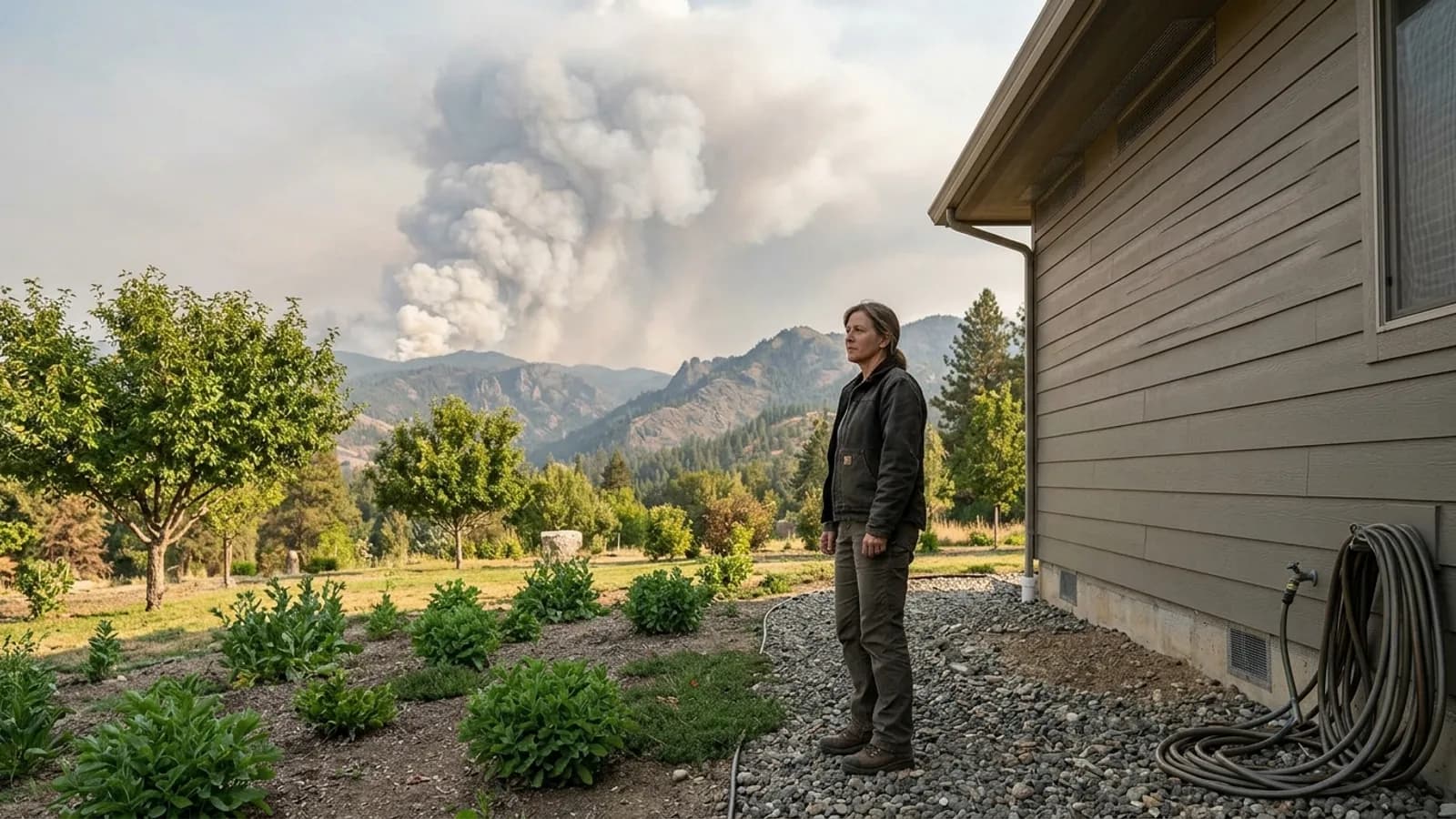
Does Homeowners Insurance Cover Wildfires?
Wildfire damage to structure, contents, and smoke is covered by standard policies; loss-of-use pays evacuation costs, and availability is the fight in fire states.
Read guide
High-Value Home Insurance: The $1M+ House Market
Homes above $750k–$1M rebuild cost need the high-net-worth market: agreed-value settlements, cash-baseline claims, broader coverage, and risk consulting.
Read guide