
Does Homeowners Insurance Cover Lightning Strikes?
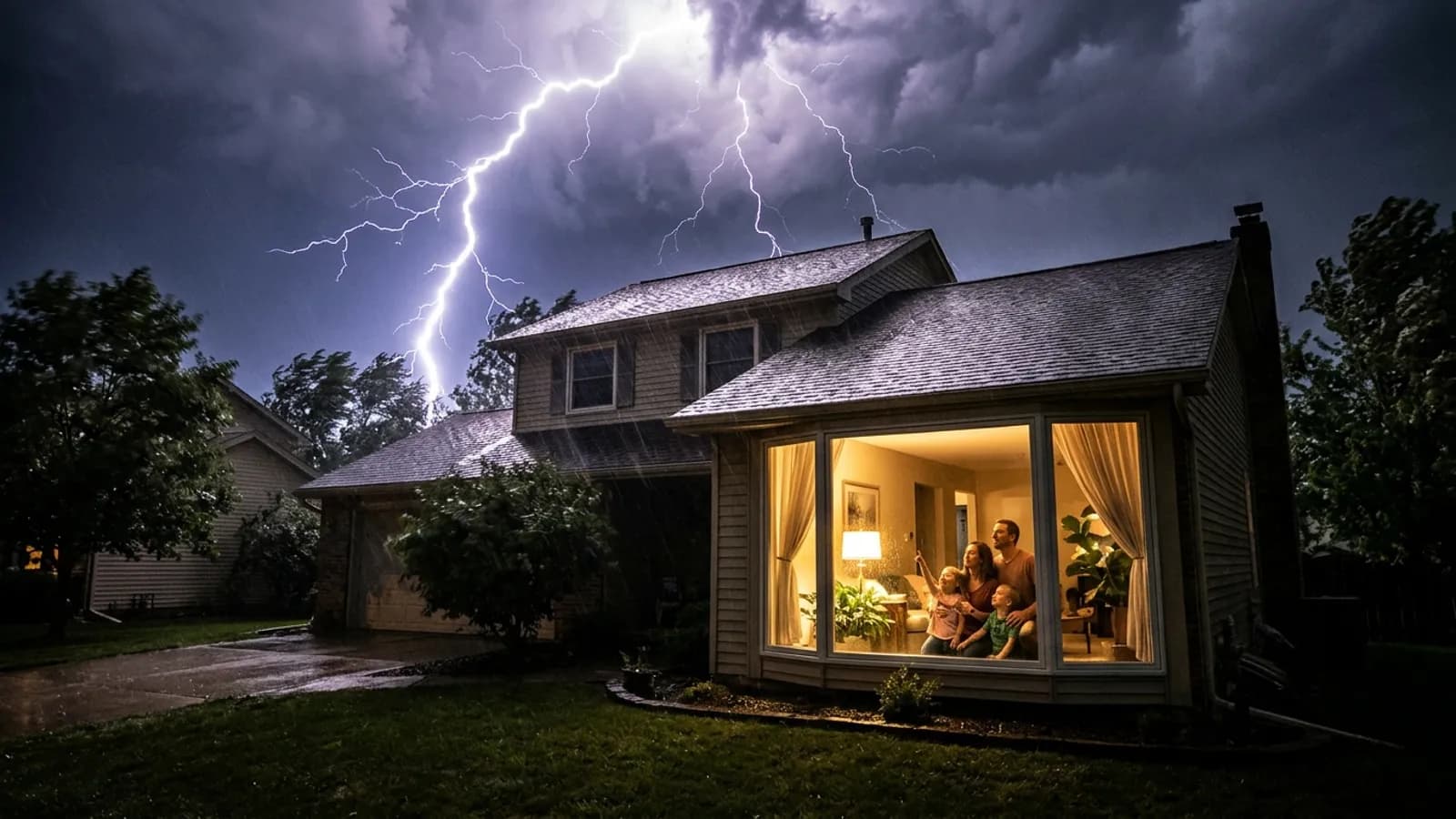
Homeowners insurance covers lightning as a core peril — strike damage, resulting fire, and power-surge damage to electronics, the most common lightning claim.
Why you can trust this guide
- Written by Daniel Reyes, AINS, former licensed P&C agent — independent insurance education publisher.
- Factual accuracy reviewed and signed off by Marcus Hale, CPCU, AINS, licensed P&C agent (Independent insurance reviewer).
- Every factual claim traces to a regulator, statute, or policy document — sources are listed at the bottom of the page.
- Last verified ; time-sensitive guides are re-checked at least twice a year. Read our editorial policy.
On this page
Lightning is a core covered peril: structural damage from strikes, fire from strikes, and power-surge damage to electronics — the most common lightning claim — are all covered under a standard homeowners policy, subject to your deductible.
The two claim forms lightning takes
Lightning produces two distinct claims. The direct strike or nearby strike — fire, structural damage, or a total loss — is the clearest covered peril in the policy, with fire following lightning as a named peril in every standard form. The surge claim — electronics and appliances damaged by the electrical spike — is covered under the named peril of artificially generated electrical current when the source is lightning. The surge claim is where adjusters focus, because the same symptoms, fried boards and dead compressors, follow grid-level surges from transformer failures and utility switching, which many policies exclude or treat differently. The documentation question is therefore attribution: when the strike occurred, what failed simultaneously across the house, and what the repair diagnostics showed. A house where the HVAC board, garage-door opener, and television all failed in the same hour during a documented storm tells a lightning story a claim file can carry.
Building the surge claim that pays
The surge claim succeeds on simultaneity and diagnostics.
- Photograph every affected device with its failure state within 24 hours of the storm, and list model and serial numbers.
- Avoid discarding anything — dead units are the evidence.
- Get professional diagnostics for the expensive items: an appliance technician's board-failure report or an electrician's panel inspection, commonly $100–$300 each, is the difference between a paid claim and an attributed-to-wear denial.
- File promptly and keep the claims process documentation sequence intact.
The deductible on a surge claim is the standard flat deductible in most states — commonly $500–$2,500 — not a percentage, because wind/hail percentage deductibles do not reach lightning claims. That gap shapes the economics: a $3,000 surge loss against a $1,000 deductible pays $2,000 and is worth filing, while the same loss with two dead televisions and no diagnostics may settle at actual cash value for less than the repair quote. Diagnostics receipts are therefore the cheapest documentation in the file, and the settlement-basis check — replacement cost versus ACV contents — belongs in the pre-storm audit, not the post-storm claim.
Content claims are paid at actual cash value unless you carry contents replacement-cost coverage, so a 6-year-old television settles at a fraction of retail — a coverage decision made before the storm, not after. Whole-house surge protectors installed at the panel commonly earn both an insurance discount and the practical benefit of limiting the loss to the devices the protector could not handle.
What a lightning claim pays, scenario by scenario
| Scenario | Covered? | Notes |
|---|---|---|
| Direct strike starts a roof fire | Yes | Fire and lightning are core perils; the dwelling limit applies |
| Surge kills the HVAC board and TV during a storm | Yes | Attribution evidence decides the claim |
| Grid transformer surge with no lightning | Often not | The utility claim route comes first |
| Strike hits a yard tree, which falls on the shed | Yes | Other structures limit; debris removal capped |
| Gradual electrical degradation | No | Wear and tear exclusion |
The table's second row is where claims are won, and the fourth row is where limits are lost: a strike-damaged tree pays under other structures, which commonly carries 10% of dwelling coverage, and the cleanup of whatever it toppled rides a separate debris-removal provision. Homeowners with detached garages, sheds, or fences should check that limit before storm season rather than after the strike.
The grid-surge question and the utility route
Surges from the utility side — a transformer failure, a fallen primary line, a switching event — follow a different payment path than lightning. Home policies that exclude artificially generated current of non-lightning origin push these claims toward the utility, because investor-owned utilities commonly have claims departments for customer-equipment damage caused by their equipment failures. The standard sequence: document the outage window and the equipment damaged, then ask the utility for its incident records. Some utilities settle readily when their equipment is implicated; some deny and leave the policy route, which is where a policy with broad electrical-current coverage earns its premium. Service line coverage is the adjacent buy for the underground utility lines on your property. The practical habit: after any surge event, note the exact outage time and call the utility's trouble line immediately — the incident log created that hour becomes the attribution evidence both a utility claim and an insurance claim will want.
Related guides
Lightning claims connect to the tree and fire-peril pages, because strike damage and wind damage run through the same structure sections.
- Does Homeowners Insurance Cover Tree Damage? — when a strike-toppled tree is a claim and when removal is capped.
- Does Homeowners Insurance Cover Wildfires? — the fire peril, smoke claims, and evacuation coverage.
- What Does Homeowners Insurance Cover? — where lightning and artificially generated current sit in the peril list.
- Homeowners Insurance Claim Denied? — the appeal playbook for surge claims misattributed to wear.
- How to Lower Homeowners Insurance — the protective-device discounts surge protectors earn.
Sources
Frequently asked questions
Is a power surge from the grid covered the same as lightning?
Often not. Lightning-caused surges are a named peril in standard policies, while surges from utility equipment or switching events are treated separately and are excluded or limited in some forms. The utility's own claims process is the first route for grid-side damage. Check the policy's electrical-current wording, and consider a carrier or endorsement that covers artificially generated current broadly if grid surges are common in your area.
Do I need receipts for electronics destroyed by a surge?
Receipts help but are not strictly required, because adjusters value electronics by model, age, and condition, and ACV settlement uses depreciation tables for common categories. What matters most is the failure documentation: photos, serial numbers, and repair diagnostics tying the failures to the storm. For high-value equipment, the serial-number list kept before the loss is worth more than any single receipt.
Does a whole-house surge protector lower my insurance?
Many carriers offer a small discount for protective devices, and the practical effect is larger than the discount: the protector absorbs the spike that would have destroyed a panel full of electronics, shrinking losses below the deductible. Have an electrician install the device at the panel, because plug strips alone do not stop a building-level surge entering through service lines.
Is a house fire caused by lightning covered?
Yes. Fire is a core peril and lightning is a core cause, so the fire, the structural damage, and the contents all claim under the standard policy with no special endorsement. A direct strike that starts a roof fire is among the clearest covered events in the form. The rebuild follows the dwelling limit and the policy's settlement basis.
Is a lightning strike to a tree in my yard covered?
Yes, under other structures coverage when the tree is a covered structure per your form, and the strike is a covered peril regardless of what it hits. The catch is the limit: other structures commonly carries 10% of dwelling coverage, and cleanup of a tree that falls harmlessly is a separate, often capped provision. Strike-damaged trees with property damage pay within the claim.
How we researched this guide
Home policies are forms-driven: the peril list in the form decides what gets paid, so our guides follow the policy form structure.
- Coverage explanations track the standard HO-3/HO-5 form structure — Coverage A through E — because that's the contract language adjusters apply.
- Flood facts come from FEMA's National Flood Insurance Program (floodsmart.gov), since standard home policies exclude flood.
- Regional cost ranges are built from NAIC home-owners insurance statistics, with the drivers of variation (construction, age, wind/hail exposure) named explicitly.
- Mitigation and eligibility claims cite IBHS research and state fair-plan rules where standard market access is an issue.
Where facts vary by state or insurer, we publish the range and the reason for the variation rather than a single misleading average. We do not sell insurance, take money from insurers for coverage, or publish claim amounts we cannot trace to a source.
Sources
The primary sources behind the facts on this page. Last verified November 10, 2026.
- FEMA — National Flood Insurance Program (FloodSmart) — flood coverage, which standard homeowners policies exclude.
- Insurance Institute for Business & Home Safety (IBHS) — property-loss research and mitigation standards that affect eligibility and discounts.
- U.S. Department of Housing and Urban Development (HUD) — FHA-insured property requirements and disaster assistance programs.
- NAIC — National Association of Insurance Commissioners — model regulations, consumer guides, and industry statistics.
- Find your state insurance regulator (NAIC directory) — every state insurance department — the authority for your state's rules and complaint filing.
- Insurance Information Institute (III) — industry statistics and consumer explainers we cross-check against regulator publications.
Rules that vary by state are verified against the state insurance department's consumer pages — find yours via the NAIC directory above.
Keep reading
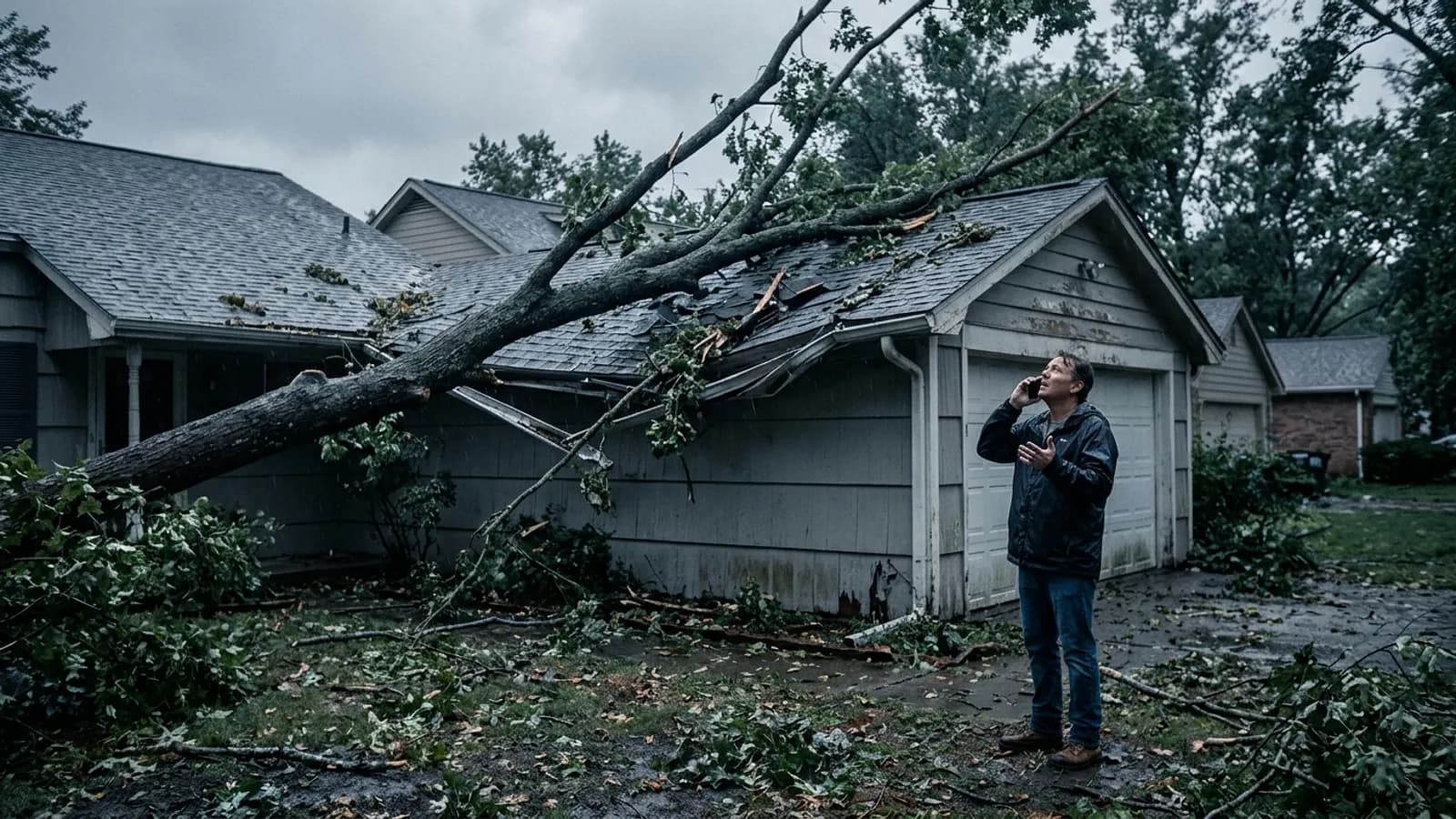
Does Homeowners Insurance Cover Tree Damage?
Homeowners insurance covers damage from fallen trees — your tree or your neighbor's — on your house and other structures; removal claims require property damage.
Read guide
What Does Homeowners Insurance Cover? (And What It Never Covers)
A standard HO-3 covers fire, wind, hail, theft, and burst pipes — and never floods, earthquakes, or gradual damage. The coverage buckets, exclusions, and fixes.
Read guide
Homeowners Insurance Claim Denied? The Appeal Playbook
Denied home claims follow patterns — exclusions, documentation gaps, misrepresentation. The appeal playbook: read the clause, cure the defect, escalate in order.
Read guide
How to Lower Homeowners Insurance: 10 Moves Ranked by Impact (2026)
Ten moves lower homeowners insurance: the deductible, the roof, bundling, claims discipline, and the annual re-shop, with the traps that cost more than they save.
Read guideWhat Is Actual Cash Value (ACV)?
Actual cash value (ACV) pays replacement cost minus depreciation — used value, not new. The cheaper premium option pays smaller claims on contents, roofs, and cars.
Read guide