
Glossary
What Is Service Line Coverage?
Service line coverage is an endorsement that pays to excavate and repair the underground utility lines you own — water, sewer, electrical, and sometimes gas and internet — after they fail. Standard homeowners policies exclude these lines entirely, and repairs routinely run $5,000–$20,000 once excavation is involved.
How it works
The ownership line is the starting fact: the utility's responsibility typically ends at the main or the meter, and the pipe, cable, or conduit crossing your yard belongs to you. Those lines sit outside the definition of the dwelling, which is why the standard policy's exclusion for underground service lines applies — a gap the endorsement closes as an added-coverage line on the declaration page.
The endorsement carries its own limit — commonly $10,000–$20,000 per line — and its own deductible, often $500. At claim, the covered event is a failure of the line itself: the sewer lateral blocked by tree roots, the water service pipe that splits. The better forms also pay the restoration above the trench, which is where landscape and driveway costs pile up. A companion water backup endorsement covers the damage a backed-up sewer causes inside the house — the two products answer adjacent halves of the same failure.
Exclusions shape the endorsement's value. Pre-existing deterioration is excluded, so enrollment works best on healthy lines before the root problem shows. A slow drain that has not failed is maintenance, not a covered event; the backup or break is the trigger. Partial exclusions also appear on some forms — cosmetic landscape may pay to sod rather than to specimen plantings — and some utilities offer their own line-protection programs, which are service contracts worth comparing against the endorsement's terms before paying twice for the same failure.
Typical values
| Parameter | Typical value |
|---|---|
| Endorsement cost | $50–$150 per year |
| Per-line limit | $10,000–$20,000 |
| Endorsement deductible | Commonly $500 |
| Sewer lateral excavation and replacement | $3,000–$8,000 and up |
| Full failure scenario (dig, pipe, restoration) | $5,000–$20,000 |
Service line coverage vs a home warranty
Service line coverage pays to repair the buried lines you own. A home warranty pays for appliance and in-home system failures under a service-contract structure with per-call fees. The failure points do not overlap: a collapsed sewer lateral is a service-line claim, a dead HVAC compressor is a warranty claim. Households with older lines commonly carry the endorsement and skip the warranty; the reverse rarely covers the excavation exposure.
Worked example
A sewer line fails 20 feet from the house. The excavation runs $8,000, the line replacement $6,500, and the landscape restoration $2,800 — a $17,300 total. The service-line endorsement, priced at $120 per year with a $500 deductible, pays $16,800. The standard homeowners policy without the endorsement pays nothing, because the line sits outside the dwelling definition. One year of premium bought 140-to-1 coverage on that failure.
Related guides
Service line coverage fills a specific exclusion — the lines underground, the backup damage above, and the warranty product people confuse it with.
- What Is an Exclusion Rider? — the water-backup endorsement that pairs with this coverage.
- What Is an Exclusion in Insurance? — why the standard policy leaves service lines out.
- Does Homeowners Insurance Cover Sewer Backup? — the in-house damage the companion rider pays.
- Home Warranty vs Home Insurance — the product people most often confuse with this endorsement.
- Home Insurance: The Complete Guide — where endorsements sit in the full policy picture.
Sources
Frequently asked questions
Am I responsible for the water and sewer lines on my property?
Yes — the utility's responsibility typically ends at the main or the meter, and the service lines crossing your yard to the house are yours. A failed sewer lateral commonly costs $3,000–$8,000 or more to excavate and replace, and standard homeowners policies exclude underground service lines. The endorsement exists to answer exactly that bill.
Is service line coverage the same as a home warranty?
No — service line coverage pays to repair buried utility lines you own; a home warranty is a service-contract product for appliances and in-home systems with per-call fees. The two cover different failure points, and homeowners with older lines commonly need the service-line endorsement while skipping the warranty.
How much does service line coverage cost?
The endorsement commonly runs $50–$150 per year, with its own limit — often $10,000–$20,000 per line — and a deductible around $500. Against a $17,000 sewer-line repair scenario, the premium math favors the endorsement on any property with lines older than a decade or two.
Related guides
What Is an Exclusion Rider?
An exclusion rider removes one documented condition or hazard from coverage — a bad knee, a trampoline — instead of declining the application outright.
Read guideWhat Is an Exclusion in Insurance?
An exclusion is a peril, property type, or situation a policy does not cover — floods, earthquakes, wear and tear — marking exactly where your protection ends.
Read guideWhat Is Dwelling Coverage (Coverage A)?
Dwelling coverage (Coverage A) insures your home's structure at rebuild cost — not market value — and anchors the policy: other limits are percentages of it.
Read guideWhat Is an Insurance Declaration Page (Dec Page)?
The declarations page is the summary at the front of every policy: insureds, limits, deductibles, premium, policy period, and endorsements — the page to read first.
Read guide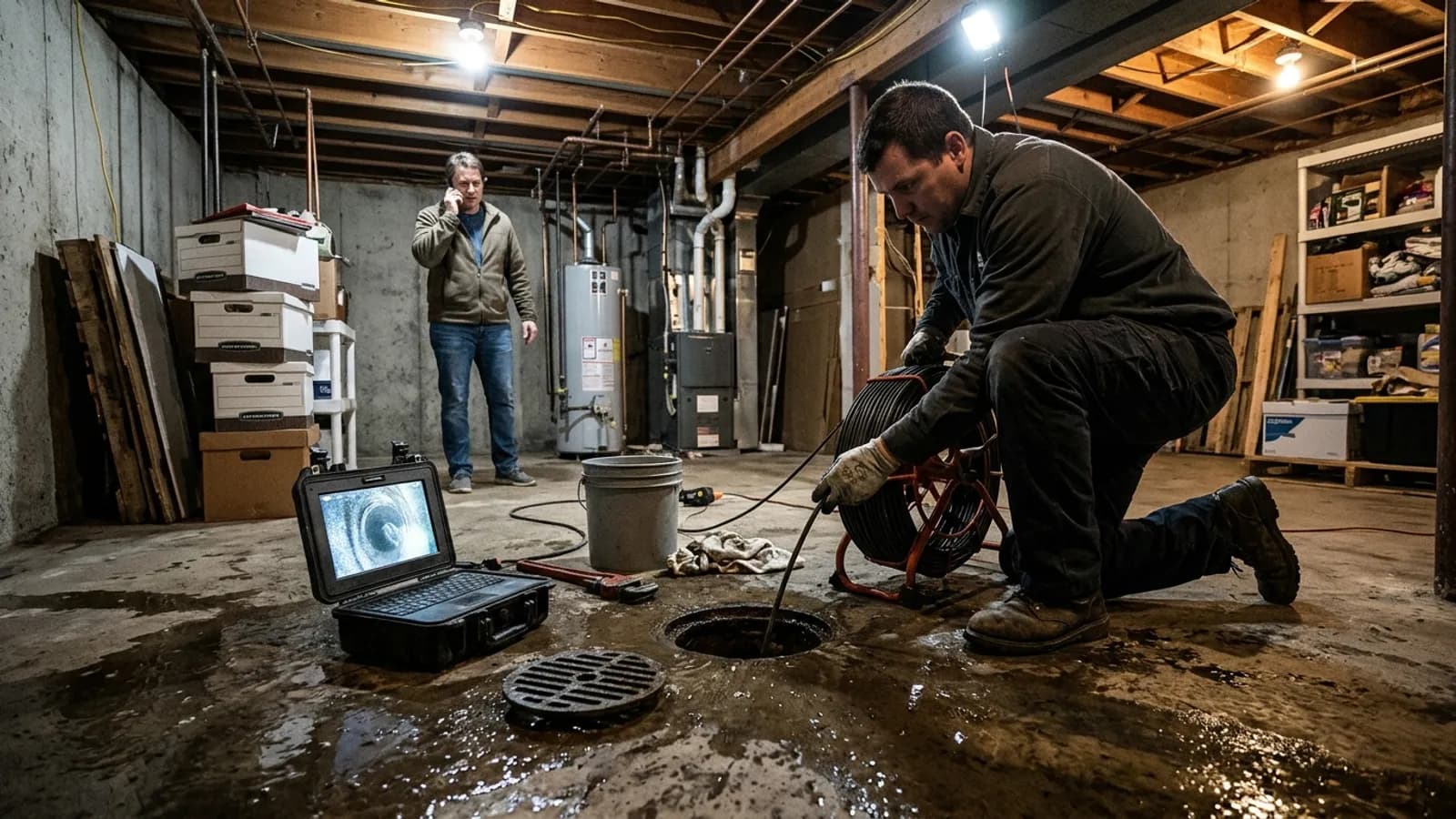
Does Homeowners Insurance Cover Sewer Backup?
Sewer and drain backup is excluded from standard homeowners policies; the dedicated endorsement ($50–$250 per year) is the fix for five-figure basement losses.
Read guide
Home Warranty vs Home Insurance: Different Products, Different Jobs
A home warranty covers appliance and system breakdowns for a yearly fee plus per-visit charges; homeowners insurance covers perils and liability.
Read guide← Back to the full insurance glossary
Sources
The primary sources behind the facts on this page. Last verified November 10, 2026.
- HealthCare.gov Glossary — official ACA definitions for health-coverage terms.
- Insurance Information Institute (III) — property & casualty term definitions cross-checked against policy forms.
- NAIC consumer resources — regulator-authored guides and glossaries for each line of insurance.
Rules that vary by state are verified against the state insurance department's consumer pages — find yours via the NAIC directory above.