
Does Homeowners Insurance Cover Sewer Backup?
Sewer and drain backup is excluded from standard homeowners policies; the dedicated endorsement ($50–$250 per year) is the fix for five-figure basement losses.
Why you can trust this guide
- Written by Daniel Reyes, AINS, former licensed P&C agent — independent insurance education publisher.
- Factual accuracy reviewed and signed off by Marcus Hale, CPCU, AINS, licensed P&C agent (Independent insurance reviewer).
- Every factual claim traces to a regulator, statute, or policy document — sources are listed at the bottom of the page.
- Last verified ; time-sensitive guides are re-checked at least twice a year. Read our editorial policy.
On this page
Sewer and drain backup is excluded from standard homeowners policies. The cheap dedicated endorsement — commonly $50–$250 per year for $5,000–$50,000 of limits — is the fix, because backed-up basements from overloaded municipal systems are among the most common uncovered losses.
The three water paths into a basement, and only one policy
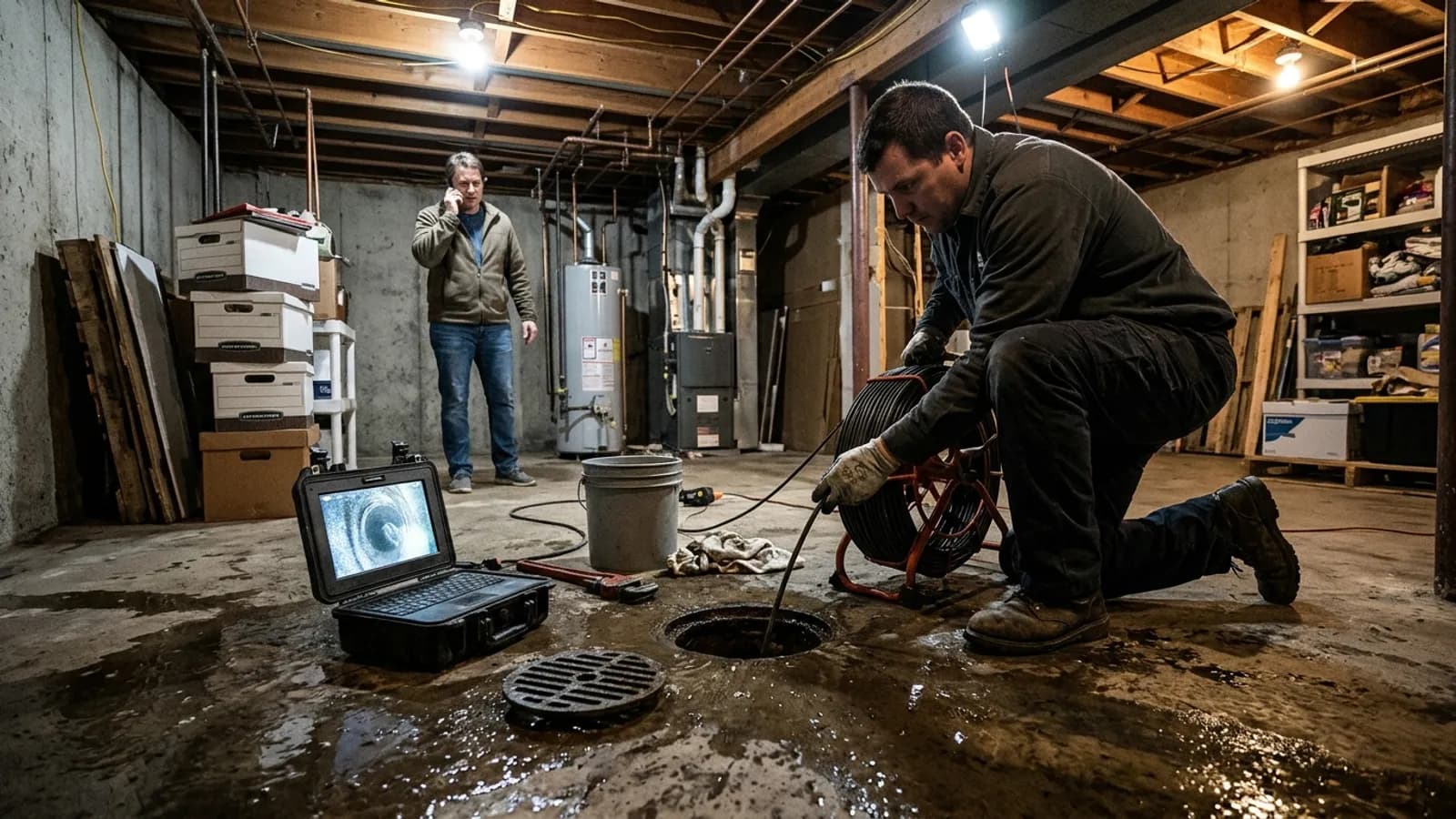
Basement flooding arrives by three mechanically different paths, and each maps to different coverage. Path one is surface flood — rising water from outside the building — covered only by flood insurance, because the homeowners policy excludes groundwater rising entirely. Path two is backup — water reversing through drains and sewers from an overloaded municipal main, a blocked lateral, or root intrusion — excluded by the standard policy and fixed by the endorsement. Path three is appliance and supply-line failure — a water heater, washing machine hose, or burst pipe inside the home — covered by the base policy as sudden and accidental discharge. The diagnostic question that sorts a real basement claim: where did the water come from — floor drains means backup, walls or windows means flood, a fixture means pipe. The supply-side version of this map is covered in the water damage guide, and the endorsement itself is the textbook exclusion-rider fix: a named exclusion restored by a purchased rider.
| Basement water scenario | Which coverage answers | Watch for |
|---|---|---|
| Municipal main overload backs water up the floor drains | Sewer-backup endorsement | No-fault payment regardless of city liability |
| Storm surge or rising creek enters through the windows | Flood policy | The endorsement excludes surface water |
| Washing machine hose bursts | Base homeowners policy | Sudden accidental discharge; standard deductible |
| Sump pump fails in a power outage, pit overflows | Endorsement, if sump overflow is written in | Verify per carrier — some price it separately |
The table's rows are mutually exclusive at claim time, which is why the diagnosis matters more than the repair: a restoration crew that pumps out a basement cannot tell the adjuster which row applies, but the water lines on the walls can. Water that entered at floor-drain level and rose evenly points to backup; water marks starting at the window sill point to surface flooding; a single wet zone near a fixture points to the supply side. Photograph the patterns before cleanup, because they are the evidence the claim rides on.
The endorsement economics and the finished-basement math
The sewer-backup endorsement is among the cheapest meaningful coverage buys in home insurance — commonly $50–$250 per year for limits of $5,000–$50,000 depending on carrier and state. Work the math against a finished basement: carpet and pad, baseboards, the lower drywall section, and one sofa produce a realistic mid-range loss of $18,000–$25,000 once restoration costs are included; an unfinished, stored-boxes-only basement might run $3,000–$8,000. On a $20,000 loss with a $25,000 endorsement and a $500 endorsement deductible, the payout is the loss minus the deductible — versus zero without the endorsement. Many carriers sell tiered limits, and the step from $10,000 to $25,000 is commonly only tens of dollars more per year. Basement owners in older districts should treat this as the first endorsement to buy, and the coverage guide shows where the base policy's water coverage stops. Run the sizing against your own basement: list finishes, furniture, and mechanicals, price the loss at restoration-company rates rather than retail, and buy the limit tier one step above that number — the incremental cost is tens of dollars per year.
Prevention, documentation, and the city-liability dead end
Two prevention investments outperform their cost in backup country: a backwater valve on the main lateral — a few thousand dollars installed, with rebates offered by many municipalities — and a battery-backup sump pump for the power-outage scenario that produces the classic storm-night backup. On the documentation side, backup claims carry the same 24–48-hour mitigation duties as any water loss: photograph before cleanup, keep restoration invoices, and report to the insurer the same day, then follow the claims process through restoration. One dead end to manage expectations on: suing the city for a main-system backup is rarely productive, because municipal tort liability for sewer backups is limited or barred in most states — which is exactly why the endorsement, not the city, is designed to be the payment path.
Related guides
Sewer backup sits between the flood and water-damage pages, because the three water sources are mutually exclusive in coverage.
- Flood Insurance — the rising-water path the homeowners policy and this endorsement both exclude.
- NFIP vs Private Flood — how backup is treated inside each flood product.
- What Does Homeowners Insurance Cover? — the exclusions map that includes drain-side water.
- The Home Insurance Claim Process — mitigation duties and settlement sequence for basement losses.
- Does Homeowners Insurance Cover Mold? — the caps that apply when backup water becomes a moisture event.
Sources
Frequently asked questions
Is sewer backup covered by flood insurance?
Generally no. NFIP flood policies cover flooding from rising surface water, and water backing up through drains is excluded unless it results from the flood itself under specific conditions. Private flood policies vary: some include backup, many exclude it or sell it separately. The homeowners sewer-backup endorsement is the purpose-built coverage for drain-side water, and it is the standard answer regardless of which flood policy you carry.
How much sewer backup coverage is enough?
Size it to the basement's real contents and finishes. A finished basement commonly produces $18,000–$30,000 losses across flooring, drywall, trim, furniture, and mechanicals; an unfinished storage-only basement may need $10,000. Many carriers tier limits at modest incremental cost, so $25,000–$50,000 is the common recommendation for finished space. Include the sump-pump scenario in your sizing if the endorsement covers it.
Does the sewer backup endorsement cover the city's failure?
Yes — that is precisely its function. When the municipal main is overloaded and water reverses into your lateral, the endorsement pays your damage regardless of where the fault sits, because municipal liability for backups is limited or barred in most states. The insurer may still subrogate where negligence applies, but your claim runs through your policy either way.
Does homeowners insurance cover sump pump failure?
Often through the same endorsement, but verify before assuming. Many carriers write sump-pump overflow into the sewer-backup endorsement; some price it separately or exclude mechanical failure of the pump itself. Power outage is the classic trigger — a storm knocks out electricity, the pump stops, the pit overflows — which is why a battery-backup pump is the paired prevention to the coverage.
What does the sewer backup endorsement cost?
Commonly $50–$250 per year for limits that run $5,000–$50,000 depending on carrier and state, against basement claims that routinely produce five-figure losses. The step from a $10,000 to a $25,000 limit is commonly only tens of dollars more per year. The endorsement deductible is typically separate from the main policy deductible, often $500.
How we researched this guide
Home policies are forms-driven: the peril list in the form decides what gets paid, so our guides follow the policy form structure.
- Coverage explanations track the standard HO-3/HO-5 form structure — Coverage A through E — because that's the contract language adjusters apply.
- Flood facts come from FEMA's National Flood Insurance Program (floodsmart.gov), since standard home policies exclude flood.
- Regional cost ranges are built from NAIC home-owners insurance statistics, with the drivers of variation (construction, age, wind/hail exposure) named explicitly.
- Mitigation and eligibility claims cite IBHS research and state fair-plan rules where standard market access is an issue.
Where facts vary by state or insurer, we publish the range and the reason for the variation rather than a single misleading average. We do not sell insurance, take money from insurers for coverage, or publish claim amounts we cannot trace to a source.
Sources
The primary sources behind the facts on this page. Last verified November 10, 2026.
- FEMA — National Flood Insurance Program (FloodSmart) — flood coverage, which standard homeowners policies exclude.
- Insurance Institute for Business & Home Safety (IBHS) — property-loss research and mitigation standards that affect eligibility and discounts.
- U.S. Department of Housing and Urban Development (HUD) — FHA-insured property requirements and disaster assistance programs.
- NAIC — National Association of Insurance Commissioners — model regulations, consumer guides, and industry statistics.
- Find your state insurance regulator (NAIC directory) — every state insurance department — the authority for your state's rules and complaint filing.
- Insurance Information Institute (III) — industry statistics and consumer explainers we cross-check against regulator publications.
Rules that vary by state are verified against the state insurance department's consumer pages — find yours via the NAIC directory above.
Keep reading

Flood Insurance: What It Covers, What It Costs, and Who Needs It
Flood insurance is never part of a standard home policy. Costs per year, the 30-day waiting period, NFIP limits, and why most claims come from outside flood zones.
Read guide
What Does Homeowners Insurance Cover? (And What It Never Covers)
A standard HO-3 covers fire, wind, hail, theft, and burst pipes — and never floods, earthquakes, or gradual damage. The coverage buckets, exclusions, and fixes.
Read guide
NFIP vs Private Flood Insurance
NFIP flood insurance caps at $250k building/$100k contents with no living-expenses coverage and a 30-day wait; private flood prices continuously and often wins.
Read guide
The Home Insurance Claim Process: From Damage to Settlement
How a homeowners claim actually works: mitigation, documentation before cleanup, the adjuster visit, the two-check payout, supplements, and common mistakes.
Read guide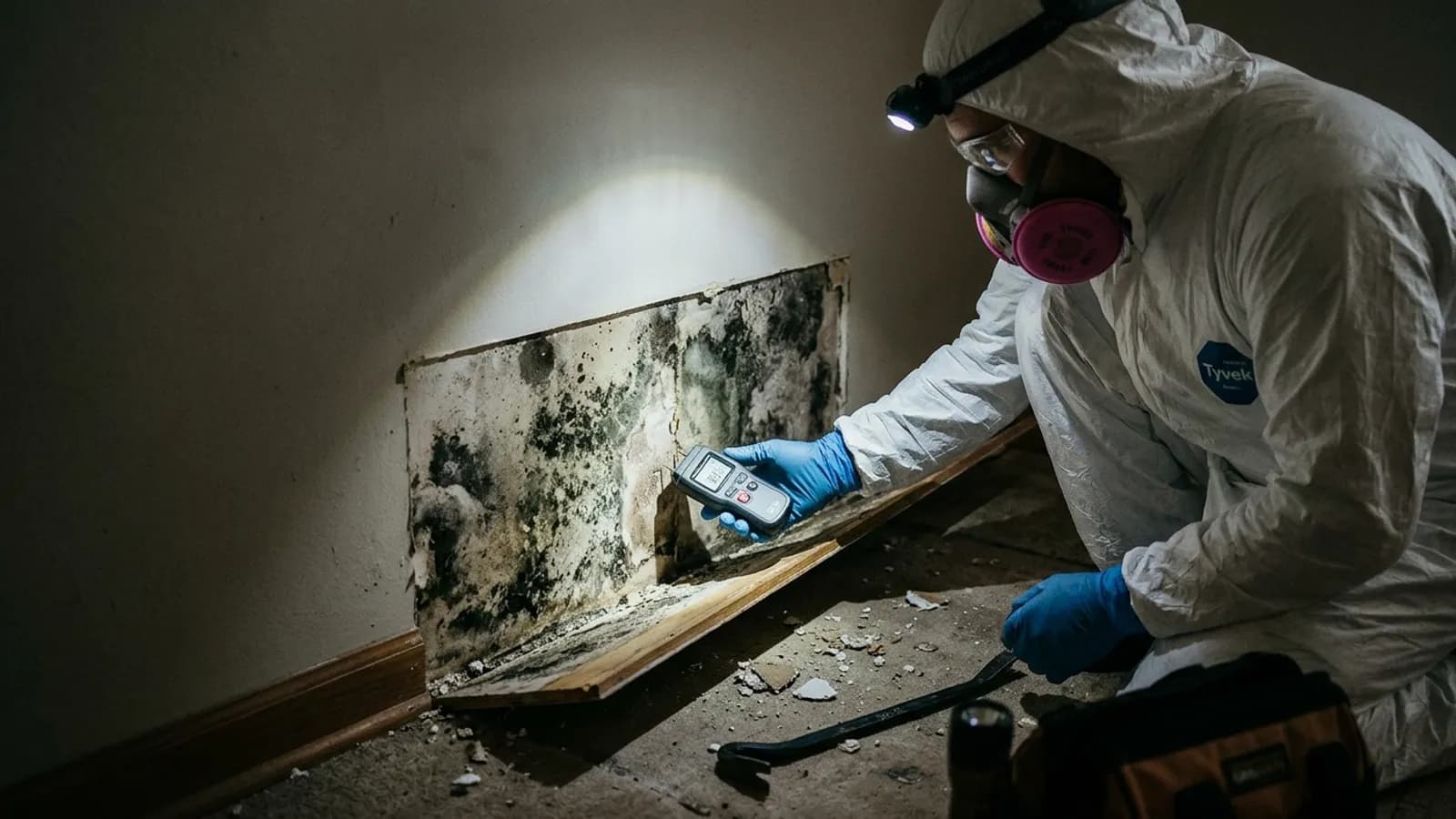
Does Homeowners Insurance Cover Mold?
Homeowners insurance covers mold only when it results from a covered sudden peril, and even then often capped at $5,000–$10,000; chronic-moisture mold is excluded.
Read guide