
Does Homeowners Insurance Cover Tree Damage?
Homeowners insurance covers damage from fallen trees — your tree or your neighbor's — on your house and other structures; removal claims require property damage.
Why you can trust this guide
- Written by Daniel Reyes, AINS, former licensed P&C agent — independent insurance education publisher.
- Factual accuracy reviewed and signed off by Marcus Hale, CPCU, AINS, licensed P&C agent (Independent insurance reviewer).
- Every factual claim traces to a regulator, statute, or policy document — sources are listed at the bottom of the page.
- Last verified ; time-sensitive guides are re-checked at least twice a year. Read our editorial policy.
On this page
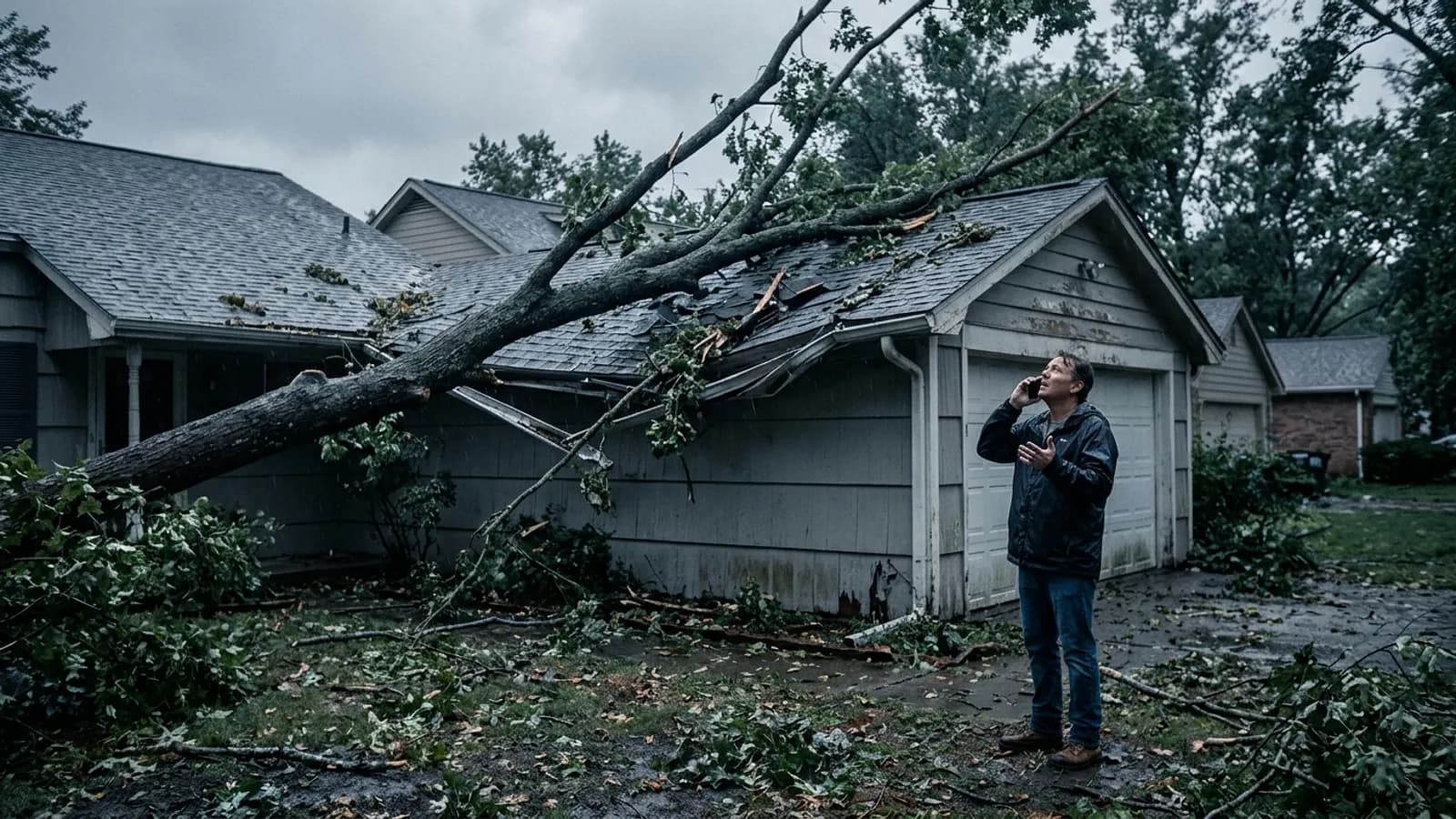
Homeowners insurance covers damage from fallen trees — your tree on your house, your tree on your fence, even a neighbor's tree on your house (still your claim). Removal costs are covered only when the tree damages a covered structure; harmless-fall cleanup and preventive removal are not covered.
The four-scenario matrix that decides who pays
Tree claims sort into four scenarios with different payers. A neighbor's healthy tree falls on your house in a storm: your policy pays your damage — an act of nature, not negligence. A neighbor's visibly dead or diseased tree falls on your house: still typically your policy pays first, but the negligence evidence — your documented requests, the dead tree's visibility — opens a subrogation route to recover your deductible and sometimes the full loss. Your tree falls on your house: your policy, regardless of the tree's health, because wind and falling-object are covered perils under the standard structure sections. Your tree falls harmlessly in your own yard: generally not covered — debris removal without structural damage is the excluded default, subject to the debris-removal provision. The only lever a homeowner controls in advance is the dead-tree documentation trail, which turns an act-of-god claim into a negligence claim you can recover costs from — the written requests and dated photos are the file.
| Scenario | Who pays | The catch |
|---|---|---|
| Neighbor's healthy tree hits your house in a storm | Your policy | An act of nature; no negligence exists |
| Neighbor's dead tree you documented hits your house | Your policy, then subrogation | The file recovers your deductible |
| Your tree falls harmlessly in your yard | No one | Debris-removal caps and driveway exceptions may apply |
| A tree lands on your car | Auto comprehensive | Separate deductible; the home policy excludes vehicles |
The matrix's fourth row is the one homeowners misfile most often, and the cost of the mistake is a rejected first notice: the home policy will open no claim for the vehicle, and the auto carrier's comprehensive coverage has its own deductible and its own timeline. File the vehicle on comprehensive the same day as the structure claim. One more boundary: a tree that damages a neighbor's structure from your yard triggers their claim against their policy, with your liability exposure decided by the same dead-tree documentation standard in reverse.
Debris removal: the provision with its own small limits
The base policy's debris-removal provision pays cleanup of covered-peril-felled trees, commonly capped at a stated dollar amount — frequently $500–$1,000 — or a percentage, and usually only when the tree damaged covered property. Three edges matter. A tree that falls harmlessly across the driveway can block access, and some forms pay debris removal in that scenario even without structural damage, which makes it the most-argued debris question — verify your policy's wording. A neighbor's tree falls in your yard doing no damage: the neighbor owes cleanup only if their policy or a local ordinance says so; in most places the yard owner handles harmless-fall cleanup, which is why the dead-tree conversation happens before the storm, in writing. Stump removal is commonly excluded from the debris allowance — confirm whether your form pays it, because stump grinding is a separate invoice line. When the fallen tree does damage, the claim mechanics are worked in the claims process guide.
The preventive removal economics
Preventive tree removal is not insurable — it is the maintenance that keeps claims from existing. The economics are unusually favorable in tree-claim country: removing a threatening tree commonly runs $500–$2,500 depending on size, access, and proximity to structures, while a tree-through-the-roof claim produces a deductible, a weeks-long repair, temporary housing if the home is unlivable, and a claims-history entry that can raise premiums or complicate a sale. The triage list arborists and adjusters use: trees leaning toward structures, trees with visible root heave or fungal conks at the base, dead limbs over roofs or driveways — limb failures precede whole-tree failures — and trees in the path of prevailing winds. Some carriers offer premium credits for documented tree mitigation in storm-prone states, and an arborist's risk assessment, commonly $150–$400, doubles as the evidence file if a retained tree later fails or if the storm loss lands in the hail and wind categories.
Related guides
Tree claims connect to the storm-peril and coverage pages, because wind, hail, and lightning are the perils that actually fell the trees.
- Does Homeowners Insurance Cover Hail Damage? — the wind and hail perils that accompany most tree-down storms.
- Does Homeowners Insurance Cover Lightning Strikes? — strike-damaged trees and the other-structures limit.
- What Does Homeowners Insurance Cover? — where falling objects and debris removal sit in the standard form.
- Car Insurance: The Complete Guide — comprehensive coverage, the auto side of a tree on the car.
- Does Homeowners Insurance Cover Termite Damage? — the pest exclusion and what it leaves you paying.
Sources
Frequently asked questions
Whose insurance pays when my neighbor's tree falls on my house?
Yours. Even when the tree rooted on their property, your homeowners policy covers your house, and your insurer pays your claim first. The negligence exception: if the tree was visibly dead or diseased and you documented the hazard with the neighbor, your insurer can subrogate against them to recover costs including your deductible. Keep dated written requests and photos, because they convert an act-of-god claim into a recoverable one.
Is tree removal covered when the tree falls with no damage?
Generally no. Debris removal is tied to a covered loss in most policies, with stated caps, so a tree that fell harmlessly in the yard is a maintenance expense. The exceptions to check in your own form: trees blocking a driveway or a ramp used for disability access are payable under some policies even without structural damage. Beyond those edges, harmless-fall cleanup is the yard owner's cost.
Can I get insurance to pay for removing a dangerous tree before it falls?
No. Preventive removal is excluded as maintenance everywhere, because coverage responds to sudden accidental loss rather than anticipated events. The economics still favor removal: $500–$2,500 of prevention against a deductible-plus-premium-surge claim cycle. In storm-prone states, ask whether your carrier credits documented mitigation, and keep the arborist assessment as evidence if a retained tree later fails.
Does homeowners insurance cover a tree that fell on my fence or shed?
Yes, under other structures coverage, which commonly carries 10% of the dwelling limit by default. The same rules apply as the house: the fallen tree damaging a covered structure brings the repair into the claim, and removal of the damaged tree is included within the debris-removal provision, usually capped. Confirm the fence and shed values fit inside the other-structures limit.
Does car insurance cover a tree falling on my car?
Yes — through the auto policy's comprehensive coverage, not the homeowners policy. The home policy excludes vehicles entirely, so the crushed roof and dented panels claim on comprehensive wherever the car was parked, subject to the auto policy's comprehensive deductible. A car parked in the garage that the tree strikes is still an auto comprehensive claim for the vehicle itself.
How we researched this guide
Home policies are forms-driven: the peril list in the form decides what gets paid, so our guides follow the policy form structure.
- Coverage explanations track the standard HO-3/HO-5 form structure — Coverage A through E — because that's the contract language adjusters apply.
- Flood facts come from FEMA's National Flood Insurance Program (floodsmart.gov), since standard home policies exclude flood.
- Regional cost ranges are built from NAIC home-owners insurance statistics, with the drivers of variation (construction, age, wind/hail exposure) named explicitly.
- Mitigation and eligibility claims cite IBHS research and state fair-plan rules where standard market access is an issue.
Where facts vary by state or insurer, we publish the range and the reason for the variation rather than a single misleading average. We do not sell insurance, take money from insurers for coverage, or publish claim amounts we cannot trace to a source.
Sources
The primary sources behind the facts on this page. Last verified November 10, 2026.
- FEMA — National Flood Insurance Program (FloodSmart) — flood coverage, which standard homeowners policies exclude.
- Insurance Institute for Business & Home Safety (IBHS) — property-loss research and mitigation standards that affect eligibility and discounts.
- U.S. Department of Housing and Urban Development (HUD) — FHA-insured property requirements and disaster assistance programs.
- NAIC — National Association of Insurance Commissioners — model regulations, consumer guides, and industry statistics.
- Find your state insurance regulator (NAIC directory) — every state insurance department — the authority for your state's rules and complaint filing.
- Insurance Information Institute (III) — industry statistics and consumer explainers we cross-check against regulator publications.
Rules that vary by state are verified against the state insurance department's consumer pages — find yours via the NAIC directory above.
Keep reading
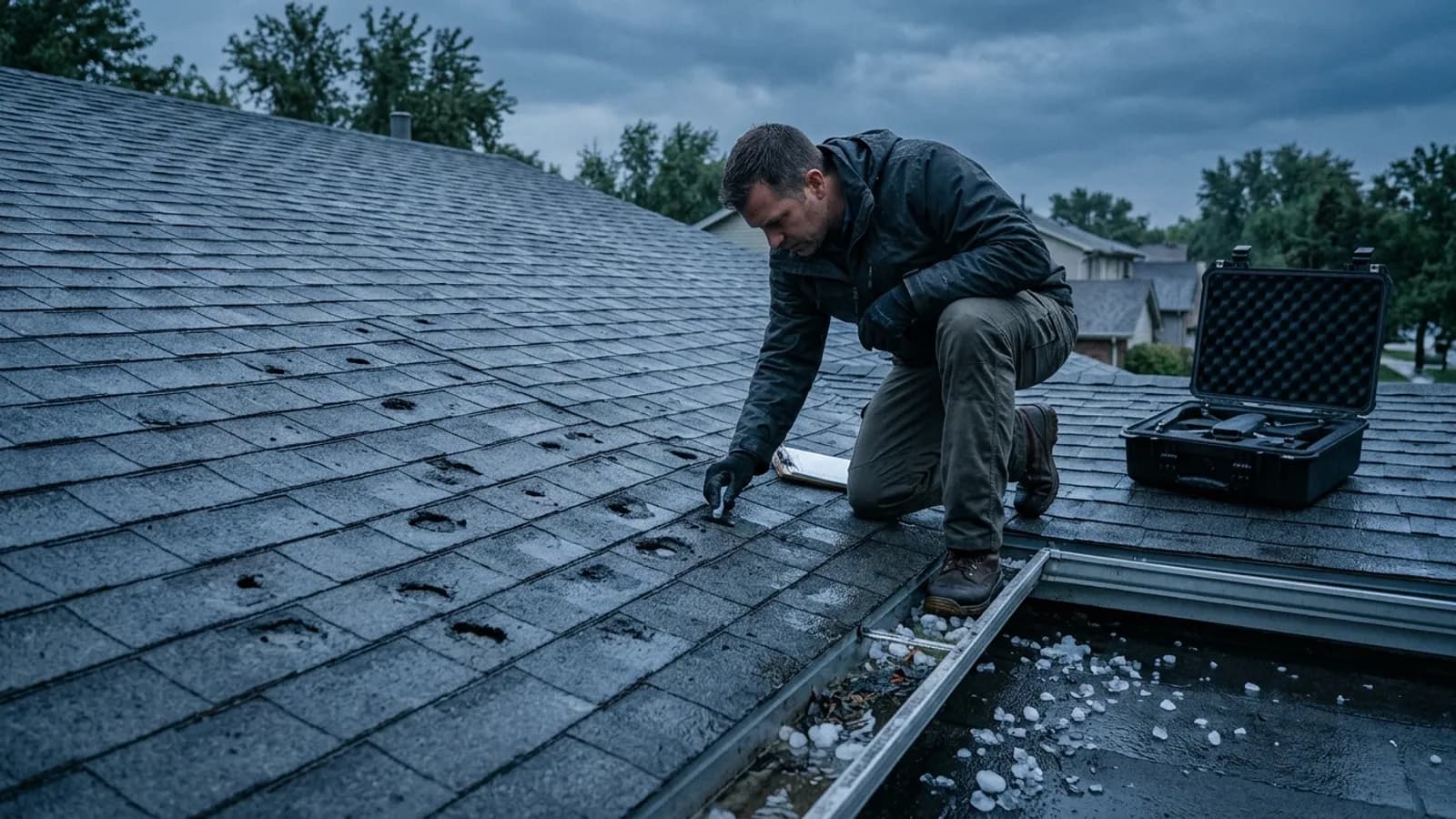
Does Homeowners Insurance Cover Hail Damage?
Homeowners insurance covers hail damage to roofs, siding, and contents, and hail-belt states price it with percentage wind/hail deductibles and ACV roof schedules.
Read guide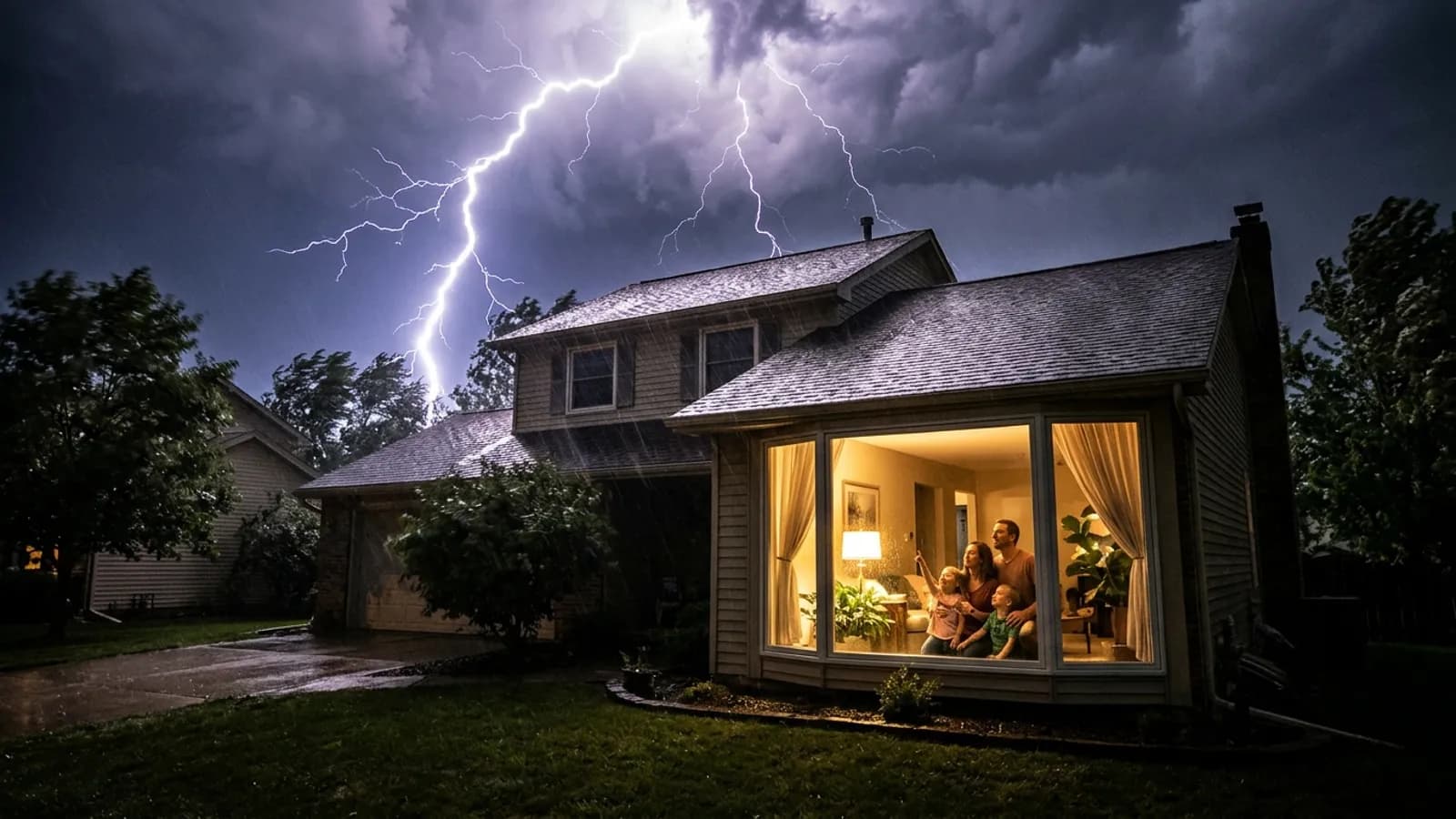
Does Homeowners Insurance Cover Lightning Strikes?
Homeowners insurance covers lightning as a core peril — strike damage, resulting fire, and power-surge damage to electronics, the most common lightning claim.
Read guide
What Does Homeowners Insurance Cover? (And What It Never Covers)
A standard HO-3 covers fire, wind, hail, theft, and burst pipes — and never floods, earthquakes, or gradual damage. The coverage buckets, exclusions, and fixes.
Read guide
Car Insurance: The Complete Guide
Car insurance bundles liability, collision, comprehensive, and medical coverage — this guide explains state minimums, full coverage, and how to lower the premium.
Read guideWhat Is Subrogation?
Subrogation is your insurer's right to recover its claim payment from the party at fault — paying you first, then pursuing the responsible side's insurer.
Read guide