
Does Homeowners Insurance Cover Termite Damage?
Termite damage is excluded from homeowners insurance as gradual, preventable pest damage; prevention contracts, not policy riders, are the product for this peril.
Why you can trust this guide
- Written by Daniel Reyes, AINS, former licensed P&C agent — independent insurance education publisher.
- Factual accuracy reviewed and signed off by Marcus Hale, CPCU, AINS, licensed P&C agent (Independent insurance reviewer).
- Every factual claim traces to a regulator, statute, or policy document — sources are listed at the bottom of the page.
- Last verified ; time-sensitive guides are re-checked at least twice a year. Read our editorial policy.
On this page
Termite damage — and all pest damage — is excluded from homeowners insurance. Infestations are gradual, detectable, and preventable, so the vermin exclusion covers the termites, the wood they eat, and the repairs; prevention contracts, not riders, are the product for this peril.
Why the exclusion exists, and what it does and does not bar
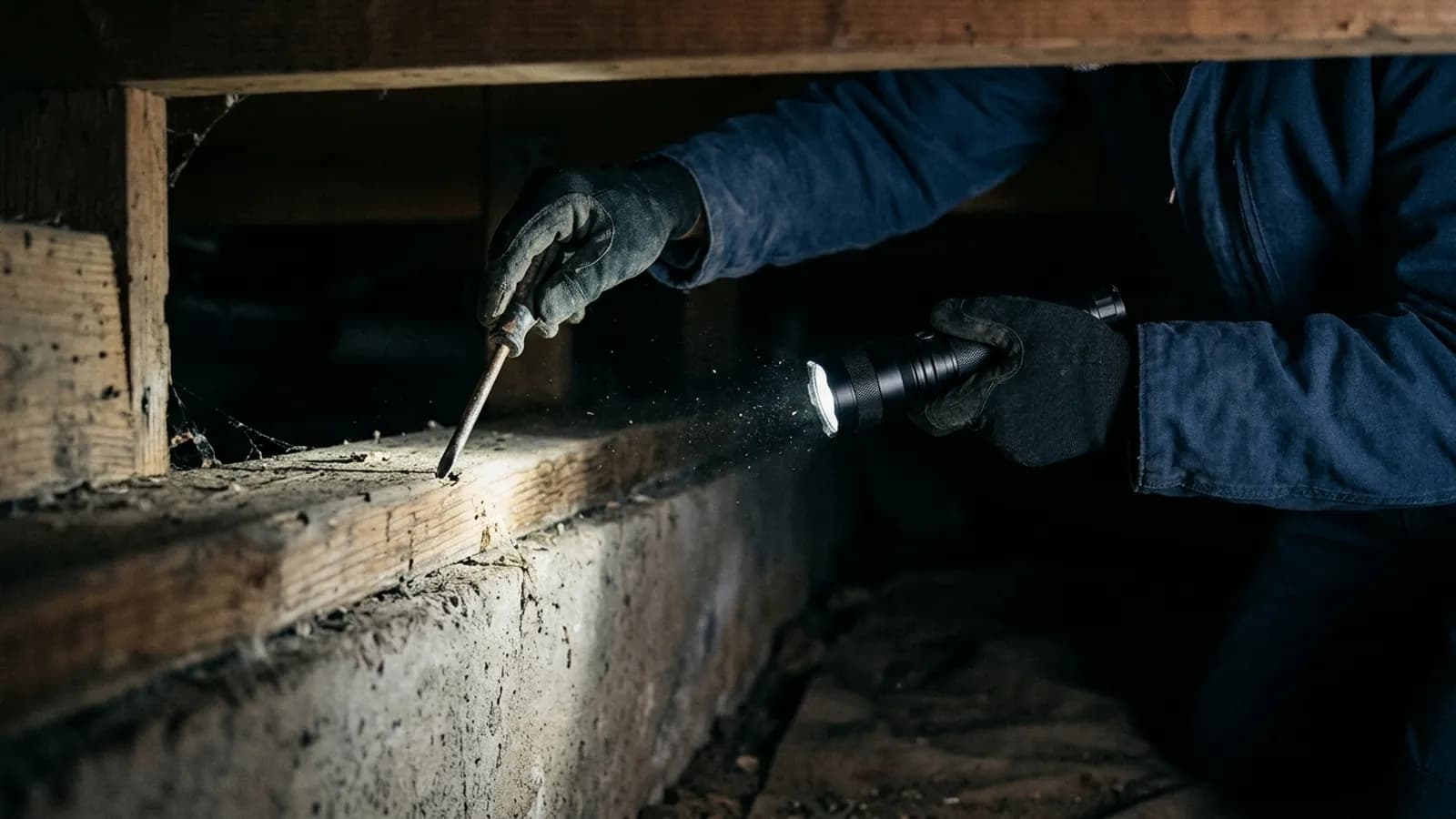
Termite damage sits in the vermin and maintenance exclusion family, and the logic is defensible rather than arbitrary: termite activity is gradual, detectable, and preventable, and annual inspections plus soil treatments are the maintenance the exclusion assumes. What it bars: the structural damage the termites caused — galleries in studs, sagging floors, damaged trim — and the treatment cost. What it does not necessarily bar: a fire that starts from wiring insulation termites compromised, because the fire is a covered peril and the resulting damage can be paid under the direct-versus-indirect loss logic, and in some policies a collapse from hidden decay, a narrow and hard-to-trigger carve-back. The practical translation: homeowners insurance is not termite insurance, and the protection lives in prevention contracts, because no mainstream carrier sells termite damage coverage on a homeowners form. The maintenance-exclusion family around this one — vermin, rot, gradual damage — is mapped in the coverage guide.
| Scenario | Covered? | Why |
|---|---|---|
| Termite galleries in studs discovered after years | No | Vermin and gradual-damage exclusions |
| Electrical fire from wiring insulation termites compromised | Fire damage only | The covered peril's damage pays; the pest damage does not |
| Infestation found during a home sale | No | Transaction negotiation via the WDIR |
| Carpenter ant excavation in damp sill plates | No | Same vermin exclusion; the moisture defect is the fix |
The second row is the exception worth understanding, because it carries real money: when an excluded condition produces a covered peril, the policy pays the peril's damage and nothing upstream of it. A fire that starts in termite-compromised wiring is a fire claim — the burned structure, the smoke, the contents — while the rewiring attributable to the termites stays excluded. Attribution is where these claims get contested, so the fire investigation's cause-and-origin report is the document that draws the line, and the policyholder's interest is a report that separates the fire damage from the insect damage in its scope.
The transaction file: WDIRs and the selling-house scenario
Real-estate transactions give termites their own paperwork. Many states require, or lenders request, a wood-destroying insect report — the WDIR, often called a termite letter — at sale: an inspector's current assessment of active infestation and existing damage, commonly $75–$200. The negotiation question the report answers is who pays for treatment and repair. Two notes prevent disputes: the WDIR covers wood-destroying organisms as each state's form defines them — termites, carpenter ants, wood-boring beetles, sometimes fungus — so read which organisms your state's report includes; and a clean WDIR is a snapshot, not a warranty, which is why buyers in high-termite-pressure regions (the Southeast, Gulf states, Southern California) purchase a treatment warranty at closing rather than relying on the report. The pre-closing coverage questions sit in the first-time homebuyer guide.
The lookalikes that change the prevention strategy
Carpenter ants and carpenter bees are claimed under the same umbrella as termites and denied for the same reasons, but the distinctions matter for prevention. Carpenter ants excavate moist, decayed wood rather than eating it, so their presence signals a moisture problem — a leaky roof section or wet sill plate — that is itself excluded gradual damage but fixable at the source. Carpenter bees bore clean round holes in unpainted trim and are cosmetic-plus-structural over years. Wood rot, fungus-driven decay, is excluded as maintenance but is the condition that makes everything else worse. The common thread is moisture control: gutters discharging away from the foundation, crawlspace ventilation, and prompt repair of wet wood. Treatment warranties deserve the same reading discipline: confirm the contract re-treats on activity and covers damage repairs separately, because the two warranty types are priced and written differently. The economics make the case: annual inspections commonly run $50–$150 and treatments $500–$2,000 depending on method and home size — the cheapest five-figure-loss prevention in the house, and the documented inspection file is also what defeats a misattributed denial.
Related guides
Termite denials connect to the foundation and gradual-damage pages, because the same maintenance exclusions decide all of them.
- Does Homeowners Insurance Cover Foundation Repair? — the structural-damage claims termites get confused with, and the evidence that separates them.
- Homeowners Insurance for First-Time Buyers — the closing-day coverage checklist where WDIR findings surface.
- Does Homeowners Insurance Cover Mold? — the moisture-exclusion sibling that follows the same gradual-damage logic.
- Homeowners Insurance Claim Denied? — the appeal path when gradual-damage denials misread the facts.
Sources
Frequently asked questions
Is termite treatment covered by homeowners insurance?
No. Treatment cost falls under the same maintenance exclusion as the damage itself. The market answer is a pest-control treatment warranty: initial treatment plus annual inspections and re-treatment if activity returns, commonly $500–$1,500 upfront with annual renewals. No mainstream homeowners carrier sells termite damage coverage, and damage warranties are separate from treatment warranties, so read which one you are buying.
Does homeowners insurance cover damage found during a home sale?
Generally no. Termite damage discovered during a transaction is excluded gradual damage, and the real-estate process handles it through negotiation: the WDIR documents the condition, and treatment and repair costs are allocated between buyer and seller by contract. The insurance exception is narrow — covered perils that follow termite-weakened structure, such as a fire, can be payable. Budget the WDIR finding as a transaction cost, not a claim.
Can termites cause a covered loss indirectly?
Sometimes. If termite damage compromises wiring insulation and an electrical fire results, the fire is a covered peril and the fire damage is payable, even though the underlying termite damage remains excluded. The same logic applies to rot-weakened structure damaged by a covered storm. The insurer pays the covered peril's damage and excludes the excluded peril's damage, and attribution disputes are where these claims are contested.
Does homeowners insurance cover carpenter ant damage?
No. Carpenter ants, carpenter bees, and rodents all fall under the same vermin and gradual-damage exclusions as termites. Carpenter ants excavate moist, decayed wood rather than eating it, so their presence signals a moisture problem — leaky roof sections, wet sill plates — that is itself excluded but fixable at the source. Prevention contracts are the only coverage for all vermin.
Who pays for termite damage when selling a house?
The transaction parties, by negotiation. Active infestation is typically the seller's cost to treat before closing, and existing damage becomes a repair-credit negotiation informed by the wood-destroying insect report, which commonly costs $75–$200. Insurance does not enter the allocation, because the exclusion applies regardless of when the damage is discovered. Buyers in high-termite-pressure regions often purchase a treatment warranty at closing.
How we researched this guide
Home policies are forms-driven: the peril list in the form decides what gets paid, so our guides follow the policy form structure.
- Coverage explanations track the standard HO-3/HO-5 form structure — Coverage A through E — because that's the contract language adjusters apply.
- Flood facts come from FEMA's National Flood Insurance Program (floodsmart.gov), since standard home policies exclude flood.
- Regional cost ranges are built from NAIC home-owners insurance statistics, with the drivers of variation (construction, age, wind/hail exposure) named explicitly.
- Mitigation and eligibility claims cite IBHS research and state fair-plan rules where standard market access is an issue.
Where facts vary by state or insurer, we publish the range and the reason for the variation rather than a single misleading average. We do not sell insurance, take money from insurers for coverage, or publish claim amounts we cannot trace to a source.
Sources
The primary sources behind the facts on this page. Last verified November 10, 2026.
- FEMA — National Flood Insurance Program (FloodSmart) — flood coverage, which standard homeowners policies exclude.
- Insurance Institute for Business & Home Safety (IBHS) — property-loss research and mitigation standards that affect eligibility and discounts.
- U.S. Department of Housing and Urban Development (HUD) — FHA-insured property requirements and disaster assistance programs.
- NAIC — National Association of Insurance Commissioners — model regulations, consumer guides, and industry statistics.
- Find your state insurance regulator (NAIC directory) — every state insurance department — the authority for your state's rules and complaint filing.
- Insurance Information Institute (III) — industry statistics and consumer explainers we cross-check against regulator publications.
Rules that vary by state are verified against the state insurance department's consumer pages — find yours via the NAIC directory above.
Keep reading

Does Homeowners Insurance Cover Foundation Repair?
Homeowners insurance covers foundation repair only when a sudden covered peril causes it; settling, soil movement, and gradual leaks are excluded maintenance.
Read guide
Homeowners Insurance for First-Time Buyers: Closing-Day Ready
First-time buyers face one deadline (the closing binder) and four compounding decisions: rebuild cost, deductible structure, endorsements, and the escrow setup.
Read guide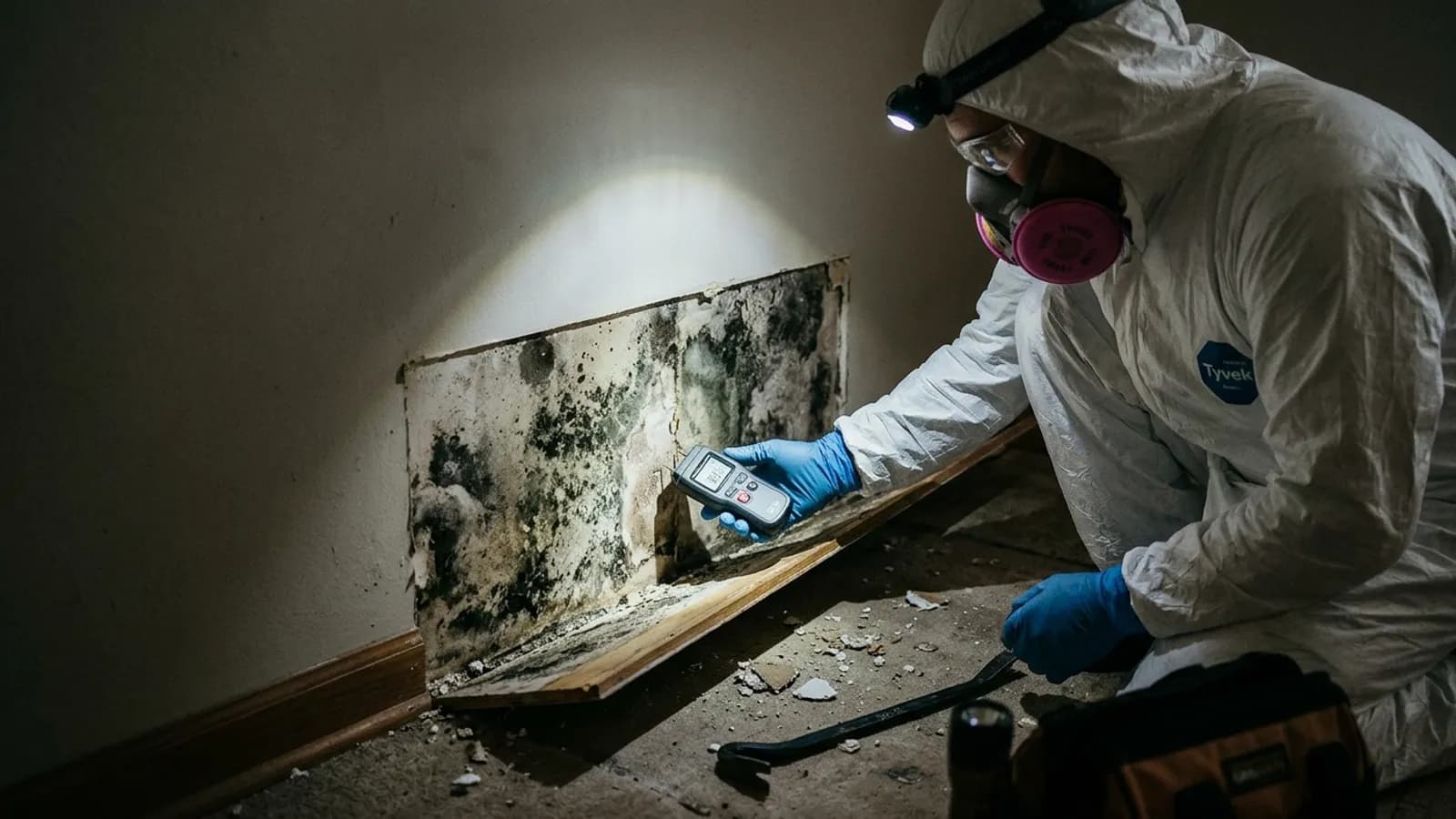
Does Homeowners Insurance Cover Mold?
Homeowners insurance covers mold only when it results from a covered sudden peril, and even then often capped at $5,000–$10,000; chronic-moisture mold is excluded.
Read guide
Homeowners Insurance Claim Denied? The Appeal Playbook
Denied home claims follow patterns — exclusions, documentation gaps, misrepresentation. The appeal playbook: read the clause, cure the defect, escalate in order.
Read guideWhat Is an Exclusion in Insurance?
An exclusion is a peril, property type, or situation a policy does not cover — floods, earthquakes, wear and tear — marking exactly where your protection ends.
Read guide
Home Warranty vs Home Insurance: Different Products, Different Jobs
A home warranty covers appliance and system breakdowns for a yearly fee plus per-visit charges; homeowners insurance covers perils and liability.
Read guide