
Does Homeowners Insurance Cover Foundation Repair?
Homeowners insurance covers foundation repair only when a sudden covered peril causes it; settling, soil movement, and gradual leaks are excluded maintenance.
Why you can trust this guide
- Written by Daniel Reyes, AINS, former licensed P&C agent — independent insurance education publisher.
- Factual accuracy reviewed and signed off by Marcus Hale, CPCU, AINS, licensed P&C agent (Independent insurance reviewer).
- Every factual claim traces to a regulator, statute, or policy document — sources are listed at the bottom of the page.
- Last verified ; time-sensitive guides are re-checked at least twice a year. Read our editorial policy.

On this page
Foundation repair is covered only when a sudden, covered peril — a burst supply line, a vehicle impact, a fallen tree — causes the damage. Settling, soil movement, tree roots, and drainage problems are excluded maintenance in every standard homeowners policy.
How the sudden-versus-gradual line works
A standard HO-3 policy pays sudden, accidental damage from covered perils and excludes earth movement, settling, and wear and tear — earth movement and settling sit in the exclusions section of every standard form. The contrast decides almost every foundation claim: a burst pipe under the slab that erodes soil overnight is a covered sudden event, while ten years of settlement cracking is excluded maintenance. The middle case is the one worth fighting: a covered sudden leak that caused soil erosion, which then caused the foundation movement. Many policies pay the resulting damage from the covered peril even while excluding the earth movement itself, though some forms exclude earth movement broadly regardless of cause. Earthquake-caused foundation damage needs separate earthquake coverage, and flood-undermined foundations follow flood insurance rules.
What is covered and what is not
| Scenario | Typically covered? | Why |
|---|---|---|
| Burst supply line saturates soil under the slab | Yes, often contested | Sudden accidental discharge; resulting damage follows the covered peril |
| Vehicle impact cracks the foundation wall | Yes | Vehicle impact is a covered peril in standard forms |
| Storm-felled tree fractures a stem wall | Yes | Wind and falling object are covered perils |
| Settlement cracks appearing over years | No | Gradual settling is excluded maintenance |
| Drought-shrunk soil pulling at the footing | No | Earth movement excludes soil shrinkage |
| Expansive soil heaving over years | No | Earth movement covers soil expansion and contraction |
| Earthquake shifts or cracks the foundation | Only with earthquake coverage | Earth movement is excluded from the standard policy |
The evidence file a foundation claim needs
Foundation claims are engineering disputes, so the file is the claim. Bring the plumber's leak-isolation test with camera footage (commonly $300–$600 and the single most persuasive document), the independent structural engineer's letter (commonly $500–$1,500), and the dated photo record. Repair-company estimates supplement the file but carry less weight, because repair vendors have an incentive to find damage and adjusters know it.
- Identify and date the sudden event — the pipe failure, the storm, the impact — before anything else.
- Order the plumber's leak-isolation test with camera footage if a slab leak is suspected.
- Photograph interior cracking, out-of-square door frames, and exterior grading before any repair, and report the loss to the insurer the same day.
- Commission the independent structural engineer's cause-attribution letter, not just the repair estimate.
- Submit the reports with the claim — an engineer's letter submitted after a denial reads as an appeal, not as evidence.
When the insurer fights the causation
The dispute in a foundation claim is attribution: did a covered peril cause the movement, or did the ground move on its own? Carriers contest plumbing-cause claims heavily, so the documented damage chain — the sudden event, its date, the soil loss it produced — is what separates a payment from a denial. The framing matters as much as the evidence: "a pipe burst on March 4th and washed out the soil under the slab" is a claim, while "my foundation cracked" is a denial. When a first denial cites earth movement on a claim with solid causation evidence, the appeal path in the claim denial playbook applies, because misattributed causation is one of the appealable denial categories.
The endorsements that can change the answer
Foundation repair costs commonly run five figures, so the pre-claim question is which specific peril is documented and endorsed. A sewer-backup endorsement (commonly $50–$250 per year) covers drain-side failures that undermine soil near the foundation. Service line coverage extends protection to the underground water and sewer lines between the house and the street — the pipes most likely to fail under a slab. Water-damage endorsements broaden the sudden-leak coverage where the base form is narrow. No endorsement restores gradual settling or drought shrinkage; those remain the maintenance the exclusions assume.
Related guides
Foundation claims connect to the other ground-movement and water-loss questions, because the same exclusions and the same causation disputes run through each.
- Does Homeowners Insurance Cover Sinkholes? — the collapse-versus-settling line, state sinkhole coverage rules, and geotechnical claim evidence.
- Does Homeowners Insurance Cover Water Damage? — the sudden-versus-gradual decision tree that governs burst-pipe and leak claims.
- Earthquake Insurance — the exclusion that matters most for foundations, and how quake coverage is priced.
- What Does Homeowners Insurance Cover? — the full covered-versus-never-covered map behind foundation denials.
- The Home Insurance Claim Process — from first notice to settlement, with the documentation sequence.
Sources
Frequently asked questions
Is foundation damage from a slab leak covered?
Often yes, with a split outcome: the water damage and the soil loss caused by a sudden, documented pipe failure are commonly covered, while the pipe repair itself and any gradual settling are not. The claim turns on the plumber's leak-isolation report, because a dated leak diagnosis is the evidence that separates a covered sudden event from excluded earth movement.
Does homeowners insurance cover foundation cracks from settling?
No. Gradual settling, soil shrinkage, and seasonal movement are excluded maintenance in every standard policy, and no endorsement buys them back. Coverage reaches the foundation only when a sudden covered peril such as a burst pipe, vehicle impact, or fire damages it. An engineer's report attributing cracks to a specific sudden event is the only realistic path to payment.
Does flood insurance cover a foundation washed out by floodwater?
Partially. NFIP and private flood policies cover flood damage to the insured building itself, but earth movement and land stabilization costs are excluded, so the soil washed out from under the slab is generally not paid. A flood-undermined foundation is a mixed claim: structure damage follows flood rules, and the erosion beneath it is usually the owner's cost.
How much does it cost to document a foundation claim?
Budget for two reports: a licensed plumber's leak-isolation test with camera footage commonly runs $300–$600 when a slab leak is suspected, and an independent structural engineer's letter runs $500–$1,500. Both are out-of-pocket whether or not the claim pays, but the engineer's cause-attribution letter is the document that moves adjusters, and free repair-company inspections carry less weight.
Is drought-related foundation damage covered?
No. Soil shrinkage from drought is gradual earth movement, an excluded category in standard policies, and no endorsement reliably restores it. The narrow exception is a sudden event during the drought, such as a water main break or a storm, that causes specific covered damage. Perimeter watering, gutter maintenance, and grading fixes are the practical prevention.
How we researched this guide
Home policies are forms-driven: the peril list in the form decides what gets paid, so our guides follow the policy form structure.
- Coverage explanations track the standard HO-3/HO-5 form structure — Coverage A through E — because that's the contract language adjusters apply.
- Flood facts come from FEMA's National Flood Insurance Program (floodsmart.gov), since standard home policies exclude flood.
- Regional cost ranges are built from NAIC home-owners insurance statistics, with the drivers of variation (construction, age, wind/hail exposure) named explicitly.
- Mitigation and eligibility claims cite IBHS research and state fair-plan rules where standard market access is an issue.
Where facts vary by state or insurer, we publish the range and the reason for the variation rather than a single misleading average. We do not sell insurance, take money from insurers for coverage, or publish claim amounts we cannot trace to a source.
Sources
The primary sources behind the facts on this page. Last verified November 10, 2026.
- FEMA — National Flood Insurance Program (FloodSmart) — flood coverage, which standard homeowners policies exclude.
- Insurance Institute for Business & Home Safety (IBHS) — property-loss research and mitigation standards that affect eligibility and discounts.
- U.S. Department of Housing and Urban Development (HUD) — FHA-insured property requirements and disaster assistance programs.
- NAIC — National Association of Insurance Commissioners — model regulations, consumer guides, and industry statistics.
- Find your state insurance regulator (NAIC directory) — every state insurance department — the authority for your state's rules and complaint filing.
- Insurance Information Institute (III) — industry statistics and consumer explainers we cross-check against regulator publications.
Rules that vary by state are verified against the state insurance department's consumer pages — find yours via the NAIC directory above.
Keep reading
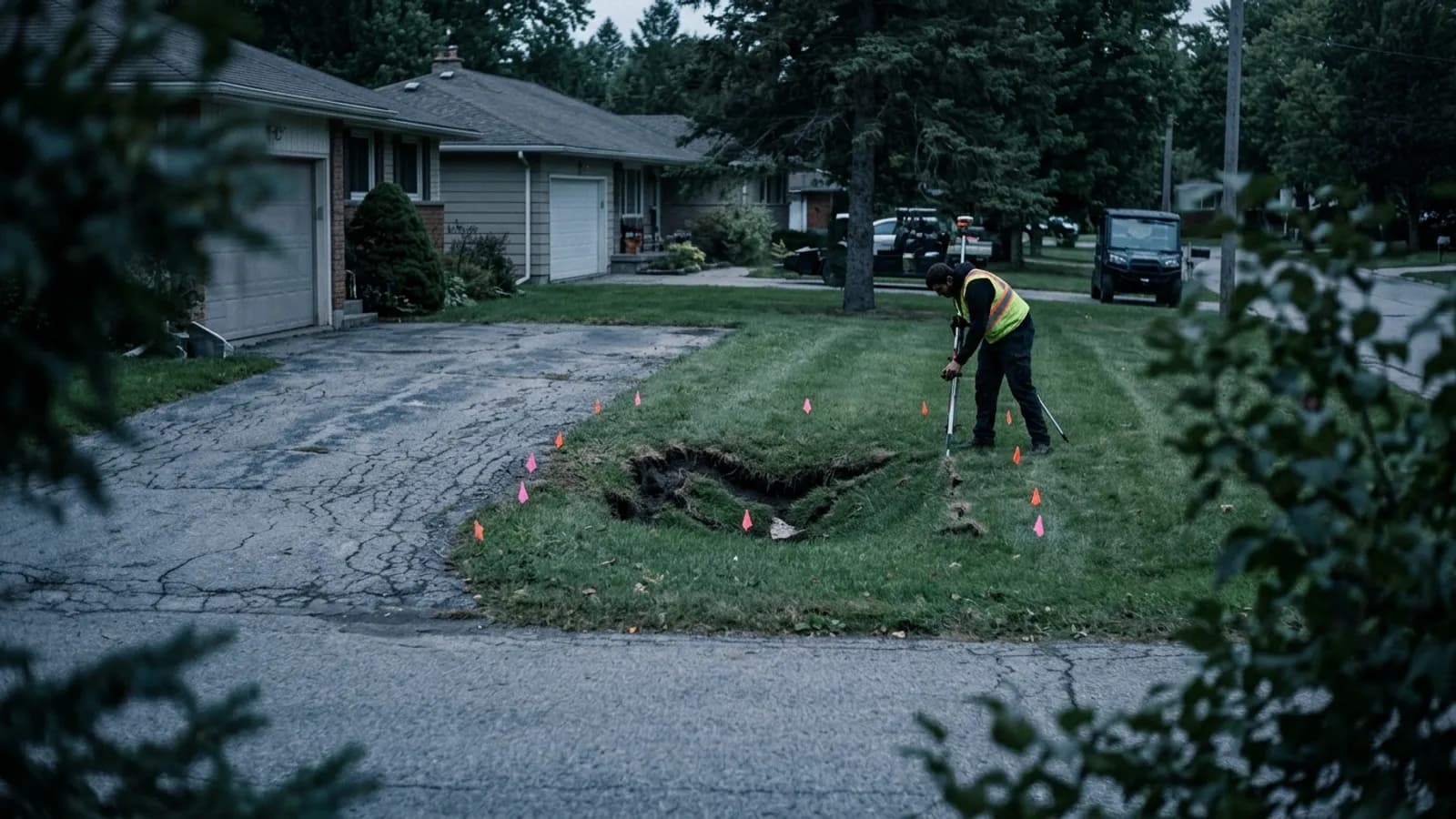
Does Homeowners Insurance Cover Sinkholes?
Standard policies cover catastrophic ground collapse under a narrow test but exclude ordinary sinkhole damage; karst states sell endorsements separately.
Read guide
Does Homeowners Insurance Cover Water Damage?
Homeowners insurance covers sudden water damage from burst pipes, appliance failures, and storm-driven rain, excluding gradual leaks, sewer backup, and floods.
Read guide
Earthquake Insurance: The Exclusion That Matters Most (and How to Fix It)
Earthquake damage is excluded from every standard home policy. What quake coverage costs, who should buy it, and the fire-following-quake exception.
Read guide
What Does Homeowners Insurance Cover? (And What It Never Covers)
A standard HO-3 covers fire, wind, hail, theft, and burst pipes — and never floods, earthquakes, or gradual damage. The coverage buckets, exclusions, and fixes.
Read guideWhat Is an Exclusion in Insurance?
An exclusion is a peril, property type, or situation a policy does not cover — floods, earthquakes, wear and tear — marking exactly where your protection ends.
Read guide