
Does Car Insurance Cover Hit-and-Run?
Hit-and-run damage claims under collision and injuries under uninsured motorist — the unidentified driver counts as uninsured. The claim protocol and refund path.
Why you can trust this guide
- Written by Daniel Reyes, AINS, former licensed P&C agent — independent insurance education publisher.
- Factual accuracy reviewed and signed off by Marcus Hale, CPCU, AINS, licensed P&C agent (Independent insurance reviewer).
- Every factual claim traces to a regulator, statute, or policy document — sources are listed at the bottom of the page.
- Last verified ; time-sensitive guides are re-checked at least twice a year. Read our editorial policy.
On this page
Yes — hit-and-run damage to the car claims under collision, and hit-and-run injuries claim under uninsured motorist bodily injury, because the unidentified driver counts as uninsured. The police report, filed the same day, is the claim's prerequisite in both paths.
Parked-car versus driving hit-and-run: the coverage split
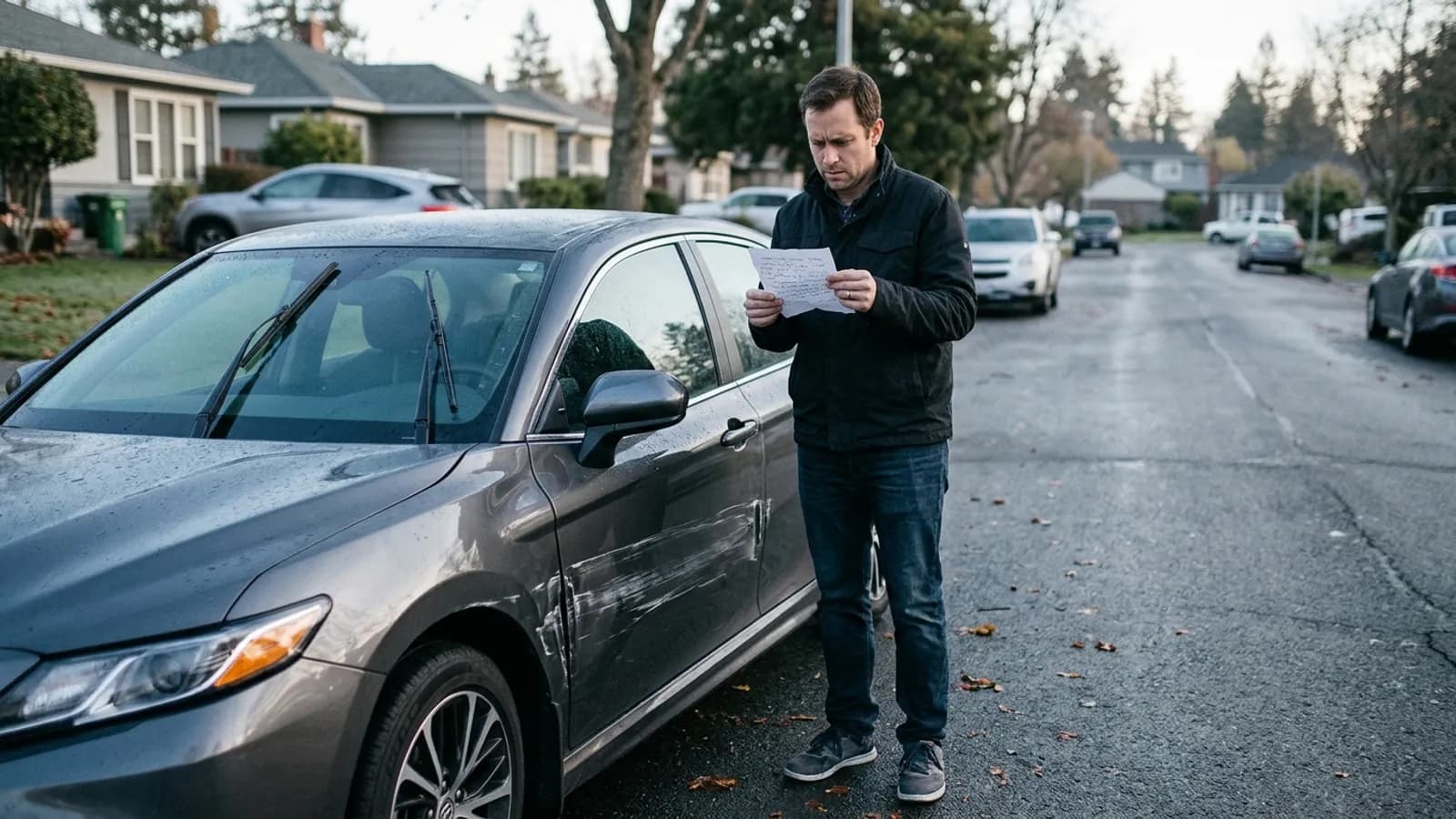
The coverage path depends on one fact: where the car was when the other driver fled. The parked-car hit-and-run — someone clips the bumper in a lot and leaves — claims under collision, minus the deductible, in most states. Uninsured-motorist property damage, where the state offers it, may pay without the deductible. The driving hit-and-run splits into two claims: collision for the car's damage, and uninsured-motorist bodily injury for the medical claim, because the unidentified driver is legally uninsured.
| Scenario | The paying coverage | Deductible | | | --- | --- | | Parked car clipped in a lot, driver flees | Collision (UM property damage where offered) | Collision deductible applies; UM-PD often none | | Struck while driving, other car flees | Collision for the car | Collision deductible applies | | Injuries in the driving hit-and-run | Uninsured motorist bodily injury | None on UM-BI | | Immediate medical bills | MedPay or PIP first | None | | Driver identified weeks later | Claim converts to subrogation | Collision deductible refundable on recovery |
The police report is the prerequisite in every row: insurers require the report number to open the claim, the report starts the identification process, and filing the same day is the discipline the after-accident checklist covers. The collision line and its deductible are defined in the collision coverage guide.
The evidence file that gets the driver identified
Hit-and-run identification is an evidence race, and the claimant collects most of it. The file that works:
- Photographs of both damage patterns — paint transfer says the other car's color and impact height.
- The exact location and time — pinpoints the camera systems worth pulling.
- Witness names — one witness moves a police report further.
- The nearest camera inventory — storefronts, doorbell cameras, and transit cameras whose retention windows are measured in days.
The tow-yard and body-shop lead matters too: the fleeing driver repairs the car eventually, and some police departments check shops after reports. Once the driver is found, the claim converts to a normal subrogation against their liability coverage. Without identification, the claim stands on collision and UM — which is why both coverages matter more in hit-and-run country than the premium difference suggests.
The deductible-refund path after an identification
The money in a hit-and-run claim has two stages, and the second is the refund nobody tracks. Stage one: collision pays the repair or total loss minus the deductible, and UM bodily injury pays medical claims as they document. Stage two: the driver is identified — through police work, cameras, or the other driver's own insurer — and the carrier subrogates against their liability coverage. When the recovery lands, the collision deductible is refunded, and the claim stops counting as a not-fault loss in the carrier's file.
The timeline is unglamorous: weeks to months after identification, sometimes after the criminal case resolves. The follow-through that matters: keep the claim number, the police report number, and the adjuster's contact; ask in writing whether subrogation was opened when the driver is identified; and confirm the refund actually arrives — deductibles recovered but never forwarded are a known consumer complaint, and the state insurance department's complaint process is the escalation path.
Quick answer: does car insurance cover hit-and-run?
Depends on which half was hit. Your collision coverage pays your car's damage from a hit-and-run; uninsured-motorist coverage pays injuries when the fleeing driver is never identified; liability pays nothing because it pays the other side.
- Parked-car hit-and-run — collision pays the damage minus your deductible; some states' uninsured motorist property damage (UMPD) coverage applies with no deductible.
- Injuries from a fleeing driver — uninsured motorist bodily injury coverage is the line built for exactly this; it pays as if the driver carried their required limits.
- The police report is the clock — most carriers require one within 24–72 hours for hit-and-run claims; the report also documents the not-at-fault status.
- Premium impact — not-at-fault claims carry no surcharge in most states; check the state rules if a surcharge appears.
The trap: paying out of pocket for a small hit-and-run to protect a discount. The hit-and-run guide covers the documentation sequence; the coverage exists — the report timeline is what protects it.
What the claim pays, priced
Collision pays the repair cost minus deductible — a $2,000 repair with a $500 deductible returns $1,500. UMPD limits in states that offer it commonly run $3,500–$25,000, and several waive the deductible for unidentified-driver damage. UM bodily-injury limits match whatever you selected — the coverage that pays six-figure injury claims from an anonymous driver. The uninsured motorist glossary entry explains the coverage family this claim lives in.
Related guides
The neighboring work is the scene protocol, the collision line that pays the car, and the uninsured-motorist coverage that pays the injuries.
- What Is Uninsured Motorist Coverage? — the coverage that pays when the other driver cannot.
- What Is Underinsured Motorist Coverage? — the layer above a thin at-fault policy.
- Does Car Insurance Cover Other Drivers? — the permissive-use rules if a borrower was driving.
- What to Do About a Claim Denial — the escalation path when a claim is refused.
- What Is a Deductible? — the collision share the recovery refunds.
Sources
Frequently asked questions
Does car insurance cover a hit-and-run on my parked car?
Yes — collision pays for the damage minus the deductible in most states, because the unidentified driver is legally treated as uninsured. Where offered, uninsured-motorist property damage may apply without the deductible. The police report number is required to open either claim.
I was injured in a hit-and-run — what covers me?
Uninsured motorist bodily injury pays the medical claim, because the unidentified driver counts as uninsured by statute, and MedPay or PIP pays immediate medical costs on top. The UM claim does not wait for the driver to be found, and it pays up to the policy's declared UM limit rather than the state minimum.
Do I need uninsured motorist coverage for hit-and-run accidents?
For injuries, yes — the unidentified driver counts as uninsured, so uninsured-motorist bodily injury is the coverage that pays when nobody can be sued. Car damage claims under collision regardless. Drivers in states where UM is optional should price it with hit-and-run frequency in mind.
How long do I have to report a hit-and-run claim?
The police report should be filed the same day — many states require it for hit-and-run incidents, and insurers require the report number to open the claim. The insurance claim follows the policy's prompt-notice condition: days, not weeks, or the late-notice denial argument starts building.
What happens if the hit-and-run driver is found weeks later?
The claim converts: the carrier subrogates against the identified driver's liability coverage, the collision deductible is refunded on recovery, and the claim stops being an unidentified-driver loss. Notify the insurer in writing when the identification is learned, and keep the claim number for the follow-up.
Will my rates rise for a hit-and-run claim?
Not-at-fault claims affect rates less than at-fault claims — some states prohibit surcharges on them entirely. The claim still lands in the claims-history file, so the renewal effect is milder than a crash but not zero with every carrier, and the deductible refund on recovery does not erase the claim's record.
How we researched this guide
Car insurance pricing is set per driver, per ZIP code — so our guides anchor on regulator and industry statistics and explain the factors, not a fake exact price.
- Premium ranges are anchored to NAIC statewide average-expenditure data, the most complete public dataset on what drivers actually pay per state.
- State minimum-coverage requirements are checked against each state's motor-vehicle financial-responsibility statute and the state insurance department's consumer pages.
- What a coverage actually pays for is verified against policy declarations and specimen forms, not marketing copy.
- Discount and surcharge rules cite the state DOI consumer bulletin where each state regulates them differently — for example credit-based insurance scores, which most states permit but a few ban.
Where facts vary by state or insurer, we publish the range and the reason for the variation rather than a single misleading average. We do not sell insurance, take money from insurers for coverage, or publish claim amounts we cannot trace to a source.
Sources
The primary sources behind the facts on this page. Last verified November 17, 2026.
- IIHS — Insurance Institute for Highway Safety — crash-test data, vehicle loss statistics, and safety-feature research.
- NHTSA — National Highway Traffic Safety Administration — recalls, crash data, and state traffic-safety requirements.
- FMCSA — Federal Motor Carrier Safety Administration — commercial vehicle and carrier insurance requirements.
- NAIC — National Association of Insurance Commissioners — model regulations, consumer guides, and industry statistics.
- Find your state insurance regulator (NAIC directory) — every state insurance department — the authority for your state's rules and complaint filing.
- Insurance Information Institute (III) — industry statistics and consumer explainers we cross-check against regulator publications.
Rules that vary by state are verified against the state insurance department's consumer pages — find yours via the NAIC directory above.
Keep reading
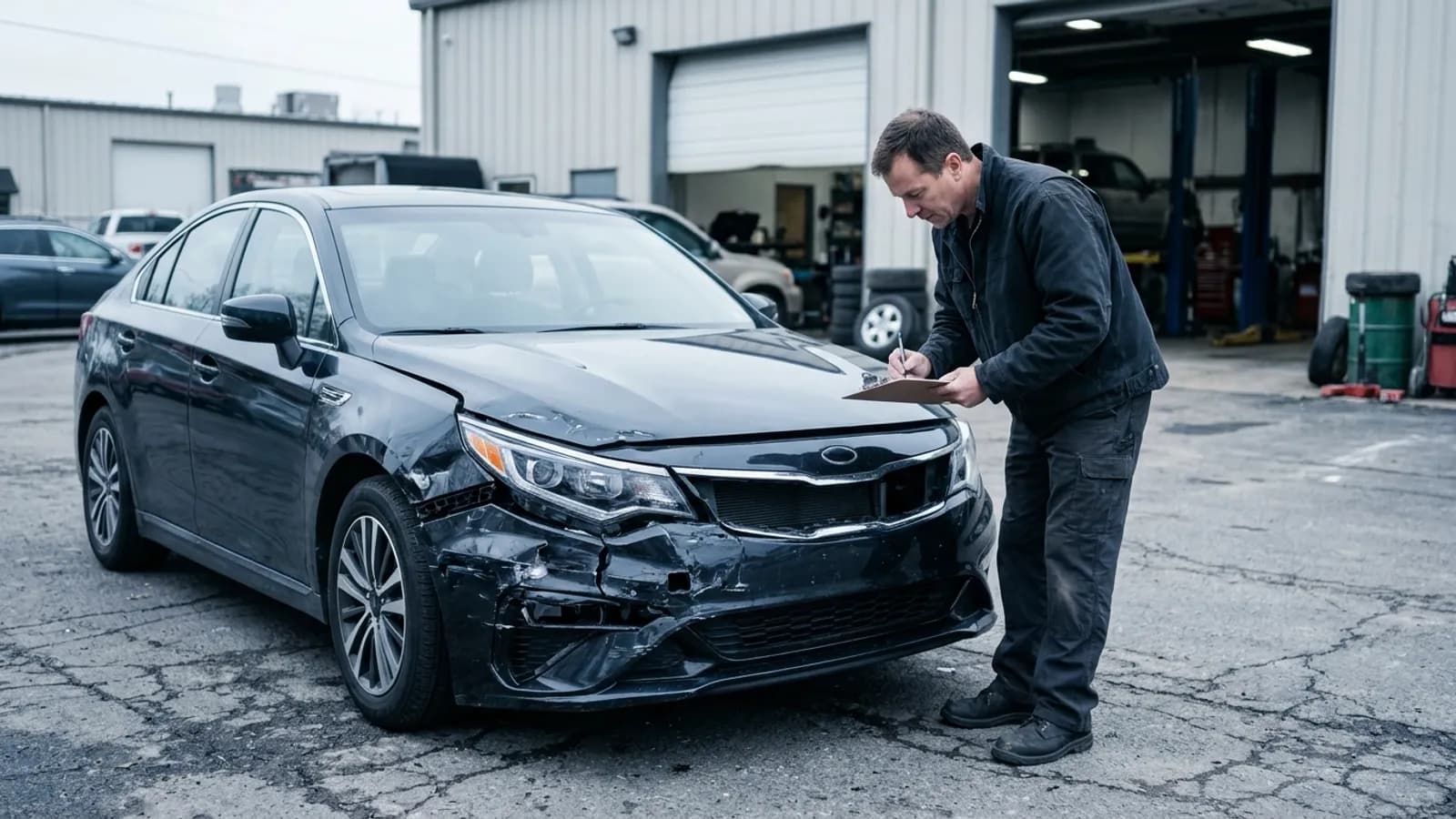
What Is Collision Car Insurance? Coverage, Deductibles, and Cost
Collision insurance pays to repair or replace your car after a crash with a vehicle or object, regardless of fault — commonly $300–$900 per year.
Read guide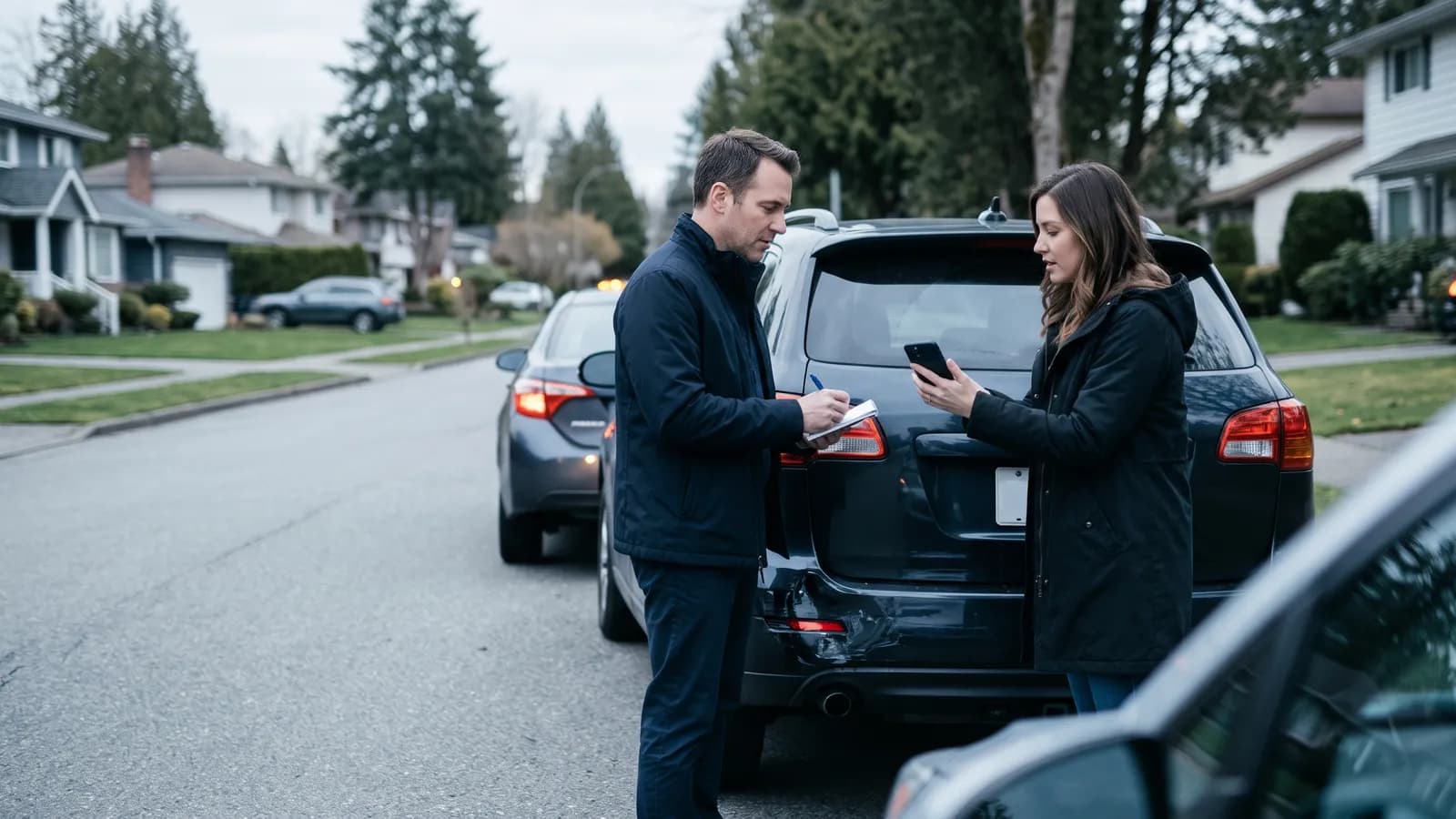
What to Do After a Car Accident: The 10-Step Claim Checklist
The post-accident sequence that protects your claim: scene safety, documentation, prompt insurer notice, the adjuster process, and the statements that cost money.
Read guide
Does Car Insurance Cover Other Drivers?
Car insurance follows the car: permissive use covers occasional permitted drivers, household members must be listed, and a named exclusion voids coverage.
Read guideWhat Is Uninsured Motorist Coverage?
Uninsured motorist (UM) coverage pays your injuries when an at-fault driver has no insurance — including hit-and-run drivers — and UIM pays when limits fall short.
Read guideWhat Is Subrogation?
Subrogation is your insurer's right to recover its claim payment from the party at fault — paying you first, then pursuing the responsible side's insurer.
Read guide