
Renters Insurance in Chicago, IL: Costs and Guide (2026)
Renters insurance in Chicago costs about $14–$21 per month. Vintage-plumbing water backup, winter pipe bursts, and lakefront replacement costs shape the price.
Why you can trust this guide
- Written by Daniel Reyes, AINS, former licensed P&C agent — independent insurance education publisher.
- Factual accuracy reviewed and signed off by Marcus Hale, CPCU, AINS, licensed P&C agent (Independent insurance reviewer).
- Every factual claim traces to a regulator, statute, or policy document — sources are listed at the bottom of the page.
- Last verified ; time-sensitive guides are re-checked at least twice a year. Read our editorial policy.
On this page
Renters insurance in Chicago costs about $14–$21 per month for a standard policy — $20,000–$30,000 of property coverage and $100,000 of liability. North-side lakefront units price above the south and west sides on replacement costs. Cook County's older building stock makes the water-backup endorsement the city's cheapest essential add-on: vintage plumbing and deep freezes concentrate the claim pattern around water.
What Chicago tenants pay
| Profile | Typical cost |
|---|---|
| Illinois statewide average | $13–$19 per month |
| Chicago standard policy ($20k–$30k property, $100k liability) | $14–$21 per month |
| Add $300k liability + replacement-cost valuation | +$3–$6 per month |
| Auto bundle discount | −5–25% off both policies |
Pricing follows the lake and the building stock. Lakeview, Edgewater, and Lincoln Park lakefront units quote toward the top of the range on replacement costs. Wicker Park, Logan Square, and Pilsen vintage walk-ups sit mid-range with elevated water-claim exposure. South Loop towers price on building value; Bronzeville and the west side quote lower on rent value but share the same vintage-plumbing risk. Illinois' smaller metros quote below the city across the board.
Why Chicago prices the way it does
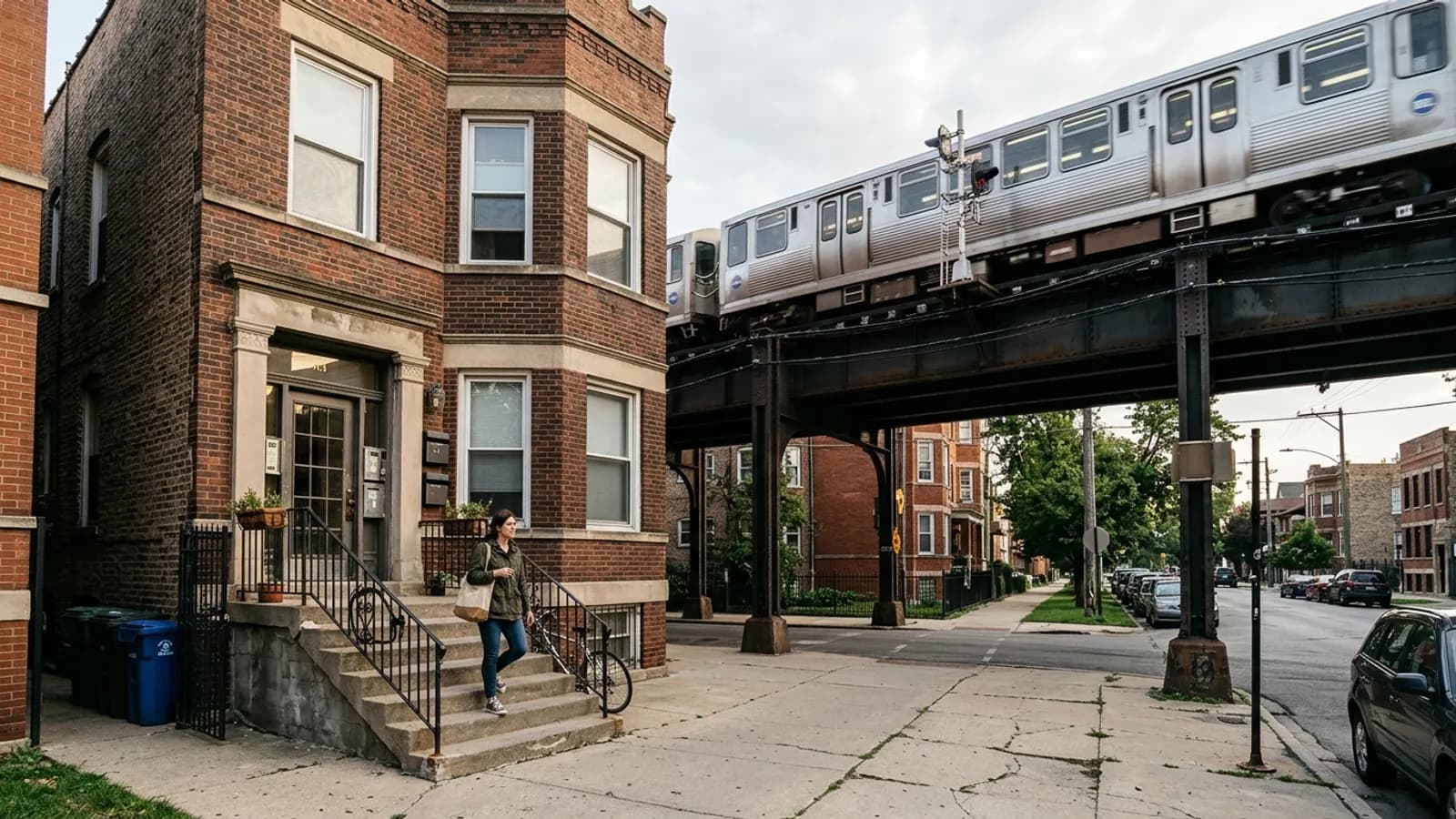
Building age is Chicago's pricing engine: two-flats, pre-war walk-ups, and converted loft stock carry cast-iron stacks and freeze-prone lines. Deep winter events — polar-vortex cold snaps — burst uninsulated plumbing across the north side, and the 2019 freeze remains the benchmark loss year. Heavy rain overwhelms the combined sewer system, sending backups into garden-level and basement units citywide. Theft-from-vehicle patterns around the entertainment corridors and lakefront parking add the urban lift, and lakefront replacement costs exceed the Illinois norm.
Requirements and landlord norms in Chicago
Chicago's large-multifamily operators require renters insurance at lease signing, typically at $100,000 of liability, and the larger management companies verify before key release. The repeat checks are the liability limit, the operator listed as an interested party for renewal and cancellation notices — notification only, no coverage granted — and a bound policy rather than a quote. Each leaseholder certifies separately; unrelated roommates each carry their own policy. Two-flat landlords enforce the same terms increasingly, and some now ask tenants to confirm the water backup endorsement explicitly given the building stock.
The Chicago claim pattern
- Water backup through vintage plumbing — the signature claim. Combined sewers and cast-iron stacks back up in heavy rain into garden units. Excluded by default; the endorsement runs $50–$150 per year. The water damage question page separates backup from flood.
- Winter pipe bursts — polar-vortex cold snaps burst uninsulated lines in vintage buildings and vacant units. Sudden bursts are covered; slow leaks are maintenance and denied.
- Theft from vehicles — the city's theft-from-vehicle pattern feeds renter claims up to category caps of about $1,500 for electronics and bikes; the claim files on the renters policy, not the auto policy.
- Garden-level and basement flood exposure — rising water is excluded everywhere in the city; below-grade units near the river and low-lying blocks justify an NFIP contents-only policy at about $100 per year.
- Displacement after a water event — a covered burst or backup that makes the unit unlivable triggers loss of use coverage, priced against Chicago's winter hotel market.
Coverage setup that fits Chicago
- $25,000–$30,000 property with replacement cost — winter bursts and backups damage whole floors at once; depreciated payouts cut recovery.
- $300,000 liability — the step above the $100,000 multifamily standard costs a dollar or two per month.
- Water backup endorsement — the essential Chicago add-on; typically $50–$150 per year.
- $500 deductible — the $1,000 step saves $1–$3 per month; keep the low deductible.
- NFIP contents-only flood policy — about $100 per year for garden-level and basement units.
- Landlord certificate and interested-party listing — bind before lease signing; large-multifamily operators verify before key release.
The base-policy guide explains how the standard form treats each water line, and the scheduled property endorsement closes the electronics gap for lakefront units.
Related guides
The Illinois state page carries the statewide rules, and Chicago's vintage-plumbing claim pattern pairs with the Midwest metros that share its building age.
- Renters Insurance in Illinois: Costs and What to Know — the statewide cost picture behind the $14–$21-per-month metro range.
- Renters Insurance: The Complete Guide — the full standard-policy mechanics.
- Renters Insurance in Milwaukee, WI — older duplex backup exposure and lake-effect winters up the lake ($12–$17 per month).
- Renters Insurance in Detroit, MI — combined-sewer backups and spring-melt claims ($14–$22 per month).
- Does Renters Insurance Cover Theft From My Car? — how Chicago's vehicle break-in claims actually file.
Sources
- Illinois Department of Insurance — Illinois consumer resources
- NAIC — Consumer resources
Frequently asked questions
How much is renters insurance in Chicago?
Renters insurance in Chicago runs about $14–$21 per month for a standard policy — $20,000–$30,000 of property coverage and $100,000 of liability. North-side lakefront units price above the south and west sides on replacement costs, so the same policy moves several dollars across the city's ZIPs.
Do Chicago landlords require renters insurance?
Yes. Chicago's large-multifamily operators require renters insurance at lease signing, typically at $100,000 of liability. The management company is added as an interested party and confirms a bound policy — not a quote — before the lease starts. Neighborhood two-flats enforce the same terms less formally but increasingly ask.
Does renters insurance cover water backup in Chicago?
Not by default. Backup through drains and sewers is excluded from the standard policy, and Chicago's vintage plumbing — pre-war walk-ups and two-flats with cast-iron stacks — makes that exposure real. The water backup endorsement typically costs $50–$150 per year and is the city's cheapest essential add-on.
Does renters insurance cover burst pipes in a Chicago winter?
Sudden pipe bursts are covered. Chicago's deep freezes — the polar-vortex events that drop the lakefront well below zero — burst uninsulated lines in vintage buildings and vacant units between tenancies. Slow leaks are treated as maintenance and denied, so suddenness is the claim line.
Does renters insurance in Chicago cover theft from my car?
Yes. Chicago's theft-from-vehicle pattern feeds renter claims — break-ins around Wicker Park, Logan Square, and the lakefront parking corridors. Belongings stolen from a parked car are covered up to the property limit, subject to category caps of about $1,500 for electronics and bikes.
Is replacement cost coverage worth adding in Chicago?
For most Chicago tenants, yes. Replacement-cost valuation adds roughly $2–$4 per month over actual cash value and pays today's prices after a loss. Winter bursts and backup events damage whole floors of belongings at once, and depreciated payouts cut recovery sharply in that scenario.
How we researched this guide
Renters coverage is small and simple, but landlord requirements and state rules vary — so we verify both sides of the lease.
- What HO-4 policies cover (and the liability and loss-of-use mechanics) is verified against standard policy forms and DOI consumer guides.
- Landlord-side insurance requirements are framed against HUD tenant-rights resources, since required coverage limits appear in lease terms, not statutes.
- Cost figures are ranges by state and coverage limit, anchored to NAIC statistics.
- Disaster-aid expectations are set from FEMA guidance: federal assistance is not a replacement for coverage, and we explain exactly what it does pay.
Where facts vary by state or insurer, we publish the range and the reason for the variation rather than a single misleading average. We do not sell insurance, take money from insurers for coverage, or publish claim amounts we cannot trace to a source.
Sources
The primary sources behind the facts on this page. Last verified November 10, 2026.
- HUD — tenant rights and responsibilities — state landlord-tenant rules that affect liability requirements.
- FEMA — renters and disaster assistance — what federal disaster aid does and does not cover for tenants.
- NAIC — National Association of Insurance Commissioners — model regulations, consumer guides, and industry statistics.
- Find your state insurance regulator (NAIC directory) — every state insurance department — the authority for your state's rules and complaint filing.
- Insurance Information Institute (III) — industry statistics and consumer explainers we cross-check against regulator publications.
Rules that vary by state are verified against the state insurance department's consumer pages — find yours via the NAIC directory above.
Keep reading

Renters Insurance in Illinois: Costs and What to Know (2026)
Renters insurance in Illinois costs about $13–$19 per month. Chicago theft rates, three-flat water backup, and New Madrid risk shape what tenants should set up.
Read guideRenters Insurance: The Complete Guide
Renters insurance covers your belongings, your liability, and your hotel bill when the rental is unlivable — what it pays, what it excludes, and how to pay less.
Read guide
Renters Insurance in Milwaukee, WI: Costs and Guide (2026)
Renters insurance in Milwaukee costs about $12–$17 per month; what Milwaukee tenants pay, the water backup decision in duplex districts, landlord rules, and coverage that fits the city.
Read guide
Renters Insurance in Detroit, MI: Costs and Guide (2026)
Renters insurance in Detroit costs about $14–$22 per month. Combined-sewer backups, spring-melt pipe bursts, and urban theft rates shape the price.
Read guide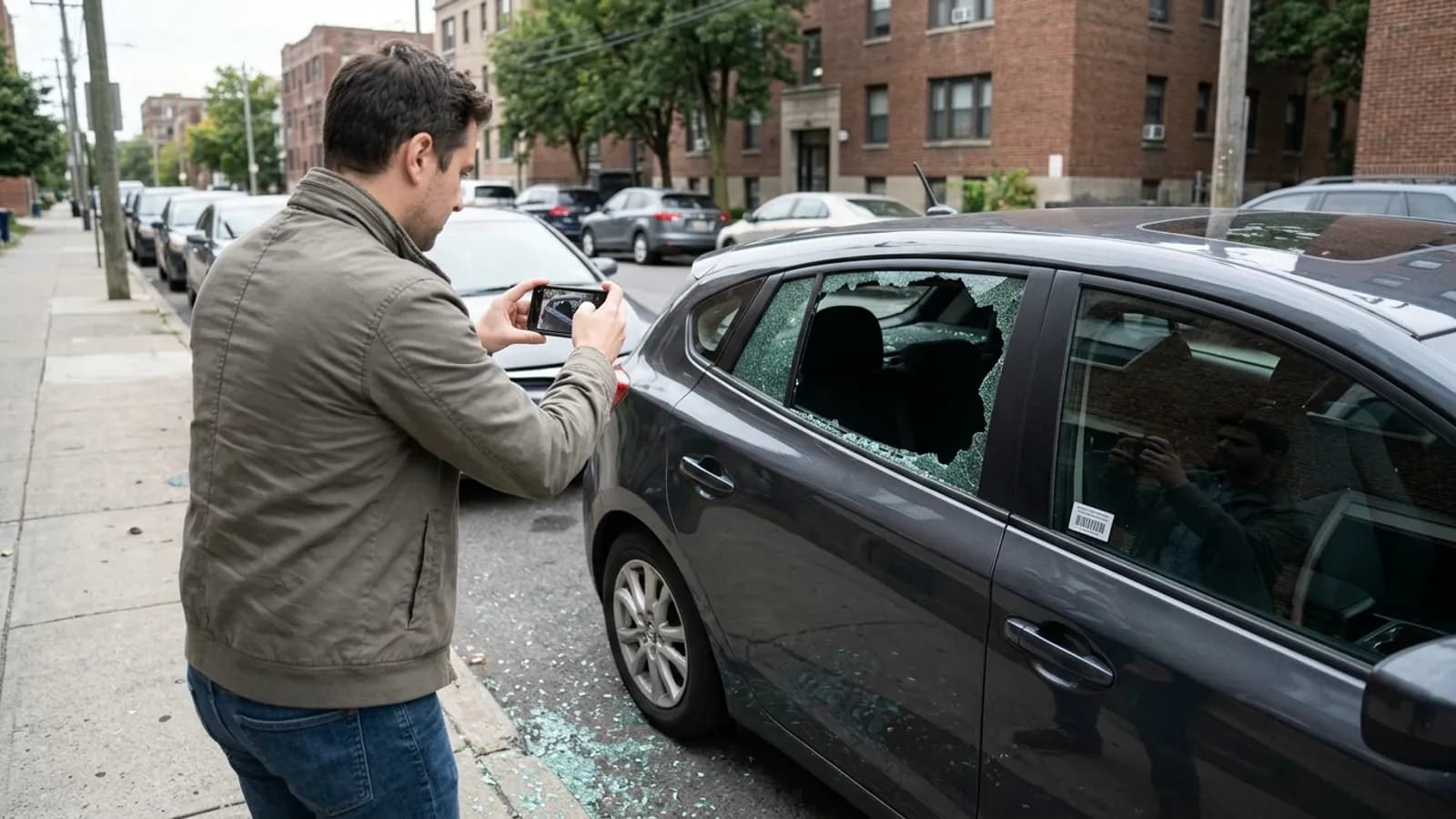
Does Renters Insurance Cover Theft From My Car?
Yes — belongings stolen from inside your car are covered by renters insurance as personal property; the car itself and attached equipment belong to auto coverage.
Read guide