
Does Renters Insurance Cover Water Damage?
Yes for sudden water damage — burst pipes and appliance failures qualify; gradual leaks, sewer backup, and rising floodwater are the excluded lanes.
Why you can trust this guide
- Written by Daniel Reyes, AINS, former licensed P&C agent — independent insurance education publisher.
- Factual accuracy reviewed and signed off by Marcus Hale, CPCU, AINS, licensed P&C agent (Independent insurance reviewer).
- Every factual claim traces to a regulator, statute, or policy document — sources are listed at the bottom of the page.
- Last verified ; time-sensitive guides are re-checked at least twice a year. Read our editorial policy.
On this page
Yes, for sudden and accidental water damage — burst pipes, appliance failures, and storm rain through wind-damaged openings are covered. Gradual leaks, sewer backup (without endorsement), and all rising surface water are excluded.
The water sources ranked by claim behavior
Water is the most frequent renter claim, and the source decides coverage:
| Water source | Standard policy | Notes |
|---|---|---|
| Burst supply line | Covered — sudden and accidental | The classic claim; pipe repair is the landlord's |
| Appliance overflow (washer, dishwasher) | Covered when sudden | Neglected hoses drift toward the gradual exclusion |
| Storm rain through wind-damaged opening | Covered | Wind creates the entry; the rain follows |
| Sewer or drain backup | Excluded | Water-backup endorsement is the fix |
| Rising surface water / flood | Excluded | Flood policy territory |
| Long-term seepage, humidity | Excluded | Gradual damage, maintenance exclusion |
The table's takeaway: velocity and suddenness are the coverage test, and the two excluded rows are bought back by endorsement, not argument. The flood row is covered fully in the natural disasters question, and the mold that follows a covered leak is treated in the mold question.
The sewer-backup endorsement math, worked
Sewer backup is the single most common uncovered renter claim in buildings with basement units, and the endorsement's pricing-to-payout ratio is the best in the policy. Cost: $50–$150 per year for meaningful limits at renters scale. Exposure: a backup that floods a basement unit's carpet, baseboards, and storage commonly runs $3,000–$8,000 in contents damage.
Worked example: $4,200 in damaged belongings under a $500 deductible pays $3,700 — a claim the standard policy pays $0 on. The endorsement also changes behavior at the marginal claim: small backups of $1,000–$2,000 become worth filing. The exclusion wording to read for: some forms bundle sump-pump overflow with backup coverage, others exclude it separately — basement dwellers should read that line before the spring melt, not after it. The endorsement attaches as a priced add-on, the mechanics of which are covered in the exclusion rider entry.
The neighbor-claim question
When your water reaches someone else's unit — a washer overflow that runs downstairs, a fishtank that fails overnight — the damage to their property is your liability, covered under personal liability up to your limit. The sequence mirrors any liability event: their claim runs against you, your carrier investigates whether negligence was involved (a failed hose you never replaced reads differently than an overflowing sink left running), and the insurer handles payment and defense.
Two boundaries apply: damage to the building itself is the landlord's claim, and the liability limit is the ceiling — $300,000 is the standard recommendation because water travels further than fire. The appliance-hose corollary is preventive: braided stainless supply lines cost more than rubber ones and fail less, which is the cheapest liability insurance available.
The same-day water checklist
- Kill the water at the shutoff valve before anything else.
- Photograph the source and the water line before cleanup begins.
- Report the event in writing to the landlord the same day — building repairs and the paper trail both start there.
- Notify your insurer within the prompt-notice window.
- Start drying: wet contents lifted, air moving — mitigation is a policy duty, not a courtesy.
If displacement follows, the hotel stays question covers the loss-of-use trigger, and the claim process page covers the filing sequence end to end.
The mitigation duty, in detail
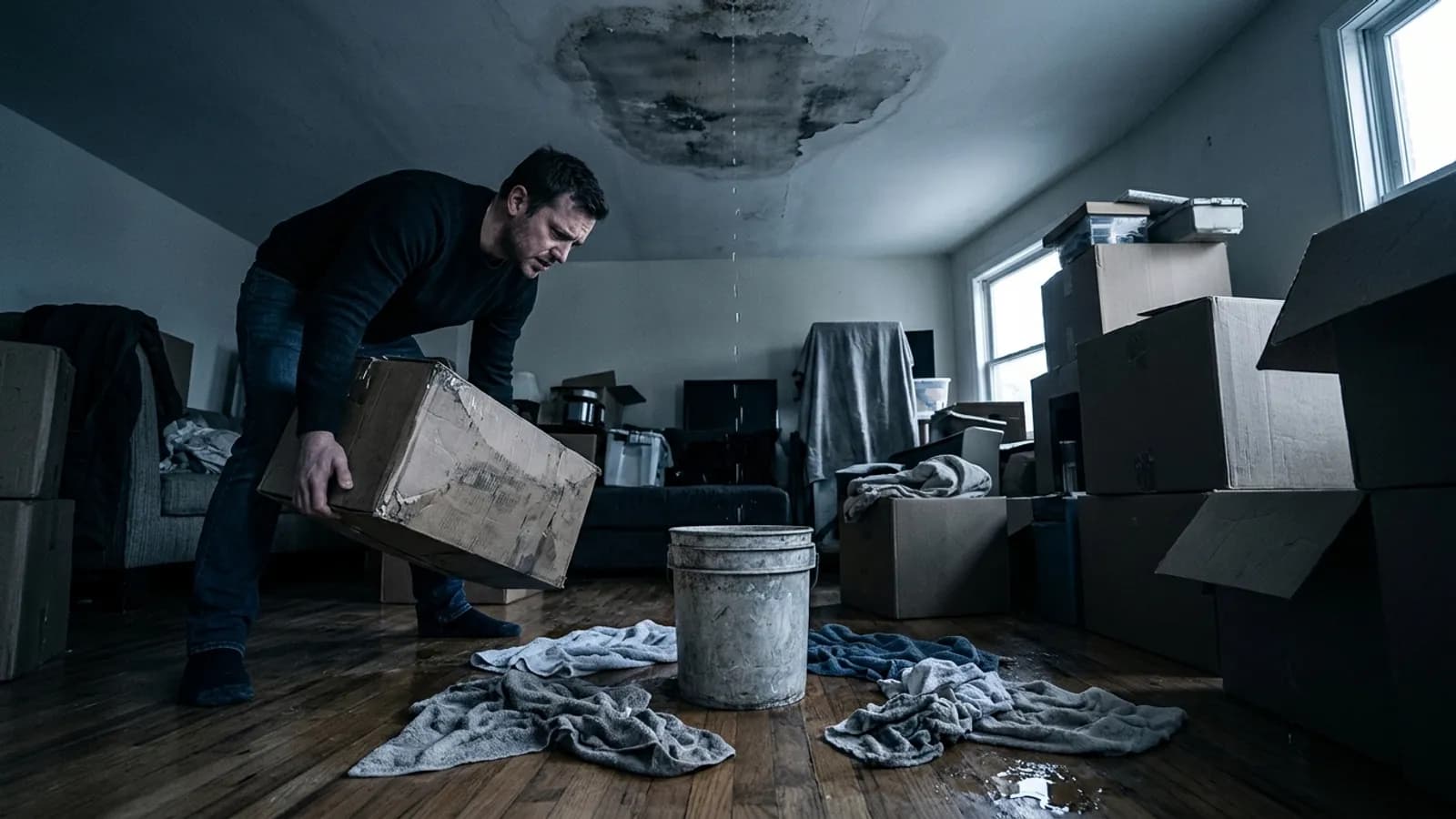
The policy's mitigation condition is a duty, not a suggestion, and it has a clock: mold can begin on wet materials within 24 to 48 hours of the water event, which is the window the drying effort belongs inside. The sequence that satisfies the duty: kill the water at the shutoff, lift wet contents off saturated floors and off the carpet they would stain, move air across the wet surfaces, and get the standing water extracted — shop vac first, professional extraction the same day for anything the shop vac cannot finish. Photograph before each stage, because the mitigation record is itself claim evidence.
Two boundaries protect the claim while you mitigate. Do not throw away damaged items before the photos exist — disposal is documentation destruction. And do not begin structural drying the building needs without the landlord's involvement; wet drywall and soaked insulation are the landlord's structure, and the written report keeps that lane separate from yours.
Related guides
Water damage connects to the mold, flood, and displacement questions:
- What Is Renters Insurance and How Much Does It Cost? — the policy parts the water claim pays under, at $15–$30 per month.
- What Is Loss of Use Coverage (Coverage D)? — the displacement benefit when the water makes the unit unlivable.
- The 8 Renters Insurance Mistakes That Cost Tenants Money — the skipped endorsement and missed mitigation on the list.
- First Apartment Insurance Checklist — where the water-backup decision gets made, step 8.
- Does Renters Insurance Cover Bedbugs? — the other excluded-contamination question.
Sources
Frequently asked questions
Does renters insurance cover a burst pipe?
Yes — sudden and accidental pipe bursts are the core covered water peril, including damage to your belongings. The prevention duty applies: heat kept on in freezes, and mitigation (shutoff, drying) started immediately. The pipe repair itself is the landlord's structural claim.
Does renters insurance cover water damage from a storm through a window?
Yes, when wind created the opening — wind-driven rain entering through storm damage is covered. Rain entering through an intact window left open, or rising water from the street, is the excluded lane: maintenance and flood respectively. Photograph the wind damage before the rain arrives, when the sky allows.
Is a flooded basement covered by renters insurance?
Three answers in one basement: water from a burst interior pipe is covered, sewer backup through the drain needs a water-backup endorsement, and rising storm water is flood — a separate policy entirely. The water's source decides the coverage, not the wet carpet.
Is my landlord's pipe repair bill my problem?
No — building plumbing is structure, covered by the landlord's policy. Your liability applies only if your negligence caused the failure, such as an overflowing appliance left running while you were out. Report building leaks in writing the same day you find them.
Does water damage to my electronics get covered?
Yes, when the water event is covered — burst pipes and appliance overflows qualify. Photograph before cleanup, do not power devices on, and keep the plumber's written cause note for the claim file. Corrosion failures weeks later belong to the same claim.
How we researched this guide
Renters coverage is small and simple, but landlord requirements and state rules vary — so we verify both sides of the lease.
- What HO-4 policies cover (and the liability and loss-of-use mechanics) is verified against standard policy forms and DOI consumer guides.
- Landlord-side insurance requirements are framed against HUD tenant-rights resources, since required coverage limits appear in lease terms, not statutes.
- Cost figures are ranges by state and coverage limit, anchored to NAIC statistics.
- Disaster-aid expectations are set from FEMA guidance: federal assistance is not a replacement for coverage, and we explain exactly what it does pay.
Where facts vary by state or insurer, we publish the range and the reason for the variation rather than a single misleading average. We do not sell insurance, take money from insurers for coverage, or publish claim amounts we cannot trace to a source.
Sources
The primary sources behind the facts on this page. Last verified November 10, 2026.
- HUD — tenant rights and responsibilities — state landlord-tenant rules that affect liability requirements.
- FEMA — renters and disaster assistance — what federal disaster aid does and does not cover for tenants.
- NAIC — National Association of Insurance Commissioners — model regulations, consumer guides, and industry statistics.
- Find your state insurance regulator (NAIC directory) — every state insurance department — the authority for your state's rules and complaint filing.
- Insurance Information Institute (III) — industry statistics and consumer explainers we cross-check against regulator publications.
Rules that vary by state are verified against the state insurance department's consumer pages — find yours via the NAIC directory above.
Keep reading
Does Renters Insurance Cover Mold?
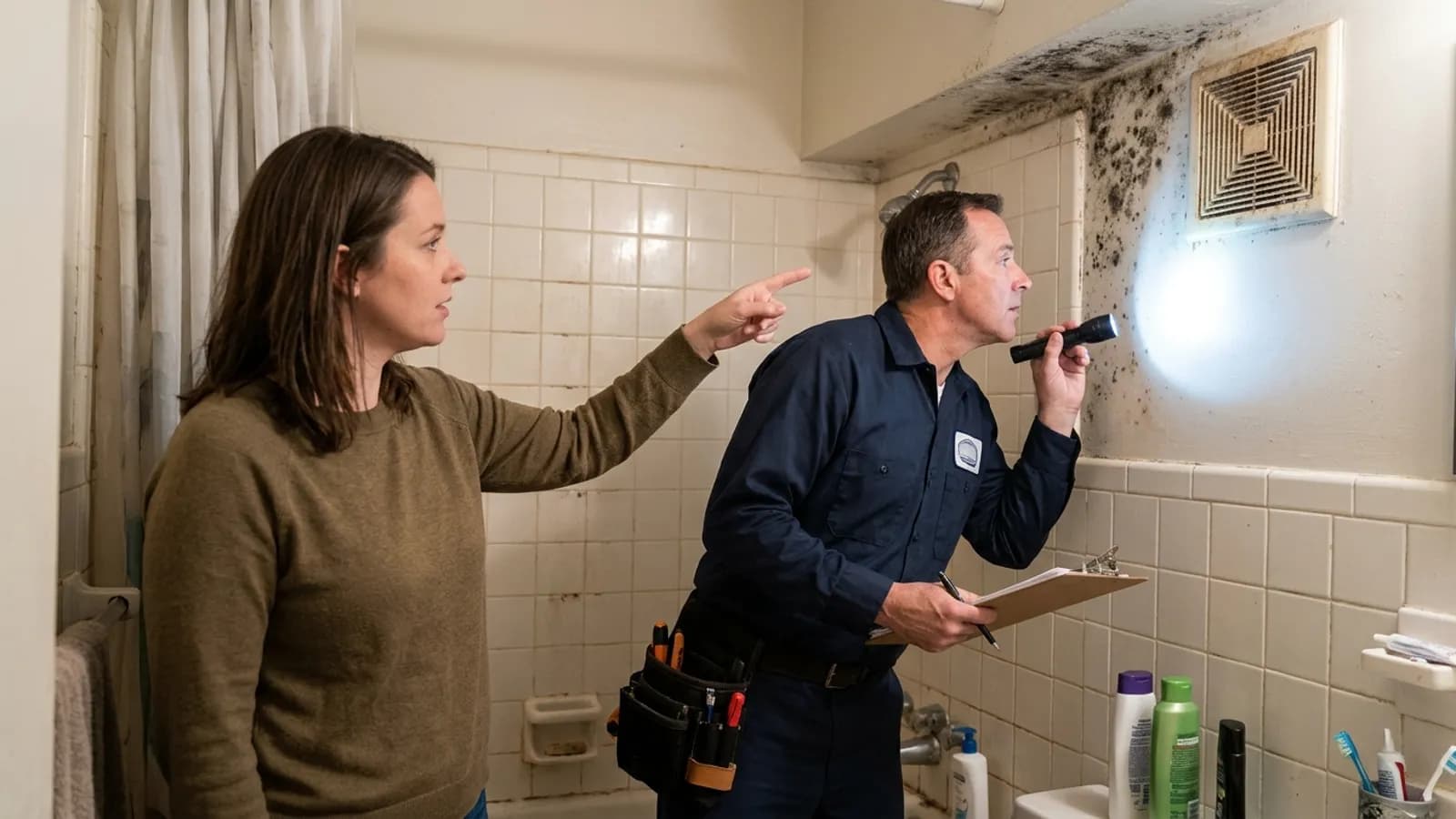
Sometimes — mold is claimable when a covered sudden peril caused the water — a burst pipe, not humidity, neglect, or long-term leaks.
Read guide
Does Renters Insurance Cover Natural Disasters?
Split — renters insurance covers wildfire, tornado, hail, and hurricane wind damage to belongings; floods and earthquakes are excluded without separate policies.
Read guide
Does Renters Insurance Cover Hotel Stays?
Yes — loss-of-use coverage pays hotel and extra meal costs while a covered peril makes your rental unlivable, typically up to 20% of your personal-property limit.
Read guide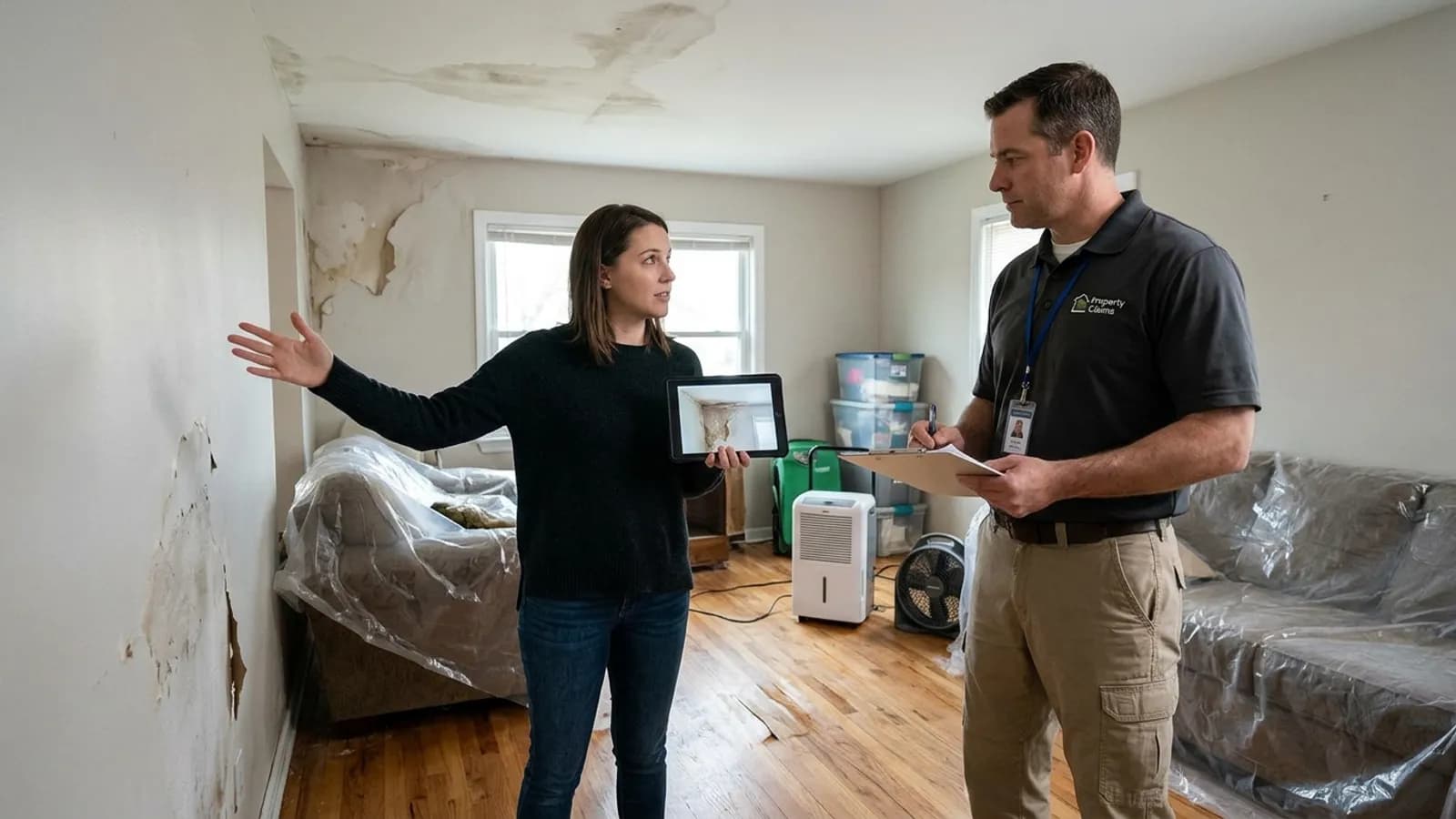
The Renters Insurance Claim Process: From Theft to Reimbursement
Renters claims are won by documentation — police report, photos before cleanup, itemized inventory — and most simple claims pay within one to two weeks.
Read guideWhat Is an Exclusion Rider?
An exclusion rider removes one documented condition or hazard from coverage — a bad knee, a trampoline — instead of declining the application outright.
Read guide