
Does Renters Insurance Cover Bedbugs?
No — renters insurance excludes bedbug infestations as gradual, preventable damage; treatment costs recover through landlord habitability law, not the policy.
Why you can trust this guide
- Written by Daniel Reyes, AINS, former licensed P&C agent — independent insurance education publisher.
- Factual accuracy reviewed and signed off by Marcus Hale, CPCU, AINS, licensed P&C agent (Independent insurance reviewer).
- Every factual claim traces to a regulator, statute, or policy document — sources are listed at the bottom of the page.
- Last verified ; time-sensitive guides are re-checked at least twice a year. Read our editorial policy.
On this page
No — renters insurance does not cover bedbugs. Extermination and infestation-damaged belongings are excluded as gradual, preventable damage, and recovery runs through the landlord's habitability duty, not the policy.
Why the exclusion applies
Renters policies insure sudden, accidental perils — fire, theft, burst pipes. A bedbug infestation is the opposite on every axis: it develops over weeks, it is classed as a maintenance or gradual-damage problem, and the standard wording excludes it by name or by the gradual-damage principle. The exclusion reaches everything the infestation touches — professional extermination, mattresses and furniture that must be discarded, and launder-or-toss clothing costs. No endorsement sold alongside a standard renters policy buys the coverage back, and specialty products are aimed at landlords. The claim that gets paid in a bedbug scenario is none, which is why the documentation steps below carry the whole recovery load.
Bedbugs share this lane with other gradual-damage exclusions; mold is the closest sibling, and the exclusion structure works the same way in both cases.
The landlord-tenant cost split
Who pays for treatment depends on jurisdiction and lease, but the pattern repeats in most places with local rules: multi-unit infestations are the landlord's remediation duty, because bedbugs travel between units through walls and the building owner controls the treatment. Tenants in those jurisdictions typically owe cooperation — access for treaters, laundering, decluttering — and the cost of replacing their own belongings. Single-family rentals and cities without local rules fall back on lease language, which is where the written record decides disputes.
The money is real: professional multi-visit treatment commonly runs $1,000–$2,500 for an apartment, and furnished units cost more because furniture adds disposal and replacement. A lease that is silent on bedbugs is a lease to renegotiate before signing, not after the first bite. Tenants who assumed their policy would pay discover the gap at the worst possible moment — see the common renters insurance mistakes for the sibling assumptions that fail the same way.
The move-in inspection that protects your wallet
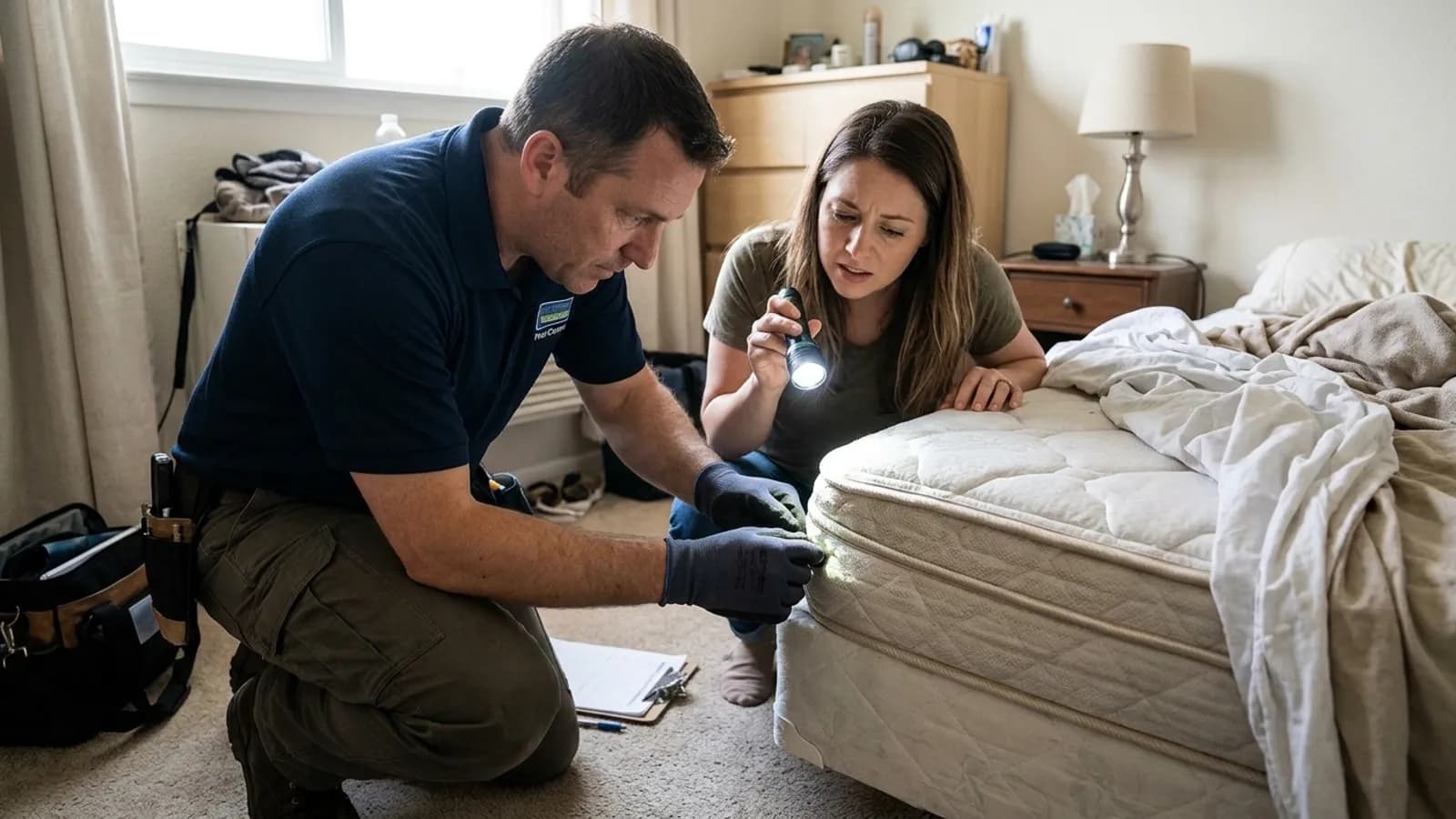
- Photograph the mattress seams, box-spring piping, headboard crevices, and baseboards before any furniture arrives.
- Look for the signs: rust-colored fecal dots, shed skins, and pale eggs in dark seams.
- Keep the photos dated and cloud-stored — the clean photo set is your proof the infestation, if one appears, predates you.
- Report any sightings to the landlord in writing within days, and keep the thread.
- Track every treatment request and visit in the same written record.
Tenants who report in writing and document treatment requests usually end disputes with their deposit intact. Tenants who discover bugs months in without a paper trail typically fund their own replacement costs — and their own landlord's policy covers the building's treatment duty, not the tenant's ruined furniture either.
The exclusion follows your belongings
Two bedbug facts extend past the policy and into the next lease. First, moving does not leave the problem behind: furniture, suitcases, and electronics carried untreated can carry the infestation into the next unit, which is why professional protocols treat belongings rather than trusting a fresh start. Second, the exclusion travels with the tenant — a new renters policy at the next apartment carries the same gradual-damage wording, so the assumption that "the next policy will catch it" fails identically.
What the policy does keep covering is unchanged: fire, theft, burst pipes, and the rest of the named perils apply as always, bedbugs aside. The bedbug scenario simply has no insurance lane — its lanes are the lease, the local tenant code, and the documentation habits above, which is why the tenants who come out whole are the ones whose written record dates the infestation before they could have caused it.
Related guides
Bedbug losses sit next to the other gradual-damage and responsibility-split questions:
- Does Renters Insurance Cover Mold? — the same sudden-versus-gradual line, applied to mold after water damage.
- Does Renters Insurance Cover Water Damage? — which water events cross from maintenance into a covered claim.
- What Is Renters Insurance and How Much Does It Cost? — what the policy does cover for $15–$30 per month.
- The Renters Insurance Claim Process — how covered claims are filed and documented, unlike this excluded lane.
Sources
Frequently asked questions
Does renters insurance ever cover bedbug losses?
No. Treatment costs and infestation-ruined furniture are excluded as gradual, maintenance-type damage, and no standard endorsement buys bedbug coverage back in the tenant market. Recovery runs through the landlord's remediation duty under state habitability law, not through the renters policy.
Who pays for bedbug treatment in an apartment?
It depends on jurisdiction and lease. Many local rules assign multi-unit treatment to the landlord because infestations travel between units; tenants generally replace their own belongings and cooperate with treatment access. Professional multi-visit protocols commonly run $1,000–$2,500, which is why the lease's pest clause matters before signing.
Can I break my lease over a bedbug infestation?
Some states allow lease exit when a landlord fails to remediate after written notice and the statutory cure period passes. Local tenant law or the housing authority decides the outcome. Document every report in writing with photos, and give the landlord the legally required window to treat before acting.
Can I buy insurance that covers bedbugs?
There is no meaningful bedbug endorsement in the personal renters market — the exclusion is industry-standard, and specialty products that exist are aimed at landlords, not tenants. The practical protections are procedural: move-in photo documentation, prompt written reporting, and state habitability rights.
How we researched this guide
Renters coverage is small and simple, but landlord requirements and state rules vary — so we verify both sides of the lease.
- What HO-4 policies cover (and the liability and loss-of-use mechanics) is verified against standard policy forms and DOI consumer guides.
- Landlord-side insurance requirements are framed against HUD tenant-rights resources, since required coverage limits appear in lease terms, not statutes.
- Cost figures are ranges by state and coverage limit, anchored to NAIC statistics.
- Disaster-aid expectations are set from FEMA guidance: federal assistance is not a replacement for coverage, and we explain exactly what it does pay.
Where facts vary by state or insurer, we publish the range and the reason for the variation rather than a single misleading average. We do not sell insurance, take money from insurers for coverage, or publish claim amounts we cannot trace to a source.
Sources
The primary sources behind the facts on this page. Last verified November 10, 2026.
- HUD — tenant rights and responsibilities — state landlord-tenant rules that affect liability requirements.
- FEMA — renters and disaster assistance — what federal disaster aid does and does not cover for tenants.
- NAIC — National Association of Insurance Commissioners — model regulations, consumer guides, and industry statistics.
- Find your state insurance regulator (NAIC directory) — every state insurance department — the authority for your state's rules and complaint filing.
- Insurance Information Institute (III) — industry statistics and consumer explainers we cross-check against regulator publications.
Rules that vary by state are verified against the state insurance department's consumer pages — find yours via the NAIC directory above.
Keep reading
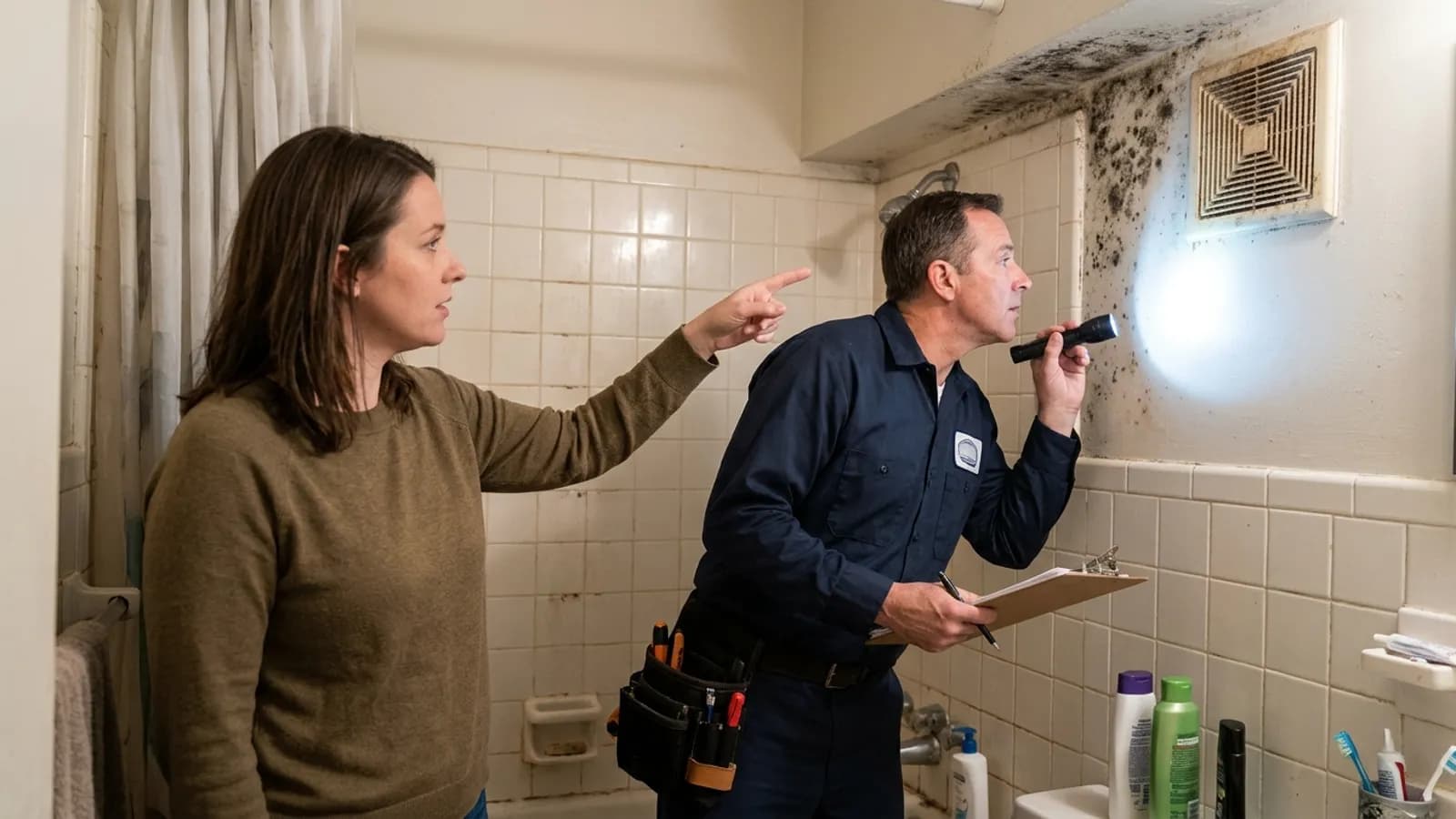
Does Renters Insurance Cover Mold?
Sometimes — mold is claimable when a covered sudden peril caused the water — a burst pipe, not humidity, neglect, or long-term leaks.
Read guide
The 8 Renters Insurance Mistakes That Cost Tenants Money
Eight renters insurance mistakes cost real money: ACV coverage, thin liability, skipped endorsements, unlisted roommates, undisclosed pets, and lapsed renewals.
Read guide
What Is Renters Insurance and How Much Does It Cost?
Renters insurance covers your belongings, liability, and hotel costs when the rental is unlivable, for about $15–$30 per month — what it pays and what it excludes.
Read guideWhat Is an Exclusion in Insurance?
An exclusion is a peril, property type, or situation a policy does not cover — floods, earthquakes, wear and tear — marking exactly where your protection ends.
Read guideWhat Is a Landlord (DP-3) Policy?
A landlord policy (typically DP-3) covers a tenant-occupied property — structure, your liability, and lost rent — for 15–25% more than owner-occupied coverage.
Read guide