
Renters Insurance in Boston, MA: Costs and Guide (2026)
Renters insurance in Boston costs about $14–$21 per month. Back Bay replacement costs, winter pipe bursts, and the September 1 moving day shape the price.
Why you can trust this guide
- Written by Daniel Reyes, AINS, former licensed P&C agent — independent insurance education publisher.
- Factual accuracy reviewed and signed off by Marcus Hale, CPCU, AINS, licensed P&C agent (Independent insurance reviewer).
- Every factual claim traces to a regulator, statute, or policy document — sources are listed at the bottom of the page.
- Last verified ; time-sensitive guides are re-checked at least twice a year. Read our editorial policy.
On this page
Renters insurance in Boston costs about $14–$21 per month for a standard policy — $20,000–$30,000 of property coverage and $100,000 of liability. Replacement costs split the city: Back Bay brownstones price above Dorchester and the outer neighborhoods. The coverage decision that defines Boston is the calendar — September 1, when most leases in the city turn over at once and the theft-and-damage event horizon arrives.
What Boston tenants pay
| Profile | Typical cost |
|---|---|
| Massachusetts statewide average | $13–$19 per month |
| Boston standard policy ($20k–$30k property, $100k liability) | $14–$21 per month |
| Add $300k liability + replacement-cost valuation | +$3–$6 per month |
| Auto bundle discount | −5–25% off both policies |
Boston prices above the Massachusetts average on replacement costs. Back Bay, South End, and Beacon Hill brownstones quote toward the top of the range on rebuilding value. Fenway, Allston, and Brighton student rentals price on turnover theft rather than building value. Dorchester, Jamaica Plain, and Charlestown sit mid-range. Cambridge's university-adjacent market behaves like the Boston student corridors. Carrier dispersion across the metro runs wide, so re-quoting before September 1 is the local ritual that actually moves the number.
Why Boston prices the way it does
Housing age is Boston's pricing engine: triple-deckers, brownstones, and pre-war walk-ups concentrate freeze-prone plumbing and aging drains. The winter-claim pattern follows — burst pipes in unoccupied units between tenancies are a recurring city loss. Student density around BU, Northeastern, and the Longwood corridor feeds annual turnover theft, with September 1 concentrating most of it into one week. Replacement costs for contents in brownstone and high-rent districts exceed the Massachusetts norm, lifting the top of the range.
Requirements and landlord norms in Boston
Boston's triple-decker landlords require renters insurance — $100,000 or more of liability is the typical ask, and some leases set higher for furnished units. The repeat move-in checks are the liability limit, the landlord listed as an interested party for renewal and cancellation notices (notification only, no coverage granted), and a bound policy rather than a quote — critical in a market where September 1 leases sign in the spring and bind in late August. Each leaseholder certifies separately; unrelated roommates in a shared triple-decker each carry their own policy.
The Boston claim pattern
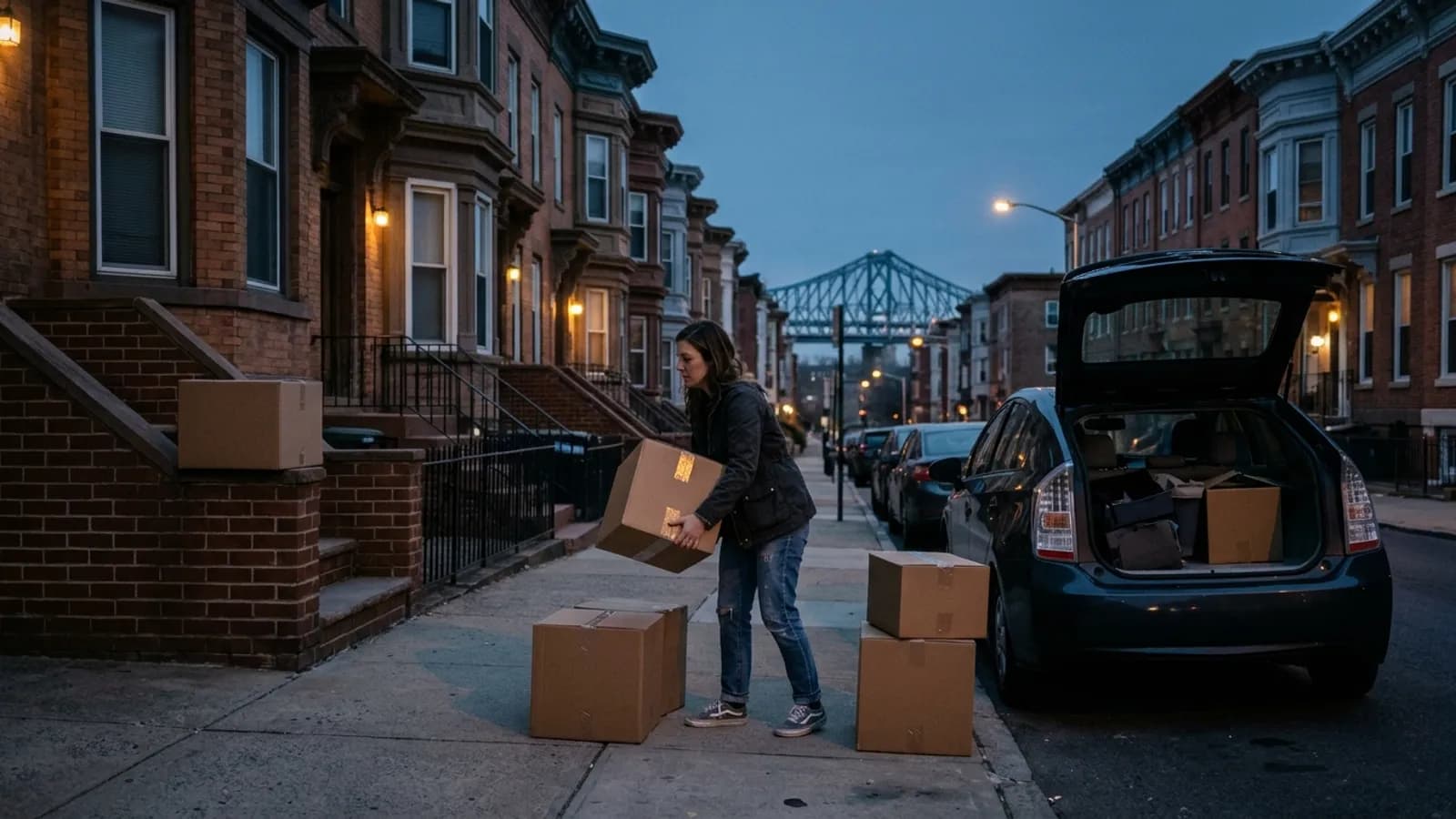
- September 1 turnover theft and damage — the single largest Boston claim window. Inventory video of every room before the trucks load is the local tradition; belongings in transit remain covered under the property section.
- Winter pipe bursts — sudden bursts in triple-decker and brownstone lines are covered; unoccupied units between tenancies are the classic loss. Slow leaks are maintenance and denied.
- Water backup in older stock — heavy rain and snowmelt overwhelm aging drains. Backup is excluded by default; the endorsement typically runs $50–$150 per year. The water damage question page separates backup from flood.
- Student-corridor theft — laptops, bikes, and instruments around the university corridors hit category caps of about $1,500 for electronics; a scheduled property endorsement covers the gap for expensive gear.
- Displacement after a winter event — a covered burst or backup that makes the unit unlivable triggers loss of use coverage, priced against Boston's expensive hotel market.
Coverage setup that fits Boston
- $25,000–$30,000 property with replacement cost — $2–$4 more per month over actual cash value; the default where winter bursts and turnover theft dominate.
- $300,000 liability — matches what brownstone and triple-decker landlords increasingly ask; $100,000 is the floor.
- Water backup endorsement — the essential add-on for pre-war stock; typically $50–$150 per year.
- $500 deductible — the $1,000 step saves $1–$3 per month; keep the low deductible.
- Scheduled property — for instruments, cameras, or electronics above the $1,500 category caps.
- Landlord certificate and interested-party listing — bind before September 1; the student-corridor guide covers the dorm versus off-campus fine print for the university-adjacent market.
The base-policy guide explains the standard form end to end, and the roommate question page covers the shared-lease mechanics Boston's triple-deckers run on.
Related guides
The Massachusetts state page carries the statewide rules, and Boston's student-turnover and winter-burst pattern pairs with the Northeast metros that share its housing age.
- Renters Insurance in Massachusetts: Costs and What to Know — the statewide cost picture behind the $14–$21-per-month metro range.
- Renters Insurance: The Complete Guide — the full standard-policy mechanics.
- Renters Insurance in New York City, NY — walk-up plumbing and urban theft in the region's largest market ($18–$28 per month).
- Does Renters Insurance Cover Roommates? — the shared-lease rules every triple-decker tenancy runs on.
- How to Choose the Best Renters Insurance Company — how to compare carriers before the September 1 re-quote.
Sources
- Massachusetts Division of Insurance — Massachusetts consumer resources
- NAIC — Consumer resources
Frequently asked questions
How much is renters insurance in Boston?
Renters insurance in Boston runs about $14–$21 per month for a standard policy — $20,000–$30,000 of property coverage and $100,000 of liability. Back Bay and South End brownstones price above Dorchester and the outer neighborhoods on replacement costs, so the same policy moves several dollars across the city.
Do Boston landlords require renters insurance?
Yes. Boston's triple-decker landlords and larger management companies require renters insurance routinely, typically at $100,000 or more of liability. The landlord is added as an interested party, and most leases confirm a bound policy before the September 1 move-in window.
Does renters insurance cover belongings during a Boston move?
Generally yes. Personal property is covered wherever it is located, including in a moving truck or in transit between units on September 1. Coverage follows the policy's property limit and category caps, so high-value items in transit deserve a video inventory before they leave the old apartment.
Does renters insurance cover burst pipes in a Boston winter?
Sudden pipe bursts are covered. Boston's triple-decker and brownstone stock is old enough that freeze events burst uninsulated lines, and unoccupied units between tenancies are the classic loss scenario. Slow leaks are treated as maintenance and denied — suddenness is the claim line.
Do Boston roommates need separate renters policies?
Unrelated roommates do. A renters policy covers the named insured and resident relatives only, so each roommate in a shared triple-decker or Allston apartment needs a separate policy with the landlord listed as an interested party. Splitting one policy creates joint liability and joint claim history.
Is replacement cost coverage worth adding in Boston?
For most Boston tenants, yes. Replacement-cost valuation adds roughly $2–$4 per month over actual cash value and pays today's prices after a loss. With student turnover driving electronics-heavy claims and winter bursts destroying whole floors of property at once, depreciated payouts cut recovery sharply.
How we researched this guide
Renters coverage is small and simple, but landlord requirements and state rules vary — so we verify both sides of the lease.
- What HO-4 policies cover (and the liability and loss-of-use mechanics) is verified against standard policy forms and DOI consumer guides.
- Landlord-side insurance requirements are framed against HUD tenant-rights resources, since required coverage limits appear in lease terms, not statutes.
- Cost figures are ranges by state and coverage limit, anchored to NAIC statistics.
- Disaster-aid expectations are set from FEMA guidance: federal assistance is not a replacement for coverage, and we explain exactly what it does pay.
Where facts vary by state or insurer, we publish the range and the reason for the variation rather than a single misleading average. We do not sell insurance, take money from insurers for coverage, or publish claim amounts we cannot trace to a source.
Sources
The primary sources behind the facts on this page. Last verified November 10, 2026.
- HUD — tenant rights and responsibilities — state landlord-tenant rules that affect liability requirements.
- FEMA — renters and disaster assistance — what federal disaster aid does and does not cover for tenants.
- NAIC — National Association of Insurance Commissioners — model regulations, consumer guides, and industry statistics.
- Find your state insurance regulator (NAIC directory) — every state insurance department — the authority for your state's rules and complaint filing.
- Insurance Information Institute (III) — industry statistics and consumer explainers we cross-check against regulator publications.
Rules that vary by state are verified against the state insurance department's consumer pages — find yours via the NAIC directory above.
Keep reading

Renters Insurance in Massachusetts: Costs and What to Know (2026)
Renters insurance in Massachusetts costs about $13–$19 per month. Nor'easter wind, Boston triple-deckers, and the September move define what tenants should set up.
Read guideRenters Insurance: The Complete Guide
Renters insurance covers your belongings, your liability, and your hotel bill when the rental is unlivable — what it pays, what it excludes, and how to pay less.
Read guide
Renters Insurance in New York City, NY: Costs and Guide (2026)
Renters insurance in New York City costs about $18–$28 per month; what NYC tenants pay, co-op board and landlord requirements, subway-commute theft patterns, and coverage that fits.
Read guide
Does Renters Insurance Cover Roommates?
No — renters policies cover the named insured and resident relatives, not unrelated adults; each roommate needs their own policy for belongings and liability.
Read guide
How to Choose the Best Renters Insurance Company (No Sponsored Rankings)
How to choose a renters insurer on replacement-cost standards, claim speed, complaint indexes, and the endorsement menu — evaluated without sponsored rankings.
Read guide