
What Is Umbrella Insurance? How $1M of Liability Costs ~$20/Month
Umbrella insurance adds $1M+ of liability protection over your auto and home policies for roughly $150–$400 per year. What it covers and requires.
Why you can trust this guide
- Written by Daniel Reyes, AINS, former licensed P&C agent — independent insurance education publisher.
- Factual accuracy reviewed and signed off by Marcus Hale, CPCU, AINS, licensed P&C agent (Independent insurance reviewer).
- Every factual claim traces to a regulator, statute, or policy document — sources are listed at the bottom of the page.
- Last verified ; time-sensitive guides are re-checked at least twice a year. Read our editorial policy.

On this page
Umbrella insurance is extra liability coverage that sits on top of your auto, home, and renters policies. When a claim exhausts those policies' limits, the umbrella pays the remainder — commonly in $1 million increments, for a premium of roughly $150–$400 per year for the first million (about $15–$35 per month). It is the cheapest serious-risk protection in personal insurance.
The problem it solves
Your policies have liability limits. A typical auto policy might carry $250,000/$500,000 bodily injury; a homeowners policy $300,000. Now picture the claims that exceed them:
- A crash causing permanent injury to another driver — medical bills and lost earnings easily clear $500,000
- A delivery person injured on icy steps, unable to work for a year
- A dog bite with lasting damage and a lawsuit
- A teen driver's at-fault crash with multiple injured parties
When limits run out, lawyers pursue the gap: savings, home equity, future wages. An umbrella converts that exposure into a $15–$35 per month line item.
What it covers
| Claim type | Handles |
|---|---|
| Bodily injury liability beyond auto/home limits | Yes — the core purpose |
| Property damage liability beyond limits | Yes |
| Landlord liability (rental properties) | Yes — usually with the property scheduled |
| Slander, libel, defamation | Yes — commonly excluded from standard policies |
| False arrest, malicious prosecution, invasion of privacy | Yes (personal injury extension) |
| Court costs and defense attorney fees for covered claims | Yes — often the biggest real value |
| Your own medical bills or car repairs | No — not a liability to others |
| Business/professional liability | No — needs commercial or E&O coverage (see business insurance) |
| Intentional or criminal acts | No |
Defense costs matter as much as payouts: a baseless lawsuit still costs tens of thousands to defend, and many umbrellas fund the defense — some outside the limit, which preserves the indemnity number for settlement.
What it requires underneath
Umbrellas attach to underlying policies and insurers mandate minimums:
- Auto liability: typically $250,000/$500,000
- Homeowners/renters liability: typically $300,000
Often the umbrella must be with the same insurer as the underlying policies (bundling also earns a discount). Raising underlying limits is part of the umbrella's true cost — small, but count it.
What it costs
| Coverage | Typical annual premium |
|---|---|
| $1 million | ~$150–$400 |
| $2 million | ~$250–$500 |
| $5 million | ~$500–$900 |
Risk factors add cost: teen drivers, rental properties, pools and trampolines, certain dog breeds, and high-theft-risk boats or toys.
Who should carry one
- Net worth above auto liability limits — the classic trigger. Equity, savings, and future earnings are all attachable.
- Landlords — tenant injury claims are the standard case (the landlord guide covers the policy that sits underneath).
- Parents of teen drivers — the highest-frequency serious-liability scenario in personal insurance.
- Volunteers, board members, coaches — service exposes you to odd liability corners.
- Pool, trampoline, or dog owners — attractive-nuisance and bite claims (the dog-bite guide and the trampoline guide cover the liability details).
How to buy one
- Inventory assets and income at risk (home equity, savings, future wages).
- Raise underlying liability to the insurer's required minimums.
- Get umbrella quotes — usually from your current insurer first (bundling).
- Disclose everything: rentals, boats, teen drivers, dogs. Undisclosed exposure is how claims get denied — see exclusions.
- Reassess at each net-worth milestone; limits raise in $1M increments for proportionally small premiums.
The claim anatomy that exhausts a base policy
The umbrella exists for the claim pattern that outruns standard limits, and the anatomy is consistent across scenarios. A representative pool-injury claim: a guest dives into the shallow end, sustains a spinal injury, and the medical and settlement demand lands at $900,000. The homeowners liability limit pays its $300,000; the umbrella pays the $600,000 above it — the $1M–$2M umbrella that costs roughly $150–$400 per year answers the $600,000 that would otherwise come from assets, wages, and future earnings. The same structure runs on the auto side (the multi-car at-fault injury accident is the other classic umbrella trigger), which is why umbrellas sit over both policies and require their underlying limits (commonly $250,000/$500,000 auto and $300,000 home) as a condition of writing. The frequency-severity profile worth internalizing: base-limit claims are common; umbrella-layer claims are rare and catastrophic — the coverage is priced as cheap catastrophe protection precisely because the layer above $300,000 rarely pays, and when it does, it is everything.
The scope edges: what umbrellas cover and what they never will
The umbrella's scope is broader than its price suggests and narrower than buyers assume. Broader: personal injury claims (slander, defamation, false arrest — categories the underlying policies handle narrowly), worldwide coverage (the follow-the-insured scope answers incidents abroad), and defense costs (many umbrellas pay defense outside the limit). Never covered: business and professional liability (your LLC's exposure, your professional errors — commercial policies answer those), intentional acts, contractual liabilities you assumed beyond what law would impose, and — carrier-specific — certain dog breeds and some recreational vehicles. The scheduling logic: properties, boats, and drivers attach to the umbrella through the underlying policies — a second home, a rental property, or a boat joins by being listed on the underlying policies first. The annual review question is therefore exposure inventory: what is new, what moved, what is not listed.
The sizing formula and the buying mechanics
The sizing question is net-worth arithmetic with a future-wages adjustment. The formula insurers and advisors use: umbrella limit at or above net worth plus roughly the present value of several years of future earnings — the $400,000-net-worth 35-year-old professional is a $2M–$3M umbrella candidate because wage garnishment is the real collection mechanism for judgments beyond insurance. The buying mechanics are the practical part: umbrellas are almost always bought from the carrier already writing your home and auto (the standalone umbrella market exists but is thinner), the underlying limits must meet the umbrella's requirements (raise them first if the carrier's minimums demand), and the premium for $1M–$2M commonly runs $150–$400 per year with each additional million priced at a fraction of the first. The quote-time checklist: confirm the umbrella covers uninsured-motorist claims on the auto side (some forms exclude it — a real gap), confirm worldwide scope, confirm defense outside limit, and confirm the rental property or boat is listed. The high-value-home guide covers the estate-scale version of the same stack.
Related guides
The umbrella sits over the liability sections the neighboring pages detail.
- Home Insurance: The Complete Guide — the hub framing the liability and property stack.
- What Is a Bundle Discount? — the pricing that usually keeps the umbrella with your carrier.
- Does Homeowners Insurance Cover Swimming Pools? — the pool-claim anatomy that exhausts base limits.
- What Is an Umbrella Policy? — the glossary definition of the layer.
- What Is the Duty to Defend? — the defense-cost mechanics that preserve the limit.
Sources
Frequently asked questions
What does umbrella insurance cover?
An umbrella policy pays liability claims that exceed the limits of your underlying auto, homeowners, or renters policies — bodily injury, property damage, and certain claims like slander, libel, and false arrest that those policies handle poorly or not at all. It pays after the underlying limits are exhausted, up to $1M–$5M or more, and commonly funds legal defense for covered claims.
What does umbrella insurance not cover?
It does not cover your own injuries or property damage — only your liability to others. Business liabilities usually need a commercial umbrella, and professional errors need E&O insurance. Intentional acts, criminal acts, and certain exclusions (some recreational vehicles, aircraft, carrier-specific dog-breed limits) are also outside personal umbrella scope.
Who needs an umbrella policy?
Anyone whose assets or future income could be pursued in a lawsuit: homeowners, drivers with meaningful savings or equity, landlords, board members, parents of teen drivers, and dog owners of litigious-breed reputations. As a rule of thumb, once your net worth exceeds your auto liability limits, an umbrella is cheap protection for the difference.
What underlying coverage does an umbrella require?
Insurers typically require auto liability of $250,000/$500,000 and homeowners liability of $300,000 before attaching the umbrella. The umbrella sits on top: if you carry $500,000 auto liability and a $1M umbrella, a serious at-fault crash is covered to $1.5M total. Raising the underlying limits is part of the umbrella's true cost — small, but count it.
How much umbrella coverage is enough?
The standard formula: at or above your net worth plus several years of future earnings — judgments beyond insurance are collected from assets and wage garnishment, so a $400,000-net-worth professional commonly carries $2M–$3M. The premium scaling is forgiving: the first $1M costs roughly $150–$400 per year, and each additional million prices at a fraction of that.
Does an umbrella policy cover my rental property?
Yes — rental premises liability is one of the classic umbrella triggers, provided the property is scheduled on the underlying landlord policy and its liability limits meet the umbrella's minimums. Tenant and visitor injury claims on rental property are among the highest-severity personal liability events, which is exactly the layer the umbrella was designed for. Landlords adding properties should confirm each one joins the umbrella's schedule.
How we researched this guide
Home policies are forms-driven: the peril list in the form decides what gets paid, so our guides follow the policy form structure.
- Coverage explanations track the standard HO-3/HO-5 form structure — Coverage A through E — because that's the contract language adjusters apply.
- Flood facts come from FEMA's National Flood Insurance Program (floodsmart.gov), since standard home policies exclude flood.
- Regional cost ranges are built from NAIC home-owners insurance statistics, with the drivers of variation (construction, age, wind/hail exposure) named explicitly.
- Mitigation and eligibility claims cite IBHS research and state fair-plan rules where standard market access is an issue.
Where facts vary by state or insurer, we publish the range and the reason for the variation rather than a single misleading average. We do not sell insurance, take money from insurers for coverage, or publish claim amounts we cannot trace to a source.
Sources
The primary sources behind the facts on this page. Last verified November 10, 2026.
- FEMA — National Flood Insurance Program (FloodSmart) — flood coverage, which standard homeowners policies exclude.
- Insurance Institute for Business & Home Safety (IBHS) — property-loss research and mitigation standards that affect eligibility and discounts.
- U.S. Department of Housing and Urban Development (HUD) — FHA-insured property requirements and disaster assistance programs.
- NAIC — National Association of Insurance Commissioners — model regulations, consumer guides, and industry statistics.
- Find your state insurance regulator (NAIC directory) — every state insurance department — the authority for your state's rules and complaint filing.
- Insurance Information Institute (III) — industry statistics and consumer explainers we cross-check against regulator publications.
Rules that vary by state are verified against the state insurance department's consumer pages — find yours via the NAIC directory above.
Keep reading

Home Insurance: The Complete Guide
Homeowners insurance pays to rebuild, replace, and defend after fire, storms, and lawsuits — this guide maps coverage, exclusions, deductibles, and costs by state.
Read guide
Does Homeowners Insurance Cover Trampolines?
Trampoline coverage depends on the insurer: some allow them with safety conditions, some exclude trampoline liability, and some decline or non-renew the policy.
Read guide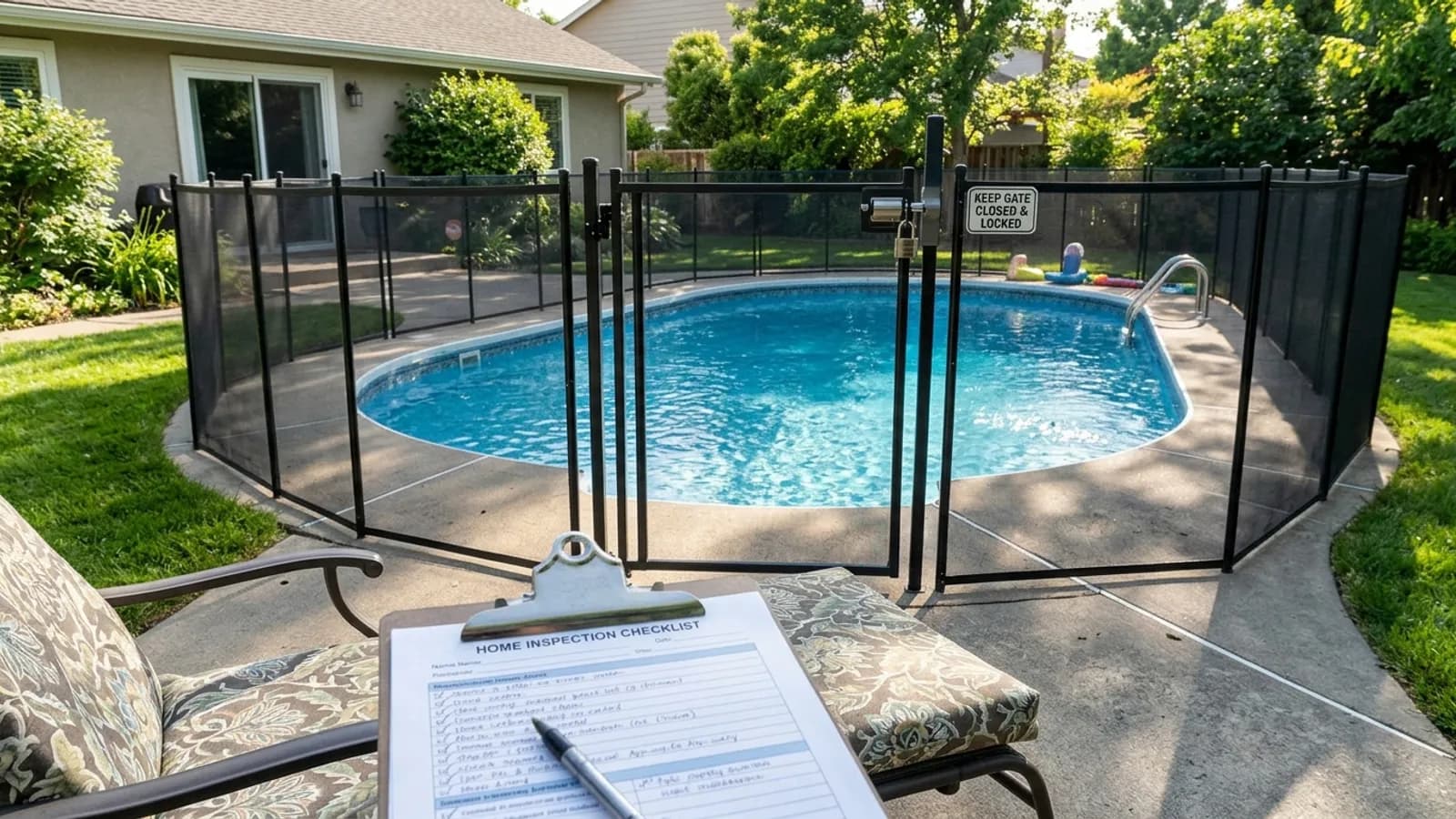
Does Homeowners Insurance Cover Swimming Pools?
Homeowners insurance covers pools as structures and pays pool-injury liability — disclosure, fencing, and liability limits decide whether it responds.
Read guideWhat Is Underlying Insurance?
Underlying insurance is the primary coverage an umbrella attaches above — the auto, home, and liability policies whose limits must be met before the umbrella pays.
Read guide
Boat Insurance: Coverage for Powerboats, Sailboats, and Personal Watercraft
Boat insurance covers hull (agreed value or ACV), liability, and the marina and lender requirements home policies do not meet. Costs run $200–$1,500+ yearly.
Read guide