
Does Homeowners Insurance Cover Swimming Pools?
Homeowners insurance covers pools as structures and pays pool-injury liability — disclosure, fencing, and liability limits decide whether it responds.
Why you can trust this guide
- Written by Daniel Reyes, AINS, former licensed P&C agent — independent insurance education publisher.
- Factual accuracy reviewed and signed off by Marcus Hale, CPCU, AINS, licensed P&C agent (Independent insurance reviewer).
- Every factual claim traces to a regulator, statute, or policy document — sources are listed at the bottom of the page.
- Last verified ; time-sensitive guides are re-checked at least twice a year. Read our editorial policy.
On this page
Homeowners insurance covers swimming pools as structures — in-ground pools usually ride with the dwelling or other structures — and the liability section pays pool-injury claims, with disclosure requirements and attractive-nuisance duties that shape whether the coverage actually responds.
The coverage structure: property, liability, and medical layers
A pool touches three coverage buckets. Property: an in-ground pool is generally part of the dwelling or a permanent structure depending on the form, an above-ground pool is often personal property or other structures, and decks and equipment sheds follow other structures with its default limit, commonly 10% of dwelling — verify the limit is sized for the actual pool asset, because in-ground installs commonly run $30,000–$80,000 to replace. Liability: the pool multiplies the premises injury exposure — diving accidents, unsupervised guests, alcohol-and-swimming combinations — which is why carriers commonly want liability limits raised to $300,000–$500,000 on pool homes and why an umbrella policy is the standard recommendation at pool purchases. Medical payments coverage, commonly $1,000–$5,000, settles the scraped foot and the minor injury without fault findings, keeping small pool events from becoming liability claims.
| Pool-loss scenario | Which layer pays | Notes |
|---|---|---|
| Storm cracks the pool shell or collapses a deck | Dwelling or other structures | Classification is carrier-specific; verify before the storm |
| Neighbor child climbs the fence and is injured | Liability | Attractive-nuisance duty applies even to trespassers |
| Guest dives into the shallow end at a party | Liability, then umbrella | The claim type that outruns a $300,000 limit |
| Scraped foot at a pool party | Medical payments | $1,000–$5,000 paid without fault findings |
The table's liability rows explain the underwriting, and the property row explains the premium: a $50,000 in-ground pool added to dwelling coverage raises the insured value the way any structure does, while the liability rows raise the carrier's exposure in ways a premium line barely captures. That asymmetry is why disclosure is the hinge — the carrier prices the property easily and manages the liability through conditions. Every condition in the file, from fencing to supervision rules, exists to keep the third row's claim from becoming a fourth row's settlement.
The attractive-nuisance duty ladder
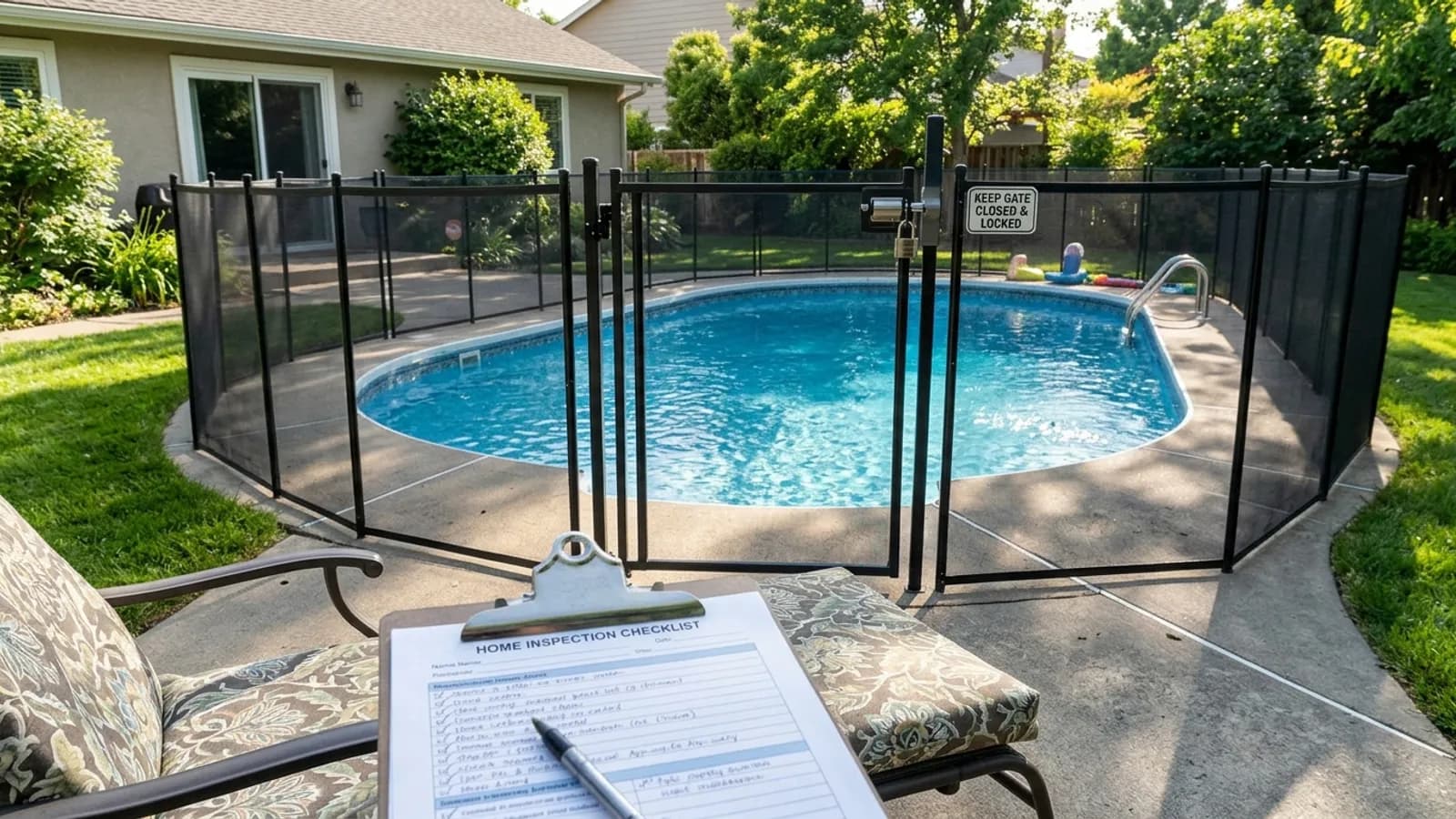
Pools carry a legal doctrine that changes the liability picture: attractive nuisance. A pool is a known draw for children who cannot appreciate its danger, and owners owe heightened care toward trespassing children — which in practice means a fence with self-closing, self-latching gates, and in many municipalities alarms or covers. The doctrine's claim-time consequence: a neighbor child who climbs the fence and drowns can produce liability even though the child trespassed, because the hazard was knowable and the protection inadequate. Insurers price this directly — underwriters ask about fencing and diving boards because the physical measures are the risk. The duty ladder is specific: four-foot fencing is the common minimum standard, gate latches out of child reach, no direct house-door access to the pool area where codes require it, and safety covers for the off-season. Photograph all of it at the start of each season — the mitigation file is the liability defense. Season opening is the audit date: photograph the fence, the gate latch, the alarm, and the cover in the same hour each spring, because the file that proves compliance is the one that survives a disputed claim.
The guest scenarios that produce the claims that matter
The realistic pool liability claims come from hosted gatherings, not random trespass. The pattern: adult guests, alcohol present, a dive into the shallow end, a spinal injury — a claim that can exceed a $300,000 liability limit in medical and settlement terms, which is the scenario the umbrella conversation is about. Supervision structure matters as much as hardware: designate a sober adult supervisor for youth swim times, keep rescue equipment poolside where codes typically require it, and set the house rule that night swimming ends when guests have been drinking. Two specifics surprise owners: hired lifeguards shift some duty structure but do not eliminate homeowner liability, and uninvited children at a party — guests' kids who wander out — are the attractive-nuisance scenario in its most litigated form. The trampoline version of the same underwriting profile is covered in the trampoline guide, and undisclosed hazards of every type carry the same concealment risk.
Related guides
Pool coverage sits beside the other liability-magnet pages, because the same attractive-nuisance doctrine and disclosure duties run through all of them.
- Does Homeowners Insurance Cover Trampolines? — the four carrier positions and the safety specs insurers actually require.
- Does Homeowners Insurance Cover Dog Bites? — the liability limits and breed rules behind the other classic injury claim.
- What Does Homeowners Insurance Cover? — where pools sit in the property sections and liability conditions.
- How to Lower Homeowners Insurance — how disclosed safety hardware keeps pool homes on standard terms.
Sources
Frequently asked questions
Is a diving board a problem for my insurance?
Frequently yes. Diving boards are a restricted feature for many carriers, producing either a surcharge, a coverage condition, or a decline, because dive-related spinal injuries are among the most severe pool liability claims. Slides face similar scrutiny. If your carrier restricts them, removal is often the cheapest path to standard terms; if you keep one, expect stricter safety requirements and higher liability minimums.
Do I have to tell my insurer when I install a pool?
Yes, and promptly. An undisclosed pool is a material misrepresentation that can void liability coverage at exactly the moment you need it, and carriers verify pool presence through aerial imagery and renewal inspections in most markets. The notification triggers the underwriting review: fencing verification, possible premium adjustment, and sometimes a liability-limit requirement. Disclosure is the cheapest insurance purchase you will ever make.
Is a neighbor's child injured in my pool covered even without permission?
Potentially yes, under the attractive-nuisance doctrine — a pool is a hazard children cannot evaluate, so the owner can owe a duty of care to trespassing children, and your liability coverage would respond to a covered claim regardless of permission. This is the doctrine's core scenario and the reason insurers require fencing and gates. Your liability limit, not your property coverage, is the layer that answers this claim.
Is an in-ground pool covered under dwelling or other structures?
It is insurer-specific. Many carriers treat in-ground pools as part of the dwelling because the plumbing and filtration tie into the house's systems; others classify them as other structures. Above-ground pools are often personal property or other structures. The distinction matters for the percentage allocation, so ask the carrier before assuming, and confirm the pool's replacement value is inside whichever limit applies.
How much liability coverage should a pool owner carry?
Commonly $300,000–$500,000 on the home policy, with an umbrella policy on top — pool liability is the classic scenario that outruns a base limit. A dive into the shallow end at a party can produce medical and settlement exposure well past $300,000. Medical payments coverage, commonly $1,000–$5,000, settles the small injuries without fault findings so they never become liability claims.
How we researched this guide
Home policies are forms-driven: the peril list in the form decides what gets paid, so our guides follow the policy form structure.
- Coverage explanations track the standard HO-3/HO-5 form structure — Coverage A through E — because that's the contract language adjusters apply.
- Flood facts come from FEMA's National Flood Insurance Program (floodsmart.gov), since standard home policies exclude flood.
- Regional cost ranges are built from NAIC home-owners insurance statistics, with the drivers of variation (construction, age, wind/hail exposure) named explicitly.
- Mitigation and eligibility claims cite IBHS research and state fair-plan rules where standard market access is an issue.
Where facts vary by state or insurer, we publish the range and the reason for the variation rather than a single misleading average. We do not sell insurance, take money from insurers for coverage, or publish claim amounts we cannot trace to a source.
Sources
The primary sources behind the facts on this page. Last verified November 10, 2026.
- FEMA — National Flood Insurance Program (FloodSmart) — flood coverage, which standard homeowners policies exclude.
- Insurance Institute for Business & Home Safety (IBHS) — property-loss research and mitigation standards that affect eligibility and discounts.
- U.S. Department of Housing and Urban Development (HUD) — FHA-insured property requirements and disaster assistance programs.
- NAIC — National Association of Insurance Commissioners — model regulations, consumer guides, and industry statistics.
- Find your state insurance regulator (NAIC directory) — every state insurance department — the authority for your state's rules and complaint filing.
- Insurance Information Institute (III) — industry statistics and consumer explainers we cross-check against regulator publications.
Rules that vary by state are verified against the state insurance department's consumer pages — find yours via the NAIC directory above.
Keep reading
Does Homeowners Insurance Cover Trampolines?
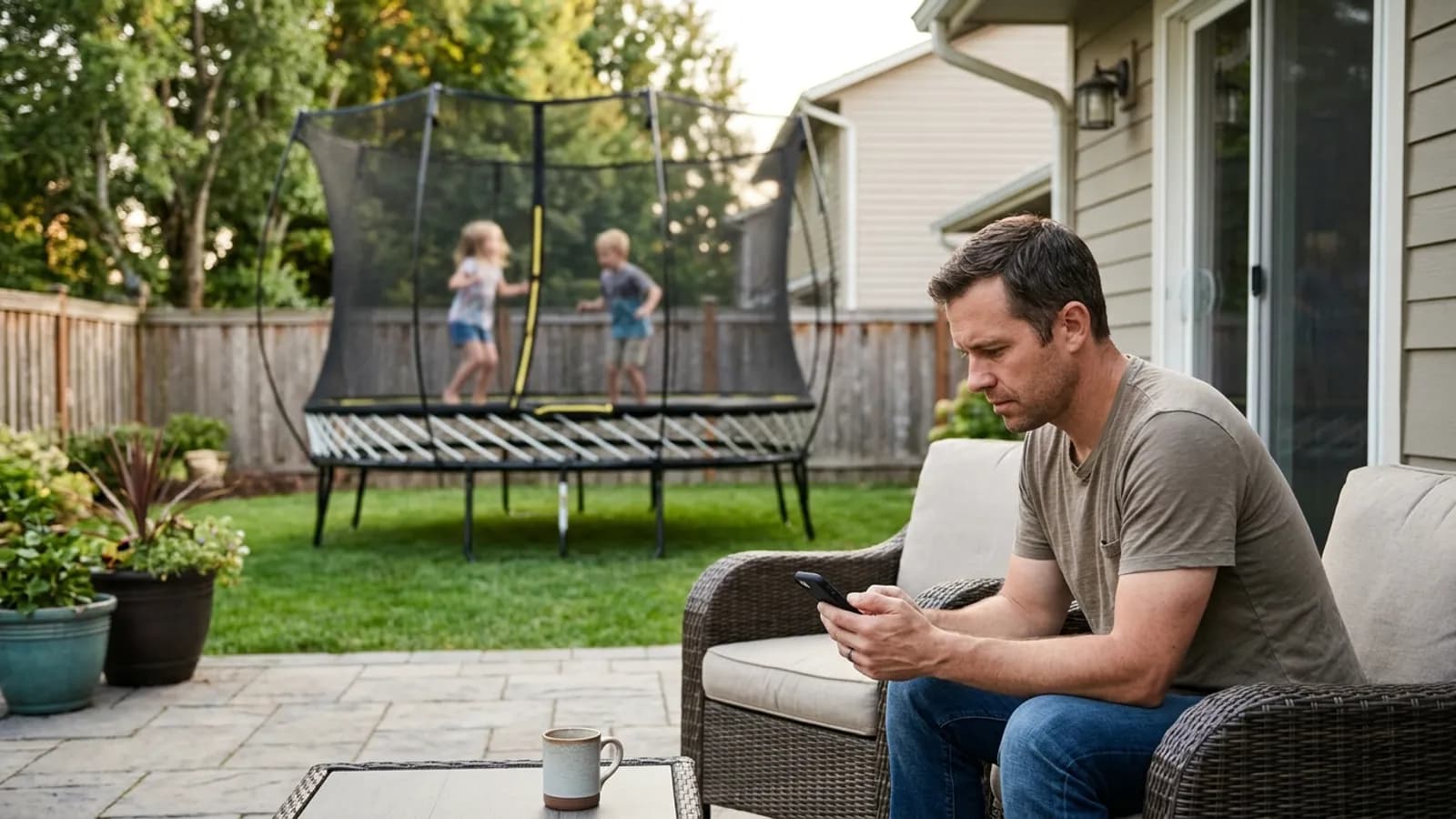
Trampoline coverage depends on the insurer: some allow them with safety conditions, some exclude trampoline liability, and some decline or non-renew the policy.
Read guide
Does Homeowners Insurance Cover Dog Bites?
Usually yes — homeowners liability covers dog bites. Breed exclusions and bite-history rules vary by insurer; the average claim pays $50,000+.
Read guide
What Does Homeowners Insurance Cover? (And What It Never Covers)
A standard HO-3 covers fire, wind, hail, theft, and burst pipes — and never floods, earthquakes, or gradual damage. The coverage buckets, exclusions, and fixes.
Read guide
How to Lower Homeowners Insurance: 10 Moves Ranked by Impact (2026)
Ten moves lower homeowners insurance: the deductible, the roof, bundling, claims discipline, and the annual re-shop, with the traps that cost more than they save.
Read guideWhat Is Other Structures Coverage (Coverage B)?
Other structures coverage (Coverage B) insures detached property such as fences, sheds, and detached garages, set at 10% of the dwelling limit by default.
Read guide