
Home Insurance in Seattle, WA: Costs and Guide (2026)
Home insurance in Seattle costs $1,600–$2,700 per year. Atmospheric-river water claims and the standing Cascadia quake exclusion shape the two-coverage decision.
Why you can trust this guide
- Written by Daniel Reyes, AINS, former licensed P&C agent — independent insurance education publisher.
- Factual accuracy reviewed and signed off by Marcus Hale, CPCU, AINS, licensed P&C agent (Independent insurance reviewer).
- Every factual claim traces to a regulator, statute, or policy document — sources are listed at the bottom of the page.
- Last verified ; time-sensitive guides are re-checked at least twice a year. Read our editorial policy.

On this page
Home insurance in Seattle runs about $1,600–$2,700 per year for a standard HO-3 policy on a median-priced home. Two forces define the local policy: atmospheric rivers that overload drains and rooflines across the older neighborhoods, and the Cascadia Subduction Zone whose earthquake risk the standard policy excludes entirely. The two-coverage decision — standard plus quake — belongs together in Seattle, and the water-backup endorsement is the cheap add-on the city's hill districts actually use. The statewide picture sits in the Washington guide linked below.
What Seattle homeowners pay
| Profile in Seattle | Typical annual premium |
|---|---|
| Washington statewide median | $1,500–$2,500 |
| Median Seattle home, updated roof, $1,000 deductible | $1,600–$2,700 |
| Older hill districts (Queen Anne, Capitol Hill, Ballard) | quotes toward the upper half; age and drainage |
| Newer construction and updated-systems homes | −10–20% vs the Seattle median |
| Roof 15+ years old | +15–40%, or an actual-cash-value roof settlement |
| Earthquake coverage added | separate policy, 10–25% deductible math |
Seattle prices at the top of the Washington range, and the spread is housing age rather than peril: a 1910 Ballard craftsman and a new Wallingford build with identical coverage can differ by hundreds of dollars per year. Rebuild costs across King County do the rest. Condo owners in Capitol Hill and Belltown play a different game — the association's master policy carries the building shell, and the owner's condo (HO-6) policy carries walls-in coverage and loss assessment.
Why Seattle prices the way it does
Water is the first driver: atmospheric rivers deliver sustained warm rain that finds every roofline flaw and overloads storm drains in the hill districts, feeding the intrusion and backup claims Seattle files most. Housing age is the second — pre-war stock carries dated plumbing, original drainage, and mature trees over shallow rooflines. Rebuild costs are the third: King County construction prices keep the dwelling figure expensive, and growth-era inflation erodes limits between renewals. The Cascadia exclusion is the fourth: the subduction zone's standing quake risk does not raise the HO-3 premium, but it creates the separate earthquake purchase that defines the city's real coverage spend.
Requirements and insurer norms in Seattle
Washington does not mandate homeowners insurance; mortgage lenders do, and replacement-cost claim treatment requires insuring at least 80% of the home's rebuild cost. Carriers underwrite the roof and drainage at binding — mature conifers over a dated roof move the quote more than most factors. Washington bans credit-based insurance scoring, so pricing leans harder on claims history and coverage structure than on the borrower profile. The Washington State Office of the Insurance Commissioner licenses carriers and runs the complaint process for stalled claims, and homes the admitted market declines for condition or history have fewer placement paths here than in FAIR Plan states — which makes re-quoting before non-renewal the Seattle discipline.
The Seattle claim pattern
- Atmospheric-river water intrusion — sustained rain finds roofline flaws in the older hill districts; sudden intrusion is covered, gradual seepage is scrutinized (water backup and drains).
- The Cascadia exclusion — earthquake damage is excluded from the HO-3; the separate quake policy with a 10–25% deductible is the fix the subduction zone argues for (earthquake insurance).
- Sewer and drain backup — overloaded storm drains back up into basements across the hill districts during the heaviest rivers; the $50–$250-per-year endorsement answers what the base policy excludes.
- Windstorm and tree damage — winter windstorms drop conifers onto rooflines; falling-tree damage to the house is covered, debris cleanup has limits.
- Freeze events in lapsed-heat homes — rare cold snaps burst pipes in unwinterized older stock; heat-on documentation decides the disputed ones.
Coverage setup that fits Seattle
- Earthquake coverage alongside the standard policy — priced together, because the quake exclusion and the water decisions belong to the same renewal conversation.
- Water-backup endorsement — $50–$250 per year for drain backflow in the hill districts; sump-overflow rides the same endorsement where offered.
- Dwelling at rebuild cost with ordinance-or-law awareness — Seattle rebuild costs punish stale limits, and older housing hides code-upgrade costs (the exclusion concept).
- A $1,000–$2,500 flat deductible — returning 10–25% of premium versus $500 while keeping windstorm-season exposure fundable.
- Tree and drainage maintenance — conifer trimming and downspout management are the water-claim defenses an owner controls before the next atmospheric river.
Related guides
Seattle's decisions run through the two-coverage structure — Cascadia quake, atmospheric-river water, and the drain-backup endorsement — and these guides cover each one.
- Homeowners Insurance in Washington — statewide pricing and the state complaint path.
- Home Insurance: The Complete Guide — the HO-3 structure and exclusions behind every figure on this page.
- Does Homeowners Insurance Cover Water Damage? — where sudden water is covered and where the policy stops.
- ACV vs Replacement Cost — the roof-settlement difference that decides partial-loss payouts.
- What Is Extended Replacement Cost? — the rebuild buffer older housing argues for.
Sources
- Washington State Office of the Insurance Commissioner — Washington consumer resources and complaint process
- III — Homeowners and renters insurance facts
Frequently asked questions
How much is home insurance in Seattle?
Seattle home insurance runs about $1,600–$2,700 per year for a standard HO-3 policy on a median-priced home. Seattle prices at the top of the Washington range on rebuild costs and water-claim history, though the metro stays well below the coastal-catastrophe markets that dominate the national headlines.
Does home insurance cover earthquakes in Seattle?
No — earthquake damage is excluded from every standard HO-3, and the Cascadia Subduction Zone makes the exclusion Seattle's defining one. Earthquake coverage is a separate policy with a 10–25% style deductible, priced alongside the standard policy because the two decisions belong together in this market.
Does home insurance cover atmospheric-river flooding in Seattle?
Rising surface water is flood, excluded from the HO-3. What Seattle actually files are water-intrusion and sewer-backup claims: atmospheric rivers overload storm drains in older hill districts, and the water-backup endorsement — roughly $50–$250 per year — answers the drain side. A creek-adjacent address adds the separate flood policy conversation.
What deductible should a Seattle homeowner carry?
A flat $1,000–$2,500 deductible handles most Seattle claims, and moving up from $500 saves 10–25% of the annual premium. The separate decision is the earthquake policy's percentage deductible — 10–25% of dwelling coverage — which on a $700,000 Seattle rebuild is a five-figure sum per event, sized consciously.
Why did Washington carriers raise Seattle quotes?
Regional loss history, not local catastrophe: Washington carriers absorbed wildfire-season smoke claims, 2021 heat damage, and construction-cost inflation that pushed rebuild estimates up statewide. Seattle's own peril profile — rain, windstorms, and freeze events — is steady, so the quotes track rebuild cost more than peril frequency.
Are Seattle winters a claim risk?
A modest one with a sharp edge. Snow and ice events are rare, which is exactly why lapsed-heat and unwinterized homes burst pipes when they arrive. Sudden freeze damage is covered, but insurers check whether heat stayed on — documentation decides the disputed claims in the city's older housing stock.
How we researched this guide
Home policies are forms-driven: the peril list in the form decides what gets paid, so our guides follow the policy form structure.
- Coverage explanations track the standard HO-3/HO-5 form structure — Coverage A through E — because that's the contract language adjusters apply.
- Flood facts come from FEMA's National Flood Insurance Program (floodsmart.gov), since standard home policies exclude flood.
- Regional cost ranges are built from NAIC home-owners insurance statistics, with the drivers of variation (construction, age, wind/hail exposure) named explicitly.
- Mitigation and eligibility claims cite IBHS research and state fair-plan rules where standard market access is an issue.
Where facts vary by state or insurer, we publish the range and the reason for the variation rather than a single misleading average. We do not sell insurance, take money from insurers for coverage, or publish claim amounts we cannot trace to a source.
Sources
The primary sources behind the facts on this page. Last verified November 10, 2026.
- FEMA — National Flood Insurance Program (FloodSmart) — flood coverage, which standard homeowners policies exclude.
- Insurance Institute for Business & Home Safety (IBHS) — property-loss research and mitigation standards that affect eligibility and discounts.
- U.S. Department of Housing and Urban Development (HUD) — FHA-insured property requirements and disaster assistance programs.
- NAIC — National Association of Insurance Commissioners — model regulations, consumer guides, and industry statistics.
- Find your state insurance regulator (NAIC directory) — every state insurance department — the authority for your state's rules and complaint filing.
- Insurance Information Institute (III) — industry statistics and consumer explainers we cross-check against regulator publications.
Rules that vary by state are verified against the state insurance department's consumer pages — find yours via the NAIC directory above.
Keep reading
Homeowners Insurance in Washington: Costs and What to Know (2026)
Homeowners insurance in Washington costs $1,500–$2,500 per year, with Cascadia quake risk, wildfire east of the Cascades, and atmospheric rivers shaping premiums.
Read guideHome Insurance: The Complete Guide
Homeowners insurance pays to rebuild, replace, and defend after fire, storms, and lawsuits — this guide maps coverage, exclusions, deductibles, and costs by state.
Read guide
Earthquake Insurance: The Exclusion That Matters Most (and How to Fix It)
Earthquake damage is excluded from every standard home policy. What quake coverage costs, who should buy it, and the fire-following-quake exception.
Read guide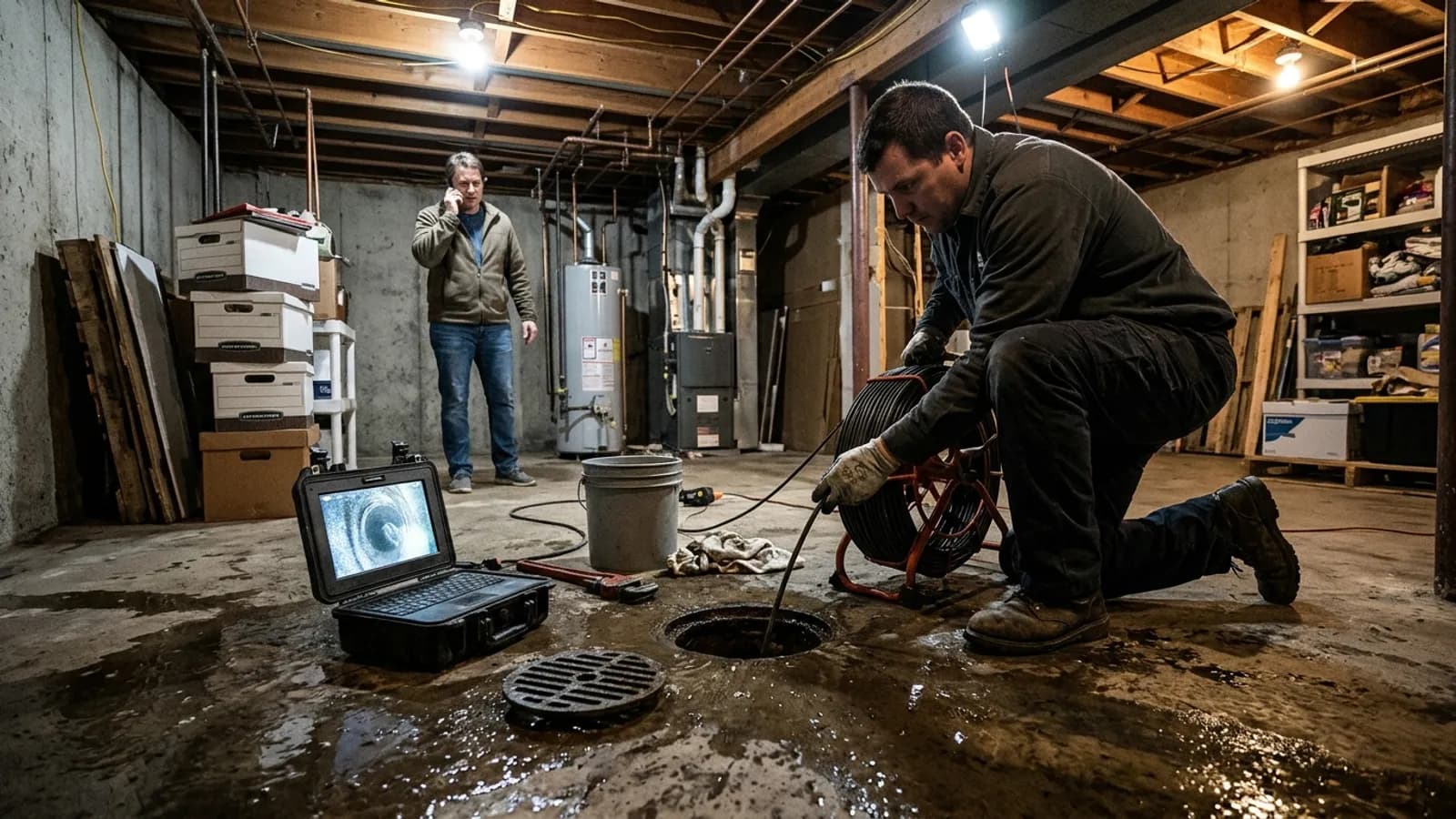
Does Homeowners Insurance Cover Sewer Backup?
Sewer and drain backup is excluded from standard homeowners policies; the dedicated endorsement ($50–$250 per year) is the fix for five-figure basement losses.
Read guideWhat Is an Exclusion in Insurance?
An exclusion is a peril, property type, or situation a policy does not cover — floods, earthquakes, wear and tear — marking exactly where your protection ends.
Read guide