
Home Insurance in Albuquerque, NM: Costs and Guide (2026)
Home insurance in Albuquerque costs about $1,400–$2,300 per year. Foothill wildfire exposure, monsoon hail, and the policy setup that fits Albuquerque homes.
Why you can trust this guide
- Written by Daniel Reyes, AINS, former licensed P&C agent — independent insurance education publisher.
- Factual accuracy reviewed and signed off by Marcus Hale, CPCU, AINS, licensed P&C agent (Independent insurance reviewer).
- Every factual claim traces to a regulator, statute, or policy document — sources are listed at the bottom of the page.
- Last verified ; time-sensitive guides are re-checked at least twice a year. Read our editorial policy.

On this page
Home insurance in Albuquerque runs about $1,400–$2,300 per year for a standard HO-3 policy on a median-priced home. Wildfire exposure along the Sandia foothills and monsoon-season hail are the two local forces behind the number. The state-side picture — carrier rules and the claim-escalation path — lives in the New Mexico guide linked below; this page covers Albuquerque pricing and the policy setup that fits it.
What Albuquerque homeowners pay
| Profile in Albuquerque | Typical annual premium |
|---|---|
| New Mexico statewide median | $1,400–$2,300 |
| Median Albuquerque home, updated roof, $1,000 deductible | $1,400–$2,300 |
| Foothill homes — Sandia Heights, High Desert, Glenwood Hills | quotes above the range; wildfire territory rating |
| East Mountains homes — Tijeras, Cedar Crest | quotes above the range; wildland-urban interface and burn-scar history |
| Roof 15+ years old | +15–40%, or an actual-cash-value roof settlement instead of replacement cost |
| New construction | −10–20% vs the Albuquerque median |
Albuquerque prices close to the statewide median, and the spread inside the city is geographic: valley ZIPs quote near the bottom of the range, foothill and East Mountains addresses quote above the top of it. Roof age is the other swing — hail history makes carriers inspect before writing an older roof.
Why Albuquerque prices the way it does
Wildland-urban interface is the defining exposure: neighborhoods hard against the Sandia foothills carry fuel, slope, and access ratings that valley ZIPs never see. Monsoon season — roughly June through September — concentrates the other perils, with hail, straight-line wind, and flash floods arriving in the same afternoon storm. After a wildfire, the risk extends downhill: flash floods off burn scars reach neighborhoods that never saw a flame, which is why post-fire flood mapping follows these watersheds. Older North Valley housing near the Rio Grande adds freeze and water claims each winter. Valley competition keeps base rates workable; scarcity shows up at the foothill edge, where fewer carriers will write at any price.
Requirements and insurer norms in Albuquerque
New Mexico does not require homeowners insurance by law; the requirement comes from mortgage lenders, who set dwelling coverage to track the rebuild estimate. Replacement-cost claims carry the 80% rule: insure at least 80% of the home's replacement cost, or the payout shrinks to a fraction of the loss. Carriers underwrite the wildfire edge hard — expect photos of defensible space and roof condition on foothill applications. Stalled claims escalate through the New Mexico Office of Superintendent of Insurance, whose complaint process reliably moves files.
The Albuquerque claim pattern
- Monsoon flash floods (July–August) — water rises off arroyos and hard-packed streets after afternoon storms; the homeowner policy excludes flood, so NFIP or private flood coverage answers this one, while a water-backup endorsement handles sewer water that backs up indoors.
- Hail on the roof — Albuquerque hail seasons produce roof claims in waves; the wind/hail percentage deductible (1–5% of dwelling coverage) applies per claim, and roof age determines whether the settlement is replacement cost or depreciated ACV (ACV vs replacement cost).
- Foothill wildfire — a covered peril, but Sandia Heights and High Desert claims run through defensible-space and roof documentation first, and smoke or ash intrusion inside the home is part of the same fire-peril claim (how wildfire claims are handled).
- Burn-scar flash flooding — neighborhoods below a recent fire scar flood from rainfall the same ground absorbed for decades without incident; the flood exclusion applies, and NFIP pricing often reflects post-fire mitigation.
- Winter pipe bursts — older North Valley homes with exposed plumbing produce freeze claims; coverage turns on proof the heat stayed on.
Coverage setup that fits Albuquerque
- Dwelling at rebuild cost, with a buffer — set Coverage A from local construction costs and add extended replacement cost, a 10–25% cushion above the limit, so post-fire regional construction spikes do not strand the claim (extended replacement cost explained).
- Replacement-cost roof while it is available — carriers move 15+ year Albuquerque roofs to ACV treatment at renewal; the premium discount versus the claim-time shortfall is a trade to price explicitly.
- Water-backup endorsement at $50–$250 per year — the cheapest answer to monsoon-season sewer surge.
- Ordinance-or-law coverage — rebuilds after a covered loss must meet current code, and older Albuquerque housing hides that gap (ordinance-or-law coverage).
- Know both deductibles — the flat deductible for fire and water claims, the percentage wind/hail deductible for hail: on a $400k dwelling, 2% means $8,000 before coverage starts (wind/hail deductible mechanics).
- Flood as a separate purchase — NFIP caps at $250,000 for the building and $100,000 for contents, with private carriers topping up above that (NFIP vs private flood).
Related guides
Albuquerque runs on a two-policy reality — homeowners for wildfire and hail, flood for monsoon and burn-scar water — and these guides fill in the pieces.
- Homeowners Insurance in New Mexico — statewide pricing, carrier rules, and the state claim path.
- Home Insurance: The Complete Guide — the HO-3 structure and exclusions behind every figure on this page.
- Flood Insurance — NFIP caps, waiting periods, and private options where the flood exclusion does real work.
- Does Homeowners Insurance Cover Hail Damage? — how hail claims settle and where percentage deductibles bite.
- What Is a Flood Zone? — how FEMA zone letters drive lender requirements and pricing.
Sources
- New Mexico Office of the Superintendent of Insurance — consumer complaints and insurer licensing
- FloodSmart / NFIP — NFIP coverage caps and flood-zone rules
- III — Homeowners and renters insurance facts
Frequently asked questions
How much is home insurance in Albuquerque?
Albuquerque home insurance runs about $1,400–$2,300 per year for a standard HO-3 policy on a median-priced home. Pricing tracks the New Mexico median, but ZIP matters: foothill addresses in Sandia Heights and High Desert quote above the range for wildfire exposure, while valley ZIPs price at or below it.
What deductible should an Albuquerque homeowner carry?
Most Albuquerque households price best at a flat $1,000–$2,500 deductible; moving up from $500 typically saves 10–25% on the annual premium. Many carriers also attach a separate wind/hail deductible of 1–5% of dwelling coverage for hail claims — check the declarations page for both numbers before storm season.
Does home insurance in Albuquerque cover wildfire?
Yes — a standard HO-3 policy covers wildfire damage to the dwelling, other structures, and contents. The catch is availability: carriers scrutinize Sandia foothill homes for defensible space, roof material, and slope access, and non-renewals concentrate there. Post-fire flash flooding is excluded, so homes below burn scars need a separate flood policy.
Is flood insurance required in Albuquerque?
Lenders require flood insurance only when the property sits in a FEMA Special Flood Hazard Area — mapped areas along the Rio Grande and parts of the North Valley qualify. The peril is real regardless of requirement: monsoon storms flood arroyos and burn-scar flash floods reach downhill neighborhoods, and the homeowner policy excludes all of it.
What does the water-backup endorsement cost in Albuquerque?
A water-backup endorsement runs roughly $50–$250 per year and covers sewer or drain water that backs up into the house — damage the base homeowners policy excludes by default. It is one of the highest-value riders in Albuquerque, where monsoon downpours overwhelm drains and sewers across the older valley grid.
Are burst-pipe claims covered after an Albuquerque winter freeze?
Yes, with a condition. Sudden pipe bursts from a freeze are covered under the dwelling and water-damage portions of an Albuquerque homeowners policy, but insurers check whether the heat stayed on and the plumbing was winterized. Documentation — thermostat records, plumber invoices — often decides disputed freeze claims in the older North Valley stock.
How we researched this guide
Home policies are forms-driven: the peril list in the form decides what gets paid, so our guides follow the policy form structure.
- Coverage explanations track the standard HO-3/HO-5 form structure — Coverage A through E — because that's the contract language adjusters apply.
- Flood facts come from FEMA's National Flood Insurance Program (floodsmart.gov), since standard home policies exclude flood.
- Regional cost ranges are built from NAIC home-owners insurance statistics, with the drivers of variation (construction, age, wind/hail exposure) named explicitly.
- Mitigation and eligibility claims cite IBHS research and state fair-plan rules where standard market access is an issue.
Where facts vary by state or insurer, we publish the range and the reason for the variation rather than a single misleading average. We do not sell insurance, take money from insurers for coverage, or publish claim amounts we cannot trace to a source.
Sources
The primary sources behind the facts on this page. Last verified November 10, 2026.
- FEMA — National Flood Insurance Program (FloodSmart) — flood coverage, which standard homeowners policies exclude.
- Insurance Institute for Business & Home Safety (IBHS) — property-loss research and mitigation standards that affect eligibility and discounts.
- U.S. Department of Housing and Urban Development (HUD) — FHA-insured property requirements and disaster assistance programs.
- NAIC — National Association of Insurance Commissioners — model regulations, consumer guides, and industry statistics.
- Find your state insurance regulator (NAIC directory) — every state insurance department — the authority for your state's rules and complaint filing.
- Insurance Information Institute (III) — industry statistics and consumer explainers we cross-check against regulator publications.
Rules that vary by state are verified against the state insurance department's consumer pages — find yours via the NAIC directory above.
Keep reading
Homeowners Insurance in New Mexico: Costs and What to Know (2026)
Homeowners insurance in New Mexico costs $1,400–$2,300 per year, with wildland-urban-interface fire risk, monsoon hail, and post-burn flash flooding shaping prices.
Read guideHome Insurance: The Complete Guide
Homeowners insurance pays to rebuild, replace, and defend after fire, storms, and lawsuits — this guide maps coverage, exclusions, deductibles, and costs by state.
Read guide
Flood Insurance: What It Covers, What It Costs, and Who Needs It
Flood insurance is never part of a standard home policy. Costs per year, the 30-day waiting period, NFIP limits, and why most claims come from outside flood zones.
Read guide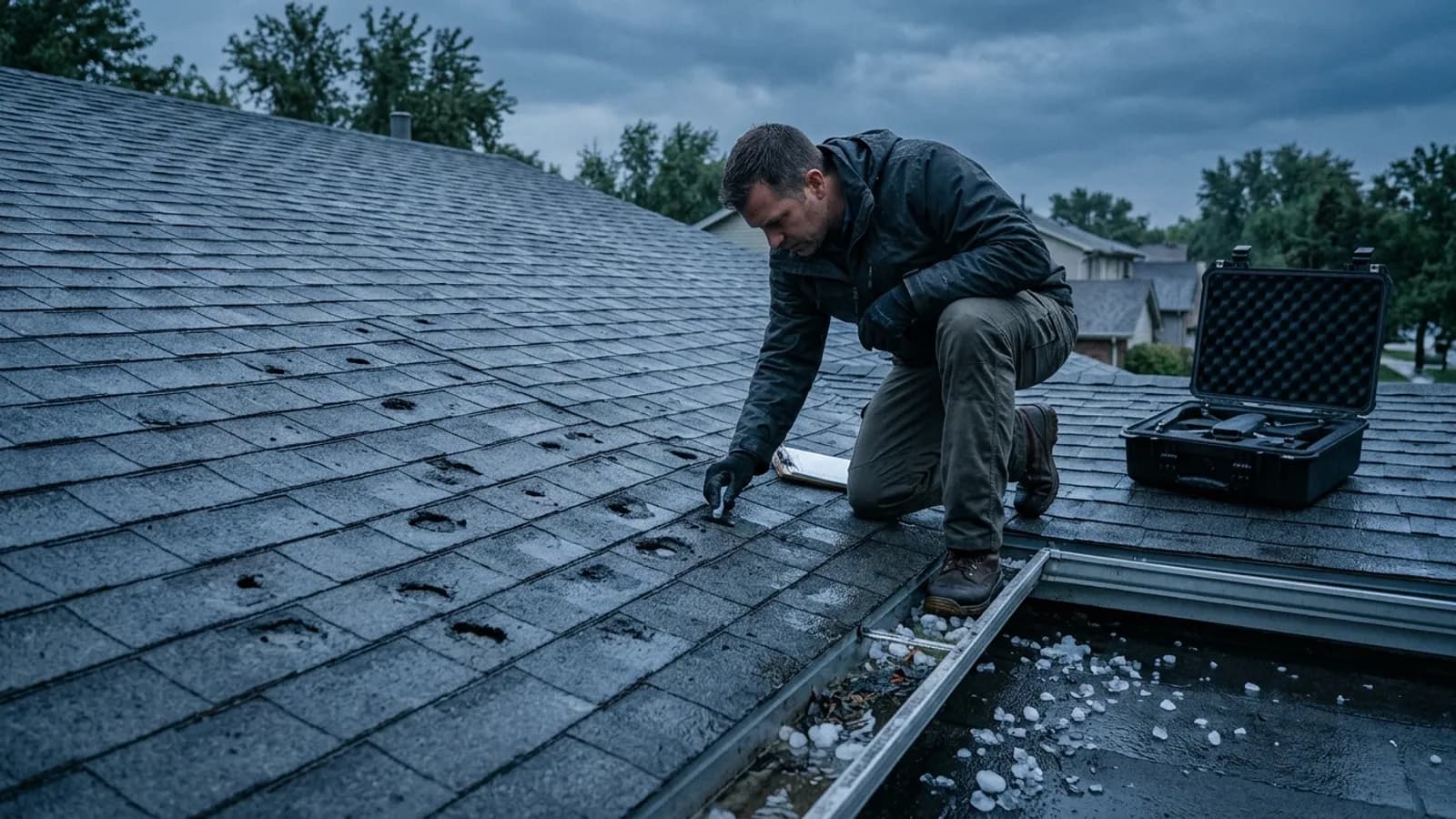
Does Homeowners Insurance Cover Hail Damage?
Homeowners insurance covers hail damage to roofs, siding, and contents, and hail-belt states price it with percentage wind/hail deductibles and ACV roof schedules.
Read guideWhat Is a Flood Zone?
A flood zone is FEMA's mapped flood-risk designation on a Flood Insurance Rate Map (FIRM) — X, AE, VE — that drives mortgage flood-insurance requirements.
Read guide
Does Homeowners Insurance Cover a Home Office?
Homeowners insurance caps home-office equipment at a small business-property sub-limit and excludes business liability; endorsements cover the gaps.
Read guide