
Does Homeowners Insurance Cover Jewelry?
Homeowners insurance covers stolen jewelry up to a small theft sub-limit, commonly $1,000–$2,500; scheduling items above the cap buys full, no-deductible coverage.
Why you can trust this guide
- Written by Daniel Reyes, AINS, former licensed P&C agent — independent insurance education publisher.
- Factual accuracy reviewed and signed off by Marcus Hale, CPCU, AINS, licensed P&C agent (Independent insurance reviewer).
- Every factual claim traces to a regulator, statute, or policy document — sources are listed at the bottom of the page.
- Last verified ; time-sensitive guides are re-checked at least twice a year. Read our editorial policy.
On this page
Homeowners insurance covers stolen jewelry up to a special theft sub-limit — commonly $1,000–$2,500 total, sometimes less per item. Engagement rings and heirloom pieces above the cap need a scheduled-personal-property endorsement for full, no-deductible coverage.
How the jewelry sub-limit works
The standard policy applies a special sub-limit to theft of jewelry, watches, and furs as a category — commonly $1,000–$2,500 total, with some policies capping single items lower. Run the engagement-ring scenario: a $9,000 ring stolen in a burglary recovers the $1,500 sub-limit minus the $1,000 deductible — $500 on a $9,000 loss. The fix is scheduling: a personal-property floater lists the item at its appraised value, pays that amount at loss, typically carries no deductible, and covers causes the base form handles poorly — mysterious disappearance and accidental damage such as a cracked stone or prong failure. Theft away from home follows the same schedule, though some policies narrow the sub-limit for theft from a vehicle specifically — which makes the glovebox the worst storage location on the policy. The economics favor scheduling earlier rather than later: at $10–$20 per year per $1,000, insuring a $9,000 ring for $90–$180 annually costs less over five years than the $7,500 shortfall a single sub-limit theft leaves behind.
What scheduling changes at claim time
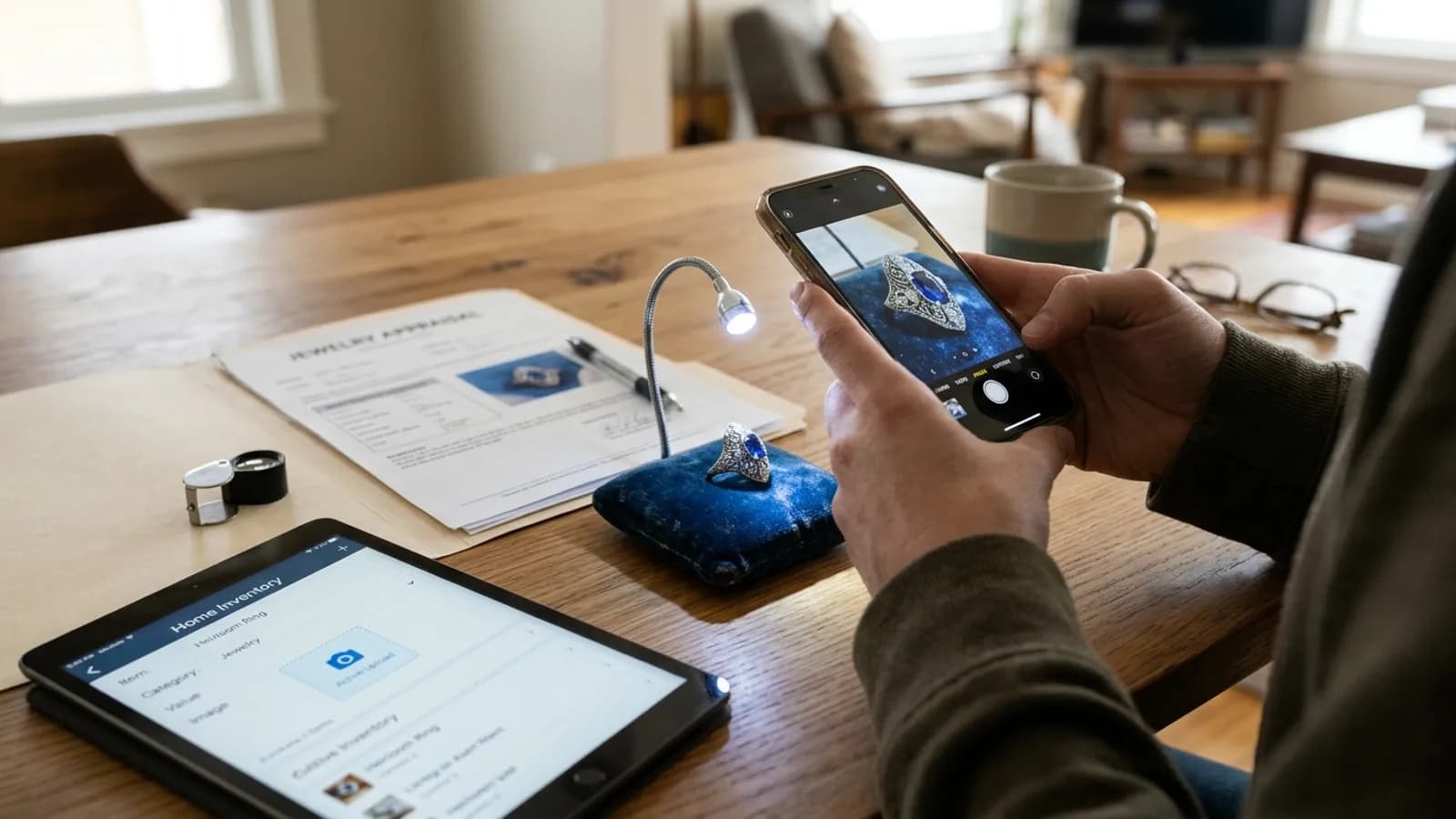
A scheduled item settles differently in three ways. Payment is the scheduled amount, so appraisal currency is the coverage — an appraisal from eight years ago schedules yesterday's price, and gold and diamond price moves make re-appraisals of significant pieces every 3–5 years a real economic decision. Proof requirements drop, because the schedule itself is the ownership record and the loss only needs to be reported with the proof-of-loss basics the form requires. And the cause-of-loss list widens: mysterious disappearance is a scheduling benefit the base policy generally denies. The requirements are modest — a current appraisal or receipt, a photo, and a description with stone weights and clarity grades for anything significant — and the mechanics behind appraised-value payouts sit beside the ACV versus replacement cost comparison.
The scenarios that defeat the base policy
Four jewelry-loss patterns sit outside the standard form, and scheduling answers all of them. Each row's denial path is the same: the base form requires theft as the trigger, and every non-theft cause fails it, which is why the sub-limit is a theft limit and scheduling is an all-cause upgrade.
| Loss scenario | Unscheduled item | Scheduled item |
|---|---|---|
| Ring stolen in a burglary | Sub-limit plus deductible | Appraised value, no deductible |
| Stone lost from its setting | Denied as unexplained loss | Covered as mysterious disappearance |
| Stone cracked in an accident | Denied as wear and tear | Covered as accidental damage |
| Ring lost down a drain | Denied — no theft occurred | Covered as accidental loss |
| Mysterious disappearance — the ring missing from the hotel drawer with no theft evidence — is unprovable loss under an HO-3 and payable under a floater. Accidental damage — the stone chipped on a doorframe, the prong that failed in the sink — fails the base form's wear-and-tear logic. Accidental loss — the ring down the drain, the earring lost on vacation — fails the theft requirement of the sub-limit. Worldwide travel is where the off-premises rules bite hardest, and floaters commonly travel with the item by default. One structural note for inherited pieces: an estate appraisal values the piece at date-of-death and documents provenance in the same document, serving both purposes of the appraisal in one appointment. |
The jewelry audit
- List every piece above $500, with photos and receipts where they exist.
- Check your policy's jewelry sub-limit — total and per-item — before assuming anything is covered.
- Schedule the pieces above the cap under scheduled personal property, with current appraisals.
- Re-appraise significant pieces every 3–5 years and update the schedule after every trade-in or sale.
- File theft claims with a police report and keep the appraisal with the policy file — the schedule and the appraisal together are the claim.
Re-run the audit after every acquisition, because the newest piece is usually the one above the cap and the least documented.
Related guides
Jewelry coverage connects to the theft and high-value pages, because sub-limits and scheduling rules run through all valuable-property questions.
- High-Value Home Insurance — how the $1M+ house market handles jewelry, art, and floaters at scale.
- What Does Homeowners Insurance Cover? — where special sub-limits sit in the standard personal-property section.
- Does Homeowners Insurance Cover Car Theft? — the vehicle-versus-contents line when jewelry is stolen from a car.
- ACV vs Replacement Cost — the settlement-basis mechanics scheduled items bypass.
- The Home Insurance Claim Process — documentation and proof-of-loss duties for theft claims.
Sources
Frequently asked questions
How much does it cost to schedule an engagement ring?
Commonly $10–$20 per year per $1,000 of appraised value — a $9,000 ring runs roughly $90–$180 annually, with no deductible and broader coverage that includes mysterious disappearance and accidental damage. The rate varies by carrier and stone value, and some insurers require the appraisal to be recent. Compare the floater against a standalone jewelry policy at the same time, because pricing and claim handling differ.
Is the jewelry sub-limit per item or total?
Both caps can appear. Many policies set a total theft sub-limit for jewelry, commonly $1,000–$2,500, and some set a lower per-item cap within it, so a two-ring theft can hit the item cap first. Scheduled items are exempt from these sub-limits entirely. Read the special-limits section of your own policy, because the wording differs by carrier more here than in almost any other coverage area.
What happens to scheduled coverage if I sell the ring?
Remove the item from the schedule at sale and the unused premium is typically refundable pro rata, because a scheduled item is billed for the value it insures. Selling without removing it leaves you paying for coverage on an item you no longer own, and a future claim on a sold item invites investigation. The same update applies after an upgrade trade-in: re-schedule the new piece at its own appraisal.
Is lost jewelry covered without scheduling?
Typically no. The base policy's jewelry sub-limit applies to theft, and mysterious disappearance — a stone gone from its setting with no theft evidence — is an unprovable loss the standard form generally denies. A scheduled personal-property floater covers loss as well as theft, which is the difference between a sympathetic denial and a paid claim for anything above the cap.
Does jewelry coverage apply while traveling?
Yes. The personal-property section and its sub-limits follow the jewelry worldwide, and scheduled items travel with the schedule by default. One narrowing to check: some policies cap or exclude theft specifically from a vehicle, which is where travel-related jewelry theft most often happens. Documentation — photos, receipts, and a police report — supports either version of the claim abroad.
How we researched this guide
Home policies are forms-driven: the peril list in the form decides what gets paid, so our guides follow the policy form structure.
- Coverage explanations track the standard HO-3/HO-5 form structure — Coverage A through E — because that's the contract language adjusters apply.
- Flood facts come from FEMA's National Flood Insurance Program (floodsmart.gov), since standard home policies exclude flood.
- Regional cost ranges are built from NAIC home-owners insurance statistics, with the drivers of variation (construction, age, wind/hail exposure) named explicitly.
- Mitigation and eligibility claims cite IBHS research and state fair-plan rules where standard market access is an issue.
Where facts vary by state or insurer, we publish the range and the reason for the variation rather than a single misleading average. We do not sell insurance, take money from insurers for coverage, or publish claim amounts we cannot trace to a source.
Sources
The primary sources behind the facts on this page. Last verified November 10, 2026.
- FEMA — National Flood Insurance Program (FloodSmart) — flood coverage, which standard homeowners policies exclude.
- Insurance Institute for Business & Home Safety (IBHS) — property-loss research and mitigation standards that affect eligibility and discounts.
- U.S. Department of Housing and Urban Development (HUD) — FHA-insured property requirements and disaster assistance programs.
- NAIC — National Association of Insurance Commissioners — model regulations, consumer guides, and industry statistics.
- Find your state insurance regulator (NAIC directory) — every state insurance department — the authority for your state's rules and complaint filing.
- Insurance Information Institute (III) — industry statistics and consumer explainers we cross-check against regulator publications.
Rules that vary by state are verified against the state insurance department's consumer pages — find yours via the NAIC directory above.
Keep reading

High-Value Home Insurance: The $1M+ House Market
Homes above $750k–$1M rebuild cost need the high-net-worth market: agreed-value settlements, cash-baseline claims, broader coverage, and risk consulting.
Read guide
What Does Homeowners Insurance Cover? (And What It Never Covers)
A standard HO-3 covers fire, wind, hail, theft, and burst pipes — and never floods, earthquakes, or gradual damage. The coverage buckets, exclusions, and fixes.
Read guide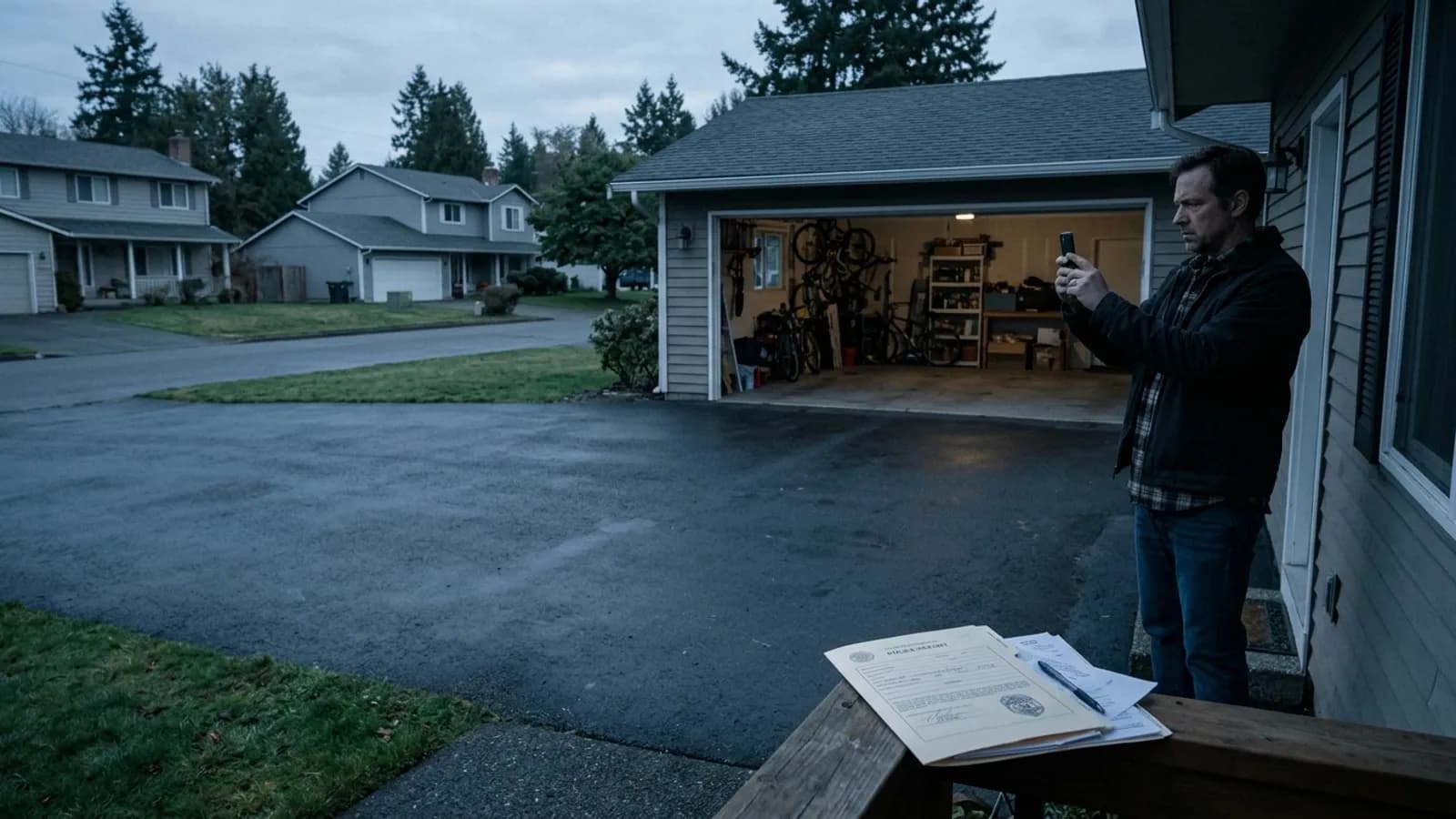
Does Homeowners Insurance Cover Car Theft?
No — the stolen car is an auto comprehensive claim; homeowners covers belongings stolen from the car as personal property away from home, within sub-limits.
Read guide
ACV vs Replacement Cost: The Claim-Payout Difference
Replacement cost pays today's price to rebuild; ACV pays that price minus depreciation. Learn which settlement basis your policy names before a claim arrives.
Read guideWhat Is Scheduled Personal Property?
Scheduled personal property is items listed individually on a policy at appraised value — no deductible, broader perils, full-value payment at loss.
Read guide