
Does Homeowners Insurance Cover Car Theft?
No — the stolen car is an auto comprehensive claim; homeowners covers belongings stolen from the car as personal property away from home, within sub-limits.
Why you can trust this guide
- Written by Daniel Reyes, AINS, former licensed P&C agent — independent insurance education publisher.
- Factual accuracy reviewed and signed off by Marcus Hale, CPCU, AINS, licensed P&C agent (Independent insurance reviewer).
- Every factual claim traces to a regulator, statute, or policy document — sources are listed at the bottom of the page.
- Last verified ; time-sensitive guides are re-checked at least twice a year. Read our editorial policy.
On this page
No — a stolen car is the auto policy's comprehensive claim; homeowners (or renters) insurance covers the belongings that were inside it, as personal property away from home. The boundary is the vehicle line.
The deciding line: the vehicle boundary
The split is mechanical. The vehicle, its factory equipment, and attached items claim against auto comprehensive (minus the auto deductible). Your laptop, gym bag, and golf clubs inside claim against homeowners or renters as personal property, subject to sub-limits and the off-premises provision. The claims run in parallel, often on the same police report. The coverage map explains the personal-property side; the vehicle side lives with the car insurance hub.
The four theft scenarios, mapped
| Scenario | Covered by | Notes |
|---|---|---|
| Car stolen from your driveway | Auto comprehensive | The home policy has no role |
| Golf clubs or laptop stolen from the car at home | Homeowners/renters | Subject to your home deductible |
| Same items stolen from the car at work | Homeowners/renters | Off-premises theft provision applies (commonly 10% of contents limit) |
| Thieves smash the garage door during the theft | Homeowners | The garage door is structure — the car is not |
Scheduled jewelry stolen from a vehicle follows the jewelry scheduling rules — the schedule pays when it is current, which is why the schedule belongs in the documentation file below.
The deductible math that makes most car-burglary claims uneconomical
Run the numbers before filing. A home policy with a $1,000 deductible on a theft of $700 in contents pays nothing — the claim exists only to eat a spot on your claims history, which insurers can consult for five to seven years. The economical cases are narrow: a $2,800 camera bag with a $500 deductible nets $2,300, and even then one claim's premium surcharge can consume the payout within two renewals. The better play for small losses is documentation without a claim: police report, photos, serial numbers — the file supports a later claim if the loss turns out to be larger or pattern-linked (a string of neighborhood break-ins is the classic case where the police report alone becomes evidence). The car side works the same way: comprehensive claims under a few hundred dollars rarely survive the deductible-surcharge math.
The documentation chain that actually pays
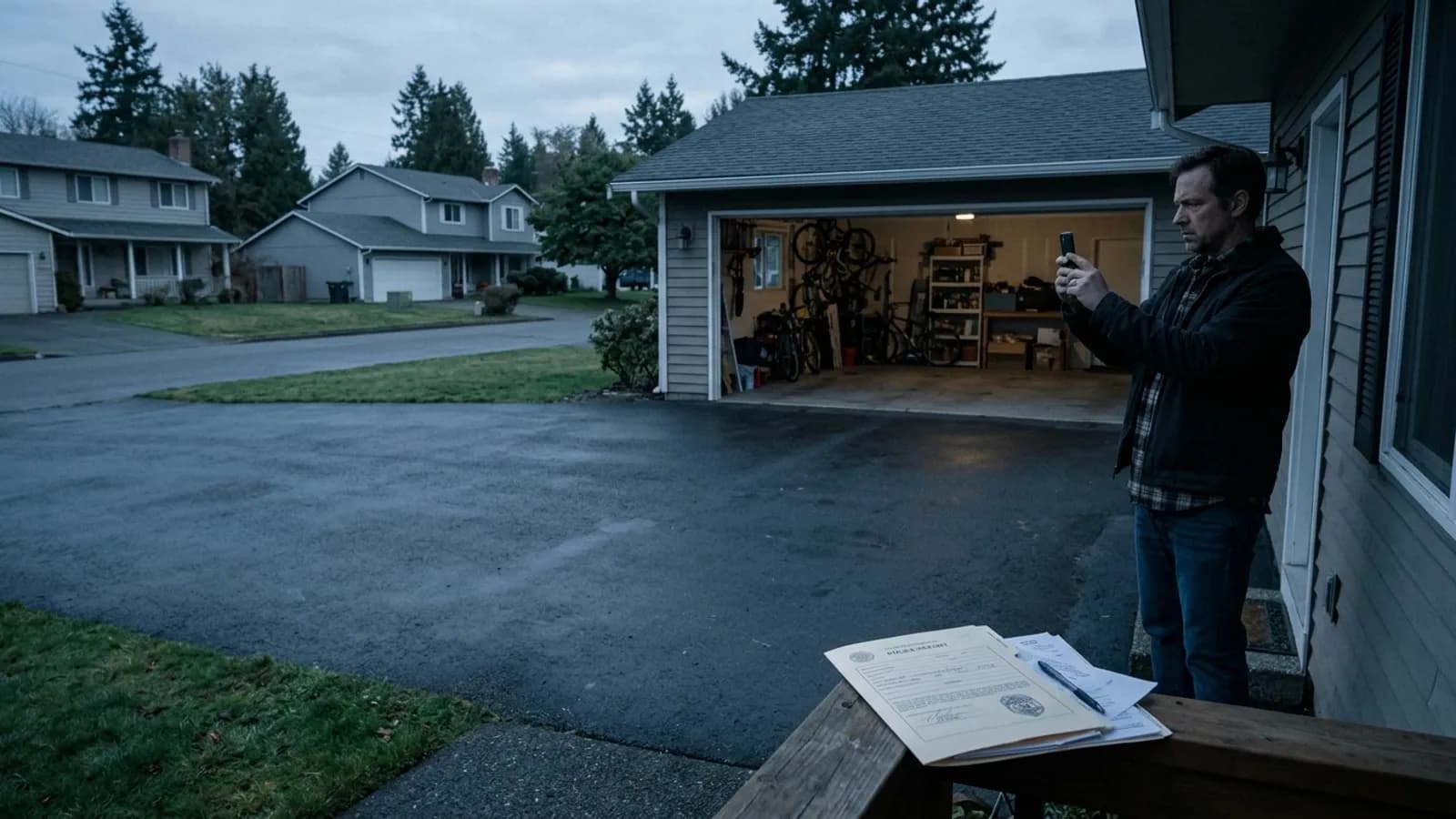
Theft claims are evidence claims, and the sequence that works: file the police report the same day (most insurers treat it as a claim prerequisite), photograph the point of entry and the empty spaces, and assemble proof of ownership — serial numbers, purchase receipts, registration cards for instruments and electronics, and for the auto-side claim the insurer's valuation of the car. Two special cases deserve pre-arranged proof: scheduled jewelry stolen from a car pays the scheduled amount only if the schedule is current, and business property inside the car (a contractor's tools) is business personal property — the home policy's business-property sub-limit, commonly around $2,500, applies, and a business policy is the honest fix above that. A claim built on this file settles in weeks; one built on memory settles after an investigation.
Related guides
The vehicle-line boundary connects to the claims process, the business-property edge, and the endorsement that raises items above sub-limits.
- Does Homeowners Insurance Cover a Home Business? — the business-property sub-limit on a contractor's tools.
- What Is a CLUE Report? — the claims record a small theft claim feeds.
- What Is a Personal Property Floater? — the endorsement that raises high-value items above sub-limits.
- Home Insurance: The Complete Guide — the hub framing the home-side policy.
- The Home Insurance Claim Process: From Damage to Settlement — the filing process both claims follow.
Sources
Frequently asked questions
Is a stolen car covered by homeowners insurance?
No — the vehicle itself is the auto policy's comprehensive claim, wherever it was parked. Homeowners (or renters) insurance covers the personal belongings that were inside it, as personal property away from home, subject to the off-premises provision, sub-limits, and your deductible. Two policies, two claims, two deductibles.
Whose policy covers my golf clubs stolen from my car?
Homeowners or renters — personal property away from home is covered under Coverage C, subject to the off-premises theft provision and sub-limits. The car's own damage is auto comprehensive territory. The aftermarket gray zone: attached auto equipment follows the auto policy; removable personal items follow the home policy.
Whose deductible applies when my car and my stuff are stolen together?
Two separate claims mean two separate deductibles. The auto comprehensive deductible applies to the car; the home deductible applies to the stolen contents. Because the home deductible often exceeds the value of items left in cars, many real-world claims resolve as an auto-only claim, with the home policy absorbing the small contents loss. Add up both deductibles before filing.
Is the off-premises 10% rule a hard cap everywhere?
It is a common policy design, not a law: many HO-3 forms limit theft coverage away from the residence premises to a percentage of personal-property coverage (10% is the classic figure). Some carriers sell higher or unlimited off-premises theft as an endorsement, and scheduled items like jewelry usually carry their own worldwide terms. Read the off-premises sentence in your own policy.
Does filing a car-theft claim on the home policy raise both premiums?
A claim reported to the home carrier enters your property claims history (CLUE), which home insurers consult for five to seven years. Auto premiums are driven by auto claims; the home-policy theft claim generally does not touch your auto rate. The surcharge logic: small theft claims under a few hundred dollars commonly cost more in renewal increases than they pay out.
Does homeowners insurance cover vandalism to my car in the driveway?
No — the car is auto comprehensive territory regardless of where it sits, even in your own driveway or garage. Homeowners covers what the thieves damaged around the vehicle — the garage door, the fence, the property boundary is the line. Report both to the same police report, then file each claim with its own carrier.
How we researched this guide
Home policies are forms-driven: the peril list in the form decides what gets paid, so our guides follow the policy form structure.
- Coverage explanations track the standard HO-3/HO-5 form structure — Coverage A through E — because that's the contract language adjusters apply.
- Flood facts come from FEMA's National Flood Insurance Program (floodsmart.gov), since standard home policies exclude flood.
- Regional cost ranges are built from NAIC home-owners insurance statistics, with the drivers of variation (construction, age, wind/hail exposure) named explicitly.
- Mitigation and eligibility claims cite IBHS research and state fair-plan rules where standard market access is an issue.
Where facts vary by state or insurer, we publish the range and the reason for the variation rather than a single misleading average. We do not sell insurance, take money from insurers for coverage, or publish claim amounts we cannot trace to a source.
Sources
The primary sources behind the facts on this page. Last verified November 10, 2026.
- FEMA — National Flood Insurance Program (FloodSmart) — flood coverage, which standard homeowners policies exclude.
- Insurance Institute for Business & Home Safety (IBHS) — property-loss research and mitigation standards that affect eligibility and discounts.
- U.S. Department of Housing and Urban Development (HUD) — FHA-insured property requirements and disaster assistance programs.
- NAIC — National Association of Insurance Commissioners — model regulations, consumer guides, and industry statistics.
- Find your state insurance regulator (NAIC directory) — every state insurance department — the authority for your state's rules and complaint filing.
- Insurance Information Institute (III) — industry statistics and consumer explainers we cross-check against regulator publications.
Rules that vary by state are verified against the state insurance department's consumer pages — find yours via the NAIC directory above.
Keep reading

Home Insurance: The Complete Guide
Homeowners insurance pays to rebuild, replace, and defend after fire, storms, and lawsuits — this guide maps coverage, exclusions, deductibles, and costs by state.
Read guide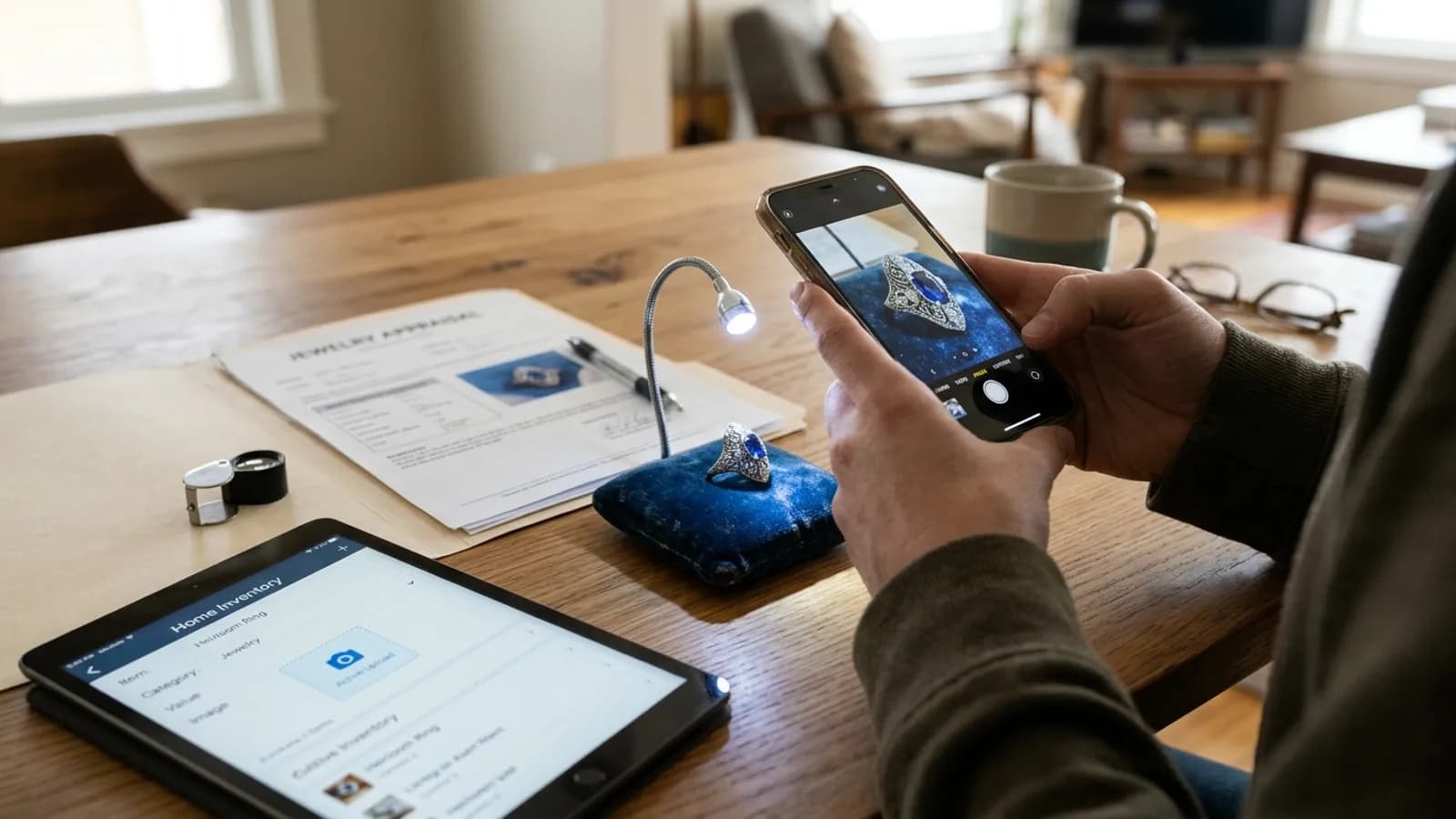
Does Homeowners Insurance Cover Jewelry?
Homeowners insurance covers stolen jewelry up to a small theft sub-limit, commonly $1,000–$2,500; scheduling items above the cap buys full, no-deductible coverage.
Read guide
What Does Homeowners Insurance Cover? (And What It Never Covers)
A standard HO-3 covers fire, wind, hail, theft, and burst pipes — and never floods, earthquakes, or gradual damage. The coverage buckets, exclusions, and fixes.
Read guide
Car Insurance: The Complete Guide
Car insurance bundles liability, collision, comprehensive, and medical coverage — this guide explains state minimums, full coverage, and how to lower the premium.
Read guideWhat Is a Personal Property Floater?
A floater is a scheduled personal property policy covering specific valuables — jewelry, cameras, bikes — at appraised value, no deductible, with broader perils.
Read guide