
Car Insurance in Arkansas: Minimums, Costs, and How to Save (2026)
Car insurance in Arkansas costs roughly $1,600–$2,400 per year for full coverage. Hail, tornadoes, and ice storms drive comprehensive claims statewide.
Why you can trust this guide
- Written by Daniel Reyes, AINS, former licensed P&C agent — independent insurance education publisher.
- Factual accuracy reviewed and signed off by Marcus Hale, CPCU, AINS, licensed P&C agent (Independent insurance reviewer).
- Every factual claim traces to a regulator, statute, or policy document — sources are listed at the bottom of the page.
- Last verified ; time-sensitive guides are re-checked at least twice a year. Read our editorial policy.
On this page
Car insurance in Arkansas commonly costs $1,600–$2,400 per year for full coverage, with a minimum-liability policy costing roughly 30–40% of that. Arkansas sits squarely in the severe-storm belt — hail, tornadoes, and ice storms drive the comprehensive lines — while Little Rock prices above the fast-growing Fayetteville–Bentonville corridor and rural counties sit at the bottom of the range.
What Arkansas drivers pay
| Profile | Typical annual premium |
|---|---|
| Full coverage, clean record, statewide | $1,600–$2,400 |
| Minimum liability only (25/50/25) | Roughly 30–40% of the full-coverage figure |
| Little Rock metro | Above the statewide range |
| Northwest Arkansas (Fayetteville–Bentonville) | Mid-range, below Little Rock |
| One at-fault crash | +25–50% |
| Teen driver added to the household | +$2,000–$5,000 |
Northwest Arkansas is the state's growth story — Benton County's corporate and logistics expansion keeps loss frequency rising faster than in the rest of the state. Quote the exact address after any in-state move, and see how to lower car insurance for the levers that apply.
What Arkansas law requires
- Minimum liability is 25/50/25 — $25,000 bodily injury per person, $50,000 per accident, $25,000 property damage, under Arkansas's motor vehicle financial responsibility law.
- The system is tort (at-fault). The driver who causes the crash pays the other side's injury and property claims through liability coverage; Arkansas requires no PIP.
- Uninsured/underinsured motorist coverage is offered on every policy and declined only in writing. See how uninsured motorist coverage works before rejecting it.
- Electronic verification is in force. Arkansas insurers report coverage to a state database, and registration or a traffic stop can expose a lapse quickly.
- The Arkansas Insurance Department publishes consumer guides, licenses carriers, and takes written complaints when a claim stalls.
The Arkansas claim landscape
- Hail and severe thunderstorms — Arkansas's spring storm season produces large hail across the state, and hail dents, windshields, and total losses land in comprehensive. This is the single most frequent physical-damage claim pattern in the state.
- Tornadoes — Arkansas sits in Dixie Alley's western edge; March–May outbreaks damage or destroy thousands of vehicles in a bad year. Comprehensive covers tornado loss the same as any weather peril.
- Ice storms — freezing-rain events (the 2021 and 2009 ice storms are the reference points) close interstates and produce multi-vehicle pileups and falling-branch claims under collision and comprehensive respectively.
- Flooding — the 2019 Arkansas River flood put neighborhoods in Little Rock, Pine Bluff, and Fort Smith underwater. Rising-water damage to a vehicle is a comprehensive peril (see does car insurance cover flood damage), distinct from the flood-insurance question homeowners face.
- Deer strikes — Arkansas's deer population and rural two-lane network produce a steady November–December animal-collision season, covered under comprehensive.
- Harvest and logging traffic — the Delta's rice and soybean harvests and the Ouachita timber operations put slow-moving equipment on Arkansas two-lanes each fall; uncontrolled rural intersections and passing decisions around implements produce the state's most severe liability claims despite its low claim frequency.
Coverage setup that fits Arkansas
- Liability at 100/300/100. Arkansas's 25/50/25 minimum caps injury payments at $25,000 per person — a single serious crash outruns it, and the excess is personally owed.
- Uninsured/underinsured motorist matched to liability limits. Arkansas makes it optional; the state's uninsured-driver share makes it valuable.
- Comprehensive on any vehicle that can't absorb a storm loss — hail, tornado, flood, and deer claims all route through this line in Arkansas.
- Collision with a deductible sized to your reserve — ice-related at-fault collisions are the state's winter signature, and a $500 vs $1,000 deductible moves the premium less than people expect.
- Bundle and collect discounts — telematics, defensive driving, and paid-in-full discounts apply statewide, and bundling with home or renters coverage trims both.
The Arkansas storm calculus
Arkansas is one of the states where the comprehensive line does more work than collision. The state's dominant loss pattern is weather: spring hail and tornadoes, winter ice, and river flooding that reaches parked vehicles. That has a practical consequence for coverage decisions — dropping comprehensive on a car worth $8,000 means self-insuring against a hail season or tornado year, not just against theft. In Little Rock, where storm and theft claims concentrate, carriers price that risk directly into metro quotes; in the northwest corridor, the fast-growing population raises loss frequency; in rural counties, deer density takes over. The statewide $1,600–$2,400 band hides a genuine spread between those profiles, so quote the specific address, keep UM/UIM at full limits, and re-run the numbers every renewal — Arkansas's carrier dispersion for identical drivers is wide enough to matter more than most discounts. The Arkansas Insurance Department's consumer guides list licensed carriers and publish complaint data, the fastest way to shortlist a storm-state market where claim handling quality varies as much as price.
Two Arkansas coverage questions deserve their own arithmetic at renewal. First, comprehensive: a $6,000 car in the Arkansas storm belt faces hail seasons, derecho wind, ice storms, and river floods — the state's dominant claim patterns — so dropping comprehensive to save a few hundred dollars per year transfers the most likely loss back to yourself. Second, UM/UIM: Arkansas insurers must offer the coverage, and the rejection form is a standing invitation to self-insure against the state's uninsured-driver share; declining to sign it is worth more than most discounts. Arkansas's low base premiums make each upgrade cheaper here than in almost any other state — and the storm season that raises your comprehensive rate next year is the same one that would have paid for the damage a liability-only policy never touches.
Related guides
Arkansas drivers get the most from these adjacent guides — storm-claim mechanics, cost benchmarks, and the switching process.
- Car Insurance: The Complete Guide — the hub for coverage types and how Arkansas minimums compare nationally.
- Average Cost of Car Insurance in 2026 — national figures to set Arkansas's $1,600–$2,400 per year in context.
- Does Car Insurance Cover Hail Damage? — how comprehensive handles Arkansas's most frequent storm claim.
- What Does Full Coverage Cover? — the ten-times rule and the physical-damage math behind liability-only decisions.
- How to Switch Car Insurance — re-shop at renewal without a lapse.
Car insurance in other states
Every state prices and regulates differently — compare the neighbors:
Sources
- Arkansas Insurance Department — current Arkansas requirements and consumer help
- NAIC — Auto insurance consumer resources
- III — Auto insurance facts and statistics
Frequently asked questions
How much is car insurance in Arkansas?
Full coverage in Arkansas commonly runs $1,600–$2,400 per year for a clean-record driver; a 25/50/25 minimum-liability policy costs roughly 30–40% of that. Little Rock prices above the northwest Fayetteville–Bentonville corridor on storm and theft claims, while the rural counties sit at the low end of the band.
What are Arkansas's minimum car insurance requirements?
Arkansas requires 25/50/25 liability — $25,000 per person, $50,000 per accident for injuries, and $25,000 for property damage. The state runs a tort system with no PIP requirement, and insurers must offer uninsured/underinsured motorist coverage that can be declined only in writing. The Arkansas Insurance Department publishes current rules.
Does car insurance cover hail and tornado damage in Arkansas?
Yes — hail, wind, tornado, and falling-tree damage are physical-damage perils under comprehensive coverage, which pays up to the vehicle's actual cash value minus your deductible. Arkansas sits in the severe-storm belt, so carriers price comprehensive above collision in much of the state; liability-only policies cover none of it.
Is uninsured motorist coverage required in Arkansas?
No — Arkansas insurers must offer uninsured/underinsured motorist coverage, but you can decline it in writing. With the state's uninsured-driver share running above the national average, the coverage is usually worth keeping: after a crash with an uninsured driver, UM is the only line that pays your own injury bills.
How much car insurance should I carry in Arkansas?
A practical Arkansas setup: 100/300/100 liability instead of 25/50/25, uninsured/underinsured motorist matched to those limits, and comprehensive coverage kept on any vehicle that can't absorb a hail or tornado loss. Deer-dense rural highways also argue for collision coverage on vehicles worth more than a few thousand dollars.
How we researched this guide
Car insurance pricing is set per driver, per ZIP code — so our guides anchor on regulator and industry statistics and explain the factors, not a fake exact price.
- Premium ranges are anchored to NAIC statewide average-expenditure data, the most complete public dataset on what drivers actually pay per state.
- State minimum-coverage requirements are checked against each state's motor-vehicle financial-responsibility statute and the state insurance department's consumer pages.
- What a coverage actually pays for is verified against policy declarations and specimen forms, not marketing copy.
- Discount and surcharge rules cite the state DOI consumer bulletin where each state regulates them differently — for example credit-based insurance scores, which most states permit but a few ban.
Where facts vary by state or insurer, we publish the range and the reason for the variation rather than a single misleading average. We do not sell insurance, take money from insurers for coverage, or publish claim amounts we cannot trace to a source.
Sources
The primary sources behind the facts on this page. Last verified November 10, 2026.
- IIHS — Insurance Institute for Highway Safety — crash-test data, vehicle loss statistics, and safety-feature research.
- NHTSA — National Highway Traffic Safety Administration — recalls, crash data, and state traffic-safety requirements.
- FMCSA — Federal Motor Carrier Safety Administration — commercial vehicle and carrier insurance requirements.
- NAIC — National Association of Insurance Commissioners — model regulations, consumer guides, and industry statistics.
- Find your state insurance regulator (NAIC directory) — every state insurance department — the authority for your state's rules and complaint filing.
- Insurance Information Institute (III) — industry statistics and consumer explainers we cross-check against regulator publications.
Rules that vary by state are verified against the state insurance department's consumer pages — find yours via the NAIC directory above.
Keep reading

Car Insurance: The Complete Guide
Car insurance bundles liability, collision, comprehensive, and medical coverage — this guide explains state minimums, full coverage, and how to lower the premium.
Read guide
Average Cost of Car Insurance in 2026
Full coverage car insurance averages roughly $1,500–$2,500 per year and minimum liability $400–$900 per year nationally — age, state, and record swing the number.
Read guide
How to Lower Car Insurance: 12 Ways That Actually Work
How to lower car insurance: re-shop every renewal, raise deductibles, trim coverage on old cars, stack discounts, and fix the rating factors you control.
Read guide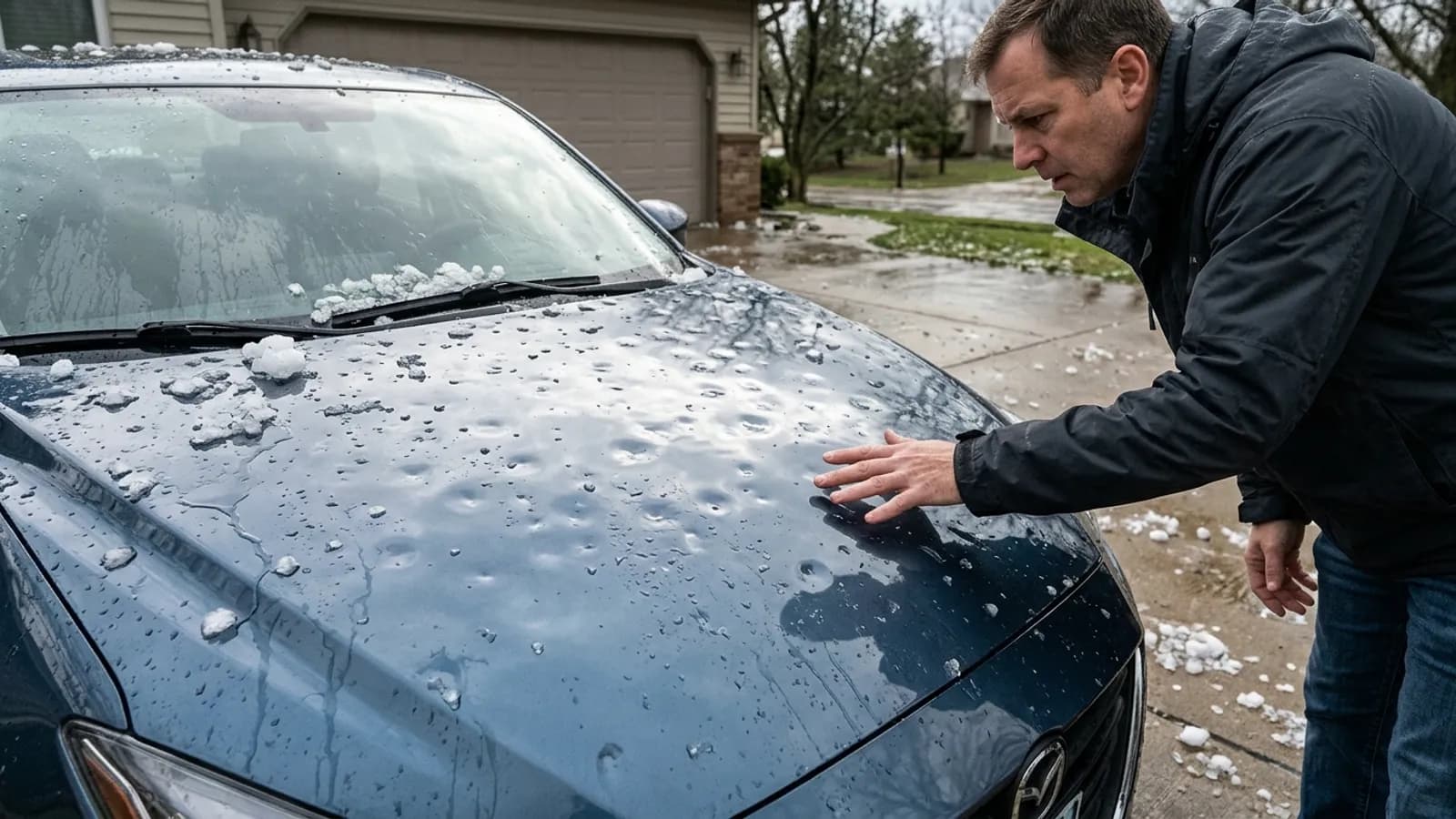
Does Car Insurance Cover Hail Damage?
Hail damage claims under comprehensive coverage — dents, broken glass, storm totals — and liability-only policies cover none of it. PDR and deductibles explained.
Read guideWhat Is Uninsured Motorist Coverage?
Uninsured motorist (UM) coverage pays your injuries when an at-fault driver has no insurance — including hit-and-run drivers — and UIM pays when limits fall short.
Read guideCar Insurance in Alabama: Minimums, Costs, and How to Save (2026)
Car insurance in Alabama costs roughly $1,800–$2,800 per year for full coverage. Gulf hurricanes, tornadoes, and Birmingham metro density drive the price.
Read guide