
Home Insurance in Washington, DC: Costs and Guide (2026)
Home insurance in Washington, DC costs $1,500–$2,600 per year. Historic rowhouse rebuild costs, 2019 flash floods, and water backup define the local policy.
Why you can trust this guide
- Written by Daniel Reyes, AINS, former licensed P&C agent — independent insurance education publisher.
- Factual accuracy reviewed and signed off by Marcus Hale, CPCU, AINS, licensed P&C agent (Independent insurance reviewer).
- Every factual claim traces to a regulator, statute, or policy document — sources are listed at the bottom of the page.
- Last verified ; time-sensitive guides are re-checked at least twice a year. Read our editorial policy.

On this page
Home insurance in Washington, DC runs about $1,500–$2,600 per year for a standard HO-3 policy on a median-priced home. The District's signature is its housing stock: century masonry rowhouses whose rebuild costs — current code, historic-district conditions, period masonry — run past what standard estimates capture, which is why extended replacement cost is the local endorsement. Water is the second story: the June 2019 flash floods drowned streets near Dupont Circle, and Bloomingdale's combined-sewer basements flood chronically — two water problems the HO-3 answers differently or not at all. Rowhouse condos convert the whole question to HO-6. The District-level picture sits in the DC guide linked below.
What Washington, DC homeowners pay
| Profile in Washington, DC | Typical annual premium |
|---|---|
| District-of-Columbia statewide median | $1,400–$2,400 |
| Median DC home, updated roof, $1,000 deductible | $1,500–$2,600 |
| Historic-district rowhouses (Capitol Hill, Georgetown, Dupont) | top of the range; masonry and code-upgrade exposure |
| Rowhouse condos | an HO-6 policy priced below the house form |
| Ward 7 and 8 single-family stock | mid-range for the District |
| Rock Creek– and Anacostia-corridor addresses | base premium plus a flood-policy conversation |
DC prices above the District median on rebuild costs, not perils — no hurricane engine at full strength, no hail belt. The local spread is housing age and form: a historic Capitol Hill rowhouse and a Northeast brick detached quote differently on dwelling math alone. The flood quote runs $400–$1,000+ per year for moderate-risk homes, and the backup endorsement adds $50–$250 — both small against a masonry rebuild.
Why Washington, DC prices the way it does
Historic-stock rebuild costs are the first driver: masonry rowhouses must be rebuilt to current code inside historic-district review, and carriers price that post-loss inflation into the dwelling figure. Water is the second — the June 2019 flash floods showed the District's steep streets channel storm water fast, while Bloomingdale and LeDroit Park carry the chronic combined-sewer backup story the city answered with the First Street Tunnel. Housing age is the third: century systems and shared walls feed the water and fire-spread claims the rowhouse form concentrates. Density is the fourth — liability exposure on the District's narrow blocks and sidewalks raises the limits locals carry.
Requirements and insurer norms in Washington, DC
DC does not mandate homeowners insurance; mortgage lenders do, and replacement-cost claim treatment requires insuring at least 80% of the home's rebuild cost. Rowhouse condos are the local structural norm: the association's master policy carries the building shell, and the owner carries an HO-6 for walls-in coverage, loss assessment, and liability. Carriers want every rental unit disclosed — the District's basement rentals are a classic unreported-tenant surprise. The DC Department of Insurance, Securities and Banking licenses carriers and runs the complaint process for stalled claims, and historic-district owners should confirm ordinance-or-law coverage exists before a claim tests it.
The DC claim pattern
- Flash-flood streets — the June 2019 event swallowed cars and basements near Dupont Circle and Adams Morgan; rising water is flood, excluded from the HO-3, and NFIP or private flood is the separate purchase.
- Combined-sewer basement backup — Bloomingdale's chronic pattern; the water-backup endorsement ($50–$250 per year) answers what the base policy excludes (sewer backup coverage).
- Historic-rebuild cost gaps — masonry rowhouse rebuilds to current code run past standard estimates; extended replacement cost plus ordinance-or-law coverage close the gap (extended replacement cost).
- Rowhouse condo structure — Capitol Hill–style condos need the HO-6 form: walls-in coverage, loss assessment, and liability the master policy omits (condo insurance).
- Shared-wall fire and water spread — the rowhouse form moves a neighbor's chimney fire or burst pipe through the party wall; liability limits sized for the attached house matter.
Coverage setup that fits Washington, DC
- Extended replacement cost first — the District's historic-rebuild math is the argument; a 25–50% buffer over replacement cost answers code and masonry inflation.
- Ordinance-or-law coverage beside it — the base policy only partially pays post-loss code compliance; the rowhouse form needs both lines.
- Water-backup endorsement — $50–$250 per year for the combined-sewer basements; it covers backflow, never rising flash-flood water.
- HO-6 structure for rowhouse condos — walls-in dwelling, loss assessment matched to the master policy's deductible, and $300,000+ liability.
- A $1,000–$2,500 flat deductible — returning 10–25% of premium versus $500 while keeping water claims fundable.
Related guides
DC's decisions run through the rowhouse form — HO-6 structure, historic rebuild math, and the two water lines — and these guides cover each one.
- Homeowners Insurance in District of Columbia — District-wide pricing, requirements, and the complaint path.
- Home Insurance: The Complete Guide — the HO-3 structure and exclusions behind every figure on this page.
- Does Homeowners Insurance Cover Water Damage? — where sudden water is covered and where the policy stops.
- ACV vs Replacement Cost — the roof-settlement difference that decides partial-loss payouts.
- What Is Ordinance or Law Coverage? — the code-upgrade gap older rebuilds face.
Sources
- DC Department of Insurance, Securities and Banking — consumer resources and the District complaint process
- III — Homeowners and renters insurance facts
Frequently asked questions
How much is home insurance in Washington, DC?
Washington, DC home insurance runs about $1,500–$2,600 per year for a standard HO-3 policy on a median-priced home. The District prices at the top of its range on historic-stock rebuild costs — masonry rowhouses and code-upgrade exposure — while avoiding the catastrophe engines that price the coasts.
Does home insurance cover flash flooding like the 2019 event?
Rising surface water is flood, excluded from the standard HO-3 — the June 2019 flash floods that swallowed streets near Dupont Circle proved the line at full strength. The water-backup endorsement covers drain backflow into basements; creek and street flooding needs a separate NFIP or private flood policy.
Why is Bloomingdale's basement flooding an insurance story?
Bloomingdale and LeDroit Park sit on the city's combined sewer system, and heavy rain has chronically backed drains into their basements — the city built the First Street Tunnel to answer it. Sewer backup is excluded from the HO-3, so the water-backup endorsement, $50–$250 per year, is the local essential in those districts.
Do DC rowhouse condos need HO-6 instead of an HO-3?
Yes — a rowhouse purchased as a condominium, common across Capitol Hill and the LeDroit corridor, needs an HO-6 policy: walls-in coverage plus loss assessment for what the association's master policy carries. The HOA's master policy insures the building shell; the HO-6 insures everything from the drywall in and the owner's liability.
What deductible should a DC homeowner carry?
A flat $1,000–$2,500 deductible handles most DC claims, and moving up from $500 saves 10–25% of the annual premium. Rowhouse owners should also size liability above the minimum, because shared-wall fire spread and sidewalk exposure raise the third-party scenarios the District's dense blocks produce.
Why do historic districts argue for extended replacement cost?
Rebuilding a masonry rowhouse inside a historic district costs more than standard estimates capture — current code, historic-commission conditions, and period masonry work all add cost the base policy only partially pays. Extended replacement cost plus ordinance-or-law coverage together close the gap the District's rebuild rules create.
How we researched this guide
Home policies are forms-driven: the peril list in the form decides what gets paid, so our guides follow the policy form structure.
- Coverage explanations track the standard HO-3/HO-5 form structure — Coverage A through E — because that's the contract language adjusters apply.
- Flood facts come from FEMA's National Flood Insurance Program (floodsmart.gov), since standard home policies exclude flood.
- Regional cost ranges are built from NAIC home-owners insurance statistics, with the drivers of variation (construction, age, wind/hail exposure) named explicitly.
- Mitigation and eligibility claims cite IBHS research and state fair-plan rules where standard market access is an issue.
Where facts vary by state or insurer, we publish the range and the reason for the variation rather than a single misleading average. We do not sell insurance, take money from insurers for coverage, or publish claim amounts we cannot trace to a source.
Sources
The primary sources behind the facts on this page. Last verified November 10, 2026.
- FEMA — National Flood Insurance Program (FloodSmart) — flood coverage, which standard homeowners policies exclude.
- Insurance Institute for Business & Home Safety (IBHS) — property-loss research and mitigation standards that affect eligibility and discounts.
- U.S. Department of Housing and Urban Development (HUD) — FHA-insured property requirements and disaster assistance programs.
- NAIC — National Association of Insurance Commissioners — model regulations, consumer guides, and industry statistics.
- Find your state insurance regulator (NAIC directory) — every state insurance department — the authority for your state's rules and complaint filing.
- Insurance Information Institute (III) — industry statistics and consumer explainers we cross-check against regulator publications.
Rules that vary by state are verified against the state insurance department's consumer pages — find yours via the NAIC directory above.
Keep reading
Homeowners Insurance in Washington, DC: Costs and What to Know (2026)
Homeowners insurance in Washington, DC costs $1,400–$2,400 per year, with rowhouse rebuild costs, flash flooding, and nor'easter wind shaping District premiums.
Read guideHome Insurance: The Complete Guide
Homeowners insurance pays to rebuild, replace, and defend after fire, storms, and lawsuits — this guide maps coverage, exclusions, deductibles, and costs by state.
Read guide
What Is Condo Insurance (HO-6)? What It Covers and Costs
Condo insurance (HO-6) covers what the association's master policy leaves to you — interior, belongings, liability, and loss assessments. How the split works.
Read guide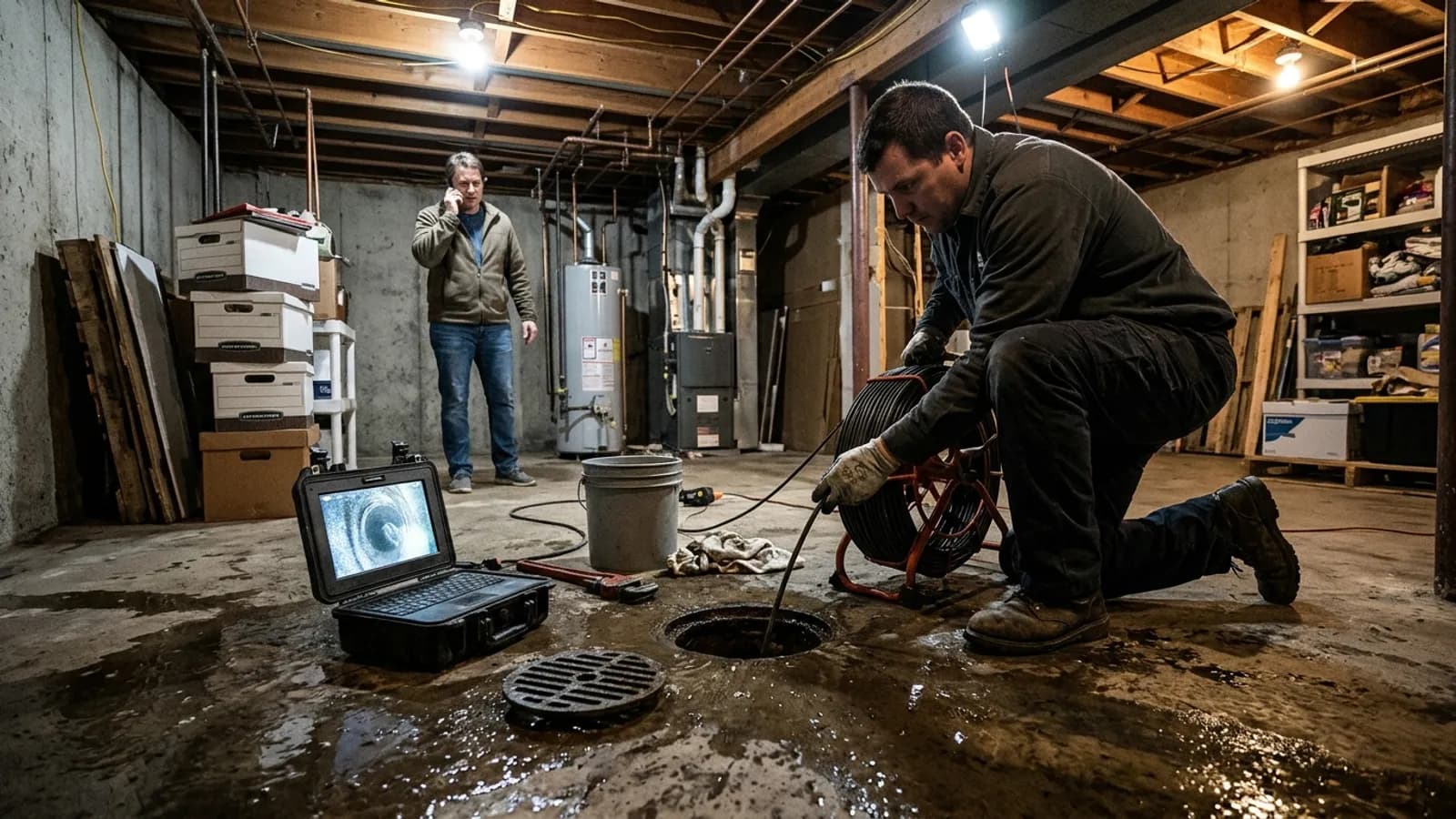
Does Homeowners Insurance Cover Sewer Backup?
Sewer and drain backup is excluded from standard homeowners policies; the dedicated endorsement ($50–$250 per year) is the fix for five-figure basement losses.
Read guideWhat Is Extended Replacement Cost?
Extended replacement cost pays a set percentage above your dwelling limit — commonly 25–50% — so a rebuild that outruns the policy still pays after a disaster.
Read guide