
Home Insurance in Baltimore, MD: Costs and Guide (2026)
Home insurance in Baltimore costs about $1,500–$2,500 per year. Rowhouse fire spread, older-stock water claims, and coastal-adjacent wind shape the policy.
Why you can trust this guide
- Written by Daniel Reyes, AINS, former licensed P&C agent — independent insurance education publisher.
- Factual accuracy reviewed and signed off by Marcus Hale, CPCU, AINS, licensed P&C agent (Independent insurance reviewer).
- Every factual claim traces to a regulator, statute, or policy document — sources are listed at the bottom of the page.
- Last verified ; time-sensitive guides are re-checked at least twice a year. Read our editorial policy.

On this page
Home insurance in Baltimore runs about $1,500–$2,500 per year for a standard HO-3 policy on a median-priced home. Rowhouse stock defines the city's coverage questions — party walls and fire spread among them — while water claims and coastal-adjacent wind finish the price. The housing stock is old by national standards, and the claims that come with it are priced into every quote. Statewide context sits in the Maryland guide linked below.
What Baltimore homeowners pay
| Profile in Baltimore | Typical annual premium |
|---|---|
| Maryland statewide median | $1,500–$2,500 |
| Median Baltimore home, updated roof, $1,000 deductible | $1,500–$2,500 |
| Historic rowhouse stock (Federal Hill, Fells Point, Hampden) | quotes toward the upper half; age of systems and attached construction |
| Waterfront and low-lying blocks (Inner Harbor, Fells Point) | base premium plus a separate flood policy |
| Roof 15+ years old | +15–40%, or an actual-cash-value roof settlement |
| New construction | −10–20% vs the Baltimore median |
Baltimore prices at the Maryland median, and the housing-stock age gradient does the work inside the range. The city's rowhouse fabric is both the affordability story — smaller footprints — and the claims story — attached construction with shared risk. The flood row is the quiet one: harbor-lowland blocks carry it even when the lender never asks.
Why Baltimore prices the way it does
Rowhouse fire spread is the local signature: attached construction moves fire between units, which makes each policy's dwelling, contents, and liability lines interact with the neighbor's. Water claims are the volume driver — Baltimore's older housing carries aged plumbing and sewer infrastructure that produces the state's steady water-loss pattern. Coastal-adjacent wind prices in from the Chesapeake's storm reach; Baltimore sits far enough up the bay to avoid coastal percentage deductibles but close enough for storm-wind claims. Flood risk concentrates in the harbor lowlands, where the standard policy excludes everything the water does. Carrier competition in the metro is solid, keeping quotes comparable while condition reports decide the spread. Attached construction also changes the dwelling math: rebuild estimates include the party wall's structural share, and historic rowhouses carry code-upgrade costs the base policy answers only in part.
Requirements and insurer norms in Baltimore
Maryland does not mandate homeowners insurance; mortgage lenders do, and replacement-cost claims require insuring at least 80% of the home's replacement value. Attached-construction disclosures matter: carriers price rowhouse risk differently from detached homes, and misreporting the attachment is a classic application error. Historic-district housing draws ordinance-or-law questions, since post-loss rebuilds must meet current code. Homes the admitted market declines can place through the Maryland Joint Insurance Association as the market of last resort. Historic-district review can extend rebuild timelines in Fells Point and Federal Hill, a factor the dwelling figure alone does not capture. The Maryland Insurance Administration runs the complaint process for stalled claims. Application accuracy on attachment status is the first check: a rowhouse reported as detached undermines the underwriting basis the entire quote sits on.
The Baltimore claim pattern
- Rowhouse fire spread — attached construction moves fire between units; each policy pays its own unit, and origin disputes pull liability in. Smoke and water damage travel between units too, and both policies' contents lines answer them separately.
- Water damage from older systems — aged plumbing and sewers produce the volume claims; sudden breaks are covered, chronic seepage is not.
- Sewer backup — heavy rain overloads older rowhouse sewers; the water-backup endorsement answers it.
- Coastal-adjacent wind — Chesapeake storm systems snap trees and open roofs; wind settles under the flat deductible.
- Harbor-lowland flooding — Inner Harbor and Fells Point flooding is excluded from the HO-3; NFIP caps at $250,000 building / $100,000 contents (NFIP vs private flood).
Coverage setup that fits Baltimore
- Water-backup endorsement at $50–$250 per year — the first add for Baltimore's older sewer grid.
- Dwelling at rebuild cost, with a buffer — historic rowhouse rebuilds run past market-price intuition; extended replacement cost covers the gap (extended replacement cost explained).
- Ordinance-or-law coverage — post-loss rebuilds must meet current code, and Baltimore's historic housing hides that gap.
- Accurate attachment disclosure — the carrier should know the property is attached; the party-wall question starts on the application, and a documented electrical panel pulls the fire-side rating down.
- Flood policy for the harbor lowlands — priced on the property, beyond the lender's mapped-zone requirement.
- Replacement-cost roof while offered — storm history pushes carriers toward actual-cash-value roof treatment at renewal (ACV vs replacement cost).
Related guides
Baltimore's coverage questions run through its rowhouse fabric — attached construction, water claims, and the harbor's flood exclusion — and these guides cover each one.
- Homeowners Insurance in Maryland — statewide pricing, coastal wind notes, and the state claim path.
- Home Insurance: The Complete Guide — the HO-3 structure and exclusions behind every figure on this page.
- Flood Insurance — the separate policy harbor-lowland flooding demands.
- Does Homeowners Insurance Cover Sewer Backup? — how backup claims work and what the endorsement pays.
- What Is Actual Cash Value? — the depreciated settlement older Baltimore roofs risk at renewal.
Sources
- Maryland Insurance Administration — consumer complaints and insurer licensing
- FloodSmart / NFIP — NFIP coverage caps and flood-zone rules
- III — Homeowners and renters insurance facts
Frequently asked questions
How much is home insurance in Baltimore?
Baltimore home insurance runs about $1,500–$2,500 per year for a standard HO-3 policy on a median-priced home. Rowhouse stock, water-claim history, and coastal-adjacent wind are the three forces that move an individual quote; the party-wall question is the city's signature coverage check.
What deductible should a Baltimore homeowner carry?
A flat $1,000–$2,500 deductible covers most Baltimore claims, and raising it from $500 saves 10–25% of the annual premium. Maryland coastal counties carry percentage wind deductibles in places; most Baltimore city policies settle on the flat deductible with roof age doing the underwriting work.
How does a rowhouse fire claim work in Baltimore?
Shared walls spread fire between units, so the claim turns on each owner's policy: the homeowners policy pays damage to the insured unit and its contents, and the neighbor's policy pays theirs. Liability questions about the fire's origin can pull both policies in — which is why Baltimore owners document smoke-detector and electrical condition.
Does home insurance cover flooding in Baltimore?
No — flood is excluded from every standard Baltimore policy, including low-lying areas along the Inner Harbor, Fells Point, and the Jones Falls corridor. Coastal storms push water into those blocks; NFIP or private flood is the separate purchase, and lenders require it only in mapped zones.
What does the water-backup endorsement cost in Baltimore?
A water-backup endorsement runs roughly $50–$250 per year and covers sewer water that backs up into the home during heavy rain — damage the base HO-3 excludes. Baltimore's older rowhouse sewer infrastructure makes it one of the highest-value riders in the city.
Who insures the party wall between Baltimore rowhouses?
Each owner's policy covers the structural elements of their own unit, including the shared wall from their side, under the dwelling coverage. Damage disputes between units resolve through the two policies and, where fault matters, liability coverage. Confirm the carrier knows the property is attached, not detached.
How we researched this guide
Home policies are forms-driven: the peril list in the form decides what gets paid, so our guides follow the policy form structure.
- Coverage explanations track the standard HO-3/HO-5 form structure — Coverage A through E — because that's the contract language adjusters apply.
- Flood facts come from FEMA's National Flood Insurance Program (floodsmart.gov), since standard home policies exclude flood.
- Regional cost ranges are built from NAIC home-owners insurance statistics, with the drivers of variation (construction, age, wind/hail exposure) named explicitly.
- Mitigation and eligibility claims cite IBHS research and state fair-plan rules where standard market access is an issue.
Where facts vary by state or insurer, we publish the range and the reason for the variation rather than a single misleading average. We do not sell insurance, take money from insurers for coverage, or publish claim amounts we cannot trace to a source.
Sources
The primary sources behind the facts on this page. Last verified November 10, 2026.
- FEMA — National Flood Insurance Program (FloodSmart) — flood coverage, which standard homeowners policies exclude.
- Insurance Institute for Business & Home Safety (IBHS) — property-loss research and mitigation standards that affect eligibility and discounts.
- U.S. Department of Housing and Urban Development (HUD) — FHA-insured property requirements and disaster assistance programs.
- NAIC — National Association of Insurance Commissioners — model regulations, consumer guides, and industry statistics.
- Find your state insurance regulator (NAIC directory) — every state insurance department — the authority for your state's rules and complaint filing.
- Insurance Information Institute (III) — industry statistics and consumer explainers we cross-check against regulator publications.
Rules that vary by state are verified against the state insurance department's consumer pages — find yours via the NAIC directory above.
Keep reading
Homeowners Insurance in Maryland: Costs and What to Know (2026)
Homeowners insurance in Maryland costs $1,500–$2,500 per year, with Chesapeake wind exposure, flash flooding, and winter storms shaping what each ZIP pays.
Read guideHome Insurance: The Complete Guide
Homeowners insurance pays to rebuild, replace, and defend after fire, storms, and lawsuits — this guide maps coverage, exclusions, deductibles, and costs by state.
Read guide
Flood Insurance: What It Covers, What It Costs, and Who Needs It
Flood insurance is never part of a standard home policy. Costs per year, the 30-day waiting period, NFIP limits, and why most claims come from outside flood zones.
Read guide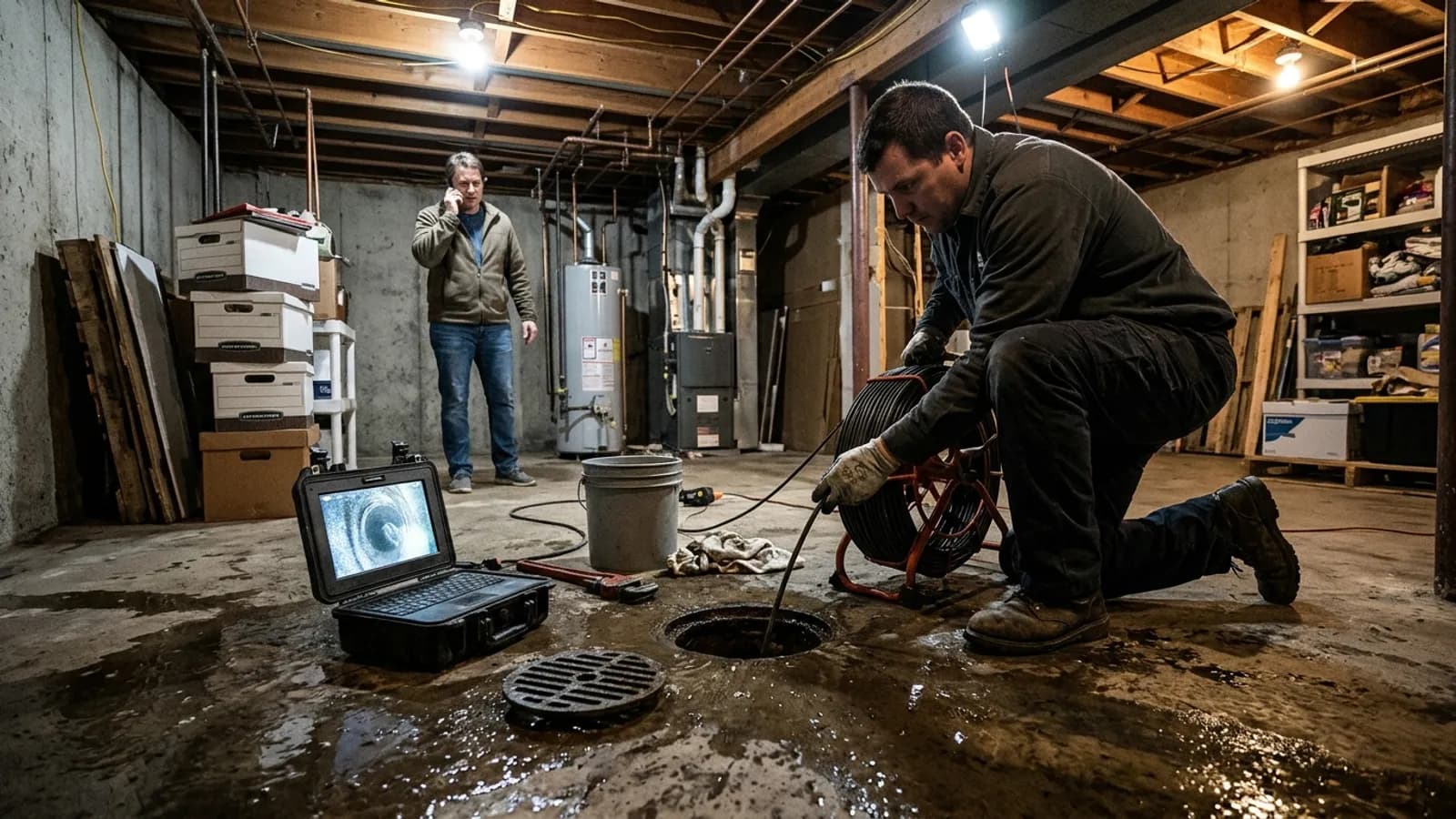
Does Homeowners Insurance Cover Sewer Backup?
Sewer and drain backup is excluded from standard homeowners policies; the dedicated endorsement ($50–$250 per year) is the fix for five-figure basement losses.
Read guideWhat Is Ordinance or Law Coverage?
Ordinance or law coverage pays the cost of rebuilding to current building codes after a covered loss — costs standard policies exclude by the like-for-like rule.
Read guide