
Car Insurance in Tennessee: Minimums, Costs, and How to Save (2026)
Car insurance in Tennessee costs $1,600–$2,500 per year for full coverage, priced for tornado alleys, high uninsured-driver rates, and Memphis-Nashville traffic.
Why you can trust this guide
- Written by Daniel Reyes, AINS, former licensed P&C agent — independent insurance education publisher.
- Factual accuracy reviewed and signed off by Marcus Hale, CPCU, AINS, licensed P&C agent (Independent insurance reviewer).
- Every factual claim traces to a regulator, statute, or policy document — sources are listed at the bottom of the page.
- Last verified ; time-sensitive guides are re-checked at least twice a year. Read our editorial policy.

On this page
Car insurance in Tennessee costs about $1,600–$2,500 per year for full coverage. Tornado alleys through Middle and West Tennessee, one of the nation's highest uninsured-driver shares, and the Memphis–Nashville claim concentration set the pattern. Minimum liability runs 25/50/15, and Tennessee is an at-fault (tort) state.
What Tennessee drivers pay
A clean-record Tennessee driver pays $1,600–$2,500 per year for full coverage, with Memphis and Nashville at the top of the range.
| Driver profile | Typical annual cost |
|---|---|
| Full coverage, clean record, statewide | $1,600–$2,500 |
| Minimum coverage only (25/50/15) | Roughly 30–40% of the full-coverage figure |
| Nashville | $1,800–$2,800 |
| Memphis | At the top of the state range |
| Knoxville and Chattanooga | Below the state's big-metro range |
| One at-fault crash on the record | +25–50% |
| Teen driver added to the household | +$2,000–$5,000 per year |
Memphis carries the state's heaviest theft and uninsured-motorist loading; Nashville's growth keeps it near the top; Knoxville and Chattanooga price below the big metros. Dispersion between carriers is wide for identical records, so re-quote at renewal — the average cost of car insurance guide puts Tennessee in national context.
What Tennessee law requires
The Tennessee Department of Commerce and Insurance (TDCI) regulates auto coverage in the state. Requirements are:
- Bodily injury liability: $25,000 per person, $50,000 per accident.
- Property damage liability: $15,000 per accident — among the lower property-damage minimums in the country.
- Uninsured/underinsured motorist: must be offered at 25/50; you may decline in writing. With Tennessee's uninsured share among the nation's highest, keeping uninsured motorist coverage is the standard recommendation.
- PIP: not required. Tennessee is an at-fault (tort) state; the liable driver's liability coverage pays the other side, with fault filtered through modified comparative negligence.
A Tennessee DUI adds a 3–5-year surcharge window with most carriers plus an SR-22 filing for reinstatement.
The Tennessee claim landscape
Tornadoes, floods, and an uninsured fleet define Tennessee's claim pattern.
- Tornadoes — the March 2020 EF3 tornado through East Nashville and Germantown, and the 2023 Clarksville tornado, totaled vehicles across neighborhoods; comprehensive pays the storm loss.
- Flooding — the August 2021 Waverly flood in Humphreys County swept vehicles away in minutes; Tennessee's flash flooding runs through comprehensive only.
- Vehicle theft in Memphis — Memphis posts some of the highest big-city theft rates in the country; comprehensive pays the stolen car.
- Uninsured drivers — Tennessee's uninsured share runs among the nation's highest, concentrating uninsured-motorist exposure in every metro.
- Interstate corridors — I-40, I-24, and I-65 funnel long-haul freight through the state; truck-involved rear-end claims are a steady pattern.
Coverage setup that fits Tennessee
A Tennessee policy should hedge the uninsured-driver risk first, then the storm file.
- Liability at 100/300/100 — the 25/50/15 minimums disappear in one multi-claimant I-40 crash.
- UM/UIM matched to liability limits — decline nothing in a state with a top-tier uninsured rate.
- Comprehensive with a $500 deductible — tornado, flood, theft, and glass all pay here; it is the coverage Tennessee drivers use most.
- Collision sized to the car's value — drop it once the vehicle is worth roughly ten times the premium (the full coverage decision).
- Rental reimbursement — post-storm repair queues in Nashville and Memphis run for weeks.
- Discount sweep — telematics, bundling, and annual re-shopping; the how to lower car insurance checklist applies fully in Tennessee, and comprehensive coverage is the line to keep.
Tennessee's tornado decade and the uninsured problem
Two Tennessee-specific facts dominate the state's claim file. First, the storm record: the March 2020 EF3 tornado carved a path through North Nashville and Germantown, the December 2023 Clarksville tornado did the same northwest of Nashville, and the August 2021 Waverly flood showed that Middle Tennessee's flash flooding can sweep vehicles away with almost no warning — all losses comprehensive coverage pays and liability-only policies do not. Second, the uninsured problem: Tennessee's uninsured-driver share has run among the highest in the nation by industry estimates, which in an at-fault state makes uninsured/underinsured motorist coverage the working driver's recovery path. Tennessee requires insurers to offer UM/UIM and allows written rejection — a combination that leaves many drivers exposed in exactly the state most likely to test it. The Tennessee setup follows: hold liability and UM/UIM at 100/300/100, keep comprehensive active through tornado and flood season, and re-quote annually in a market where Memphis and Nashville price well above the rest of the state.
What Tennessee's minimums actually pay in a real crash
Work a common Tennessee scenario: a rear-end collision on I-40 with two injured occupants ($85,000 in combined medical bills) and $32,000 of vehicle damage.
| Coverage line | Tennessee minimum pays | 100/300/100 pays |
|---|---|---|
| Bodily injury, per person | up to $25,000 each | up to $100,000 each |
| Bodily injury, per accident | capped at $50,000 total | capped at $300,000 total |
| Property damage | capped at $15,000 | capped at $100,000 |
At Tennessee's 25/50/15 minimums, the injured parties' bills exceed the per-accident cap the moment treatment passes $50,000, and the at-fault driver owes everything above the cap personally — wage garnishment and asset exposure follow. The $15,000 property-damage minimum is among the country's lowest: a modern pickup repair approaches it, and $32,000 of damage leaves more than half personal. With Tennessee's uninsured-driver share among the nation's highest, the recovery path for a minimum-limits or uninsured at-fault driver runs through your own UIM coverage. At 100/300/100, the same crash is a claims event, not a lawsuit.
Related guides
Tennessee's storm profile connects it to Kentucky and Georgia, and the flood guide covers the Waverly-style claim comprehensive exists for.
- Car Insurance: The Complete Guide — how every coverage line works before you set limits.
- Car Insurance in Nashville, TN — the state's biggest metro market; $1,800–$2,800 per year for full coverage.
- Car Insurance in Kentucky — the northern neighbor; $1,600–$2,400 per year.
- Car Insurance in Georgia — the southern neighbor; $1,900–$3,000 per year.
- Does Car Insurance Cover Flood Damage? — the Waverly-style flash-flood claim and which line pays it.
Car insurance in other states
Every state prices and regulates differently — compare the neighbors:
-
Free Car Insurance Quotes: Compare Rates by State (2026) — the 25/50/15 floor and the Memphis-versus-Nashville quote spread.
Sources
- Tennessee Department of Commerce and Insurance — current Tennessee requirements
- NAIC — Auto insurance consumer resources
- III — Understanding auto insurance
Frequently asked questions
How much does car insurance cost in Tennessee per year?
Full coverage in Tennessee runs about $1,600–$2,500 per year for a clean-record driver, with minimum-only policies costing roughly 30–40% of that. Nashville prices near the top — about $1,800–$2,800 per year — and Memphis carries the state's heaviest theft and uninsured-driver loading.
What is the cheapest legal car insurance in Tennessee?
A 25/50/15 liability-only policy is the cheapest legal setup in Tennessee. It pays only the other side's injuries and property, so anything above $50,000 per accident is personal. Raising liability to 100/300/100 usually costs far less than drivers expect and actually protects assets.
Is uninsured motorist coverage required in Tennessee?
No — but insurers must offer it. Tennessee requires carriers to offer uninsured and underinsured motorist coverage, and you may decline in writing. Declining is risky here: Tennessee's uninsured-driver share runs among the highest in the nation, so the odds of meeting one are real.
Does car insurance cover tornado damage in Tennessee?
Yes — comprehensive coverage pays tornado and storm damage, and Tennessee's history makes it concrete: the March 2020 EF3 tornado cut through East Nashville and Germantown, and the 2023 Clarksville tornado did the same there. Liability-only policies pay nothing for a storm-totaled car.
Why is Memphis car insurance so expensive?
Memphis stacks the state's worst exposures: among the highest vehicle-theft rates of any large US city, an elevated uninsured-driver share, and dense urban claim frequency on I-240 and the I-40 corridor. Territorial rating prices all three into Memphis garaging ZIPs, well above Knoxville or Chattanooga.
Is Tennessee a no-fault state?
No. Tennessee is an at-fault (tort) state — the driver who causes the crash pays the other side's injury and property claims through liability coverage, and there is no mandatory PIP. Fault is settled with police reports, witness statements, and Tennessee's modified comparative-fault rule.
How we researched this guide
Car insurance pricing is set per driver, per ZIP code — so our guides anchor on regulator and industry statistics and explain the factors, not a fake exact price.
- Premium ranges are anchored to NAIC statewide average-expenditure data, the most complete public dataset on what drivers actually pay per state.
- State minimum-coverage requirements are checked against each state's motor-vehicle financial-responsibility statute and the state insurance department's consumer pages.
- What a coverage actually pays for is verified against policy declarations and specimen forms, not marketing copy.
- Discount and surcharge rules cite the state DOI consumer bulletin where each state regulates them differently — for example credit-based insurance scores, which most states permit but a few ban.
Where facts vary by state or insurer, we publish the range and the reason for the variation rather than a single misleading average. We do not sell insurance, take money from insurers for coverage, or publish claim amounts we cannot trace to a source.
Sources
The primary sources behind the facts on this page. Last verified November 16, 2026.
- IIHS — Insurance Institute for Highway Safety — crash-test data, vehicle loss statistics, and safety-feature research.
- NHTSA — National Highway Traffic Safety Administration — recalls, crash data, and state traffic-safety requirements.
- FMCSA — Federal Motor Carrier Safety Administration — commercial vehicle and carrier insurance requirements.
- NAIC — National Association of Insurance Commissioners — model regulations, consumer guides, and industry statistics.
- Find your state insurance regulator (NAIC directory) — every state insurance department — the authority for your state's rules and complaint filing.
- Insurance Information Institute (III) — industry statistics and consumer explainers we cross-check against regulator publications.
Rules that vary by state are verified against the state insurance department's consumer pages — find yours via the NAIC directory above.
Keep reading
Car Insurance: The Complete Guide
Car insurance bundles liability, collision, comprehensive, and medical coverage — this guide explains state minimums, full coverage, and how to lower the premium.
Read guideFree Car Insurance Quotes: Compare Rates by State (2026)
Free car insurance quotes explained — what drivers pay by state and age in November 2026, the information insurers request, and how to compare quotes fairly.
Read guide
Car Insurance in Nashville, TN: Costs and Guide (2026)
Car insurance in Nashville costs about $1,800–$2,800 per year, with explosive growth, Broadway tourism traffic, tornado corridors, and uninsured drivers at play.
Read guideCar Insurance in Kentucky: Minimums, Costs, and How to Save (2026)
Car insurance in Kentucky costs roughly $1,600–$2,400 per year for full coverage. Choice no-fault PIP, Louisville metro claims, and ice storms shape every quote.
Read guide
Car Insurance in Georgia: Minimums, Costs, and How to Save (2026)
Car insurance in Georgia costs roughly $1,900–$3,000 per year for full coverage. Atlanta density and theft, coastal hurricanes, and uninsured drivers set the price.
Read guide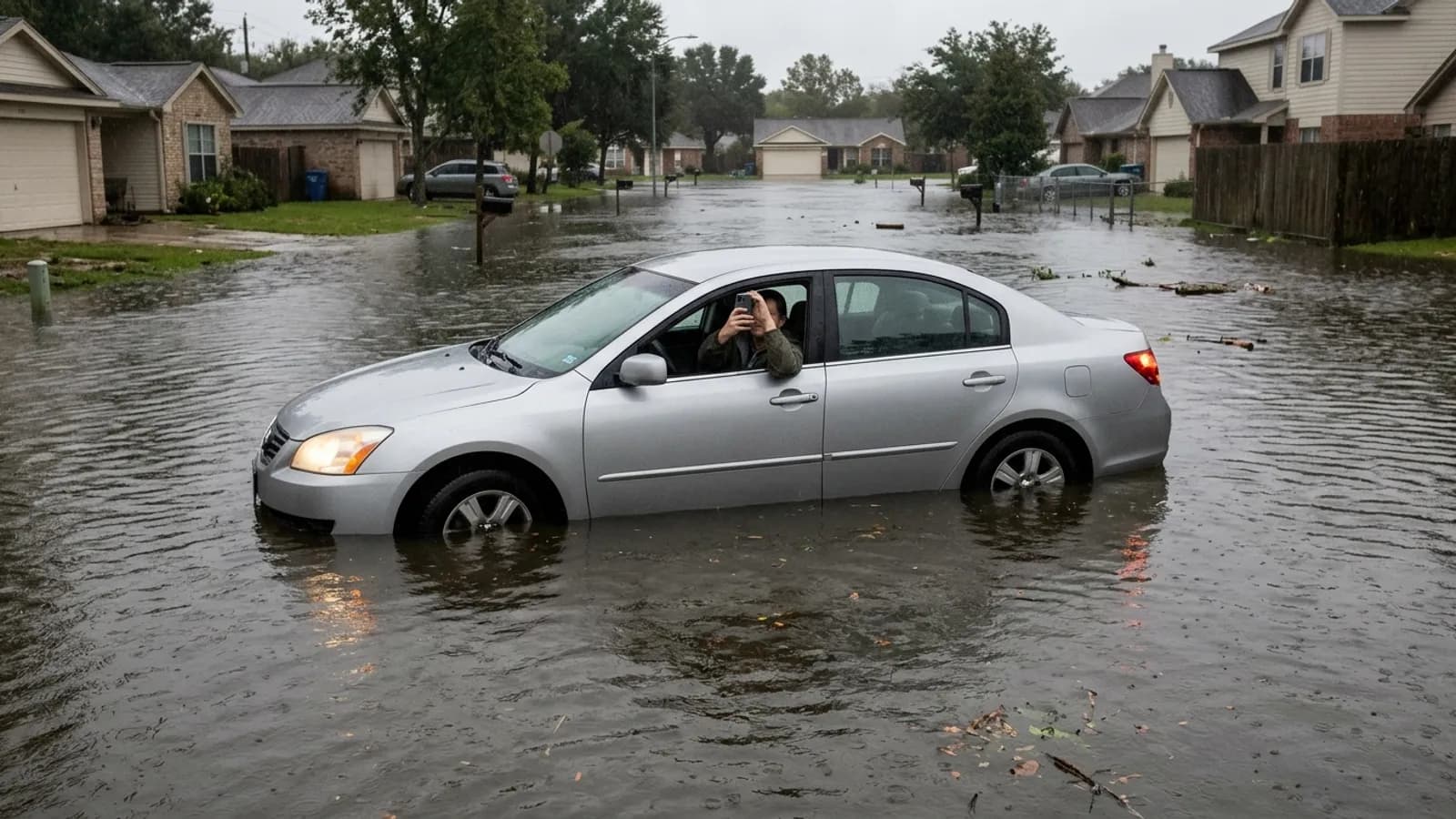
Does Car Insurance Cover Flood Damage?
Flood damage claims under comprehensive coverage — hydro-locked engines, flooded interiors, storm surge — and liability-only policies pay none of it.
Read guide