
Car Insurance in Louisiana: Minimums, Costs, and How to Save (2026)
Car insurance in Louisiana costs roughly $2,400–$3,800 per year for full coverage. Hurricanes, a top-tier uninsured rate, and litigation pressure drive the price.
Why you can trust this guide
- Written by Daniel Reyes, AINS, former licensed P&C agent — independent insurance education publisher.
- Factual accuracy reviewed and signed off by Marcus Hale, CPCU, AINS, licensed P&C agent (Independent insurance reviewer).
- Every factual claim traces to a regulator, statute, or policy document — sources are listed at the bottom of the page.
- Last verified ; time-sensitive guides are re-checked at least twice a year. Read our editorial policy.

On this page
Car insurance in Louisiana commonly costs $2,400–$3,800 per year for full coverage — among America's most expensive — with a minimum-liability policy running roughly 30–40% of that. Louisiana's pricing signature is a compounding one: hurricane exposure, one of the nation's highest uninsured-driver shares, a litigation-heavy claims history, and New Orleans–Baton Rouge metro density.
What Louisiana drivers pay
| Profile | Typical annual premium |
|---|---|
| Full coverage, clean record, statewide | $2,400–$3,800 |
| Minimum liability only (15/30/25) | Roughly 30–40% of the full-coverage figure |
| New Orleans metro | $2,600–$4,200 per year |
| Baton Rouge metro | Near the top of the band |
| One at-fault crash | +25–50% |
| Teen driver added to the household | +$2,000–$5,000 |
The New Orleans figure comes from the New Orleans city guide. Louisiana's statewide average tops most of the country — the state's combination of storm exposure and uninsured-driver load does what big-metro density does elsewhere, even in its smaller cities. See how to lower car insurance for the levers; in Louisiana, annual re-quoting is mandatory practice, because carriers enter and exit the storm-stressed market regularly.
What Louisiana law requires
- Minimum liability is 15/30/25 — $15,000 bodily injury per person, $30,000 per accident, $25,000 property damage. The limits rose from 15/25/10 on August 1, 2023; the Louisiana Department of Insurance confirms the current floor.
- The system is tort (at-fault). The driver who causes the crash pays the other side's injury and property claims; Louisiana requires no PIP.
- UM/UIM coverage is included unless rejected in writing. Louisiana's uninsured-motorist default is one of the strongest in the country — see what uninsured motorist coverage is.
- Louisiana's 2025 insurance reforms reshaped the claims environment — the "no pay, no play" threshold for uninsured claimants rose to $100,000, and the jury-trial threshold dropped to $10,000, both aimed at claim costs.
- The Louisiana Department of Insurance (LDI) licenses carriers, publishes consumer guides, and takes written complaints when claims stall.
The Louisiana claim landscape
- Hurricane wind and flood damage — Katrina (2005), Ida (2021), and annual tropical systems make wind, debris, and rising-water damage a structural Louisiana claim pattern; comprehensive pays the vehicle damage, including flooded-car totals that arrive by the thousands in landfall years.
- Uninsured-driver claims — with an uninsured share near or above one in five (top-tier nationally), Louisiana injury claims route through UM/UIM more than through at-fault liability, and carriers price that gap into every policy.
- Litigation-pressure claims — Louisiana's long-standing jury-trial threshold and claim-litigation culture inflated injury-claim severity for years; the 2025 reforms (no-pay-no-play at $100,000, jury threshold at $10,000) target exactly that cost driver.
- Metro collisions and theft — New Orleans' dense grid, tourist corridors, and I-10 traffic plus Baton Rouge's I-12 commute load generate the state's highest crash frequency and metro theft claims.
- Carrier-exit instability — hurricane losses have pushed multiple carriers out of Louisiana in recent years, shrinking competition and repricing the remaining market — a structural premium driver unique to storm states.
- Cajun-corridor flooding — the bayou parishes south of Baton Rouge (Terrebonne, Lafourche, Vermilion) flood outside hurricane seasons too: tropical-disturbance rain events put vehicles underwater in places storm names never reach, all comprehensive claims.
Coverage setup that fits Louisiana
- Liability at 100/300/100. Louisiana's 15/30/25 floor is among the thinnest in the country relative to its claim costs — one hospital stay exhausts the per-person cap, and the excess is personally owed.
- Keep UM/UIM at liability limits. Louisiana includes it unless you sign a rejection; in a state with a top-tier uninsured share, declining is the worst trade on the policy.
- Comprehensive for storm and flood exposure. Hurricanes, storm surge, and tropical flooding all route here — see how car insurance handles flood damage.
- Collision with a deductible sized to your reserve — metro fender claims dominate in New Orleans and Baton Rouge; verify the deductible before hurricane season.
- Re-quote every renewal. Louisiana's carrier churn after recent hurricane years means the cheapest carrier changes year to year; loyalty has a measurable price here.
The Louisiana premium: storm state economics in a tort market
Louisiana is the case study in how weather, litigation, and uninsured drivers compound rather than add. Hurricane exposure loads the comprehensive line — landfall years file flooded-vehicle totals by the thousands — and the claims pressure has repeatedly pushed carriers out of the state, shrinking competition. The uninsured-driver share, near or above one in five, routes injury claims through UM/UIM instead of liability, inflating the optional lines. And for years the litigation environment priced injury severity above national norms, a cost driver the 2025 reforms (no-pay-no-play at $100,000, jury threshold at $10,000) were written to address. The result: a $2,400–$3,800 full-coverage band that tops most of the country even in Louisiana's smaller cities, where geography alone would predict nothing of the kind. The practical Louisiana playbook is therefore about structure: liability well above the thin 15/30/25 floor, UM/UIM kept at full limits (it's on the policy unless you sign it away), comprehensive held through hurricane season on anything worth keeping, and a hard annual re-quote habit — in Louisiana's unstable market, last year's carrier is rarely this year's cheapest. The Louisiana Department of Insurance tracks carrier solvency actions and complaint data; in a market that has reshaped itself after every major landfall, that regulator page is the first stop before renewing with anyone.
Related guides
Louisiana drivers connect with the New Orleans metro guide and the storm-claim mechanics behind the state's most expensive lines.
- Car Insurance: The Complete Guide — the hub for coverage types and how Louisiana's thin minimums compare nationally.
- Car Insurance in Mississippi — the eastern neighbor, at $1,600–$2,400 per year for full coverage.
- Does Car Insurance Cover Hail Damage? — how comprehensive handles the storm perils beyond wind and flood.
- Average Cost of Car Insurance in 2026 — national benchmarks against Louisiana's $2,400–$3,800 per year.
- How to Switch Car Insurance — re-shop without a lapse in a market where carriers enter and exit.
Car insurance in other states
Every state prices and regulates differently — compare the neighbors:
Sources
- Louisiana Department of Insurance — current Louisiana requirements and consumer help
- NAIC — Auto insurance consumer resources
- III — Auto insurance facts and statistics
Frequently asked questions
How much is car insurance in Louisiana?
Full coverage in Louisiana commonly runs $2,400–$3,800 per year — consistently among the nation's most expensive — while a 15/30/25 minimum-liability policy costs roughly 30–40% of that. New Orleans prices highest at $2,600–$4,200 per year; Baton Rouge follows, and the Cajun parishes and northern parishes sit below the metro line but still above national norms.
What are Louisiana's minimum car insurance requirements?
Louisiana requires 15/30/25 liability — $15,000 per person, $30,000 per accident for injuries, and $25,000 for property damage — per the Louisiana Department of Insurance (the limits were raised from 15/25/10 in 2023). The state is tort-based with no PIP requirement, and uninsured/underinsured motorist coverage is included unless you reject it in writing.
Why is Louisiana car insurance so expensive?
Four compounding factors: hurricane and tropical-storm exposure feeding comprehensive claims, one of the nation's highest uninsured-driver shares (roughly one in five or more), a litigation environment that inflated injury-claim costs for years, and dense metro claim patterns in New Orleans and Baton Rouge. Carrier exits after recent hurricane years tightened competition further.
Is uninsured motorist coverage required in Louisiana?
Yes — Louisiana includes uninsured/underinsured motorist coverage in every policy unless you reject it in writing. With one of the country's largest uninsured-driver populations, UM is the coverage most likely to pay your own injury claim; the Louisiana Department of Insurance consistently warns against signing the rejection form.
Does car insurance cover flood damage in Louisiana?
Yes — rising-water damage from hurricanes, storm surge, and heavy rain is a comprehensive-coverage peril that pays up to actual cash value minus the deductible. Flooded-car totals are routine in Louisiana landfall years; comprehensive handles them. A liability-only policy pays nothing for flood damage to your own vehicle.
How we researched this guide
Car insurance pricing is set per driver, per ZIP code — so our guides anchor on regulator and industry statistics and explain the factors, not a fake exact price.
- Premium ranges are anchored to NAIC statewide average-expenditure data, the most complete public dataset on what drivers actually pay per state.
- State minimum-coverage requirements are checked against each state's motor-vehicle financial-responsibility statute and the state insurance department's consumer pages.
- What a coverage actually pays for is verified against policy declarations and specimen forms, not marketing copy.
- Discount and surcharge rules cite the state DOI consumer bulletin where each state regulates them differently — for example credit-based insurance scores, which most states permit but a few ban.
Where facts vary by state or insurer, we publish the range and the reason for the variation rather than a single misleading average. We do not sell insurance, take money from insurers for coverage, or publish claim amounts we cannot trace to a source.
Sources
The primary sources behind the facts on this page. Last verified November 10, 2026.
- IIHS — Insurance Institute for Highway Safety — crash-test data, vehicle loss statistics, and safety-feature research.
- NHTSA — National Highway Traffic Safety Administration — recalls, crash data, and state traffic-safety requirements.
- FMCSA — Federal Motor Carrier Safety Administration — commercial vehicle and carrier insurance requirements.
- NAIC — National Association of Insurance Commissioners — model regulations, consumer guides, and industry statistics.
- Find your state insurance regulator (NAIC directory) — every state insurance department — the authority for your state's rules and complaint filing.
- Insurance Information Institute (III) — industry statistics and consumer explainers we cross-check against regulator publications.
Rules that vary by state are verified against the state insurance department's consumer pages — find yours via the NAIC directory above.
Keep reading
Car Insurance: The Complete Guide
Car insurance bundles liability, collision, comprehensive, and medical coverage — this guide explains state minimums, full coverage, and how to lower the premium.
Read guide
Car Insurance in New Orleans, LA: Costs and Guide (2026)
Car insurance in New Orleans costs about $2,600–$4,200 per year, with Louisiana's litigation climate, roughly one-in-four uninsured drivers, and storm exposure.
Read guide
How to Lower Car Insurance: 12 Ways That Actually Work
How to lower car insurance: re-shop every renewal, raise deductibles, trim coverage on old cars, stack discounts, and fix the rating factors you control.
Read guide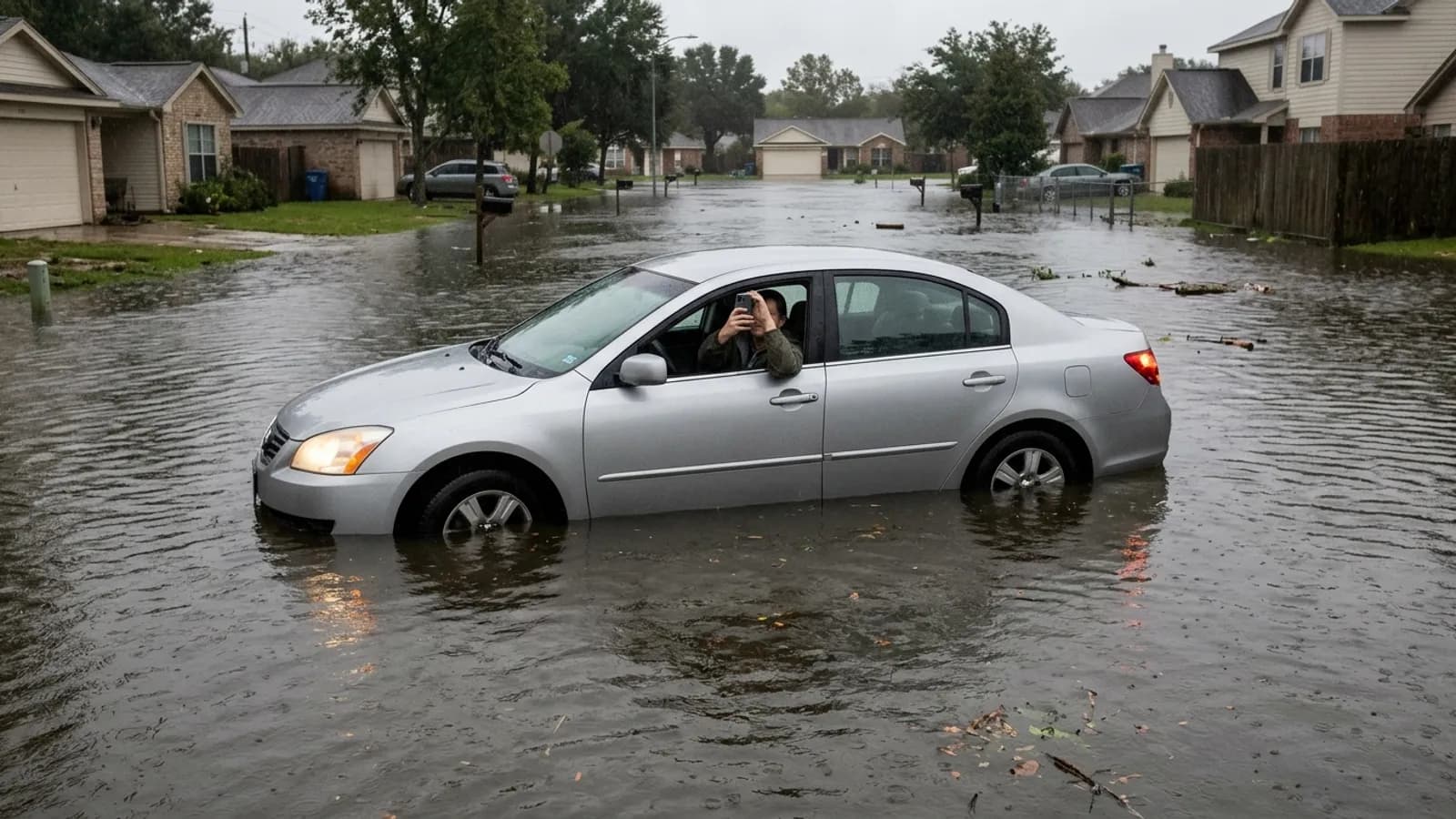
Does Car Insurance Cover Flood Damage?
Flood damage claims under comprehensive coverage — hydro-locked engines, flooded interiors, storm surge — and liability-only policies pay none of it.
Read guideWhat Is Uninsured Motorist Coverage?
Uninsured motorist (UM) coverage pays your injuries when an at-fault driver has no insurance — including hit-and-run drivers — and UIM pays when limits fall short.
Read guide