
Travel Insurance for the Maldives: Do You Need It and What It Costs (2026)
Travel insurance for the Maldives is essential: atoll transfers run by seaplane and boat, decompression claims need dive coverage, and a policy costs 4–10% of trip.
Why you can trust this guide
- Written by Daniel Reyes, AINS, former licensed P&C agent — independent insurance education publisher.
- Factual accuracy reviewed and signed off by Marcus Hale, CPCU, AINS, licensed P&C agent (Independent insurance reviewer).
- Every factual claim traces to a regulator, statute, or policy document — sources are listed at the bottom of the page.
- Last verified ; time-sensitive guides are re-checked at least twice a year. Read our editorial policy.
On this page
Yes — travel insurance for the Maldives is essential. Malé hospitals handle basics, resorts transfer serious cases by seaplane and boat toward Sri Lanka, India, or Dubai, and decompression claims ride the same logistics.
Do you need travel insurance for the Maldives?
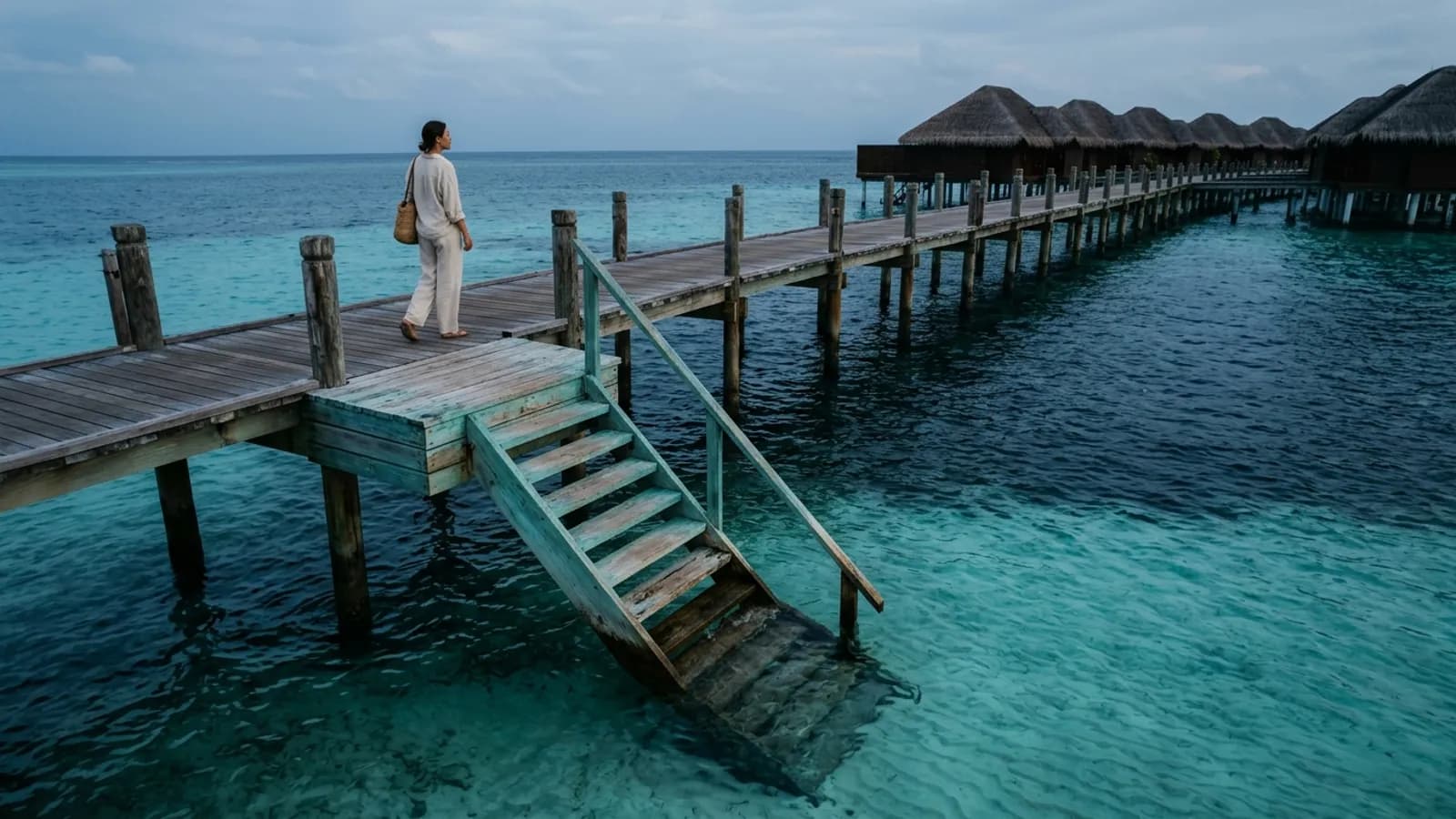
Tourist entry grants a free visa with no insurance check, but dive packages often require dive coverage at booking, and the geography makes the medical case unarguable. The Maldives spreads its resorts across atolls reached by seaplane and speedboat; Malé hospitals handle basics, and the serious-case path runs from the resort clinic to Malé by seaplane or boat, then onward by air to Sri Lanka, India, or Dubai — the longest medical logistics chain in the Indian Ocean. US plans hold no Maldivian network, Medicare stops at the border, and resort clinics bill at the time of treatment. The claim mix is marine-specific: decompression sickness from the atoll dive sites, marine-life injuries, and the monsoon-season (May–October) disruptions that strand transfers. A $500,000–$1,000,000 emergency medical evacuation limit is the number this destination genuinely requires. Resort doctors stabilize; the Indira Gandhi Memorial Hospital in Malé is the domestic step before any international flight.
What a Maldives policy must cover
| Coverage | Why it matters in the Maldives | Target amount | | | --- | --- | | Emergency medical | Malé hospitals and resort clinics bill visitors; US plans have no local network | $100,000+ | | Emergency medical evacuation | Seaplane-to-Malé-to-Dubai routing is the serious-case path — five-to-six-figure cost | $500,000–$1,000,000 | | Trip cancellation | Overwater villa weeks and seaplane packages are prepaid and monsoon-exposed | 100% of prepaid, non-refundable costs | | Baggage and dive gear | Regulators and camera housing travel checked through Malé | Per-item caps matched to gear value |
Monsoon exposure makes the trip cancellation coverage line concrete: overwater villa weeks are booked a year out and cancel on a sliding scale that reaches 100% inside a month, so check how weather-halted seaplanes trigger interruption benefits before booking the wet-season dates.
What it costs for the Maldives
Maldives policies price at 4–10% of prepaid trip cost — and the trips run expensive: an $8,000 resort week prices a comprehensive policy at about $320–$800 per traveler. The evacuation limit and the dive rider are the Maldives-specific levers, followed by age. Cancel For Any Reason (CFAR) coverage adds roughly 50% to the premium and suits monsoon-season bookings. Buy within 14–21 days of the first trip payment to preserve the pre-existing condition waiver and CFAR eligibility on most plans. Medical-only plans still need the $500,000-plus evacuation floor; what they drop is the prepaid-villa cancellation side.
Maldives-specific risks and exclusions
- Seaplane and boat medical transfers. Every serious case moves by resort seaplane or speedboat to Malé before any air ambulance — the exclusion rider language on marine transport deserves a read.
- Decompression sickness. The specialty claim: hyperbaric capability is limited, so dive accidents ride the same seaplane-to-Dubai chain, and dive packages often require dive insurance at booking. The nearest recompression capability sits in Malé; definitive treatment often continues abroad.
- Marine-life injuries. Stingray, stonefish, and reef cuts are ordinary claims that need imaging and sometimes surgical removal at resort prices; the dive clause governs the treatment of underwater incidents.
- Monsoon season. May–October swell cancels seaplanes and water activities in minutes during squalls; weather-driven cancellations are covered reasons on standard plans, and the stranded-night costs ride on the interruption half.
Filing a claim from the Maldives
- Call the 24/7 assistance line at the first sign of a dive injury — pre-authorization for the seaplane transfer and the hyperbaric chain is where claims are won or lost.
- Let the assistance provider coordinate the resort-to-Malé transfer and the onward air ambulance to Sri Lanka, India, or Dubai.
- Keep itemized invoices from the resort clinic and the Malé facility, plus the dive operator's incident report.
- Photograph damaged baggage and gear within the notification window.
- Submit seaplane and resort documentation for monsoon-driven interruption claims before the policy deadline.
Related guides
The Maldives shares the Indian Ocean's evacuation-distance logic with Bali and Thailand, and Fiji mirrors the atoll-remoteness math on the far side of the Pacific.
- Travel Insurance for Bali, Indonesia — the scooter-claim mirror and Singapore evacuation route.
- Travel Insurance for Thailand — the Bangkok hospitals that anchor the region's serious care.
- Travel Insurance for Fiji — the South Pacific's version of the same atoll-remoteness argument.
- Adventure Sports Travel Insurance: Skiing, Diving, and Climbing Coverage — dive riders and hyperbaric treatment coverage explained.
- Travel Insurance: The Complete Guide — the coverage framework applied to the Maldives.
Travel insurance for other destinations in the region
Planning a multi-country trip? The regional guides carry entry rules and medical realities per destination:
Sources
Frequently asked questions
Do I need travel insurance for the Maldives?
Yes. Tourist entry grants a free visa with no insurance mandate, but the resort-atoll geography makes the decision: Malé hospitals handle basics, and anything serious transfers by seaplane or boat toward Sri Lanka, India, or Dubai. Dive packages often require dive coverage, so the evacuation limit and the dive clause are both real requirements on this destination.
How much medical and evacuation coverage do I need for the Maldives?
Carry $100,000 or more in emergency medical benefits and $500,000–$1,000,000 in emergency medical evacuation coverage. The Maldives pairs world-class diving with the longest medical logistics in the Indian Ocean: decompression cases and serious emergencies move by seaplane and boat to Malé, then by air to Colombo, Mumbai, or Dubai at five-to-six-figure cost.
Does my U.S. health insurance work in the Maldives?
No. US plans hold no Maldivian provider network, Medicare and Medicaid stop at the border, and resort clinics plus Malé facilities expect payment at the time of treatment. A policy that pays providers directly or advances cash is the practical mechanism, and its evacuation benefit funds the seaplane-and-air-ambulance chain the atoll geography forces.
What does travel insurance for the Maldives cost?
Plan on roughly 4–10% of your prepaid trip cost. An $8,000 Maldives resort week prices a comprehensive policy at about $320–$800 per traveler. The $500,000-plus evacuation limit and the dive rider are the Maldives-specific cost drivers, and Cancel For Any Reason (CFAR) coverage adds about 50% to the premium for monsoon-season flexibility.
Is diving covered by travel insurance for the Maldives?
Only where the policy's dive clause is active, and many dive packages in the Maldives require dive coverage at booking anyway. Decompression sickness rides the same seaplane logistics as every other serious case, so a dive-inclusive medical policy — or DAN-style coverage paired with a travel policy — is the structure that actually pays the hyperbaric chain.
Does the monsoon season change the coverage math for the Maldives?
Yes. The southwest monsoon runs May through October and brings the rain and swell that cancel seaplane transfers and water activities, while the January–April dry season concentrates bookings. Standard plans cover weather-driven cancellations as covered reasons, and CFAR coverage closes the gap for travelers who want refundability beyond the covered-reason list.
How we researched this guide
Travel insurance pays on documented triggers, so our guides focus on what activates each benefit and what documentation the claim needs.
- Coverage triggers (trip cancellation reasons, medical evacuation standards, pre-existing waivers) are verified against policy wordings and the state DOI consumer guides that regulate them.
- Visa-entry insurance requirements (e.g., Schengen) are checked against U.S. State Department country guidance.
- Air-passenger rights cited in delay/cancellation guides come from U.S. DOT consumer rules, not airline policies.
- Destination health-risk context comes from CDC traveler health notices.
Where facts vary by state or insurer, we publish the range and the reason for the variation rather than a single misleading average. We do not sell insurance, take money from insurers for coverage, or publish claim amounts we cannot trace to a source.
Sources
The primary sources behind the facts on this page. Last verified November 10, 2026.
- U.S. State Department — travel — country conditions, visa insurance requirements, and emergency assistance programs.
- CDC — traveler health — destination health risks and vaccination requirements that affect medical coverage.
- U.S. DOT — Aviation Consumer Protection — airline passenger rules on cancellations, delays, and refunds.
- NAIC — National Association of Insurance Commissioners — model regulations, consumer guides, and industry statistics.
- Find your state insurance regulator (NAIC directory) — every state insurance department — the authority for your state's rules and complaint filing.
- Insurance Information Institute (III) — industry statistics and consumer explainers we cross-check against regulator publications.
Rules that vary by state are verified against the state insurance department's consumer pages — find yours via the NAIC directory above.
Keep reading

Travel Insurance: The Complete Guide
Travel insurance reimburses prepaid trip costs after covered cancellations and pays medical bills abroad — how policies work, what they cost, and when they pay.
Read guide
Travel Insurance for Bali, Indonesia: Do You Need It and What It Costs (2026)
Travel insurance for Bali is worth it: scooter accidents drive claims, serious cases evacuate to Singapore, and a $500,000 evacuation limit costs 4–10% of trip.
Read guide
Travel Insurance for Thailand: Do You Need It and What It Costs (2026)
Yes, buy travel insurance for Thailand: private hospitals bill foreigners premium rates, motorbike accidents drive claims, and premiums run 4–10% of trip cost.
Read guide
Travel Insurance for Fiji: Do You Need It and What It Costs (2026)
Travel insurance for Fiji is essential: serious cases fly to Auckland or Brisbane at five-to-six-figure cost, and $500,000+ evacuation coverage runs 4–10% of trip.
Read guide
Adventure Sports Travel Insurance: Skiing, Diving, and Climbing Coverage
Standard travel policies exclude or cap adventure sports, and off-piste skiing, deep scuba, and climbing need riders or specialty coverage priced 10–40% higher.
Read guide