
Travel Insurance for Japan: Do You Need It and What It Costs (2026)
Travel insurance for Japan is worth it: superb hospitals bill tourists 100% upfront, earthquake and typhoon season add risks, and a policy costs 4–10% of trip.
Why you can trust this guide
- Written by Daniel Reyes, AINS, former licensed P&C agent — independent insurance education publisher.
- Factual accuracy reviewed and signed off by Marcus Hale, CPCU, AINS, licensed P&C agent (Independent insurance reviewer).
- Every factual claim traces to a regulator, statute, or policy document — sources are listed at the bottom of the page.
- Last verified ; time-sensitive guides are re-checked at least twice a year. Read our editorial policy.
On this page
Yes — travel insurance for Japan is worth buying. Japan's superb hospitals bill non-residents 100% upfront, the 30% co-payment system never applies to tourists, and earthquake and typhoon season add the natural-disaster layer.
Do you need travel insurance for Japan?
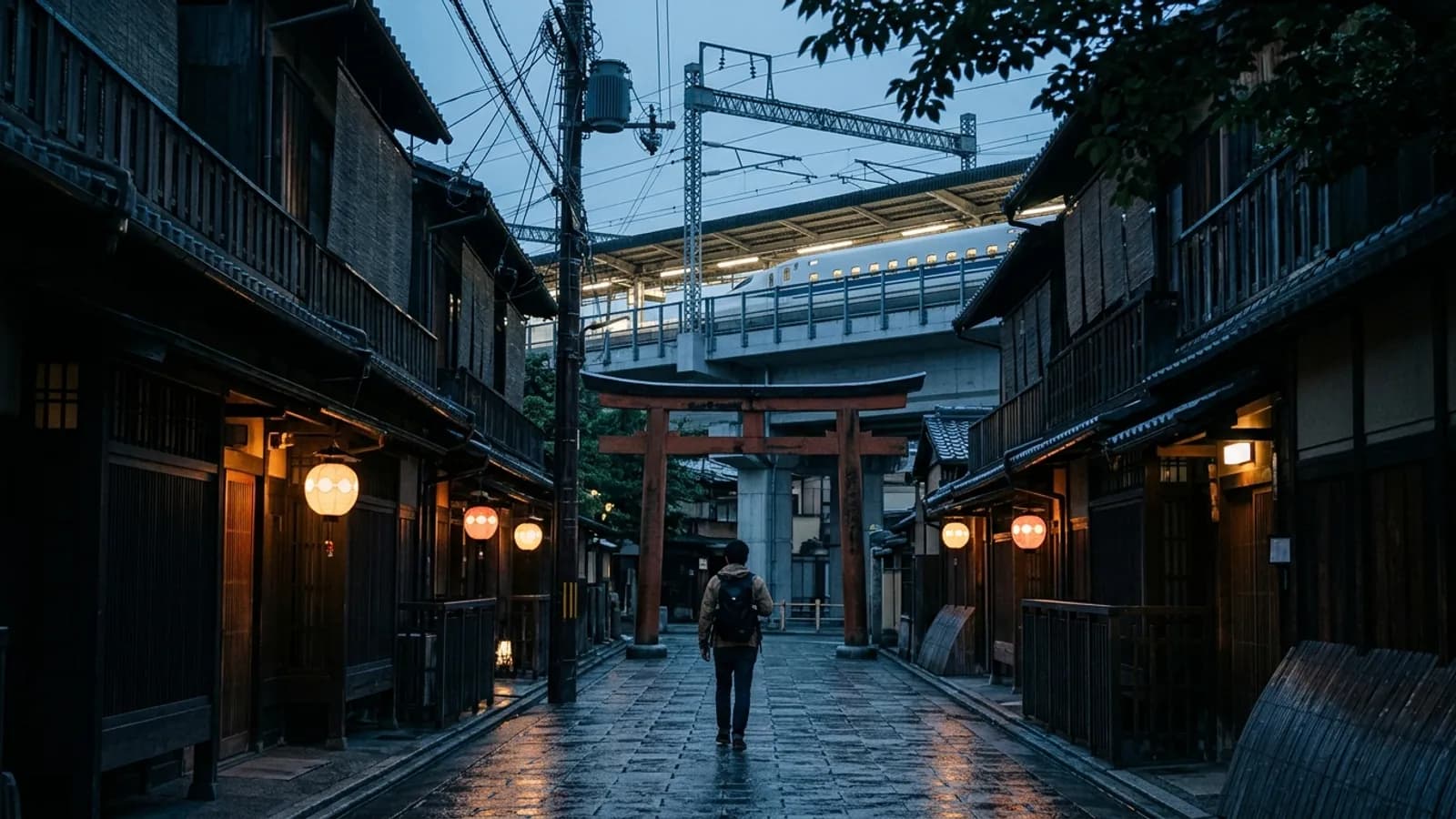
US visitors enter visa-free for 90 days and no insurance is checked at the border, so the case rests on billing mechanics. Japan's hospital care is world-class, and tourists pay full private rates upfront — 100%, because the 30% co-payment applies only to residents enrolled in the national system — so a serious hospitalization bills into the tens of thousands of dollars, with Japanese-first paperwork at the billing desk. US plans hold no Japanese network and Medicare stops at the border, which makes policies that pay providers directly especially valuable here. The claim mix is Japan's own: earthquakes and tsunamis that some policies exclude by name, typhoon-season flight and rail disruptions from August through October, and Mt. Fuji climbing-season injuries each July–September. A $250,000 emergency medical evacuation limit covers the repatriation leg the serious cases produce. Tokyo's St. Luke's and the hospitals with international desks bill in full — the 30% resident discount never applies at the tourist window. JR documents typhoon-driven shinkansen delays, which makes the interruption paperwork mechanical.
What a Japan policy must cover
| Coverage | Why it matters in Japan | Target amount | | | --- | --- | | Emergency medical | Tourists pay 100% upfront at excellent private rates; US plans have no local network | $100,000+ | | Emergency medical evacuation | Repatriation flights home are the expensive leg after a major event | $250,000+ | | Trip cancellation and interruption | Prepaid ryokan stays, JR passes, and blossom-season bookings cancel under strict penalties | 100% of prepaid, non-refundable costs | | Baggage | Rail-heavy itineraries move luggage through stations and forwarding services daily | Per-item caps matched to declared value |
Check the natural-disaster language before buying — the act of god clause is where earthquake exclusions hide, and Japan is the destination where it fires.
What it costs for Japan
Japan policies price at 4–10% of prepaid trip cost — a $6,000 itinerary runs about $240–$600 per traveler. Age is the sharpest lever here because Japan draws older travelers heavily; the travel insurance for seniors page covers what changes after 65. Cancel For Any Reason (CFAR) coverage adds roughly 50% to the premium. Buy within 14–21 days of the first trip payment to preserve the pre-existing condition waiver and CFAR eligibility on most plans. Medical-only plans fit the short city trip; the two-week rail itinerary justifies the bundle.
Japan-specific risks and exclusions
- Earthquakes and tsunamis. Some policies exclude earthquake-related claims outright; read the natural-disaster language for the country with the most famous seismic risk on any itinerary. The coverage question is whether earthquake-driven cancellations count as covered reasons or fold into the exclusion.
- Typhoon season. August–October storms close Narita and Kansai for 24–48 hours around major landfalls; unforeseen typhoons are covered interruption reasons, named-before-purchase storms are not.
- Mt. Fuji and hiking injuries. The July–September climbing season produces altitude and fall injuries above the 8th-station huts on the Yoshida trail; climbing registration is required on all four trails, and the adventure-sports clause governs the treatment side.
- Language friction at billing. Japanese-first paperwork makes the assistance line's interpreter support a practical benefit — the exclusion rider terms matter less than the service layer here.
Filing a claim from Japan
- Call the 24/7 assistance line first — the interpreter service bridges the Japanese-first paperwork at admission and billing, and pre-authorization protects the claim.
- Ask whether the hospital accepts direct payment from the insurer; Tokyo and Osaka international hospitals often do.
- Keep every itemized invoice and the medical certificate the hospital issues on request; Japanese billing itemizes treatment points precisely.
- For mountain injuries, get the rescue or patrol documentation from the prefecture.
- Submit airline and JR documentation for typhoon-driven interruption claims before the policy deadline.
Related guides
Japan anchors the East Asia circuit, and its neighbors repeat the full-rate-tourist-billing structure while the seniors product covers the age curve Japan's travelers actually span.
- Travel Insurance for South Korea — the neighbor with the same visitor-billing and upfront-payment norms.
- Travel Insurance for Thailand — premium private hospitals and the motorbike exclusion next door.
- Is Travel Insurance Worth It? A Decision Framework — the cost-versus-exposure test behind the Japan verdict.
- What Is Travel Insurance? Types, Coverage, and How It Works — the category math behind the Japan verdict.
- Travel Insurance: The Complete Guide — the coverage framework applied to Japan.
Destination guides travelers pair with this one
Travelers to this destination most often also price:
Sources
Frequently asked questions
Do I need travel insurance for Japan?
Yes. US visitors enter visa-free with no insurance mandate, but Japan's superb hospitals bill non-residents 100% upfront — the 30% co-payment applies only to enrolled residents — and a serious hospitalization runs into the tens of thousands of dollars. Language barriers make policies with direct-provider-payment and interpreter support especially valuable on this destination.
Does my U.S. health insurance work in Japan?
No. US plans hold no Japanese provider network, Medicare and Medicaid stop at the border, and Japanese hospitals collect full private rates from tourists at the time of treatment, with Japanese-first paperwork. A policy whose assistance service arranges direct payment or advances cash removes the pay-first problem and the language friction at the billing desk.
How much medical and evacuation coverage do I need for Japan?
Carry $100,000 or more in emergency medical benefits and $250,000 or more in emergency medical evacuation coverage. A serious hospitalization bills into the tens of thousands at Japanese rates, and repatriation flights home after a major event are the expensive leg. Mountain injuries from Mt. Fuji and the Japan Alps complete the claim mix.
What does travel insurance for Japan cost?
Plan on roughly 4–10% of your prepaid trip cost. A $6,000 two-week Japan itinerary prices a comprehensive policy at about $240–$600 per traveler. Age moves the price sharply — Japan is a top destination for travelers over 65 — and Cancel For Any Reason (CFAR) coverage adds about 50% to the premium.
Are earthquake-related claims excluded from travel insurance for Japan?
Sometimes — which is exactly why the natural-disaster language deserves a read for this country specifically. Some policies exclude earthquake-related claims; others cover injuries and trip disruptions from named natural events. Typhoon season adds the same question from August through October, when storms close airports and shinkansen lines.
Does trip cancellation coverage matter for Japan?
Yes. Prepaid ryokan stays, JR passes, and cherry-blossom-season bookings cancel under strict penalties, and typhoon-driven flight cancellations interrupt September itineraries routinely. Trip cancellation reimburses prepaid costs for covered reasons, and trip interruption pays the unused portion plus changed return travel when weather or illness cuts the trip short.
How we researched this guide
Travel insurance pays on documented triggers, so our guides focus on what activates each benefit and what documentation the claim needs.
- Coverage triggers (trip cancellation reasons, medical evacuation standards, pre-existing waivers) are verified against policy wordings and the state DOI consumer guides that regulate them.
- Visa-entry insurance requirements (e.g., Schengen) are checked against U.S. State Department country guidance.
- Air-passenger rights cited in delay/cancellation guides come from U.S. DOT consumer rules, not airline policies.
- Destination health-risk context comes from CDC traveler health notices.
Where facts vary by state or insurer, we publish the range and the reason for the variation rather than a single misleading average. We do not sell insurance, take money from insurers for coverage, or publish claim amounts we cannot trace to a source.
Sources
The primary sources behind the facts on this page. Last verified November 10, 2026.
- U.S. State Department — travel — country conditions, visa insurance requirements, and emergency assistance programs.
- CDC — traveler health — destination health risks and vaccination requirements that affect medical coverage.
- U.S. DOT — Aviation Consumer Protection — airline passenger rules on cancellations, delays, and refunds.
- NAIC — National Association of Insurance Commissioners — model regulations, consumer guides, and industry statistics.
- Find your state insurance regulator (NAIC directory) — every state insurance department — the authority for your state's rules and complaint filing.
- Insurance Information Institute (III) — industry statistics and consumer explainers we cross-check against regulator publications.
Rules that vary by state are verified against the state insurance department's consumer pages — find yours via the NAIC directory above.
Keep reading

Travel Insurance: The Complete Guide
Travel insurance reimburses prepaid trip costs after covered cancellations and pays medical bills abroad — how policies work, what they cost, and when they pay.
Read guide
Travel Insurance for South Korea: Do You Need It and What It Costs (2026)
Yes, buy travel insurance for South Korea: hospitals bill visitors upfront and in full, and premiums run 4–10% of the trip's prepaid cost.
Read guide
Travel Insurance for Thailand: Do You Need It and What It Costs (2026)
Yes, buy travel insurance for Thailand: private hospitals bill foreigners premium rates, motorbike accidents drive claims, and premiums run 4–10% of trip cost.
Read guide
Travel Insurance for Seniors: Coverage After 65 (and 75)
Senior travel insurance turns on the Medicare gap abroad, the pre-existing condition waiver, and higher medical limits — the coverage structure after 65 and 75.
Read guide
What Is Travel Insurance? Types, Coverage, and How It Works
Travel insurance reimburses prepaid trip costs after a covered cancellation or interruption and pays emergency medical and evacuation abroad — the product, defined.
Read guide