
Does Renters Insurance Cover Food Spoilage From Power Outages?
Sometimes — renters policies pay food spoilage when a covered peril causes the outage, typically capped near $500; plain grid failures are excluded.
Why you can trust this guide
- Written by Daniel Reyes, AINS, former licensed P&C agent — independent insurance education publisher.
- Factual accuracy reviewed and signed off by Marcus Hale, CPCU, AINS, licensed P&C agent (Independent insurance reviewer).
- Every factual claim traces to a regulator, statute, or policy document — sources are listed at the bottom of the page.
- Last verified ; time-sensitive guides are re-checked at least twice a year. Read our editorial policy.
On this page
Sometimes — renters policies pay food spoilage when a covered peril causes the outage, but generic grid failures are excluded under the service-interruption clause, and many policies exclude spoilage outright.
The covered-peril trigger, mapped
Food spoilage coverage is a trigger question, and the trigger table is short. The distinction it turns on is the direct versus indirect loss line: spoilage is an indirect consequence, and indirect consequences are covered only when the form says so.
| Outage cause | Standard policy | Why |
|---|---|---|
| Storm downs the power lines | Commonly covered | Covered peril caused the outage |
| Wildfire evacuation (fridge dies off-power) | Commonly covered | Part of a covered-peril event |
| Utility equipment failure, no storm | Commonly excluded | Service-interruption exclusion |
| Rolling blackout / grid failure | Not covered | No peril involved |
| You unplugged the fridge, breaker trip | Not covered | Household cause |
The service-interruption exclusion is the clause that decides most utility-side claims. Some forms restore coverage when the utility connection is on your premises, which is why the exclusion wording matters more than the general idea of coverage.
The claim math on a full fridge
The arithmetic kills most household spoilage claims before they start. A stocked refrigerator holds roughly $150–$350 of food; a chest freezer can hold $400–$800. Spoilage benefits commonly run $250–$500 when included at all, and the policy deductible — $500 is standard — applies first.
Worked example: $280 of spoiled groceries against a $500 deductible is a $0 payout on a claim that still sits on your loss history. Even the deep-freezer scenario — $700 of stored meat against a $250 sub-limit and the same deductible — nets little. Spoilage claims are worth filing mainly when the policy carries a low deductible, a no-deductible spoilage rider, or the outage rode a much larger covered loss like a fire. The claim process page covers how a filed claim affects your history and timeline either way.
The outage playbook that protects food
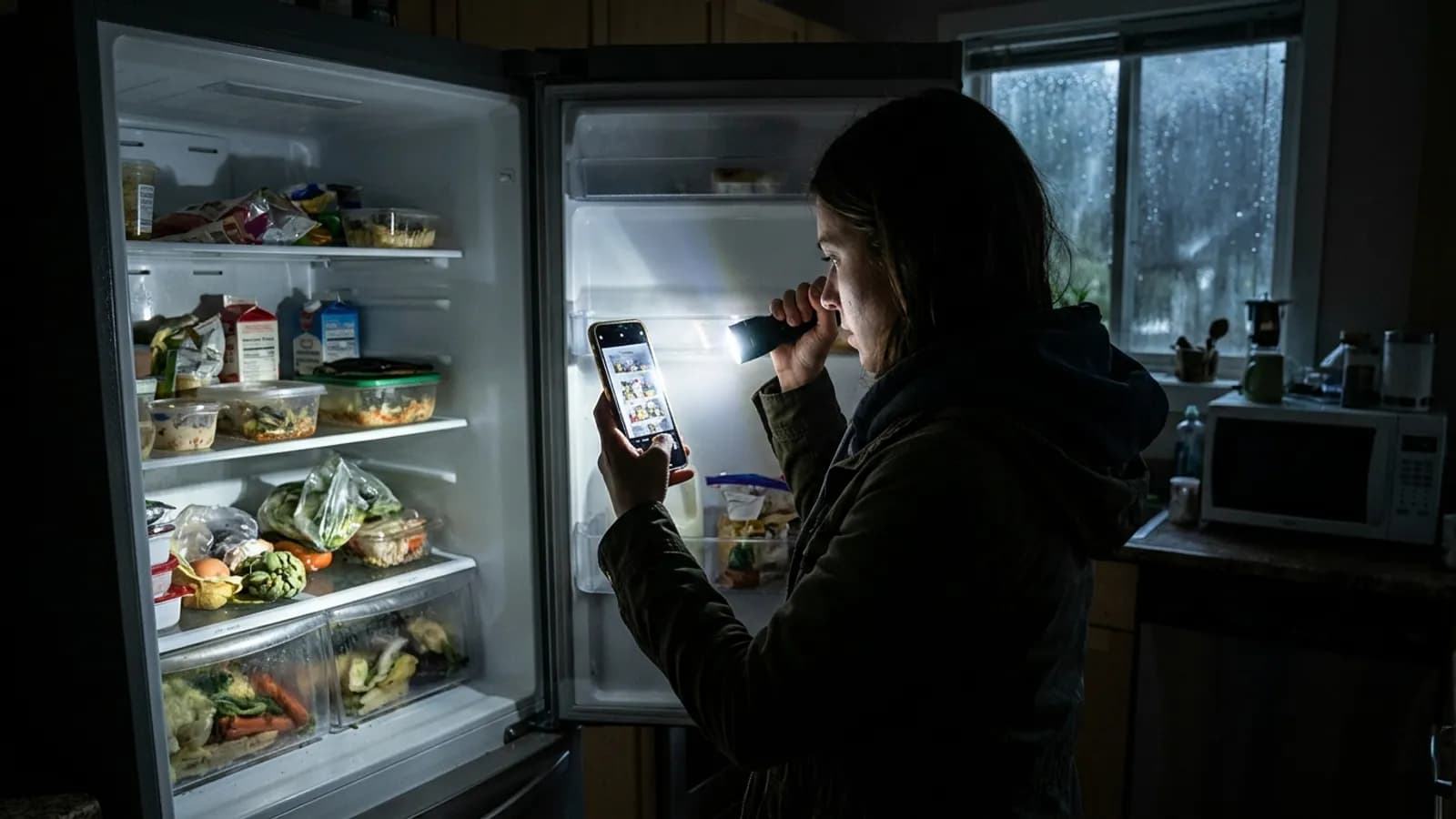
The food-safety timeline is fixed and worth knowing by heart: an unopened refrigerator keeps food safe for about four hours; a full freezer holds about 48 hours (24 if half full). The playbook follows from it:
- Keep both doors closed — every open resets the clock.
- Group freezer items together to preserve thermal mass.
- Use an appliance thermometer, not smell — the 40°F threshold is the decision line.
- Photograph the thermometer readings and the contents before disposal, for any claim above the deductible.
- Keep the utility's outage report as the trigger evidence connecting your loss to the event.
The 40°F rule and the door-discipline habit are food-safety facts from federal guidance; the documentation habit is the insurance fact. The 2021 Texas freeze made the distinction concrete: Texas renters filed thousands of spoilage claims, and the peril-at-your-location test decided which ones paid.
When the outage displaces you instead
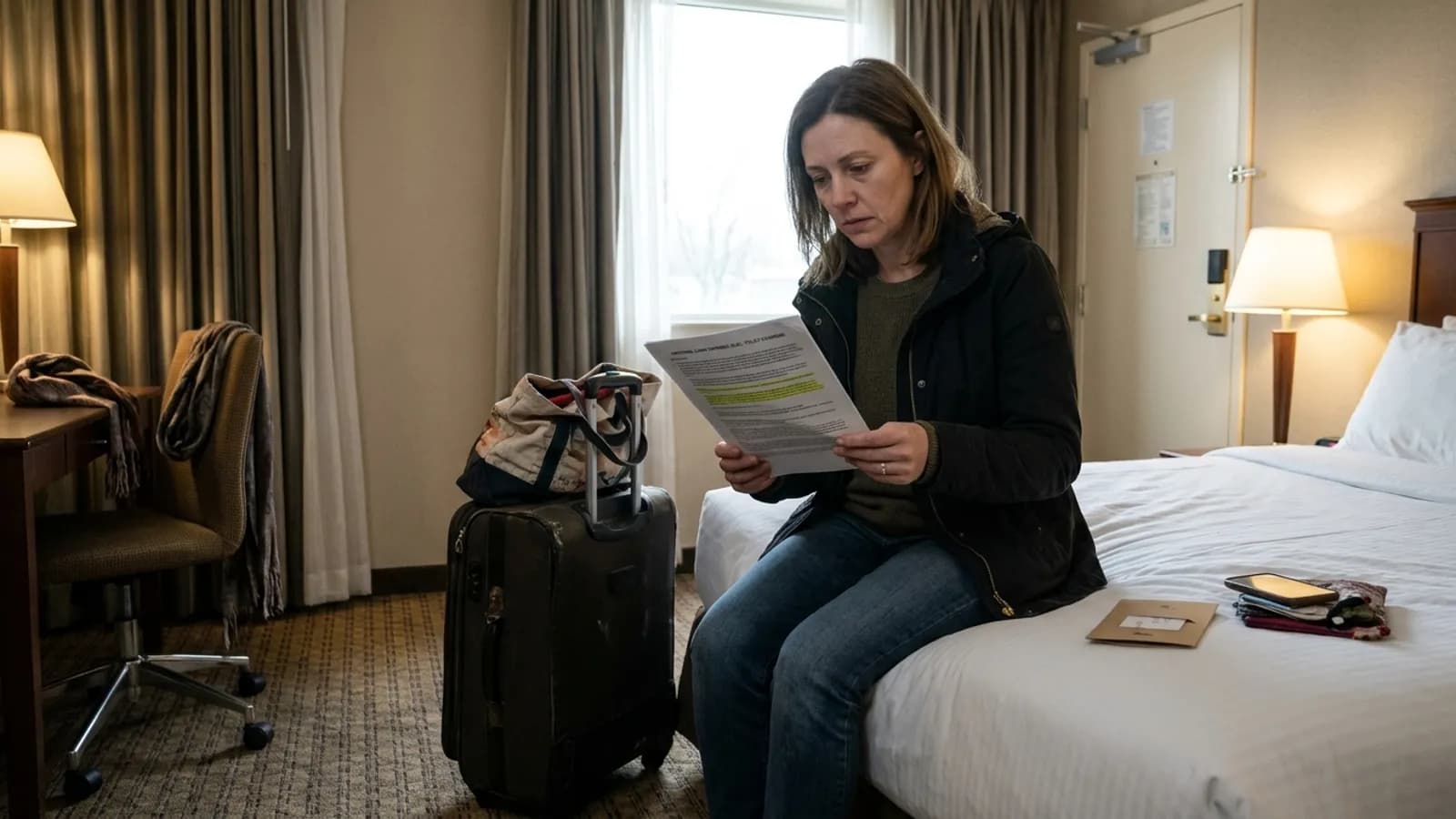
A multi-day outage raises the second question — whether the hotel stay qualifies under loss of use. Generally it does not, without property damage; civil-authority evacuation wording is the exception. The hotel stays question covers that trigger, and the two coverage lanes fail in opposite directions, which is why both belong in the same pre-storm check.
Reading the service-interruption clause
Four wordings in the spoilage and service-interruption language decide real claims, and they are worth reading before winter rather than after. The origin wording: some forms restore coverage when the interruption originates at the residence premises, which pulls a failed panel or supply line on the property back into coverage even without a storm. The waiting-period wording: a few forms apply a short wait before spoilage pays, which kills claims for short blips. The named-peril wording: coverage that attaches only to outages caused by listed perils (windstorm, fire, lightning) reads narrower than coverage that attaches to any covered-peril cause. And the sub-limit wording: the $250–$500 figure lives here, sometimes with medication folded in and sometimes named separately.
The clause is short, and the four questions it answers — what causes count, how long the wait is, what the cap is, and whether medication rides along — are exactly the questions the outage-night claim will ask.
Related guides
Spoilage connects to the outage, displacement, and exclusion questions:
- What Is Renters Insurance and How Much Does It Cost? — the policy the spoilage clause modifies, at $15–$30 per month.
- Renters Insurance in Florida: Costs and What to Know — the hurricane-outage state view, at $14–$25 per month.
- What Is a Deductible? — the math that zeroes most small spoilage claims before they start.
- The 8 Renters Insurance Mistakes That Cost Tenants Money — filing sub-deductible claims is one of the history mistakes on the list.
Sources
Frequently asked questions
Is food spoilage covered if the utility's transformer fails?
Commonly excluded under the service-interruption clause. Coverage usually requires a covered peril — storm, fire — to cause the outage. Some forms restore coverage when the interruption originates on your premises, so read the exclusion wording rather than assuming either way.
Should I file a claim for spoiled groceries?
Do the deductible math first. A $200 loss under a $500 deductible pays nothing and still adds a claim to your history. Spoilage claims earn their paperwork mainly when a rider removes the deductible or the outage rode a much larger covered loss.
Is spoiled medication covered?
Some policies extend the spoilage benefit to prescription medication; others limit it to food. Sub-limits are small — $250–$500 typical — so check the form if refrigerated medication is part of your household, and keep a cooler-and-pharmacy backup plan regardless.
Was food spoilage covered after the Texas freeze?
Policies with spoilage coverage paid when the outage traced to the covered freeze event at the residence; policies excluding spoilage — many — paid nothing. The clause, not the event, decided every claim, which is why reading your form before winter matters.
How much food spoilage coverage do I have?
Check the policy: typically $500 fixed where offered, or nothing where the exclusion stands. The endorsement is rare in the personal market, so the practical hedges are prevention — a cooler, ice, closed doors — and the food-safety clock, with an appliance thermometer and the four-hour refrigerator rule doing the rest.
How we researched this guide
Renters coverage is small and simple, but landlord requirements and state rules vary — so we verify both sides of the lease.
- What HO-4 policies cover (and the liability and loss-of-use mechanics) is verified against standard policy forms and DOI consumer guides.
- Landlord-side insurance requirements are framed against HUD tenant-rights resources, since required coverage limits appear in lease terms, not statutes.
- Cost figures are ranges by state and coverage limit, anchored to NAIC statistics.
- Disaster-aid expectations are set from FEMA guidance: federal assistance is not a replacement for coverage, and we explain exactly what it does pay.
Where facts vary by state or insurer, we publish the range and the reason for the variation rather than a single misleading average. We do not sell insurance, take money from insurers for coverage, or publish claim amounts we cannot trace to a source.
Sources
The primary sources behind the facts on this page. Last verified November 10, 2026.
- HUD — tenant rights and responsibilities — state landlord-tenant rules that affect liability requirements.
- FEMA — renters and disaster assistance — what federal disaster aid does and does not cover for tenants.
- NAIC — National Association of Insurance Commissioners — model regulations, consumer guides, and industry statistics.
- Find your state insurance regulator (NAIC directory) — every state insurance department — the authority for your state's rules and complaint filing.
- Insurance Information Institute (III) — industry statistics and consumer explainers we cross-check against regulator publications.
Rules that vary by state are verified against the state insurance department's consumer pages — find yours via the NAIC directory above.
Keep reading
Does Renters Insurance Cover Hotel Stays?
Yes — loss-of-use coverage pays hotel and extra meal costs while a covered peril makes your rental unlivable, typically up to 20% of your personal-property limit.
Read guide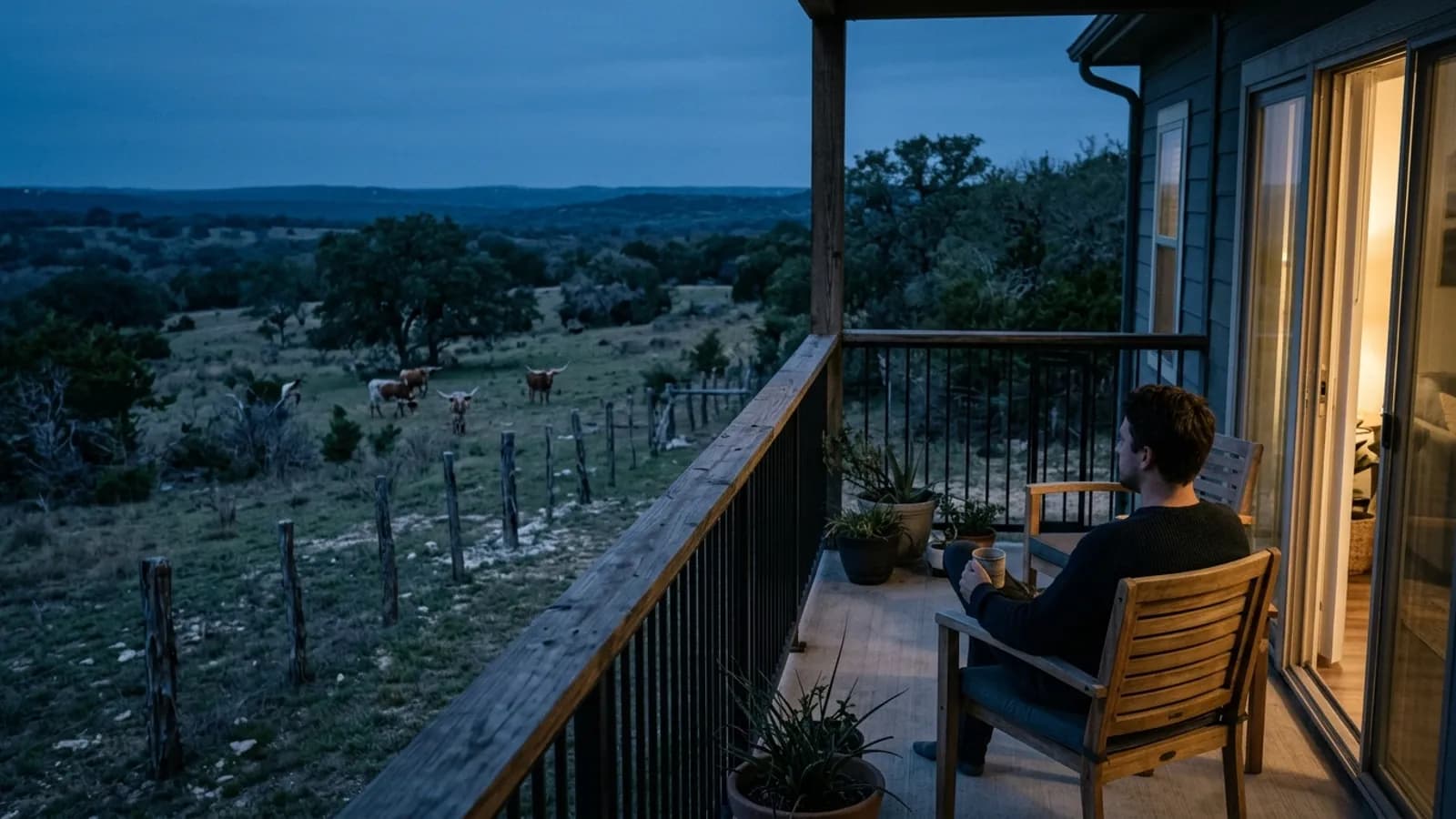
Renters Insurance in Texas: Costs and What to Know (2026)
Renters insurance in Texas costs about $15–$25 per month. DFW hail, the Uri freeze legacy, and Gulf wind-versus-flood shape what Texas tenants should set up.
Read guide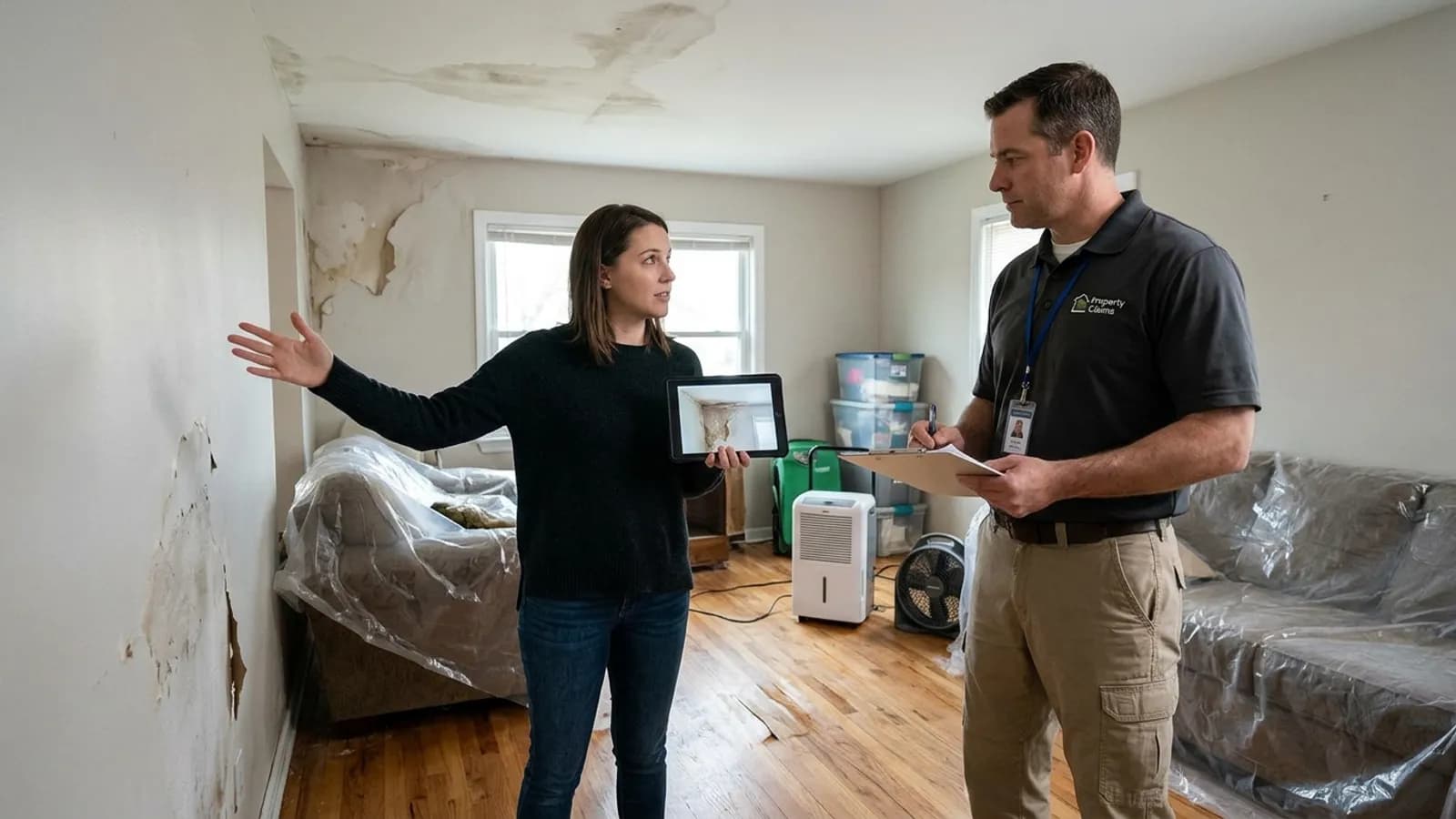
The Renters Insurance Claim Process: From Theft to Reimbursement
Renters claims are won by documentation — police report, photos before cleanup, itemized inventory — and most simple claims pay within one to two weeks.
Read guideDirect vs Indirect Loss
Direct loss is physical damage to covered property — the burned wall; indirect loss is the financial consequence — lost rent — paid under separate coverages.
Read guideWhat Is an Exclusion in Insurance?
An exclusion is a peril, property type, or situation a policy does not cover — floods, earthquakes, wear and tear — marking exactly where your protection ends.
Read guide