
Does Renters Insurance Cover Fires?
Yes — fire is the core renters peril: burned and smoke-damaged belongings are covered, loss of use pays displacement, and liability covers negligence-started fires.
Why you can trust this guide
- Written by Daniel Reyes, AINS, former licensed P&C agent — independent insurance education publisher.
- Factual accuracy reviewed and signed off by Marcus Hale, CPCU, AINS, licensed P&C agent (Independent insurance reviewer).
- Every factual claim traces to a regulator, statute, or policy document — sources are listed at the bottom of the page.
- Last verified ; time-sensitive guides are re-checked at least twice a year. Read our editorial policy.

On this page
Yes — fire is the core covered peril of renters insurance. Belongings destroyed by fire and smoke are covered up to your limit, loss of use pays hotel costs during repairs, and liability responds when your negligence started the fire.
What a fire claim actually pays
A fire claim runs three payouts in parallel. Contents: your belongings at replacement cost or actual cash value depending on the form, up to your limit — smoke-damaged textiles, heat-warped furniture, and electronics corroded by soot are all claimable. Loss of use: hotel and extra food costs while the unit is uninhabitable, paid as the increase over your normal living expenses under loss of use coverage. And the building itself is never your problem — the landlord's policy owns the structure, exactly as the fire peril on your form covers only what you own.
The contents limit is the number that matters, and the starter inventory surprises most renters: a bedroom of furniture, a closet of clothes, and a desk of electronics crosses $15,000 easily, which is why $25,000–$30,000 is the standard starting limit rather than $10,000.
When the fire starts with you
Negligence does not void fire coverage. A stove fire from distracted cooking, a candle left burning, an iron forgotten on a shirt — your belongings are covered because fire is a covered peril and ordinary carelessness is what insurance exists for. Two boundaries matter. Intentional acts are never covered, and arson investigations treat accelerant patterns accordingly. Lease violations — a prohibited grill on a balcony, a banned space heater — complicate liability more than contents: the carrier can still pay your belongings while contesting liability for damage to others.
The landlord's building claim runs through their insurer, which may pursue subrogation against the responsible party. That is a carrier-to-carrier negotiation, not a bill you receive, and your duty is limited to cooperation and truthful statements about the origin.
The smoke-damage documentation step
Smoke damages more square footage than flames, and it is the half of the claim renters under-document. Photograph every room before cleaning anything: soot on curtains, film on walls, residue inside closed drawers. Electronics deserve special attention — soot is corrosive, and devices that worked the day of the fire can fail weeks later, so power nothing on and photograph the serials. Professional restoration receipts (textile cleaning, ozone treatment) are claimable as mitigation costs.
The claims that pay cleanly are the ones with a room-by-room photo set taken before disposal; the ones that stall are the ones where the smoke layer got wiped down before anyone documented it.
Filing the fire claim, in order
- Get medical help first if anyone was injured; replace documents and medications second.
- Photograph every room before cleanup, disposal, or restoration crews arrive.
- Notify the insurer and the landlord in writing the same day.
- Keep every receipt — hotel, meals, laundry, replacements — from the first night out.
- Submit the itemized inventory with ages and values; replacement-cost claims finish only when replacement receipts are in.
The full claim process details the filing sequence, the settlement math, and the appeal path for low valuations.
The origin-and-cause investigation
Fires above trivial size get an origin-and-cause review before the payout, and the review is routine rather than adversarial. The investigator reconstructs where and how the fire started — stove, outlet, candle, appliance — from burn patterns, the appliance remains, and the occupants' statements. The tenant's role is cooperation and accurate statements: where you were, what was running, when you last used the area of origin. Inconsistencies between the account and the physical evidence are what escalate a routine claim into a fraud investigation, and material misrepresentation is the defense that can void an otherwise covered loss.
The practical consequences for the renter: do not clean the area of origin before the investigator has seen it, do not discard the failed appliance or the burnt cord that started it, and keep the receipts for everything replaced on an emergency basis. The investigation usually adds days, not weeks, and a clean origin story backed by the kitchen's actual appliance history closes fast.
Related guides
Fire claims connect to the displacement, disaster, and setup questions around them:
- Does Renters Insurance Cover Hotel Stays? — the loss-of-use math behind the hotel bill after a fire.
- Does Renters Insurance Cover Natural Disasters? — where wildfire sits in the covered-peril list and where flood splits off.
- First Apartment Insurance Checklist — the inventory and limits that make the fire claim pay.
- What Is Actual Cash Value (ACV)? — the depreciated valuation basis the fire claim pays under without the endorsement.
Sources
Frequently asked questions
Are my electronics covered after smoke damage?
Yes — smoke is part of the covered fire peril, and electronics with soot or corrosion are claimable. Photograph serials before cleaning, do not power devices on, and keep restoration receipts. Corrosion failures weeks later are part of the same claim, so report them to the same claim number.
Does renters insurance pay for a hotel after an apartment fire?
Yes — loss of use pays the increase over your normal living expenses while the unit is uninhabitable: the hotel bill above your rent-equivalent baseline, plus extra food and laundry. Receipts drive the payout, and the limit commonly runs 20% of your personal-property coverage.
Is a grill fire on my balcony covered?
Damage to your belongings from the fire is covered as a peril. But a lease-prohibited grill complicates liability for damage to the building or neighbors — the carrier can pay your contents while contesting liability. Check the lease before lighting anything on a balcony.
Does renters insurance cover a fire I accidentally started cooking?
Yes — your belongings are covered by the fire peril regardless of cause, and your liability section responds to damage you negligently cause to the building and neighbors. Ordinary carelessness is what the policy is for; intentional fires are the exclusion.
Is smoke damage from a neighbor's fire covered?
Yes — smoke from a covered fire damages your belongings even if the fire started next door or miles away, the same principle as wildfire smoke reaching your unit. Document the soot layer before cleaning anything, because the documentation drives the contents payout.
How we researched this guide
Renters coverage is small and simple, but landlord requirements and state rules vary — so we verify both sides of the lease.
- What HO-4 policies cover (and the liability and loss-of-use mechanics) is verified against standard policy forms and DOI consumer guides.
- Landlord-side insurance requirements are framed against HUD tenant-rights resources, since required coverage limits appear in lease terms, not statutes.
- Cost figures are ranges by state and coverage limit, anchored to NAIC statistics.
- Disaster-aid expectations are set from FEMA guidance: federal assistance is not a replacement for coverage, and we explain exactly what it does pay.
Where facts vary by state or insurer, we publish the range and the reason for the variation rather than a single misleading average. We do not sell insurance, take money from insurers for coverage, or publish claim amounts we cannot trace to a source.
Sources
The primary sources behind the facts on this page. Last verified November 10, 2026.
- HUD — tenant rights and responsibilities — state landlord-tenant rules that affect liability requirements.
- FEMA — renters and disaster assistance — what federal disaster aid does and does not cover for tenants.
- NAIC — National Association of Insurance Commissioners — model regulations, consumer guides, and industry statistics.
- Find your state insurance regulator (NAIC directory) — every state insurance department — the authority for your state's rules and complaint filing.
- Insurance Information Institute (III) — industry statistics and consumer explainers we cross-check against regulator publications.
Rules that vary by state are verified against the state insurance department's consumer pages — find yours via the NAIC directory above.
Keep reading
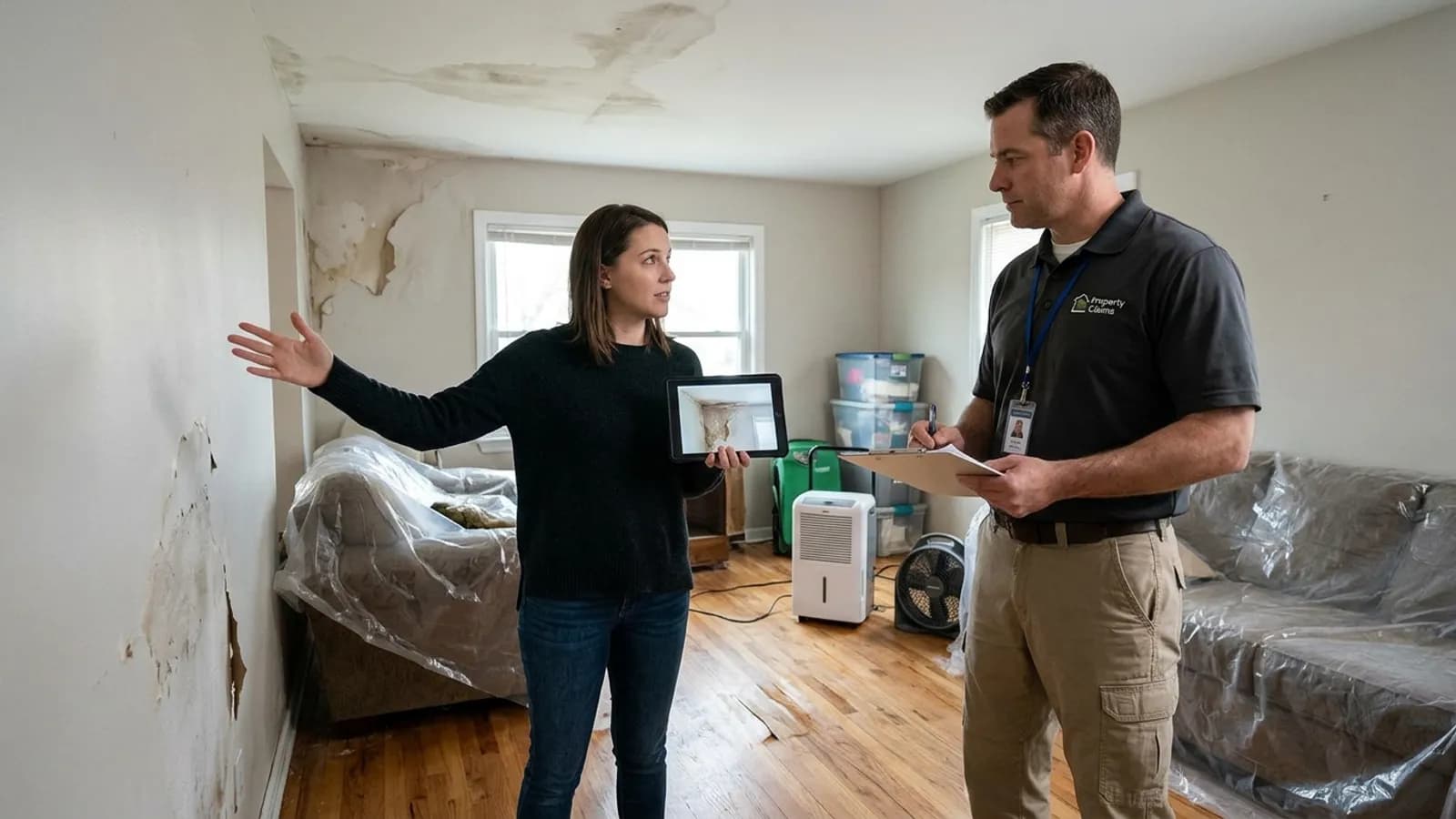
The Renters Insurance Claim Process: From Theft to Reimbursement
Renters claims are won by documentation — police report, photos before cleanup, itemized inventory — and most simple claims pay within one to two weeks.
Read guide
Does Renters Insurance Cover Natural Disasters?
Split — renters insurance covers wildfire, tornado, hail, and hurricane wind damage to belongings; floods and earthquakes are excluded without separate policies.
Read guide
First Apartment Insurance Checklist (20 Minutes to Covered)
The first-apartment renters checklist: a 20-minute sequence of inventory, limits, replacement cost, endorsements, and the landlord certificate before move-in.
Read guideWhat Is Loss of Use Coverage (Coverage D)?
Loss of use (Coverage D) pays hotel, meals, and other extra costs while a covered peril makes your home unlivable — typically 20% of dwelling coverage.
Read guideWhat Is a Peril?
A peril is the specific cause of loss a policy insures against — fire, windstorm, hail, theft — the list that separates named-peril from open-peril forms.
Read guide