
Homeowners Insurance in Utah: Costs and What to Know (2026)
Homeowners insurance in Utah costs $1,300–$2,200 per year, with Wasatch Front quake risk, wildfire interface rating, and snowmelt flood seasons shaping premiums.
Why you can trust this guide
- Written by Daniel Reyes, AINS, former licensed P&C agent — independent insurance education publisher.
- Factual accuracy reviewed and signed off by Marcus Hale, CPCU, AINS, licensed P&C agent (Independent insurance reviewer).
- Every factual claim traces to a regulator, statute, or policy document — sources are listed at the bottom of the page.
- Last verified ; time-sensitive guides are re-checked at least twice a year. Read our editorial policy.

On this page
Homeowners insurance in Utah costs $1,300–$2,200 per year for a standard HO-3 policy on a typical single-family home — below the national midpoint. Wasatch Front earthquake risk, wildfire-interface rating along the foothills, and the 2023 snowmelt flood season set the state's claim pattern.
What Utah homeowners pay
| Home profile / city | Typical annual cost |
|---|---|
| Statewide typical (standard HO-3) | $1,300–$2,200 |
| Salt Lake City, Provo, Ogden | Near the range, Wasatch Front rated |
| Foothill and canyon-mouth interface parcels | Above the range, fire-district rated |
| St. George and Washington County | Near the range, thinner carrier menus |
| Rural counties | Lower half of the range |
| Home + auto bundle with one carrier | Usually trims 5–15% off both premiums |
Utah prices cheaply for a state with a major fault under its capital — the HO-3 premium simply does not include the quake, which lives on the endorsement line the state requires carriers to offer.
Utah's rules and regulators
The Utah Insurance Department licenses carriers, reviews filings, and runs the consumer complaint process at insurance.utah.gov. No state statute requires homeowners insurance; lenders mandate replacement-cost dwelling coverage while the loan exists and force-place insurance at 5–10 times market price after a lapse. Utah does mandate one offer: insurers writing residential policies must offer earthquake coverage, a rule born from the Wasatch fault's position beneath 75%+ of the state's population. Most policies keep a flat $1,000–$2,500 deductible across other perils. Escrowed premiums mean a renewal change flows into the monthly mortgage payment without a letter from the carrier.
The Utah claim landscape
- Wasatch Front earthquakes — the fault zone runs beneath Salt Lake City, Provo, and Ogden; the 2020 Magna earthquake (magnitude 5.7) was the strongest in decades. Quake damage is excluded from every standard policy and rides on the mandated-offer endorsement.
- Wildfire at the interface — foothill and canyon-mouth parcels carry fire-district rating; fire and smoke are covered perils on the standard policy, and debris flows after a burn fall to the flood policy.
- Snowmelt flooding — the record 2023 snowpack sent meltwater into rivers, basements, and low-lying neighborhoods statewide; rising water is excluded from the HO-3, with the flood zone map setting lender requirements and the NFIP vs private flood comparison mapping the stack.
- Winter storm loads — the same record snowpack stressed roofs and broke branch lines statewide; weight of snow and ice is a covered peril, and burst pipes during inversions pay through dwelling coverage.
- Water claims in valley housing — the sewer backup endorsement covers the drain-side claim that snowmelt and flash floods push through older systems.
Coverage setup that fits Utah
- Dwelling at rebuild cost — keep Coverage A within 5% of a local estimate; Wasatch Front construction costs have climbed with the state's growth.
- The earthquake endorsement — the only private-market answer to the Wasatch fault; a separate limit sized to rebuild cost and a separate deductible. The extended replacement cost cushion matters alongside it, since a regional quake inflates rebuild demand.
- A flood policy for snowmelt years — NFIP caps at $250,000/$100,000 with a 30-day wait and $30,000 of Increased Cost of Compliance; 2023 showed unmapped low parcels carry the risk too.
- Water backup endorsement — excluded by default at roughly $50–$250 per year; essential in older valley neighborhoods.
- Interface wildfire documentation — defensible-space photos and ember-resistant vents support availability where foothill carriers tightened after recent fire seasons.
- Bundle discipline — a home-plus-auto bundle trims 5–15% off both premiums on an already-modest market.
The Wasatch Front mandate: Utah's earthquake-offer law
Utah is one of the only states that legislated the earthquake decision into the sales process. The law requires insurers to offer earthquake coverage whenever they write a Utah residential policy — a direct answer to the Wasatch fault, which runs beneath the urban corridor holding 75%+ of the state's population. The 2020 Magna earthquake (magnitude 5.7) was the strongest Wasatch event in decades and a reminder that the fault's geological record includes larger events than anything the metro has seen in modern times. The standard HO-3 excludes every ground-movement loss, so the endorsement — separate limit, separate deductible, priced meaningfully below California rates — is the entire private-market answer. The mandate solves the availability problem, not the take-up problem: most Utah homeowners still decline the offer, which leaves the Wasatch Front carrying one of the nation's largest concentrations of uninsured earthquake risk. Owners who accept it should match the limit to rebuild cost and read the deductible structure — the endorsement's deductible runs separate from the flat policy deductible and typically scales with dwelling value.
Related guides
Utah's Wasatch fault and its wildfire interface have dedicated playbooks, and Colorado and Idaho border the mountain markets to the east and north.
- Home Insurance: The Complete Guide — the HO-3 structure and claim strategy behind every Utah policy.
- Earthquake Insurance — pricing and deductible mechanics for the Wasatch endorsement.
- Does Homeowners Insurance Cover Wildfires? — how fire and smoke claims pay, and when they do not.
- Homeowners Insurance in Colorado — $2,400–$3,800 per year across the hail-heavy Rockies.
- Homeowners Insurance in Idaho — $1,200–$2,000 per year in the neighboring mountain market.
- Best Home Insurance Companies — comparing carriers on claims handling and financial strength.
Home insurance in other states
Every state prices and regulates differently — compare the neighbors:
Sources
- Utah Insurance Department — Utah consumer resources and complaint process
- FloodSmart / NFIP — flood policy caps, waiting periods, and zone rules
- III — Homeowners and renters insurance facts
Frequently asked questions
How much is homeowners insurance in Utah?
Homeowners insurance in Utah costs roughly $1,300–$2,200 per year for a standard HO-3 policy on a typical single-family home — below the national midpoint. The Wasatch Front metros (Salt Lake City, Provo, Ogden) price near the range, interface parcels above it, and the earthquake endorsement is a separate line item the state mandates insurers offer.
What is Utah's earthquake-offer rule?
Utah law requires insurers to offer earthquake coverage to homeowners when they write the residential policy — a unique state mandate born from the Wasatch fault running beneath 75%+ of the population. The offer is not automatic purchase: quake coverage carries a separate premium and deductible that homeowners accept or decline each policy cycle.
Does Utah require homeowners insurance?
No state law requires homeowners insurance in Utah. Mortgage lenders set the floor — full replacement-cost dwelling coverage while the loan exists — and mapped flood zones add an NFIP or private flood policy. The Utah Insurance Department licenses carriers and operates the consumer complaint process.
Is wildfire damage covered by homeowners insurance in Utah?
Yes. Fire and smoke are covered perils on a standard Utah HO-3 policy, and wildland-urban-interface parcels along the Wasatch foothills carry fire-district rating. The debris flows that follow a burn are mudflow — excluded from the homeowners policy and covered only by an NFIP or private flood policy.
Is snowmelt flooding covered on a Utah homeowners policy?
No. The 2023 spring floods — driven by Utah's record snowpack melting through rivers and low-lying neighborhoods — were surface water, excluded from every standard policy. NFIP coverage caps at $250,000 for the building and $100,000 for contents with a 30-day waiting period; private flood fills above the caps.
Why is the earthquake endorsement cheaper in Utah than California?
Utah's quake risk is concentrated on the Wasatch Front, not statewide, and Utah has never experienced the insured-loss history California has. The endorsement prices meaningfully below California rates — but the hazard is real: the 2020 Magna earthquake (magnitude 5.7) was the strongest Wasatch event in decades, and the fault remains capable of larger.
How we researched this guide
Home policies are forms-driven: the peril list in the form decides what gets paid, so our guides follow the policy form structure.
- Coverage explanations track the standard HO-3/HO-5 form structure — Coverage A through E — because that's the contract language adjusters apply.
- Flood facts come from FEMA's National Flood Insurance Program (floodsmart.gov), since standard home policies exclude flood.
- Regional cost ranges are built from NAIC home-owners insurance statistics, with the drivers of variation (construction, age, wind/hail exposure) named explicitly.
- Mitigation and eligibility claims cite IBHS research and state fair-plan rules where standard market access is an issue.
Where facts vary by state or insurer, we publish the range and the reason for the variation rather than a single misleading average. We do not sell insurance, take money from insurers for coverage, or publish claim amounts we cannot trace to a source.
Sources
The primary sources behind the facts on this page. Last verified November 10, 2026.
- FEMA — National Flood Insurance Program (FloodSmart) — flood coverage, which standard homeowners policies exclude.
- Insurance Institute for Business & Home Safety (IBHS) — property-loss research and mitigation standards that affect eligibility and discounts.
- U.S. Department of Housing and Urban Development (HUD) — FHA-insured property requirements and disaster assistance programs.
- NAIC — National Association of Insurance Commissioners — model regulations, consumer guides, and industry statistics.
- Find your state insurance regulator (NAIC directory) — every state insurance department — the authority for your state's rules and complaint filing.
- Insurance Information Institute (III) — industry statistics and consumer explainers we cross-check against regulator publications.
Rules that vary by state are verified against the state insurance department's consumer pages — find yours via the NAIC directory above.
Keep reading
Home Insurance: The Complete Guide
Homeowners insurance pays to rebuild, replace, and defend after fire, storms, and lawsuits — this guide maps coverage, exclusions, deductibles, and costs by state.
Read guide
Earthquake Insurance: The Exclusion That Matters Most (and How to Fix It)
Earthquake damage is excluded from every standard home policy. What quake coverage costs, who should buy it, and the fire-following-quake exception.
Read guide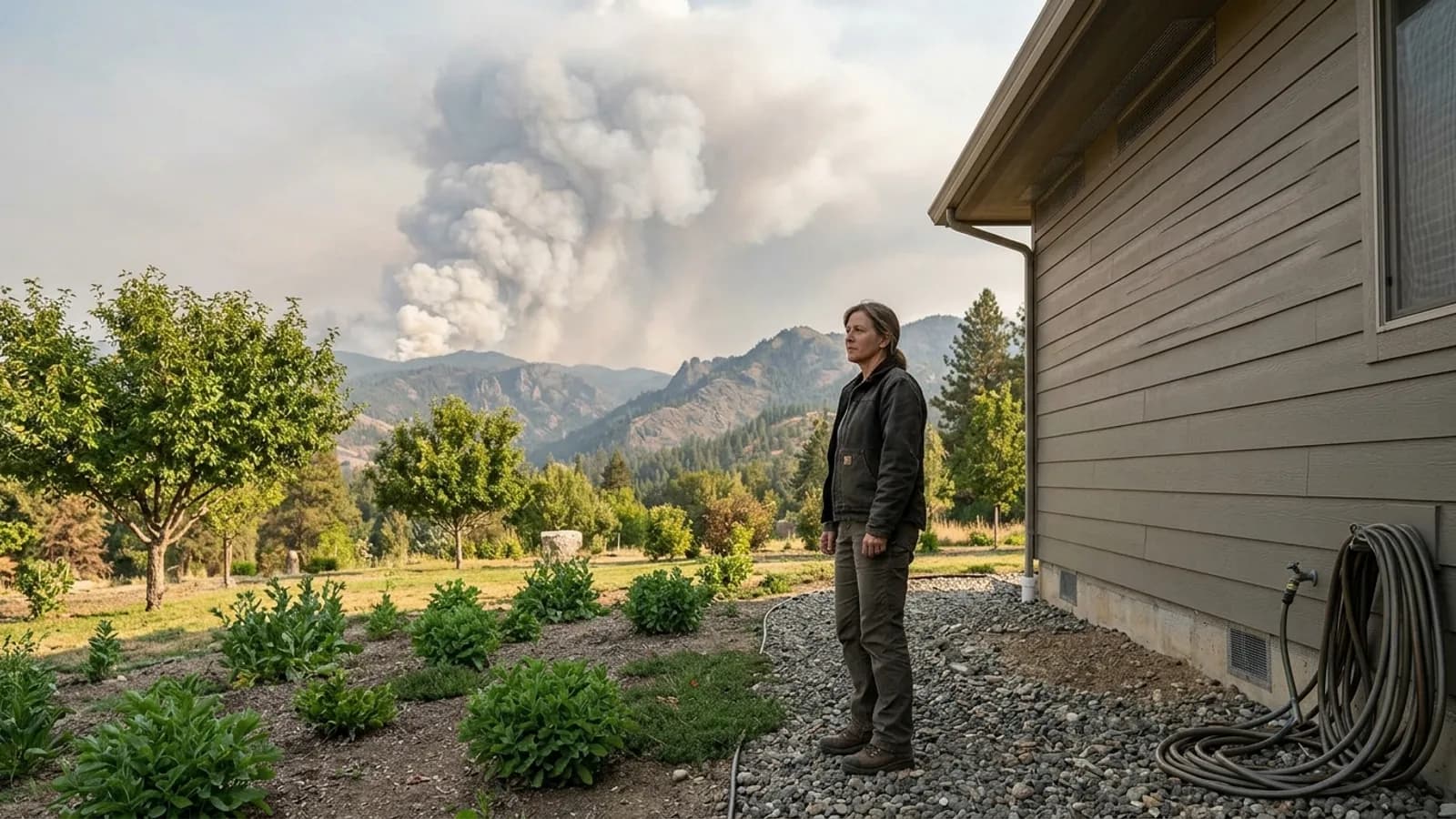
Does Homeowners Insurance Cover Wildfires?
Wildfire damage to structure, contents, and smoke is covered by standard policies; loss-of-use pays evacuation costs, and availability is the fight in fire states.
Read guideHomeowners Insurance in Colorado: Costs and What to Know (2026)
Homeowners insurance in Colorado costs $2,400–$3,800 per year, with Front Range hail, wildfire losses, and roof-shrinkage rules shaping what each ZIP pays.
Read guideHomeowners Insurance in Idaho: Costs and What to Know (2026)
Homeowners insurance in Idaho costs $1,200–$2,000 per year, with wildfire at the urban edge, hard freezes, and seismic zones shaping what each ZIP pays.
Read guide
How to Choose the Best Home Insurance Company (No Sponsored Rankings)
Choose a home insurer on claims satisfaction, financial strength, coverage breadth, and state-market position — the criteria that replace sponsored rankings.
Read guide