
My Insurance Company Dropped Me: What to Do After Non-Renewal
A non-renewal notice starts a state-mandated clock — read the stated reason, re-shop immediately, involve the DOI where it looks wrong, and never lapse.
Why you can trust this guide
- Written by Daniel Reyes, AINS, former licensed P&C agent — independent insurance education publisher.
- Factual accuracy reviewed and signed off by Marcus Hale, CPCU, AINS, licensed P&C agent (Independent insurance reviewer).
- Every factual claim traces to a regulator, statute, or policy document — sources are listed at the bottom of the page.
- Last verified ; time-sensitive guides are re-checked at least twice a year. Read our editorial policy.
On this page
Non-renewal notices come with state-mandated windows — and the response is the same every time: immediate re-shopping, the DOI's help where the reason looks wrong, and the never-lapse discipline. The post-notice playbook below runs in that order.
The response sequence
- Read the notice's stated reason — it shapes everything (claims-based, market-exit, misstatement, risk-change)
- Verify the state notice rules — 30–90 days is the typical window; the DOI confirms
- Shop immediately — the full window is the shopping window; see switching
- Never let the policy lapse — the lapse costs more than the non-renewal itself
- File the DOI complaint where the reason looks discriminatory or improperly noticed
The reason-specific paths
| Reason | The path |
|---|---|
| Claims history | The high-risk market + the aging-off calendar |
| Market exit (FL/CA property) | FAIR plans + surplus-lines carriers + the independent-agent route |
| Risk change (pool, dog, roof) | The mitigation or the disclosure fix |
| Non-payment history | The payment discipline + the continuous-coverage rebuild |
| Misstatement | The correction + the honest re-application |
The non-renewal letter, decoded line by line
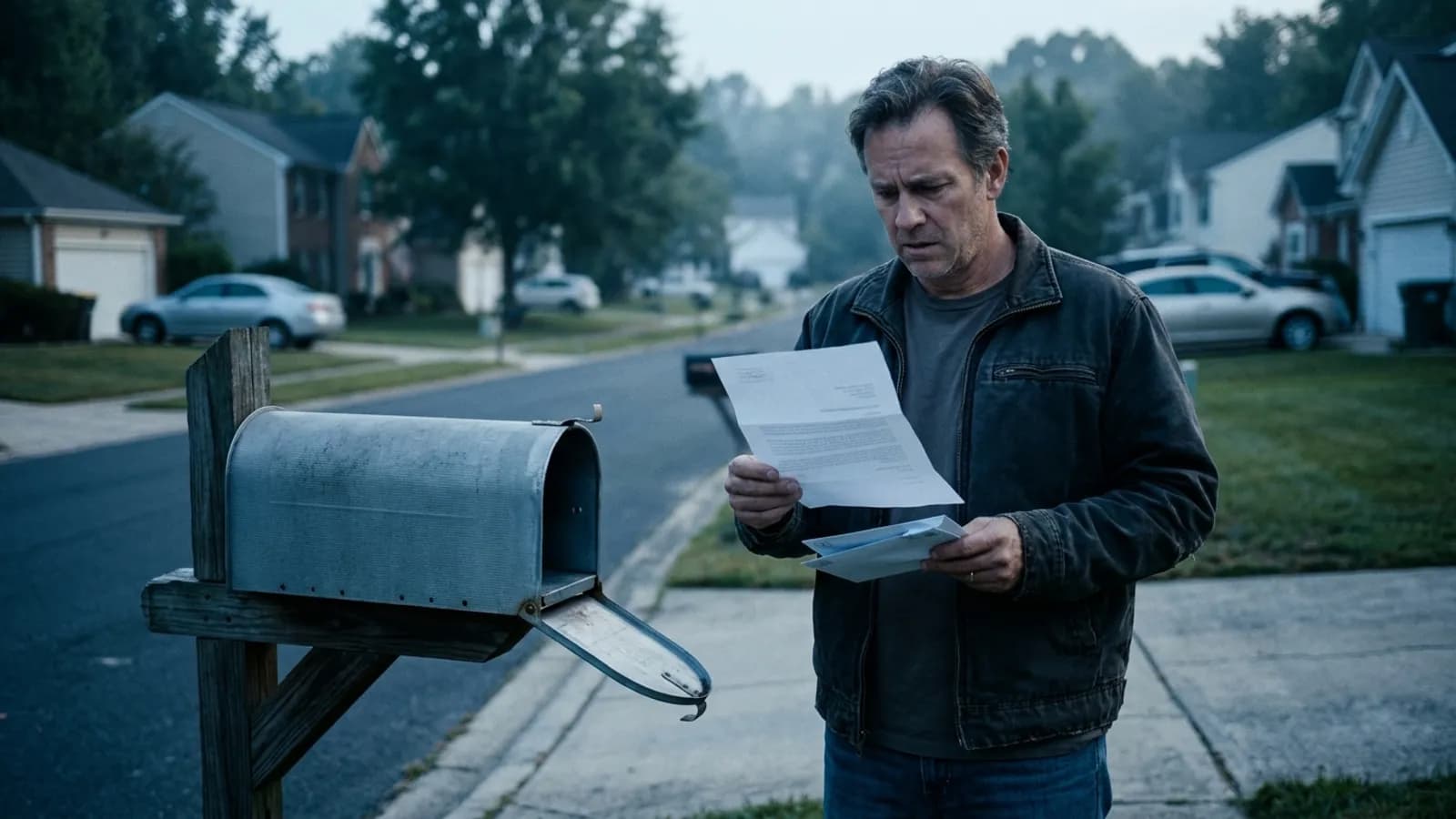
The letter is a legal document with three operative lines, and each one starts a clock or a decision. The effective date: the last day of coverage — everything you do must land before it, because the day after is a lapse. The stated reason: claims history, risk change, market exit, non-payment history, or a misstatement — the reason decides the market you shop (standard, nonstandard, or the special cases) and whether a DOI complaint is worth filing. The notice window: most states require 30–90 days for non-renewal, shorter for mid-term cancellations, and the state DOI confirms the requirement for your policy type. What the letter is not: a rating on you as a driver — market exits and portfolio purges drop clean drivers, which matters because the response to a claims-based non-renewal (aggressive re-shop with the aging-off calendar in hand) differs from the response to a market exit (the independent-agent and last-resort routes). The re-shop mechanics are the switching guide's sequence, compressed into the notice window.
The bridge options when standard carriers decline
When the non-renewal reason is claims-based or risk-based, the standard market may decline too — and the bridge options are ordered by price. First, the nonstandard specialists: carriers built for adverse files, pricing higher but writing what the standard market declines — the widest quote dispersion in insurance lives here, and the nonstandard specialists write it. Second, the independent agent: multi-carrier access finds the one standard carrier whose appetite still matches the file, plus the surplus-lines carriers some states allow for hard-to-place auto risks. Third, the state's assigned-risk or joint-underwriting plan: every state guarantees a liability policy is obtainable — priced at the ceiling, bare-bones by design, and the plan of last resort rather than first choice. The sequencing rule: bridge options exist to maintain continuous coverage while the file heals, not to become permanent housing — the aging-off calendar (3–5 years for violations and claims) is the exit schedule, and every bridge year should end with a standard-market quote.
The home-market special case
Florida and California homeowners face market-wide exits — the FAIR plans (state-backed insurers of last resort) and surplus-lines carriers backstop. The sequence: independent agent (the surplus-lines access), mitigation documentation, and the honest rebuild-cost number. See the home insurance hub for the property-side market notes. The same never-lapse rule binds harder on homes: a lender whose borrower's policy ends buys force-placed insurance at 5–10× the market price and bills it to the escrow account.
The lapse-cost math that makes timing everything
The gap between the old policy's end and the new policy's start is the most expensive free days in insurance. Worked example: a driver lets a policy end on the 1st and binds the replacement on the 13th — twelve days. The consequences: future quotes commonly price 8–15% higher for years, because carriers price coverage gaps as risk indicators; any continuous-coverage discount is forfeited; in filing states, an SR-22 filer's license re-suspends within days of the gap; and a crash during the gap is a personal-liability event with no policy behind it. The math against the alternative: binding the new policy to start the same day the old one ends costs nothing — the switch is sequenced, not delayed — and the mid-term refund from the old carrier arrives afterward. The discipline is one sentence: the new policy binds first, the old policy cancels second, and the effective dates match to the day. The full refund mechanics are in the switching guide, and the never-lapse rule outranks every other item in the response sequence.
Related guides
The non-renewal response runs on the record rules these pages define — the reason codes, the claims history, and the SR-22 variant.
- Car Insurance After a DUI: Costs, SR-22, and the Recovery Timeline — the surcharge size, the SR-22/FR-44 filing, and the recovery timeline.
- What Is Non-Renewal? — what a non-renewal is, the notice rules, and how it differs from cancellation.
- How Long Do Claims Affect Insurance? — how long claims follow you between carriers.
- Car Insurance: The Complete Guide — the coverage structures, state rules, and savings levers every other page builds on.
Sources
Frequently asked questions
Why did my insurance company drop me?
The pattern list: claims history (too many claims — especially water damage for homes), market exits (FL/CA carriers withdrawing), risk changes (pool added, dog breed, roof age), and non-payment history. State rules restrict reasons and require notice windows (30–90 days).
How much notice must an insurer give before non-renewal?
State-mandated: typically 30–75 days for auto and home, longer for some senior products. The notice states the reason — read it, because it shapes the response (claims-based: shop; market-exit: the FAIR plan path; misstatement: fix the record).
Can I fight a non-renewal?
Sometimes — state DOIs review non-renewals for discriminatory reasons or defective notice, and a written complaint is free to file. The practical path runs in parallel: re-shop the market immediately, because a carrier exists for nearly every file, and let the DOI complaint press the procedural question while the re-shop solves the coverage one.
What happens if I don't find new insurance before the policy ends?
A lapse — future quotes commonly price 8–15% higher for years, continuous-coverage discounts forfeit, and a crash in the gap is a personal-liability event. For homes, the lender buys force-placed insurance at 5–10× market cost; for SR-22 filers, the license re-suspends. The never-lapse discipline outranks every other item in the response sequence.
Can my insurer cancel my policy mid-term instead of at renewal?
Only for limited causes in most states — non-payment, fraud or material misrepresentation, license suspension, or substantial risk change with proper notice. Mid-term cancellation for a pure rate decision is generally prohibited; non-renewal at the term's end is where insurers have flexibility, with 30–90 days' notice depending on state.
Does a non-renewal follow me to the next insurance company?
The underlying reason does — claims history (via CLUE-type reports) and violations follow you for 3–5 years. The non-renewal itself is less visible, though some applications ask directly. Answer honestly: an undisclosed non-renewal discovered later is a misrepresentation problem worse than the reason for the non-renewal.
How we researched this guide
Car insurance pricing is set per driver, per ZIP code — so our guides anchor on regulator and industry statistics and explain the factors, not a fake exact price.
- Premium ranges are anchored to NAIC statewide average-expenditure data, the most complete public dataset on what drivers actually pay per state.
- State minimum-coverage requirements are checked against each state's motor-vehicle financial-responsibility statute and the state insurance department's consumer pages.
- What a coverage actually pays for is verified against policy declarations and specimen forms, not marketing copy.
- Discount and surcharge rules cite the state DOI consumer bulletin where each state regulates them differently — for example credit-based insurance scores, which most states permit but a few ban.
Where facts vary by state or insurer, we publish the range and the reason for the variation rather than a single misleading average. We do not sell insurance, take money from insurers for coverage, or publish claim amounts we cannot trace to a source.
Sources
The primary sources behind the facts on this page. Last verified November 10, 2026.
- IIHS — Insurance Institute for Highway Safety — crash-test data, vehicle loss statistics, and safety-feature research.
- NHTSA — National Highway Traffic Safety Administration — recalls, crash data, and state traffic-safety requirements.
- FMCSA — Federal Motor Carrier Safety Administration — commercial vehicle and carrier insurance requirements.
- NAIC — National Association of Insurance Commissioners — model regulations, consumer guides, and industry statistics.
- Find your state insurance regulator (NAIC directory) — every state insurance department — the authority for your state's rules and complaint filing.
- Insurance Information Institute (III) — industry statistics and consumer explainers we cross-check against regulator publications.
Rules that vary by state are verified against the state insurance department's consumer pages — find yours via the NAIC directory above.
Keep reading

Car Insurance After a DUI: Costs, SR-22, and the Recovery Timeline
A DUI raises car insurance 60–100%+ for 3–5 years and triggers an SR-22 or FR-44 filing — the cost tables, the recovery timeline, and the shopping playbook.
Read guideWhat Is Non-Renewal?
Non-renewal is the insurer declining to continue a policy at its expiration — distinct from mid-term cancellation, with state-set notice periods and a stated reason.
Read guideHow Long Do Claims Affect Insurance?
Claims history affects pricing for 3–7 years by line of business: auto claims 3–5 years, property claims 5–7 through CLUE, workers comp modifications about 3 years.
Read guide
Car Insurance: The Complete Guide
Car insurance bundles liability, collision, comprehensive, and medical coverage — this guide explains state minimums, full coverage, and how to lower the premium.
Read guide