
What Is Non-Owner Car Insurance? Who Needs It and What It Covers
Non-owner car insurance is liability that follows the driver, not the car — who needs it, what it covers, what it costs, and when it beats a standard policy.
Why you can trust this guide
- Written by Daniel Reyes, AINS, former licensed P&C agent — independent insurance education publisher.
- Factual accuracy reviewed and signed off by Marcus Hale, CPCU, AINS, licensed P&C agent (Independent insurance reviewer).
- Every factual claim traces to a regulator, statute, or policy document — sources are listed at the bottom of the page.
- Last verified ; time-sensitive guides are re-checked at least twice a year. Read our editorial policy.
On this page
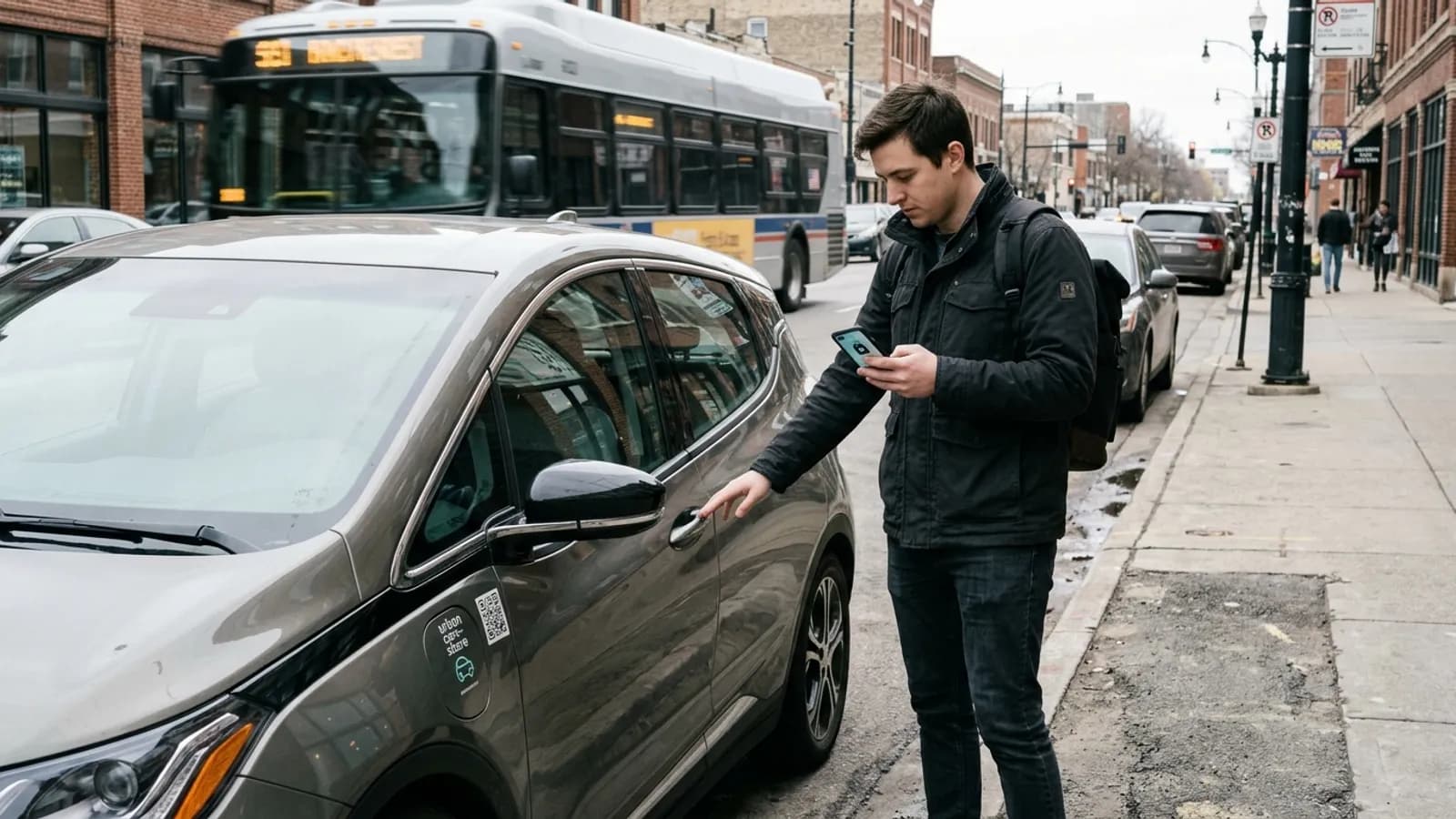
Non-owner car insurance is liability coverage that attaches to the driver rather than to a car. It pays for injuries and property damage the policyholder causes while driving a vehicle they do not own — a borrowed car, a rental, a car-share vehicle. It never covers damage to the car being driven, because no car sits on the policy.
What non-owner car insurance covers
The coverage list is short by design — liability only:
- Bodily injury liability — injuries the driver causes to other people.
- Property damage liability — damage the driver causes to other vehicles and property.
- Uninsured/underinsured motorist and medical payments — available from some carriers; ask at quote time.
What it does not cover
The exclusions define the product's edges, and each one surprises a different driver:
- Damage to the car being driven — no collision or comprehensive exists on the policy.
- The rental car itself — the rental company's damage waiver or a qualifying credit card covers that.
- Business use of the vehicle — delivery and rideshare driving is excluded like every personal policy.
- Vehicles titled to the policyholder or a household member — owned cars require a standard policy.
- Custom equipment, towing, and rental reimbursement — the add-on lines do not attach to this product.
Because the policy is liability-only, the car's fate after a crash is not the non-owner policy's problem — the owner's physical-damage coverage or the rental waiver absorbs it. The rental-car gap is priced in detail in the rental car coverage guide.
Who needs non-owner car insurance
| Driver situation | Non-owner fit | | | --- | | Regularly rents cars | Often yes — cheaper than repeated damage waivers for the liability layer | | Uses car-share services | Yes — their built-in liability can be minimal | | Borrows friends' or family cars often | Yes — backup above the owner's policy | | Between cars, wants no coverage lapse | Yes — continuous coverage avoids the lapse penalty later | | Court-ordered SR-22, owns no car | Yes — this is the standard product for it | | Owns any vehicle | No — a standard policy is the requirement |
The worked version: a driver renting 24 days a year at an $18-per-day waiver spends $432 per year on the waiver alone, for liability limits the rental company sets. A non-owner policy at $350 per year covers the same days with the driver's own chosen limits, and a credit card's collision benefit absorbs the car-damage layer the waiver would have priced. Below roughly 20 rental days a year, the daily waiver is the cheaper structure; above it, the annual policy wins.
The excess-liability position in a borrowed-car claim
The non-owner policy's role in a claim is excess liability — it sits behind the owner's policy, and the position is clearest in dollars. The priority order: the owner's policy pays first for injuries and damage the driver causes; the non-owner policy pays above the owner's limits. Worked example: a borrowed car causes $60,000 in bodily-injury damages, the owner carries 25/50 limits, and the non-owner driver carries 100/300 — the owner's policy pays $50,000, and the non-owner policy covers the remaining $10,000.
The same structure explains what the policy does not do: the borrowed car's own damage is the owner's comprehensive and collision problem. The position matters most in two scenarios — regularly borrowing cars from thinly insured owners, and the court-ordered SR-22 without a vehicle, which is the next section.
What non-owner car insurance costs
Non-owner policies commonly run $200–$600 per year — well under a standard owned-car policy, since there is no physical-damage exposure. Pricing still reflects age, driving record, state, and the chosen liability limits, and the average cost of car insurance guide explains why minimum limits are a false economy on any policy. The quote conversation is short, and two inputs set the price: the liability limits chosen and whether an SR-22 filing rides on the policy. Drivers required to file an SR-22 pay more — the filing adds its one-time fee on top of the high-risk re-rating — and should confirm the insurer actually files SR-22s in their state before binding.
The non-owner SR-22 filing
The court-ordered SR-22 without a car is the non-owner policy's most important job. The setup: buy the non-owner policy from an insurer that files SR-22s — not all do, so expect to shop regional and nonstandard carriers — confirm the filing fee ($15–$50 one-time) and the monthly cost (commonly $25–$70), and verify the filing posts with the state, because reinstatement follows the filing, not the purchase. The full filing mechanics are the SR-22 guide.
The discipline: the policy must stay continuously active for the required period, commonly one to three years, even through months with zero driving. A lapse restarts the filing clock and re-suspends the license — the single most expensive mistake in the SR-22 timeline. When a car enters the picture mid-requirement, the non-owner policy converts to a standard policy at the same carrier, preserving the continuous-coverage record the high-risk market exit depends on.
How to buy a non-owner policy
- Decide liability limits first — they work exactly like a standard policy's limits. A 50/100 property-and-injury floor is the practical minimum, and 100/300 is the comfortable one, because the policy's whole job is paying what a borrowed-car accident costs.
- Ask specifically whether the carrier sells non-owner policies — not every insurer does, and the ones that do sell it under names like "non-owned auto" or "named-operator" coverage.
- If an SR-22 is required, confirm the filing fee and that coverage stays continuous, because a gap restarts the clock in many states. Budget the full requirement period — commonly one to three years of $25–$70 monthly payments — before binding, since the filing obligates the whole run.
- Re-shop annually, and when a car is purchased, convert the non-owner policy to a standard one at the same carrier to keep the continuous-coverage history intact.
When non-owner coverage is the wrong tool
Four situations put a driver on the wrong side of the product:
- Owning any vehicle — a car, and on many carriers a motorcycle, requires a standard policy; non-owner coverage excludes owned vehicles by definition.
- Renting one week a year — the rental counter's damage waiver plus the renter's existing liability is the cheaper structure; the crossover for frequent renters sits near 20 rental days a year.
- Driving for delivery or rideshare apps — business use is excluded, and the gig driver needs a delivery endorsement or commercial path instead, per the gig economy checklist.
- Expecting the borrowed car to be repaired — no physical-damage line exists, so a crash in a friend's car is the friend's comprehensive and collision claim; the non-owner policy pays only what the driver owes others.
The short-duration alternatives — permissive use, pay-per-mile, the buy-and-cancel structure — are mapped in the temporary car insurance guide.
Related guides
The neighboring products are the SR-22 filing that often rides on this policy, the short-term structures it replaces, and the standard-policy market drivers graduate into.
- What Does Full Coverage Car Insurance Cover? — the physical-damage structure this liability-only product lacks.
- How to Lower Car Insurance — the discount and re-shop checklist for any policy type.
- What Is an SR-22? — the certificate behind the non-owner filing.
- Does Car Insurance Cover Other Drivers? — the lending priority order this product sits behind.
- Car Insurance: The Complete Guide — the hub for coverage types, state rules, and costs.
Sources
Frequently asked questions
What does non-owner car insurance cover?
Non-owner policies provide bodily injury and property damage liability that applies to any car the policyholder drives with permission — borrowed or rented. Depending on the carrier, the policy can also include uninsured/underinsured motorist and medical payments coverage. It never covers damage to the car itself, because no vehicle is attached to the policy.
Who should buy non-owner car insurance?
Drivers who regularly borrow or rent cars but own none: frequent renters, car-share users, people between vehicles who want continuous coverage, and drivers who need an SR-22 filing without owning a car. Anyone who owns a vehicle needs a standard policy instead — non-owner coverage excludes owned cars by definition.
How much does non-owner car insurance cost?
Typically $200–$600 per year — well below a standard policy, because there is no physical-damage coverage and the liability-only exposure is lower. Rates still reflect age, record, state, and chosen liability limits. High-risk drivers filing an SR-22 pay more than clean-record non-owner drivers.
Does non-owner insurance cover rental cars fully?
No — it covers the liability the renter causes to others. Damage to the rental car itself needs the rental company's damage waiver or a credit card that provides collision coverage for rentals. For occasional renters, compare the daily waiver price against an annual non-owner policy honestly before choosing.
Does non-owner insurance build an insurance history?
Yes — continuous months on a non-owner policy count as continuous coverage, which future carriers price. That is the product's second job: drivers between cars keep their history clean instead of paying the lapse penalty when they return to the owned-car market.
Can I add comprehensive or collision to a non-owner policy?
No — the product is liability-only by structure, because it attaches to the driver rather than a vehicle. Physical damage to any car being driven is the owner's coverage's job, or a rental waiver's. A driver who needs personal physical-damage coverage needs a standard policy on an owned car.
How we researched this guide
Car insurance pricing is set per driver, per ZIP code — so our guides anchor on regulator and industry statistics and explain the factors, not a fake exact price.
- Premium ranges are anchored to NAIC statewide average-expenditure data, the most complete public dataset on what drivers actually pay per state.
- State minimum-coverage requirements are checked against each state's motor-vehicle financial-responsibility statute and the state insurance department's consumer pages.
- What a coverage actually pays for is verified against policy declarations and specimen forms, not marketing copy.
- Discount and surcharge rules cite the state DOI consumer bulletin where each state regulates them differently — for example credit-based insurance scores, which most states permit but a few ban.
Where facts vary by state or insurer, we publish the range and the reason for the variation rather than a single misleading average. We do not sell insurance, take money from insurers for coverage, or publish claim amounts we cannot trace to a source.
Sources
The primary sources behind the facts on this page. Last verified November 10, 2026.
- IIHS — Insurance Institute for Highway Safety — crash-test data, vehicle loss statistics, and safety-feature research.
- NHTSA — National Highway Traffic Safety Administration — recalls, crash data, and state traffic-safety requirements.
- FMCSA — Federal Motor Carrier Safety Administration — commercial vehicle and carrier insurance requirements.
- NAIC — National Association of Insurance Commissioners — model regulations, consumer guides, and industry statistics.
- Find your state insurance regulator (NAIC directory) — every state insurance department — the authority for your state's rules and complaint filing.
- Insurance Information Institute (III) — industry statistics and consumer explainers we cross-check against regulator publications.
Rules that vary by state are verified against the state insurance department's consumer pages — find yours via the NAIC directory above.
Keep reading
What Is Liability Insurance?
Liability insurance pays others when you're legally responsible for their injuries or property damage — plus the legal defense — and never pays your own losses.
Read guide
How to Lower Car Insurance: 12 Ways That Actually Work
How to lower car insurance: re-shop every renewal, raise deductibles, trim coverage on old cars, stack discounts, and fix the rating factors you control.
Read guide
What Does Full Coverage Car Insurance Cover?
Full coverage car insurance is liability plus comprehensive and collision — what each part pays, what it excludes, what it costs, and when liability-only wins.
Read guide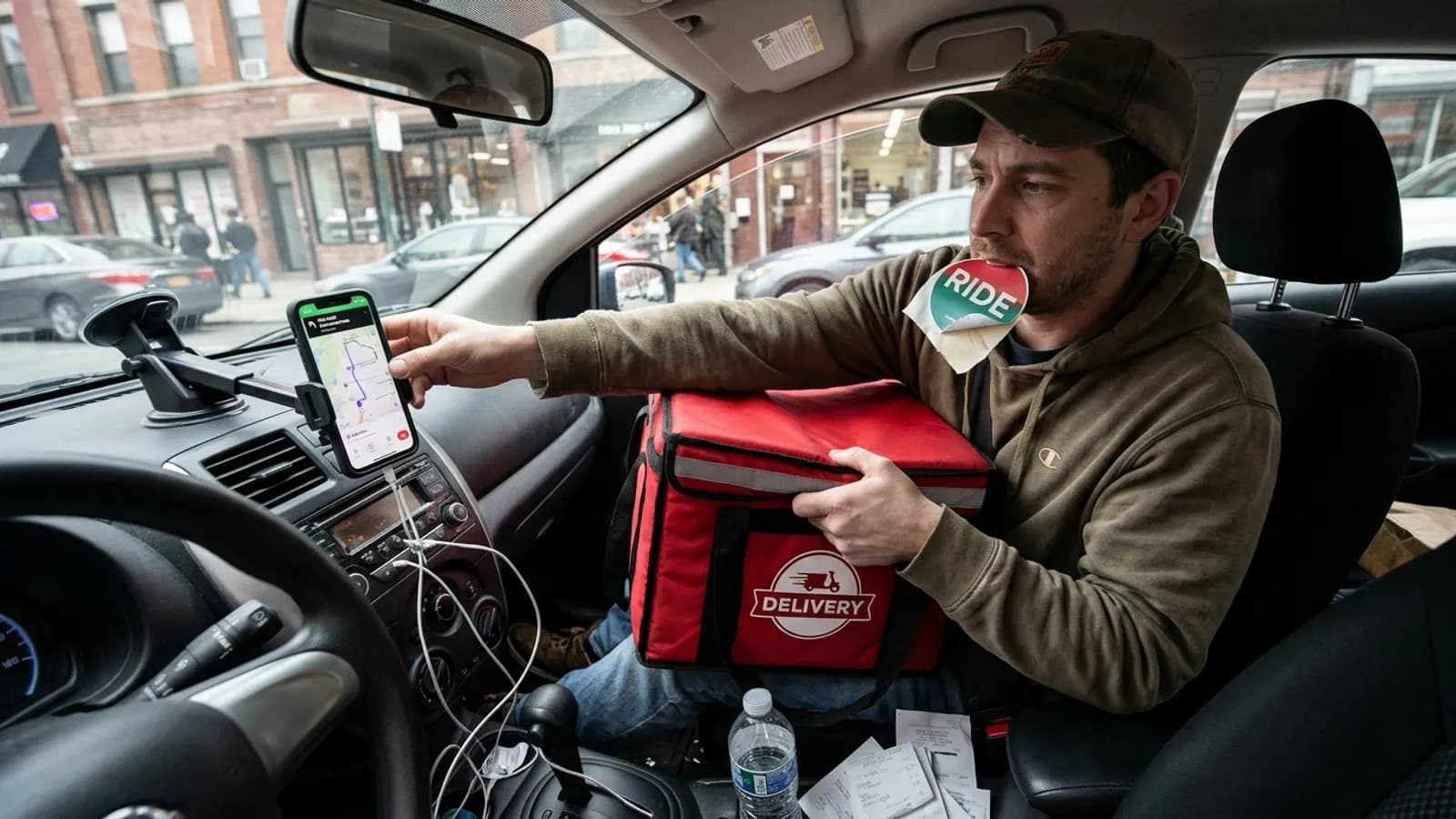
Gig Economy: Insurance Checklist
Gig-economy insurance checklist: rideshare and delivery endorsements, the waiting-phase gap, health coverage for 1099 income, and when commercial auto takes over.
Read guide
Car Insurance: The Complete Guide
Car insurance bundles liability, collision, comprehensive, and medical coverage — this guide explains state minimums, full coverage, and how to lower the premium.
Read guide